2026.09.07 Monday|Start with the Basics
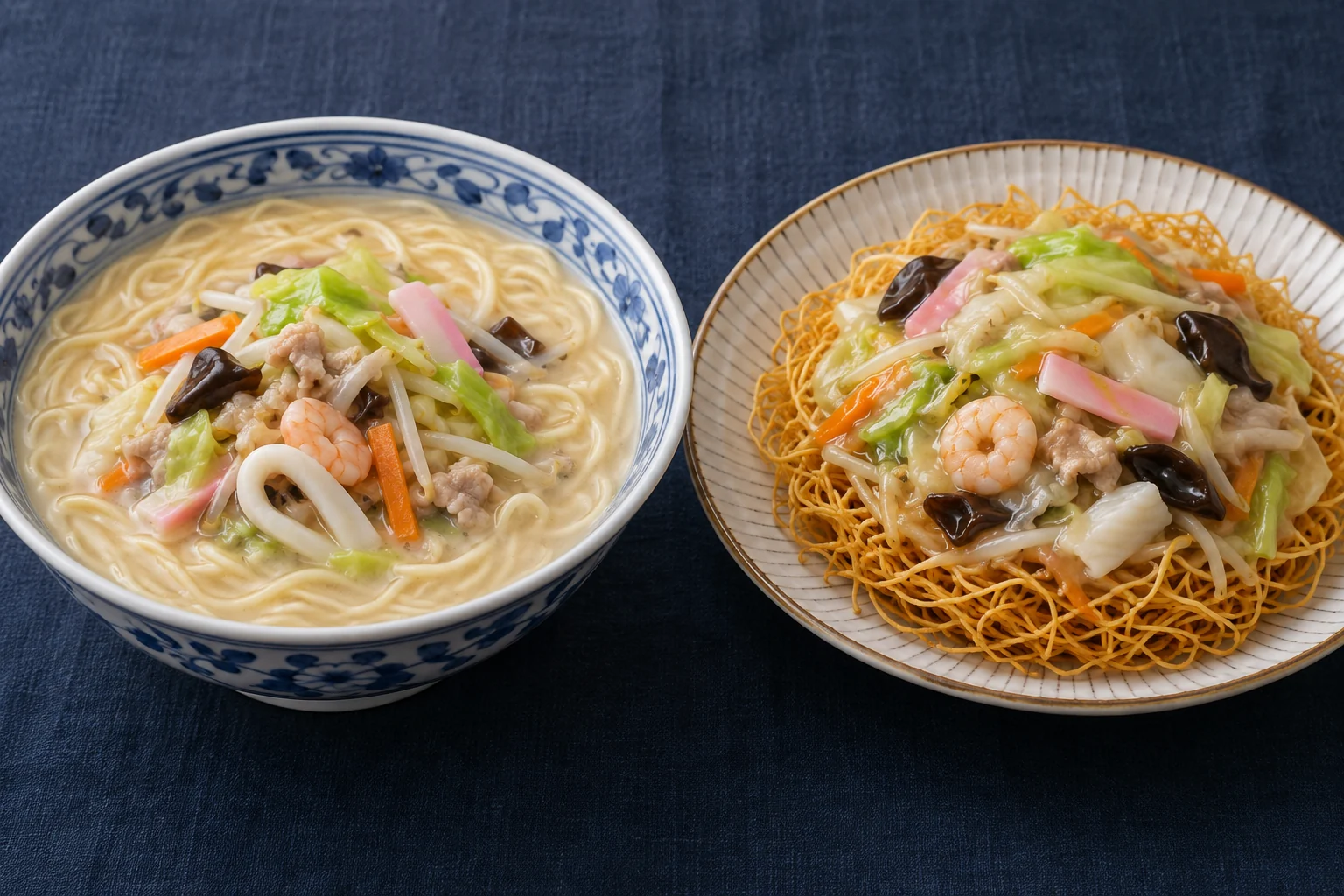
Nagasaki Champon vs. Sara Udon: Five Differences to Know
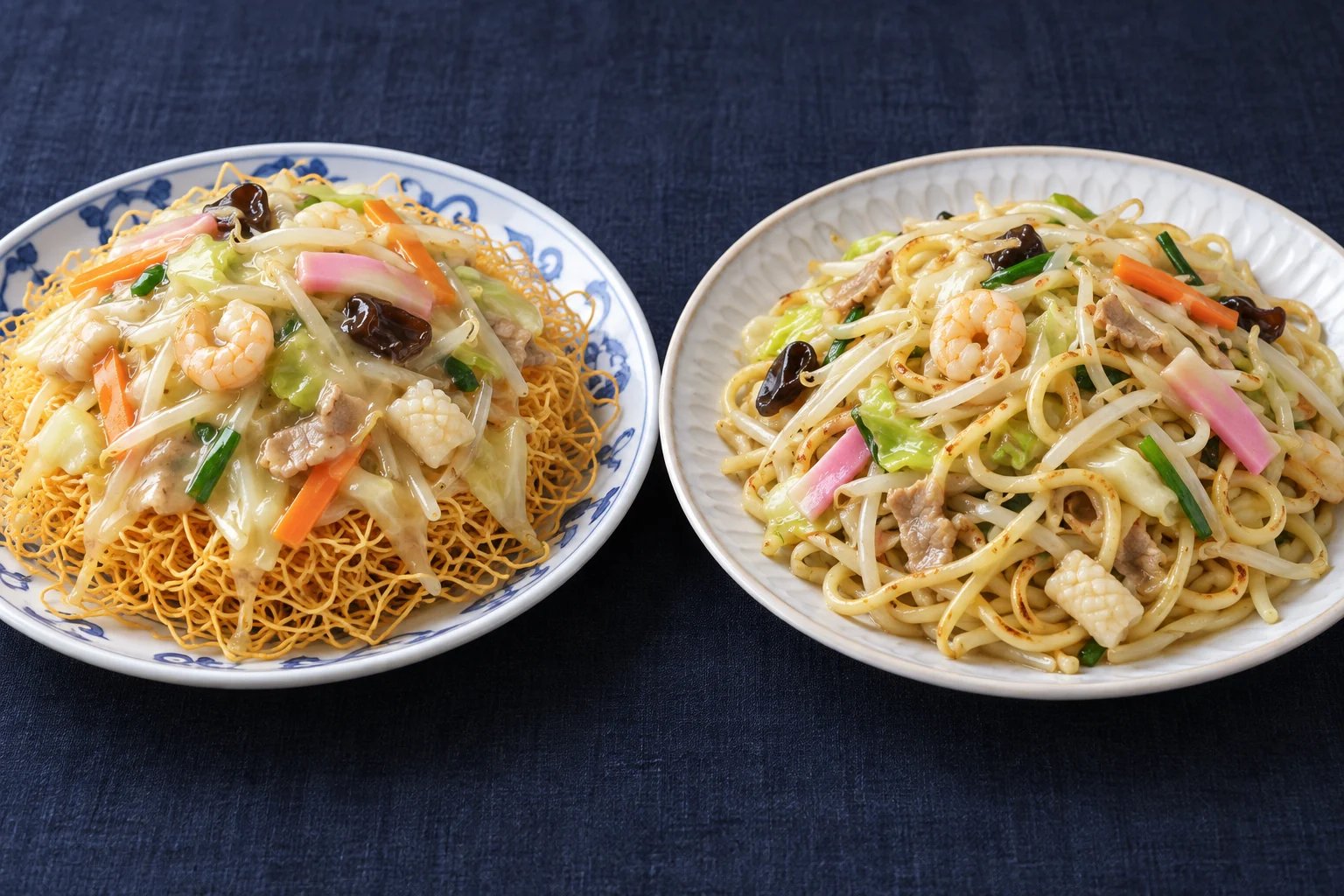
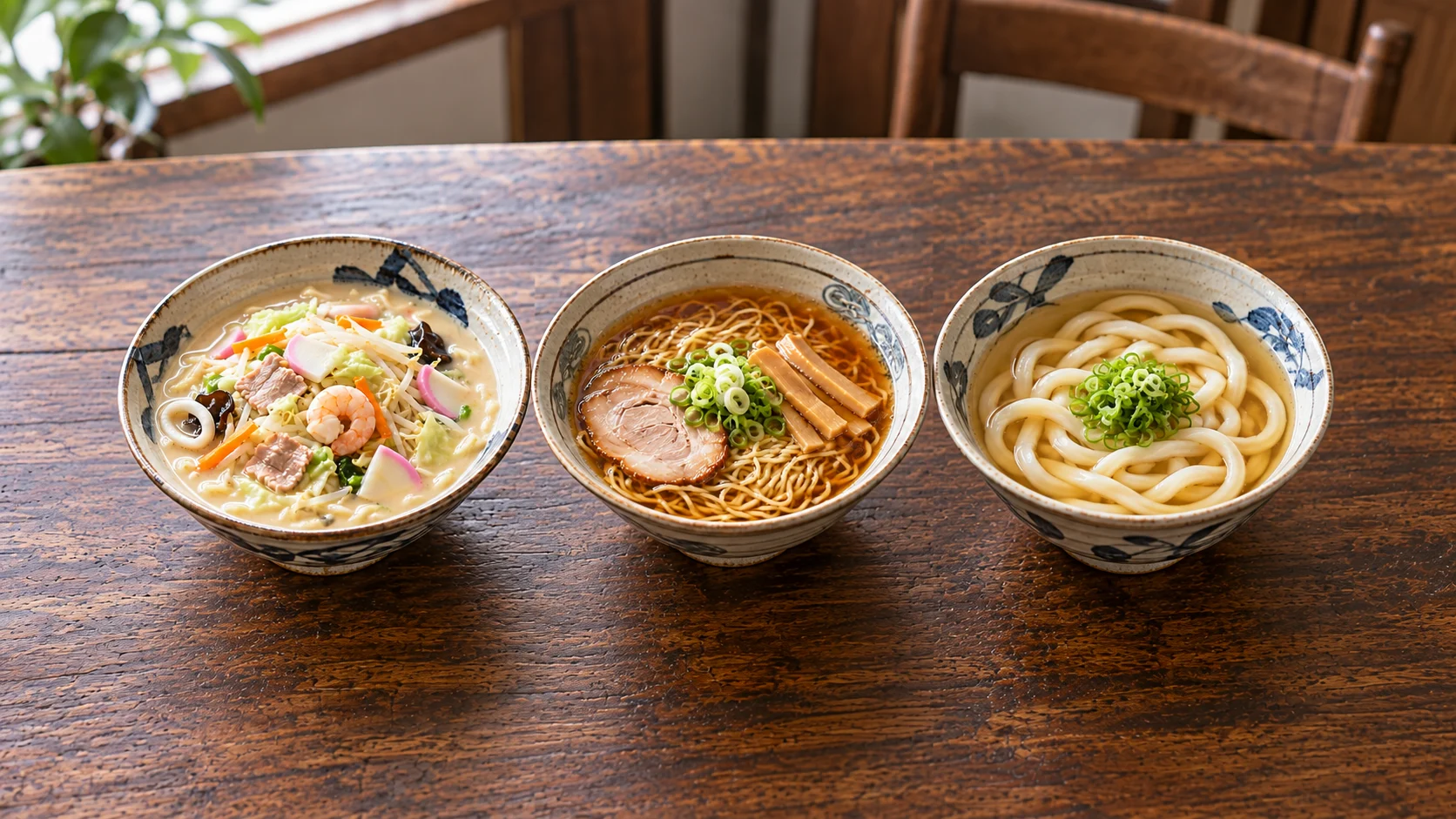
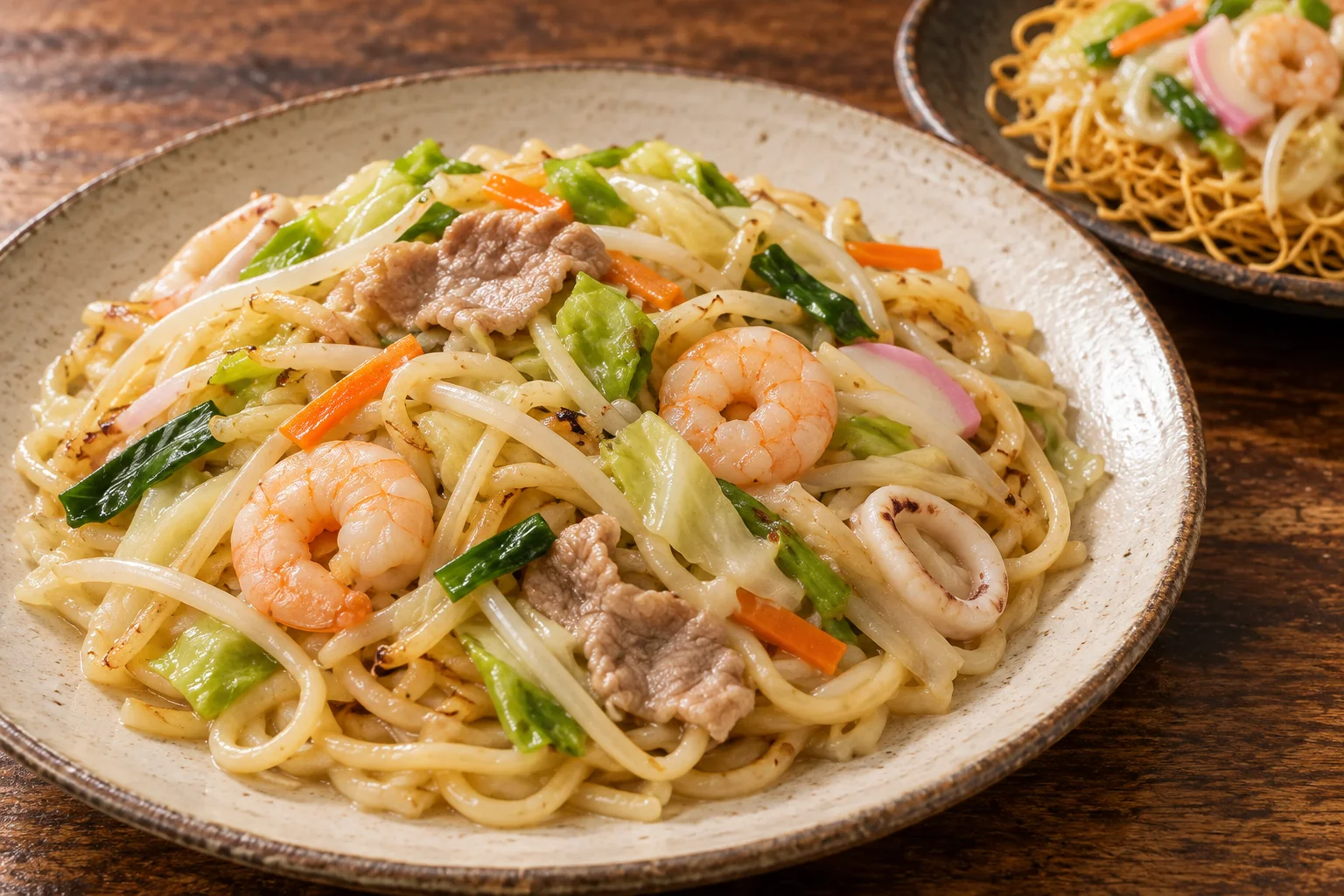
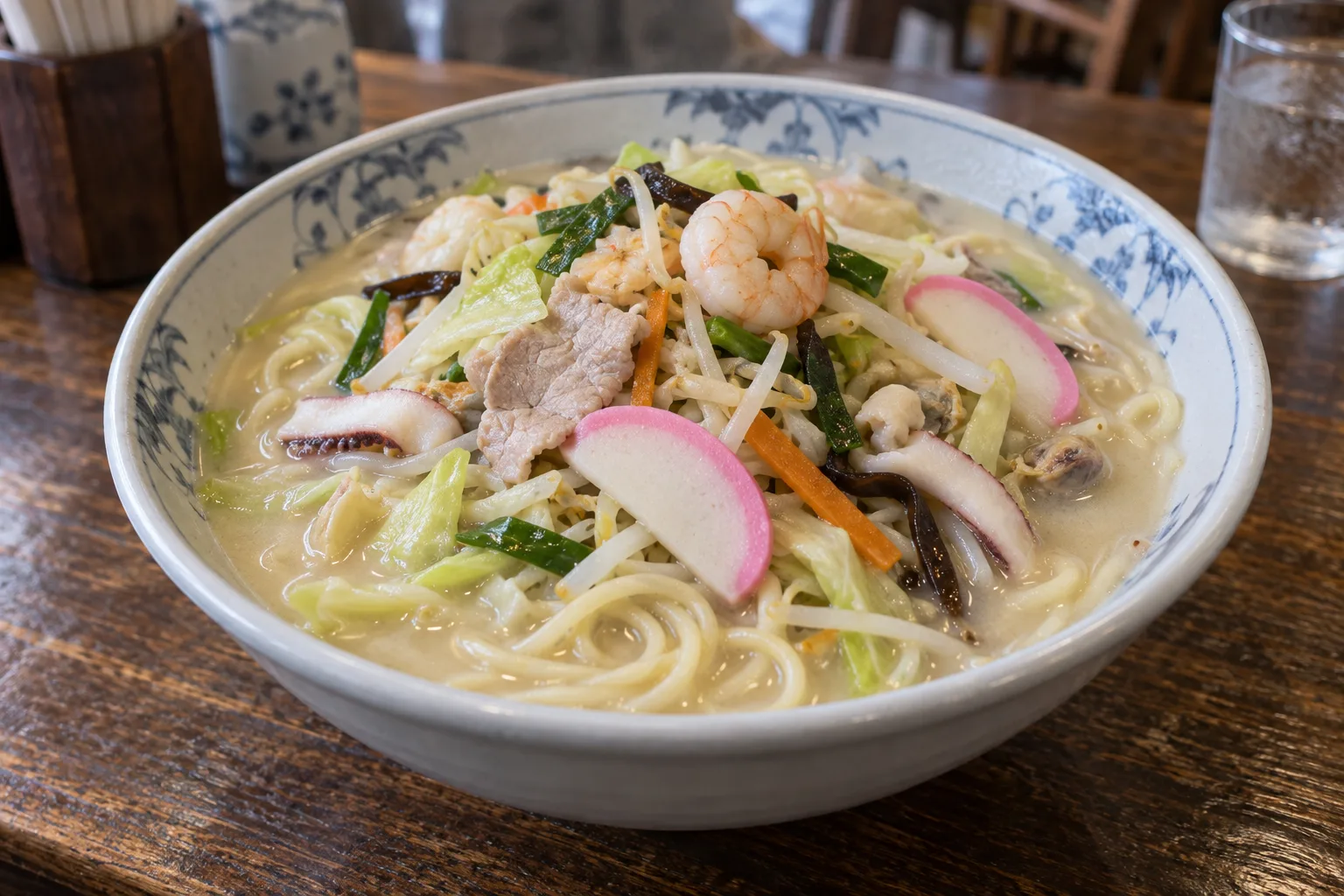
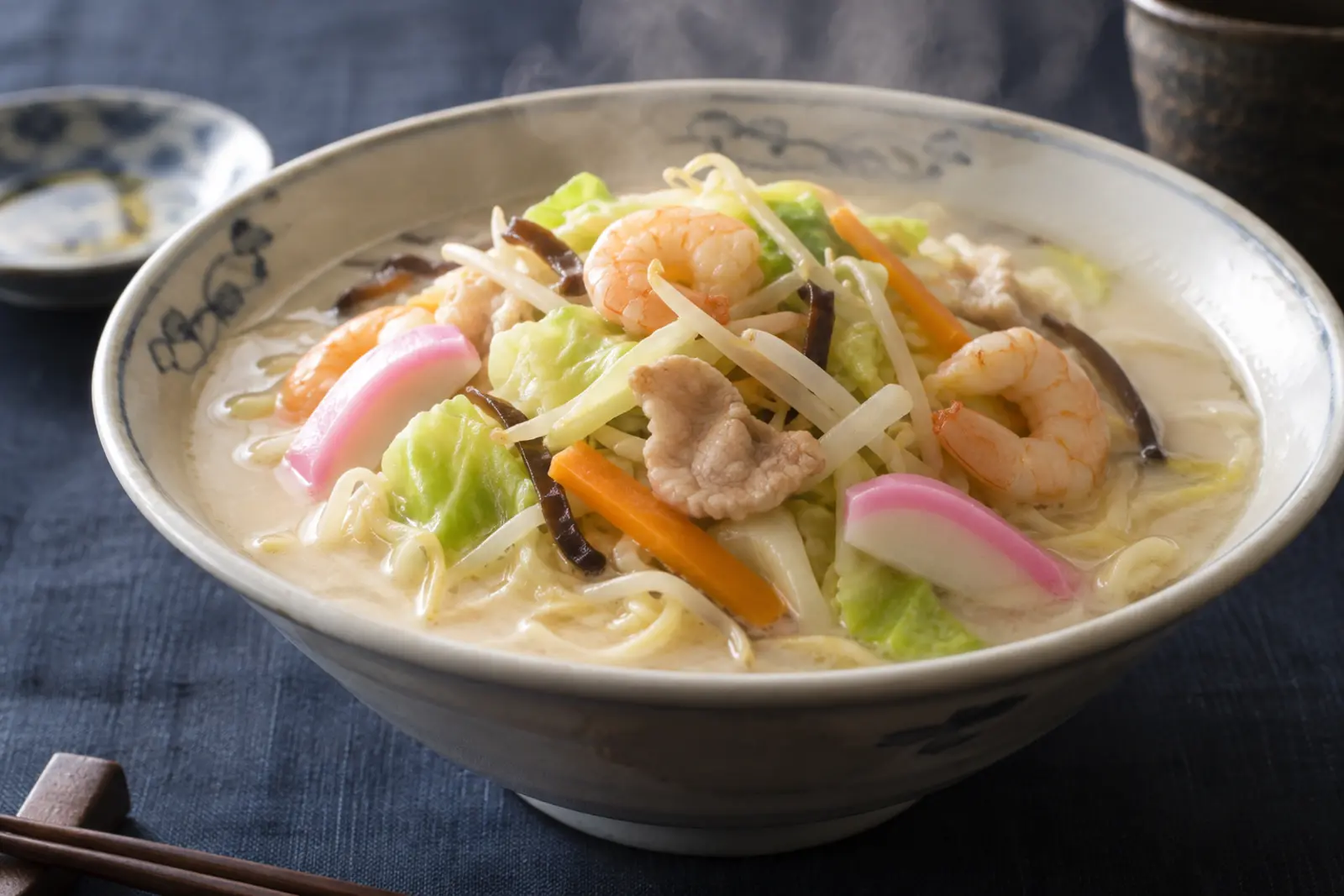
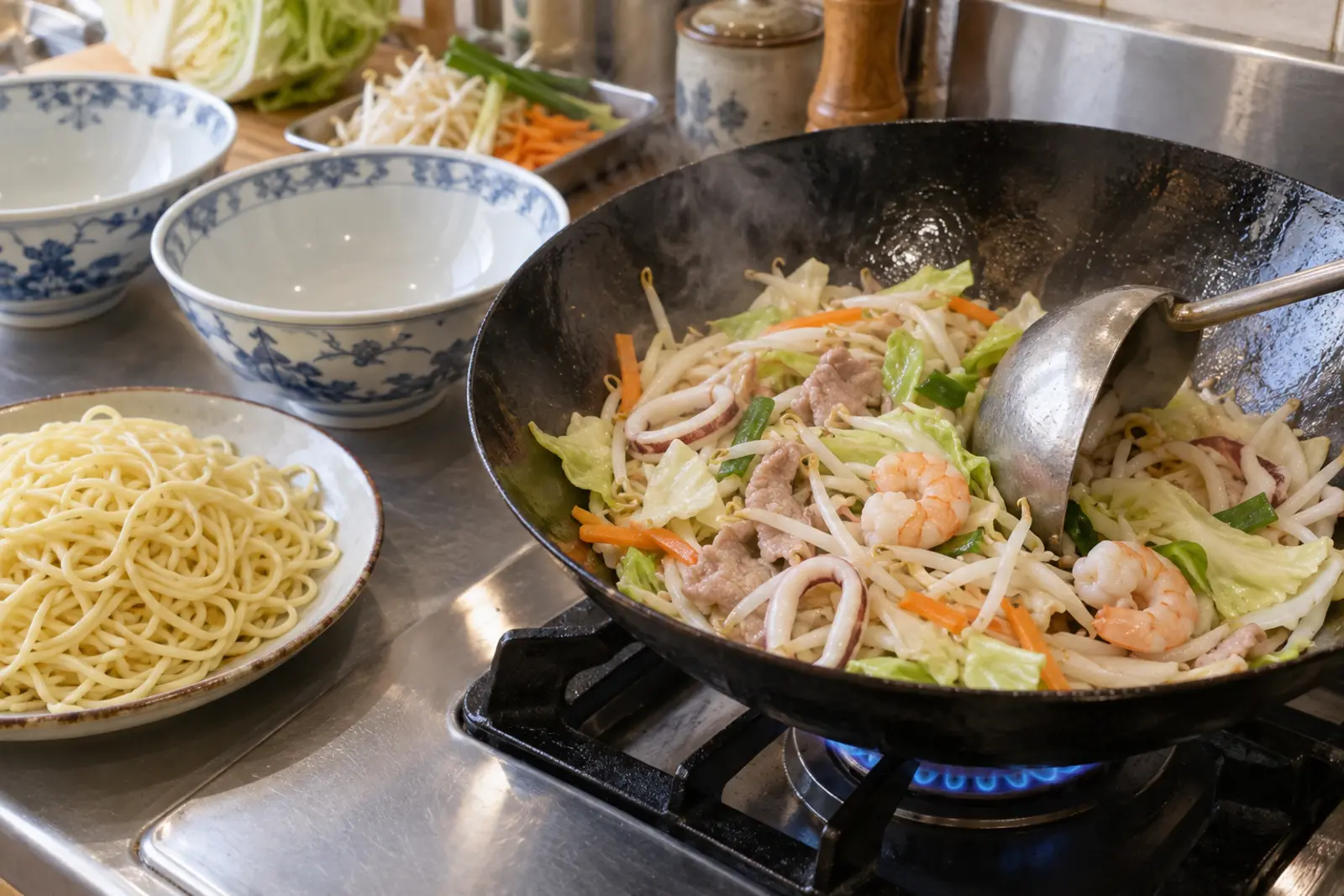
These two Nagasaki classics often share ingredients, yet their broth, noodles, cooking methods, textures, and ways of eating are distinct.
Read storyCHAMPON & SARA UDON BASICS
Start with the differences between Nagasaki champon and sara udon, their noodles and ingredients, and how each dish is eaten.
STORIES IN THIS TOPIC
2026.09.07 Monday|Start with the Basics
These two Nagasaki classics often share ingredients, yet their broth, noodles, cooking methods, textures, and ways of eating are distinct.
Read story2026.09.14 Monday|Start with the Basics
One is crisp and gradually softens; the other is toasted and chewy. The cooking method changes with the noodle.
Read story2026.09.28 Monday|Start with the Basics
Round and satisfyingly chewy, champon noodles can resemble udon yet taste unlike either udon or ramen. They belong to the same broad family as ramen noodles. So what makes them right for champon?
Read story2026.10.05 Monday|Start with the Basics
Look at a plate of crisp, fine noodles and you may wonder where the udon went. The answer begins with the original thick-noodle dish and the way it was served.
Read story2026.10.07 Wednesday|Tracing Nagasaki
Champon's story does not stop in Nagasaki City. In seaside Obama Onsen, local routines and each restaurant's choices have shaped another champon culture.
Read story2026.10.14 Wednesday|Tracing Nagasaki
That white slice with a pink rim in a bowl of champon is a local fish cake, sometimes called hanpen in Nagasaki. It offers a small window into the port city's food culture.
Read story2026.10.15 Thursday|Inside Noodle Making
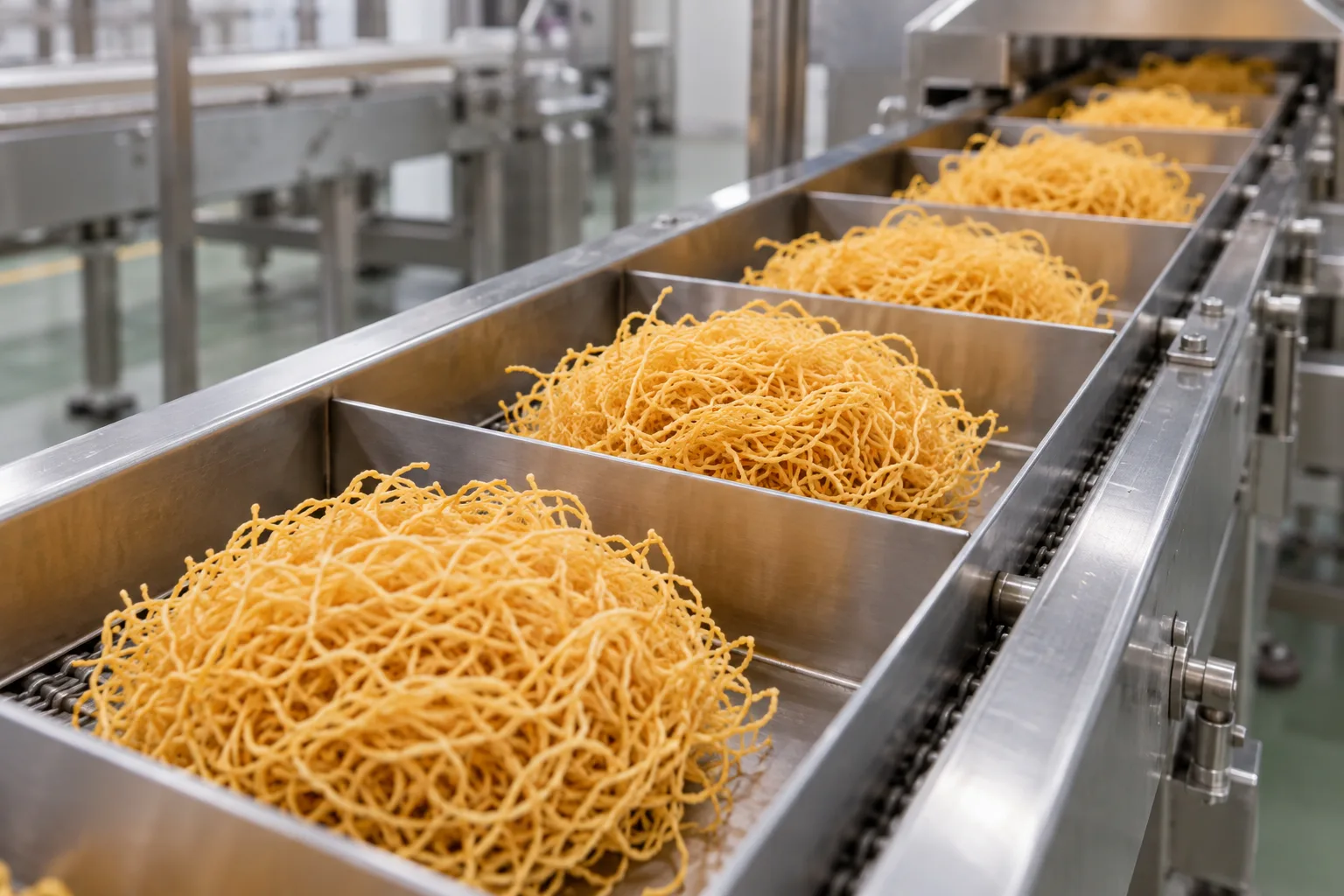
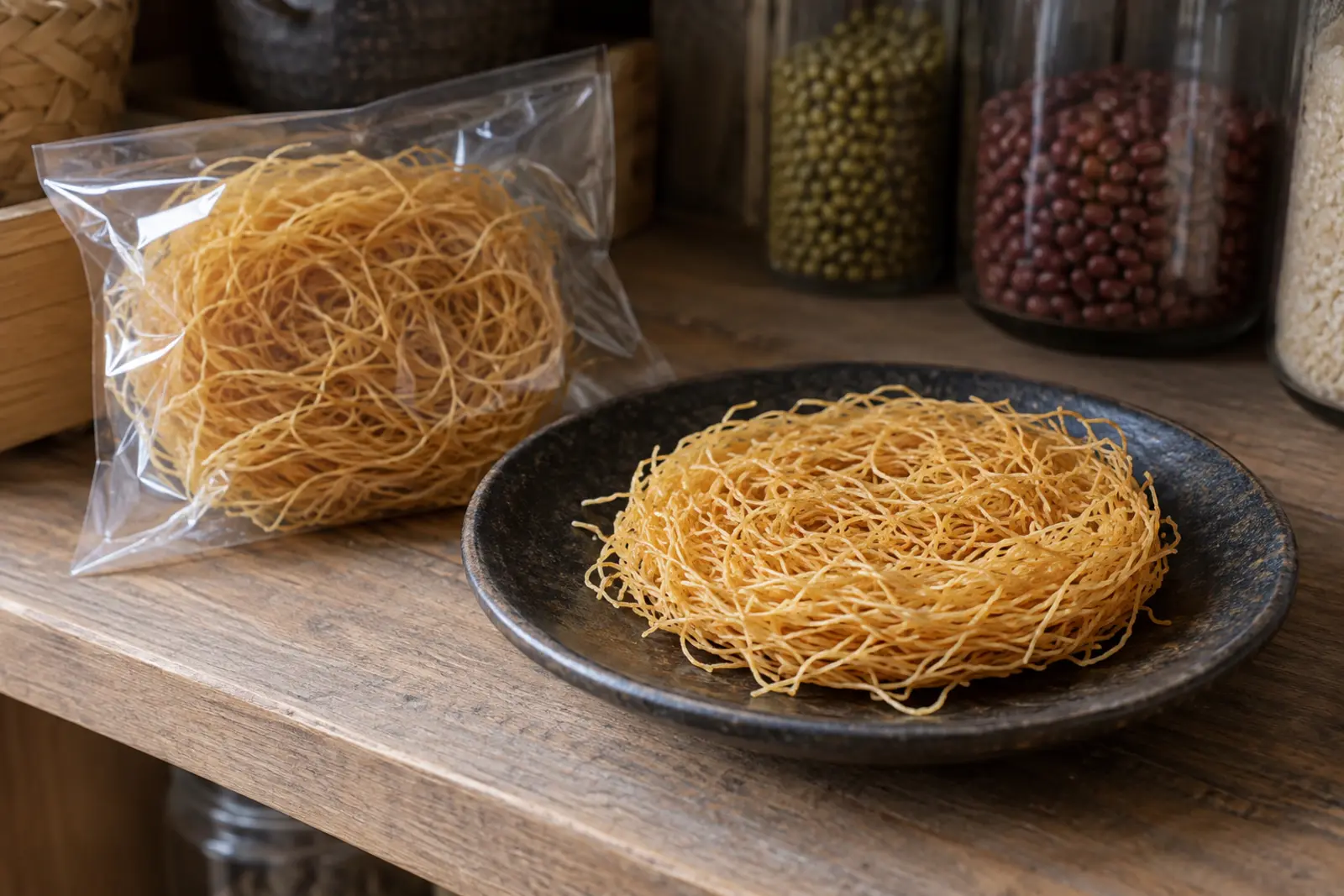
Open a pack and the fine fried noodles form a portion-sized piece. Its shape makes more sense when you consider cooking, packing and eating the dish.
Read story2026.10.19 Monday|Start Here
A pale, cloudy broth is familiar, but color alone cannot define champon. Look at how the stock, stir-fried toppings and noodles come together.
Read story2026.10.20 Tuesday|Try It in the Kitchen
A seafood mix can make an appealing champon without buying several kinds of fish and shellfish. Here are a full version and a no-chopping shortcut, both built around managing excess water.
Read story2026.10.21 Wednesday|Tracing Nagasaki
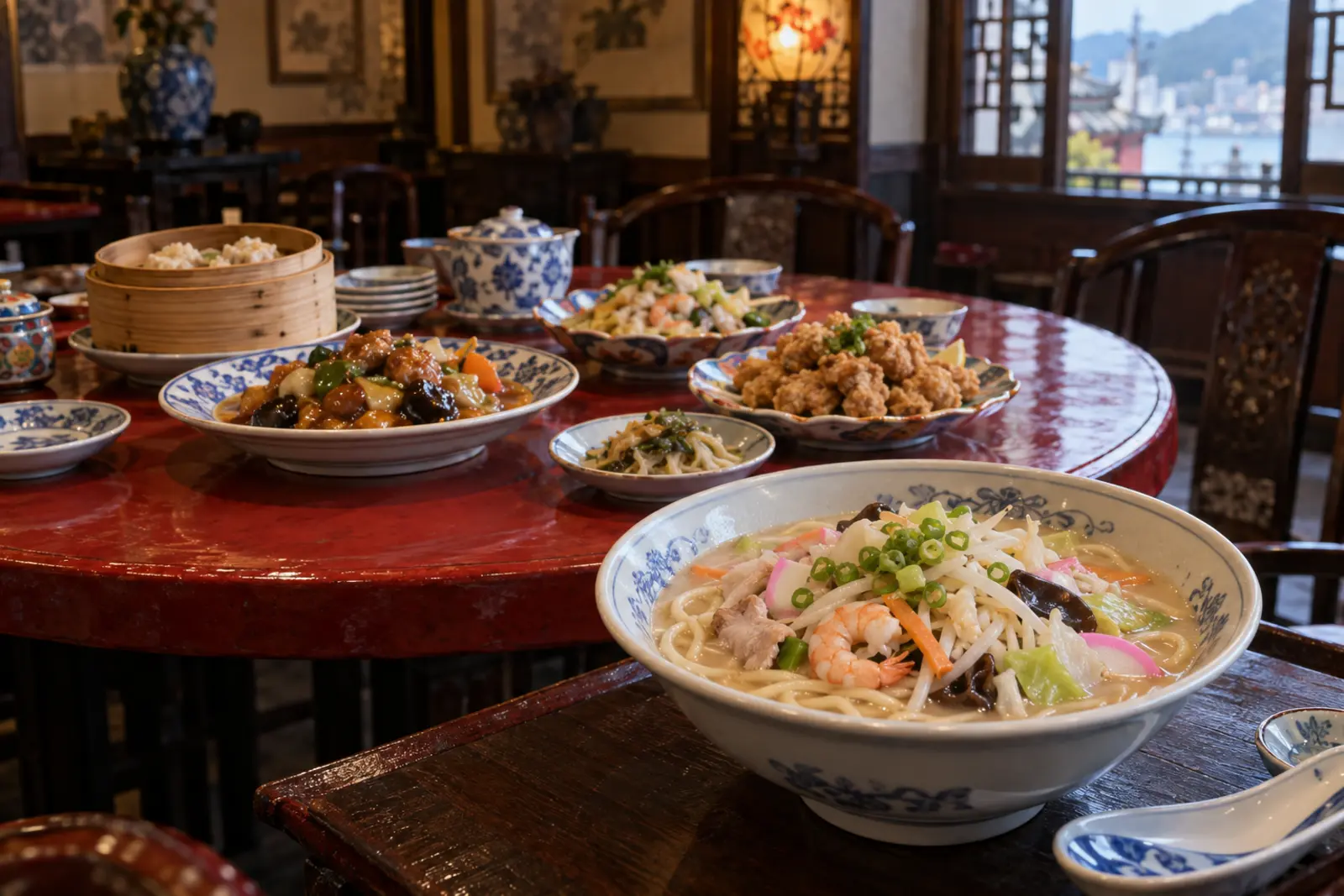
Shippoku (shippoku ryōri) is a shared banquet around a round table. Champon is a meal in a bowl. Their histories meet in Nagasaki, but one is not established as the direct ancestor of the other.
Read story2026.10.22 Thursday|Inside Noodle Making
Keep unused fried fine noodles dry, seal the pack and store it where that product's label directs. These are the practical steps that protect their crunch and flavor until the next serving.
Read story2026.10.26 Monday|Start Here
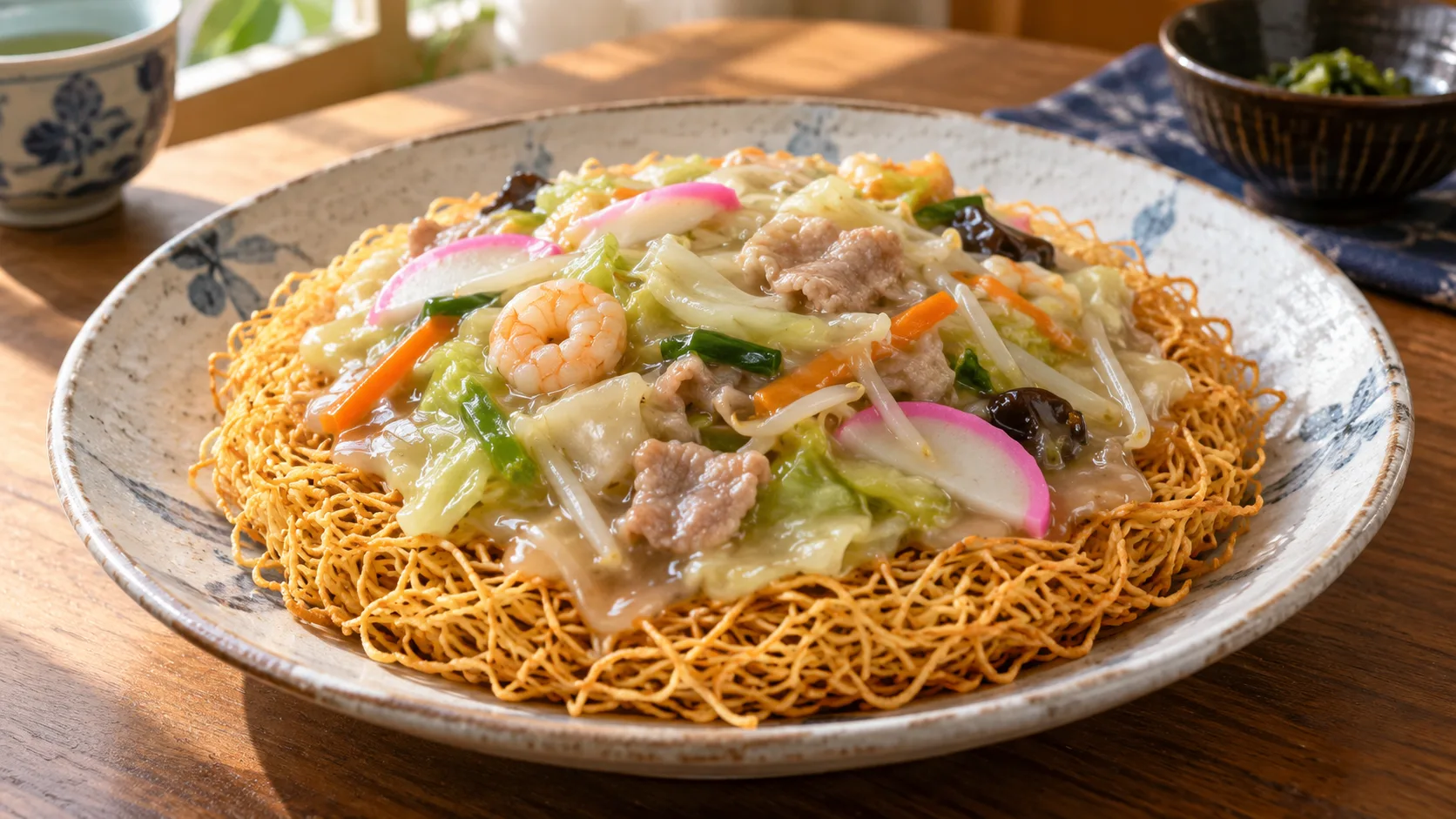
Hot, thickened toppings turn fried thin noodles soft where they meet, while the edges stay crisp. The first bite and the way you pour the sauce can give you both textures.
Read story2026.10.28 Wednesday|Tracing Nagasaki
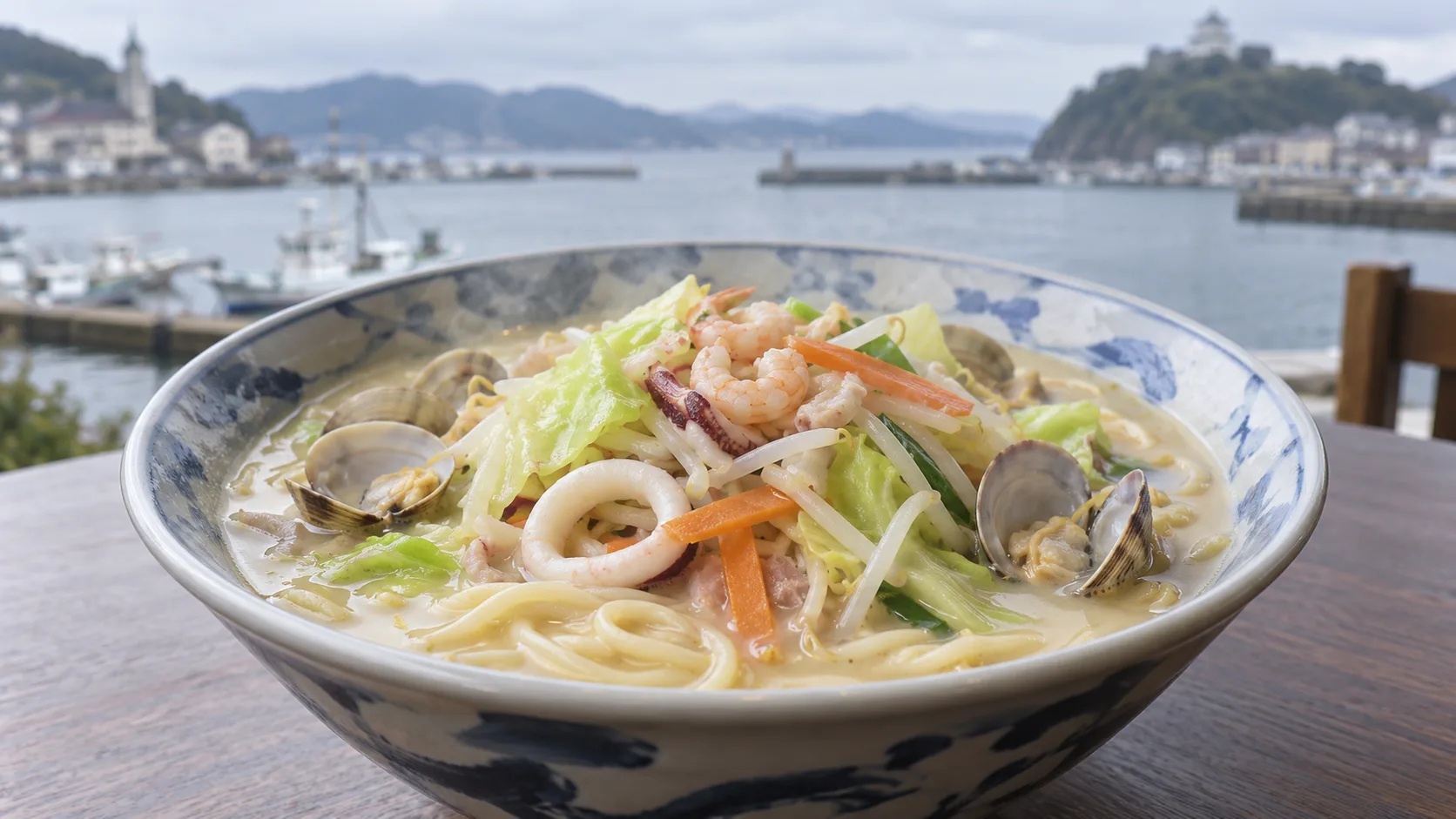
In Hirado, northern Nagasaki, some champon bowls put seafood at the forefront. A tourism association's restaurant profile helps us look at the ingredients and place without treating every shop as one recipe.
Read story2026.10.29 Thursday|Inside Noodle Making
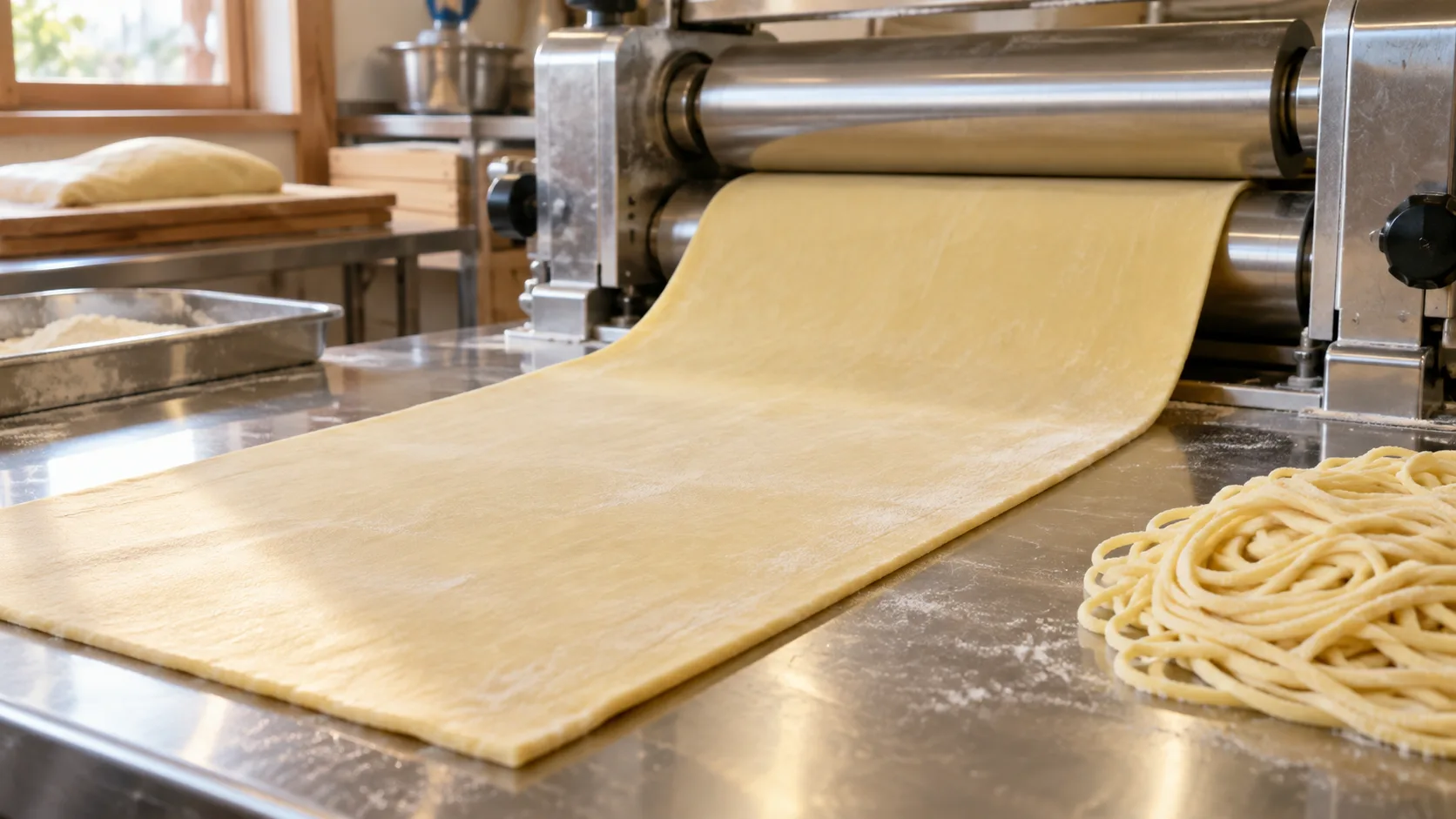
'Aged' or 'matured' noodles are not automatically better because more time has passed. Here is what a dough-resting step may do and why the process differs by product.
Read story2026.11.02 Monday|Start with the basics
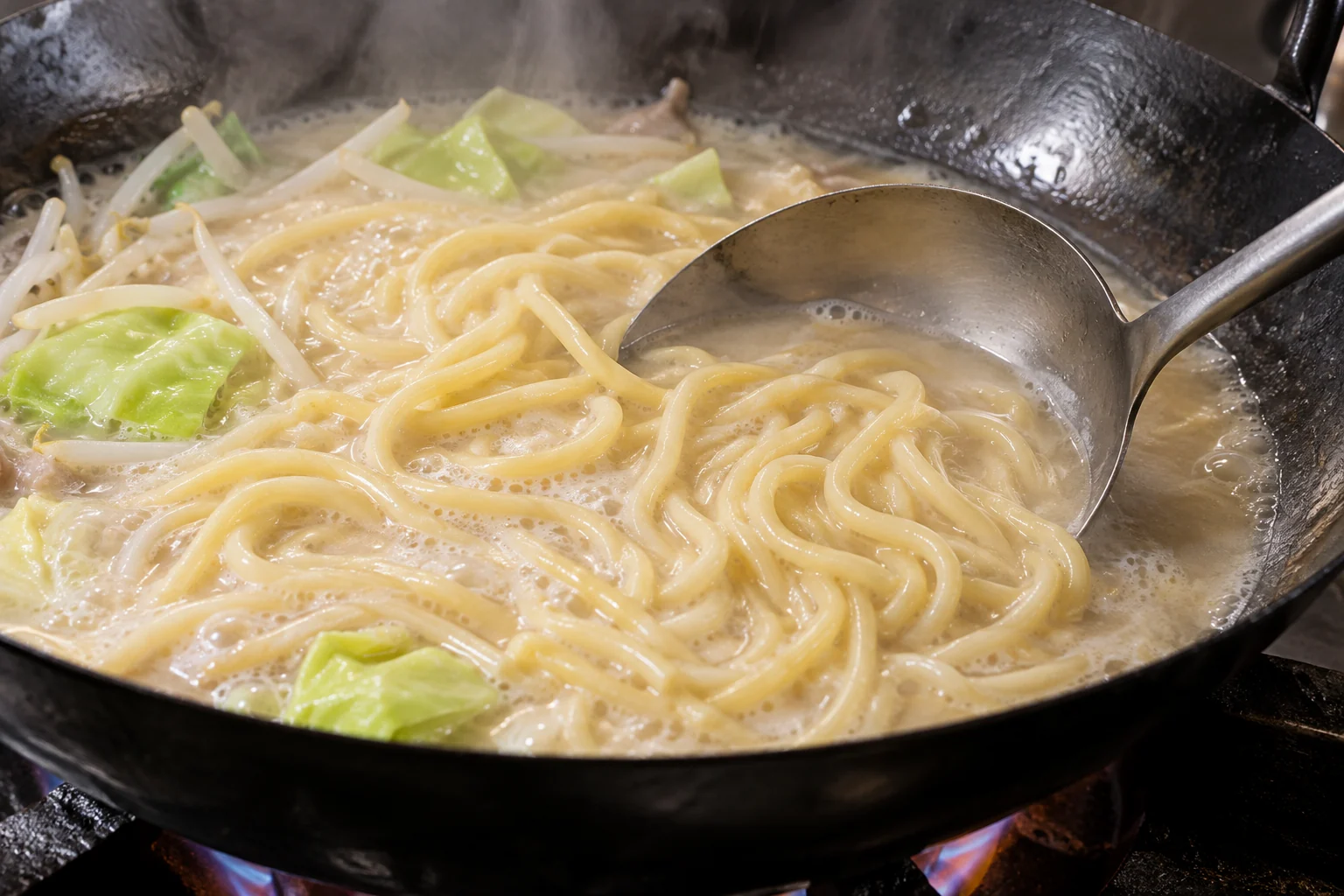
Not every champon noodle goes into the soup uncooked. Manufacturer instructions show why some products need a separate boiling step while others are cooked directly with the soup.
Read story2026.11.04 Wednesday|Exploring Nagasaki
Nagasaki’s Shinchi Chinatown brings together the pleasure of eating champon and the history of a trading port. Its development and Shikairō’s account of champon’s creation are connected stories, but they should not be confused.
Read story2026.11.05 Thursday|Inside noodle making
Pale yellow noodles do not necessarily contain egg. Here is how colour develops in Chinese-style noodles, and how to check ingredients that appearance alone cannot reveal.
Read story