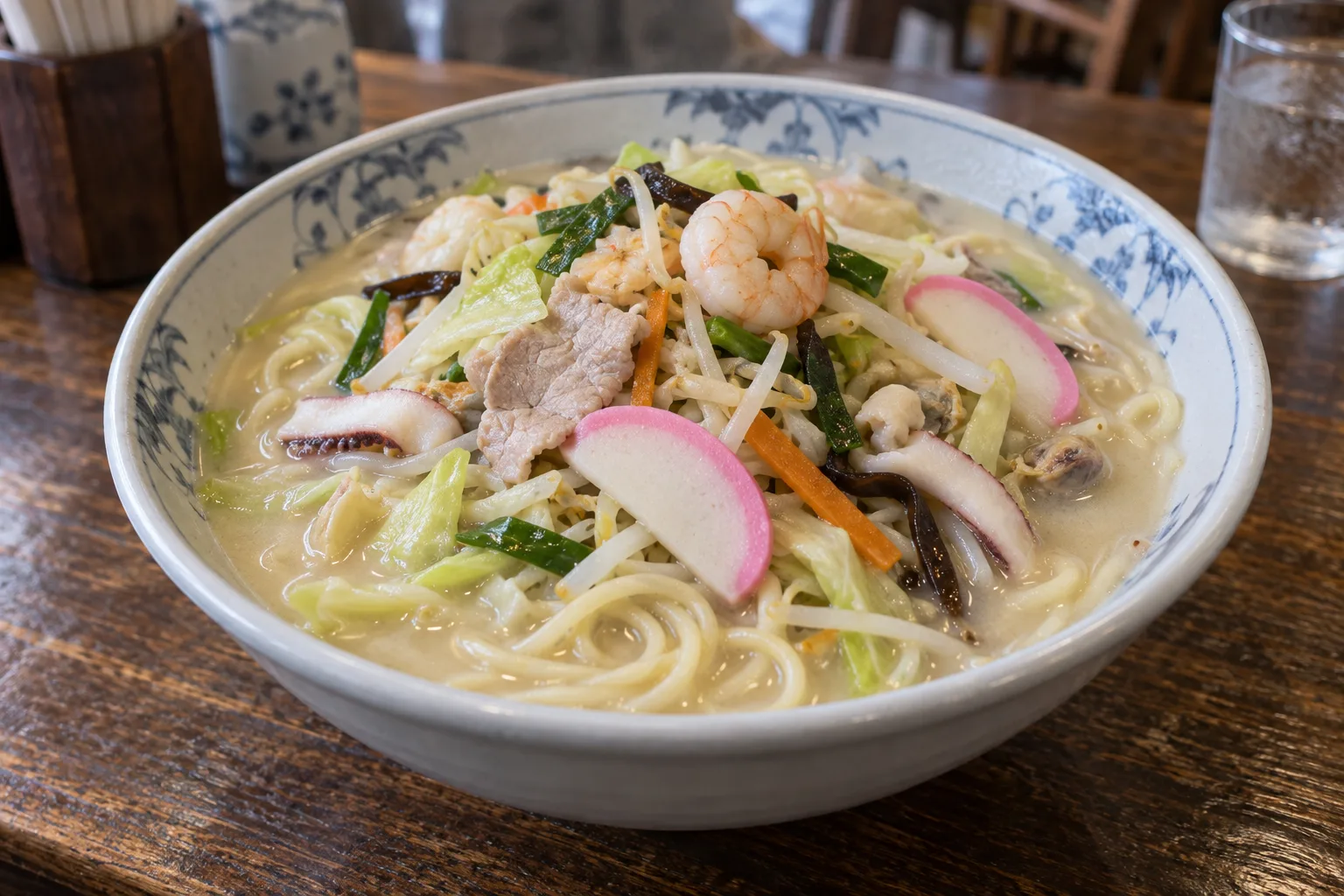
A fish-paste cake—not the fluffy white hanpen you may know
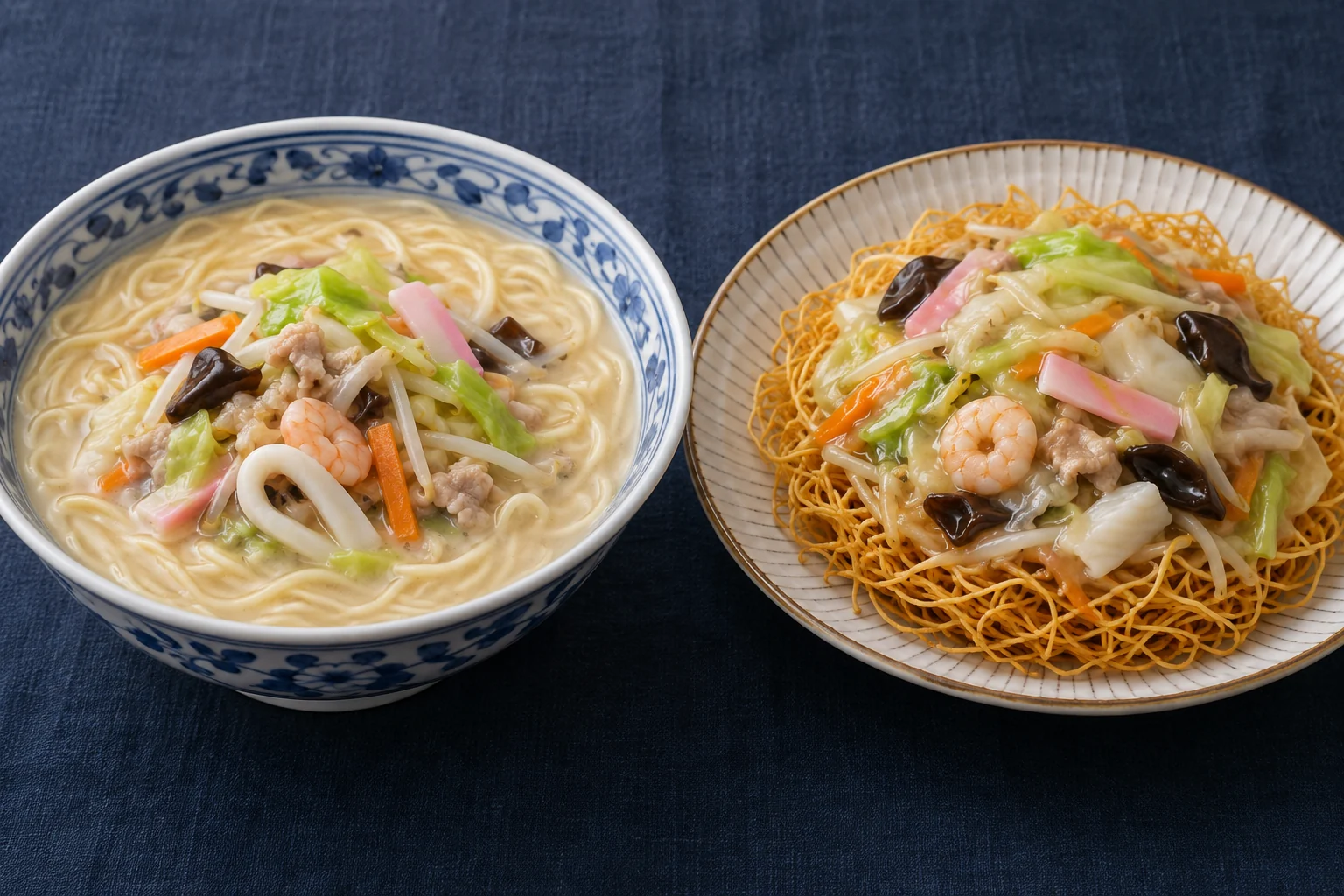
Look closely at a bowl of champon and you may find a thin, pink-edged half-moon among the meat and vegetables. Japan's Ministry of Agriculture lists Nagasaki-style hanpen, a pink-and-white kamaboko fish cake, among common toppings. Names differ by shop and region; here they refer to a processed fish-paste cake.
Elsewhere in Japan, hanpen often means a fluffy, square, all-white cake. This Nagasaki topping has a different shape and bite. Looking at the actual slice tells you more than relying on the name alone.
From local fish to an everyday ingredient
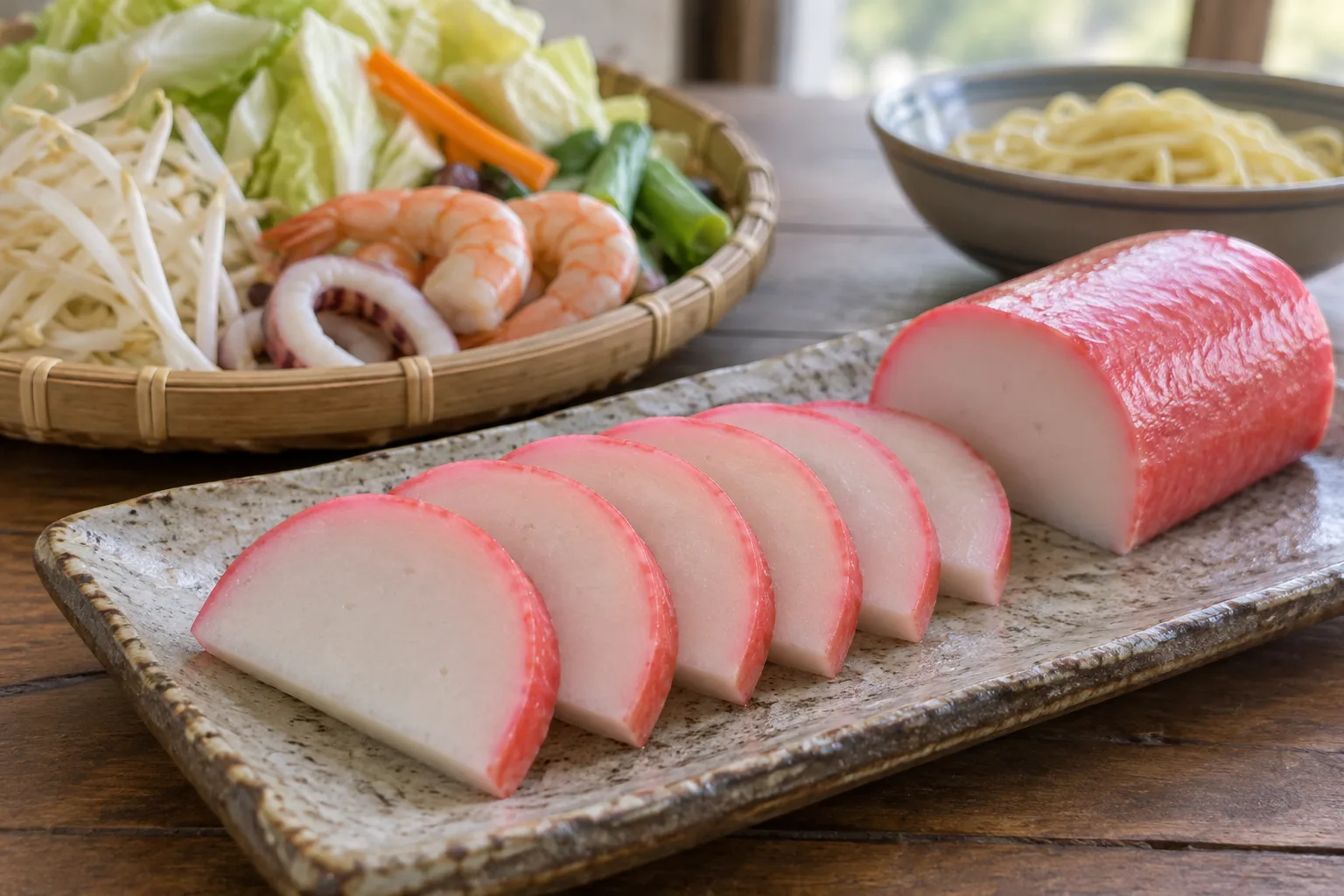
Japan's Ministry of Agriculture describes kamaboko as a food made by mincing fish, kneading it with salt and heating it. Fish species, shaping and cooking methods differ among products. A single slice in a bowl does not reveal the exact fish or recipe used.
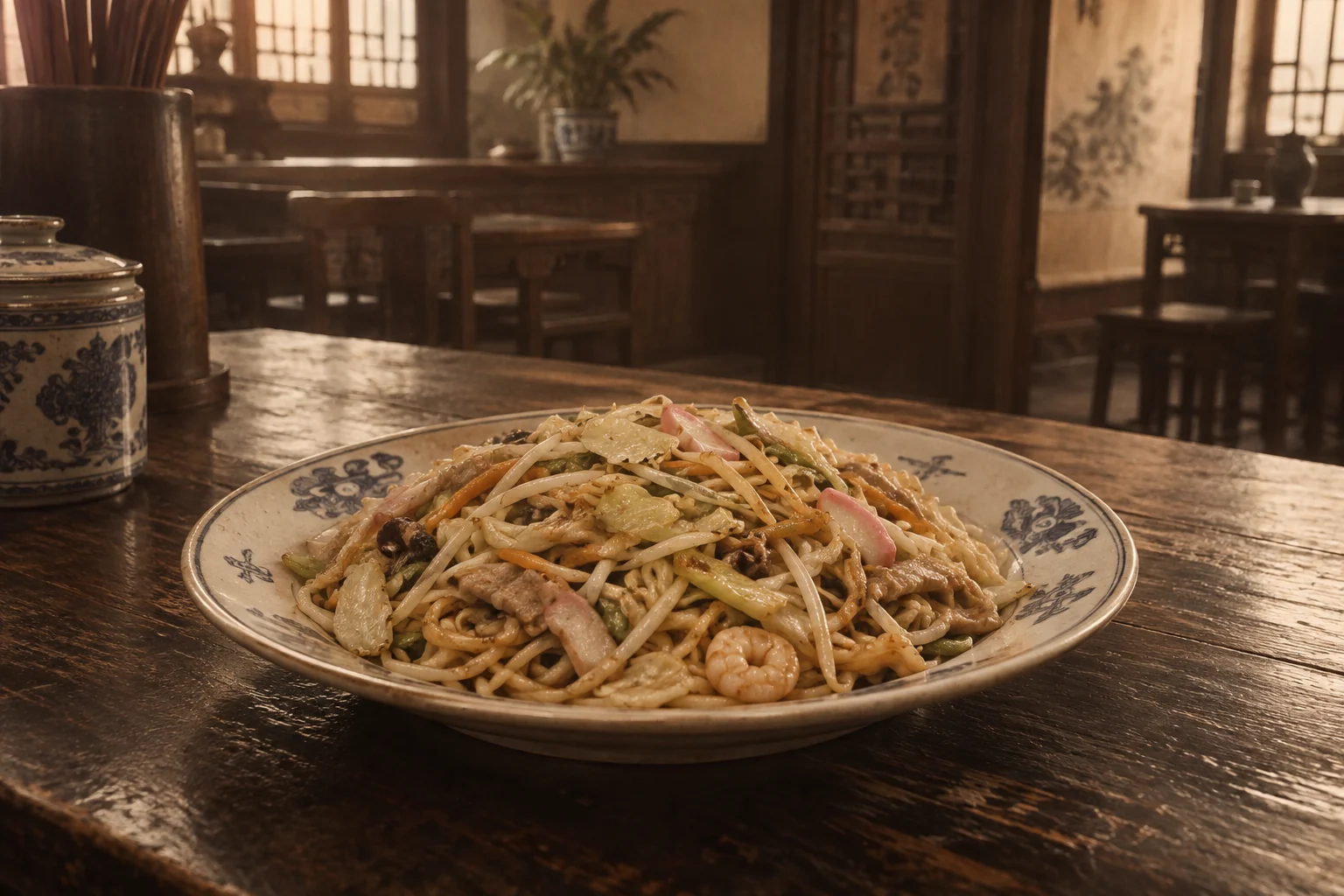
The Nagasaki Prefecture Tourism Association notes that locally sourced fish are commonly used in the prefecture's kamaboko, which has long been familiar in champon and sara udon. Pork, vegetables, seafood and a fish cake can meet in the same pan—a combination that evokes a port city's foodways. Each restaurant still chooses its own toppings, colors and cuts.
More than a splash of color
Pink and white stand out against pale broth and green cabbage, but the slice is more than decoration. Its springy texture differs from tender vegetables and chewy noodles, changing the bite as you eat.
Our home champon recipe includes fish cake too. At home, try a few thin slices warmed in the broth, then taste before adding more salt: packaged fish cakes vary in saltiness.
Notice the slice in your next bowl
Noodles and soup usually get the attention, yet a small topping can speak to a place's habits. Next time you eat champon in Nagasaki, look for that pink-and-white slice and notice its thickness and spring. You may find it in sara udon too.
A slice cannot disclose a restaurant's secret formula. It can, however, remind us of the regional habit of bringing fish to the table in a convenient, savory form.