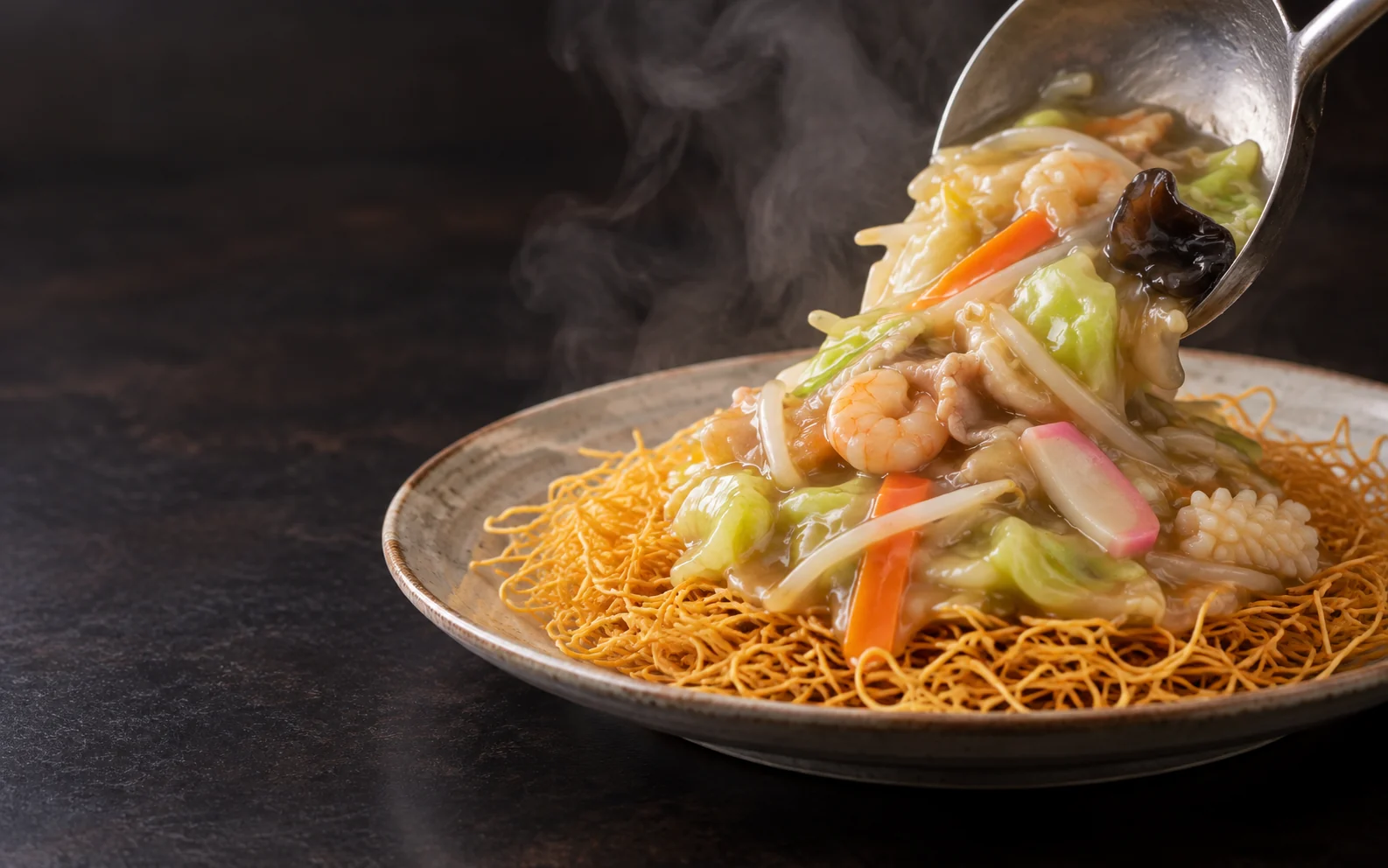
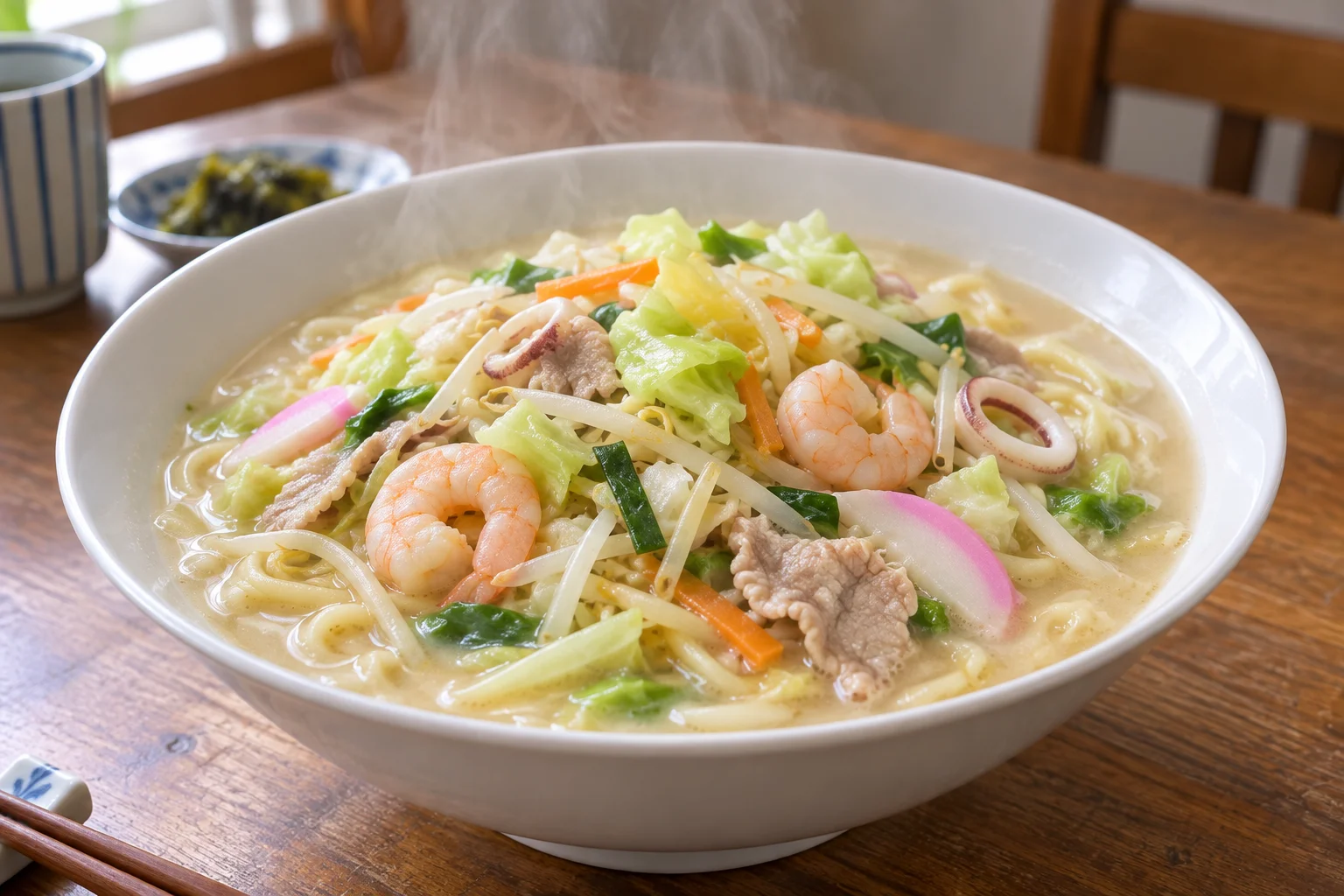
Ingredients for two—and a look at the noodle packet
The quantities follow the two-serving recipe published by Japan's Ministry of Agriculture. With several toppings to prepare, cut everything first and mix the broth seasonings before heating the pan. Champon noodles can be sold fresh, pre-boiled or in another state. Always follow the cooking time and preparation instructions on the product you bought.
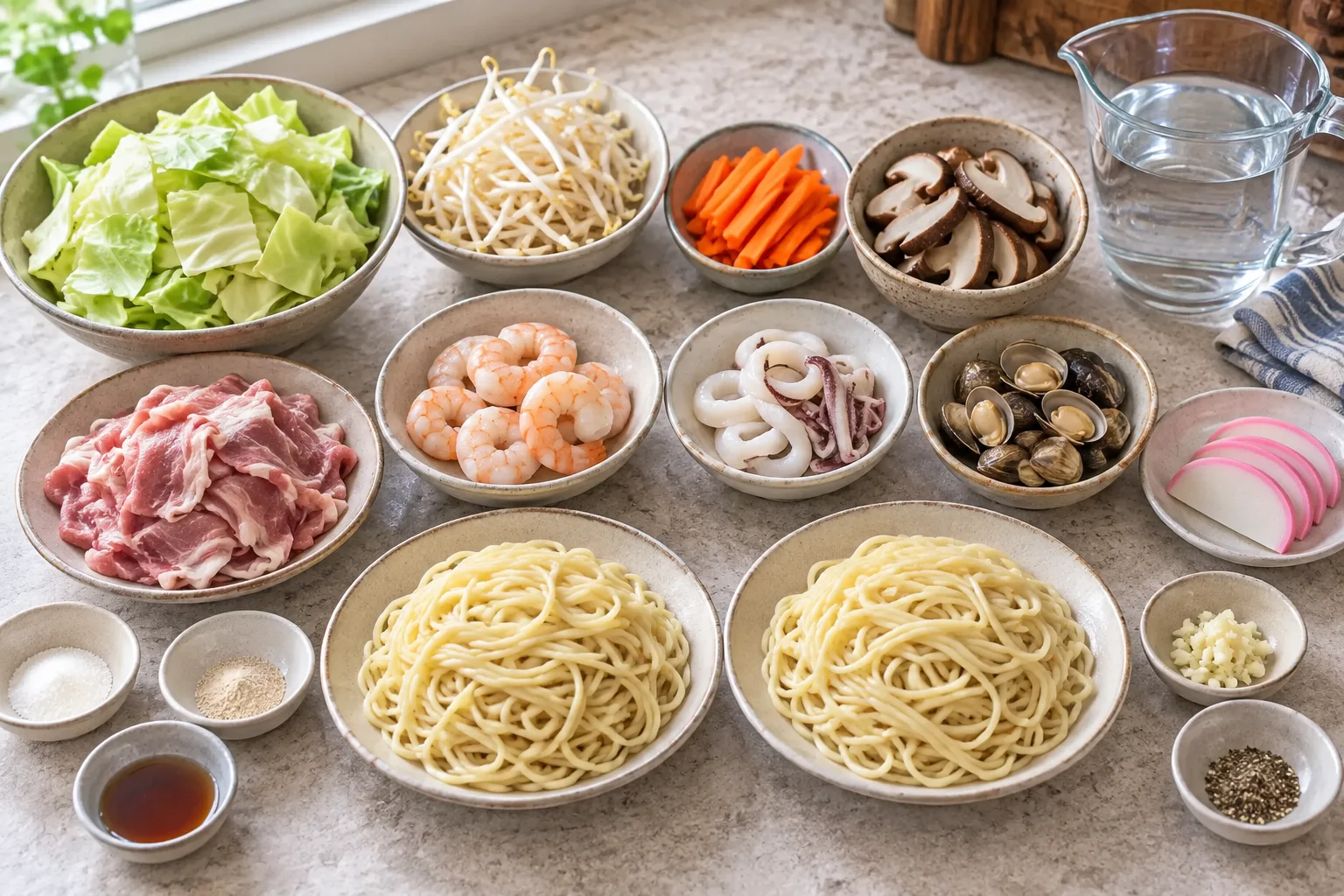
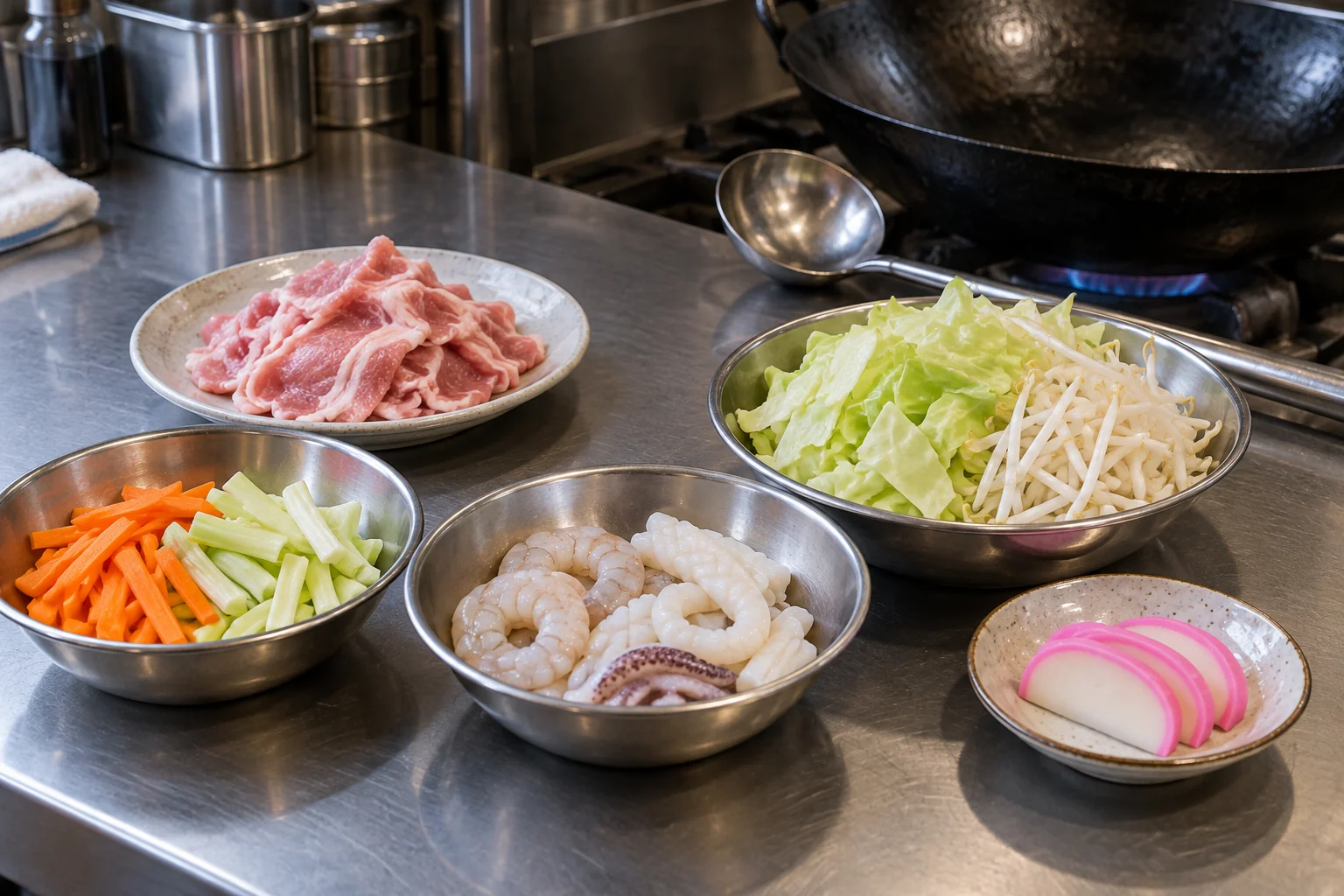
- Nagasaki champon noodles: 2 servings.
- Pork: 80 g; peeled shrimp: 80 g; squid: 80 g; clams: 80 g.
- Carrot: 30 g; cabbage: 100 g; bean sprouts: 100 g; shiitake: 2–3; kamaboko fish cake: 30 g.
- Broth: 400 ml water, 1 tbsp chicken-stock powder, 2 tsp oyster sauce, 1 tbsp sake, ½ tbsp sugar and ½ tsp salt.
- Oil for stir-frying; taste before adding any extra salt.
1. Cut, mix and parboil
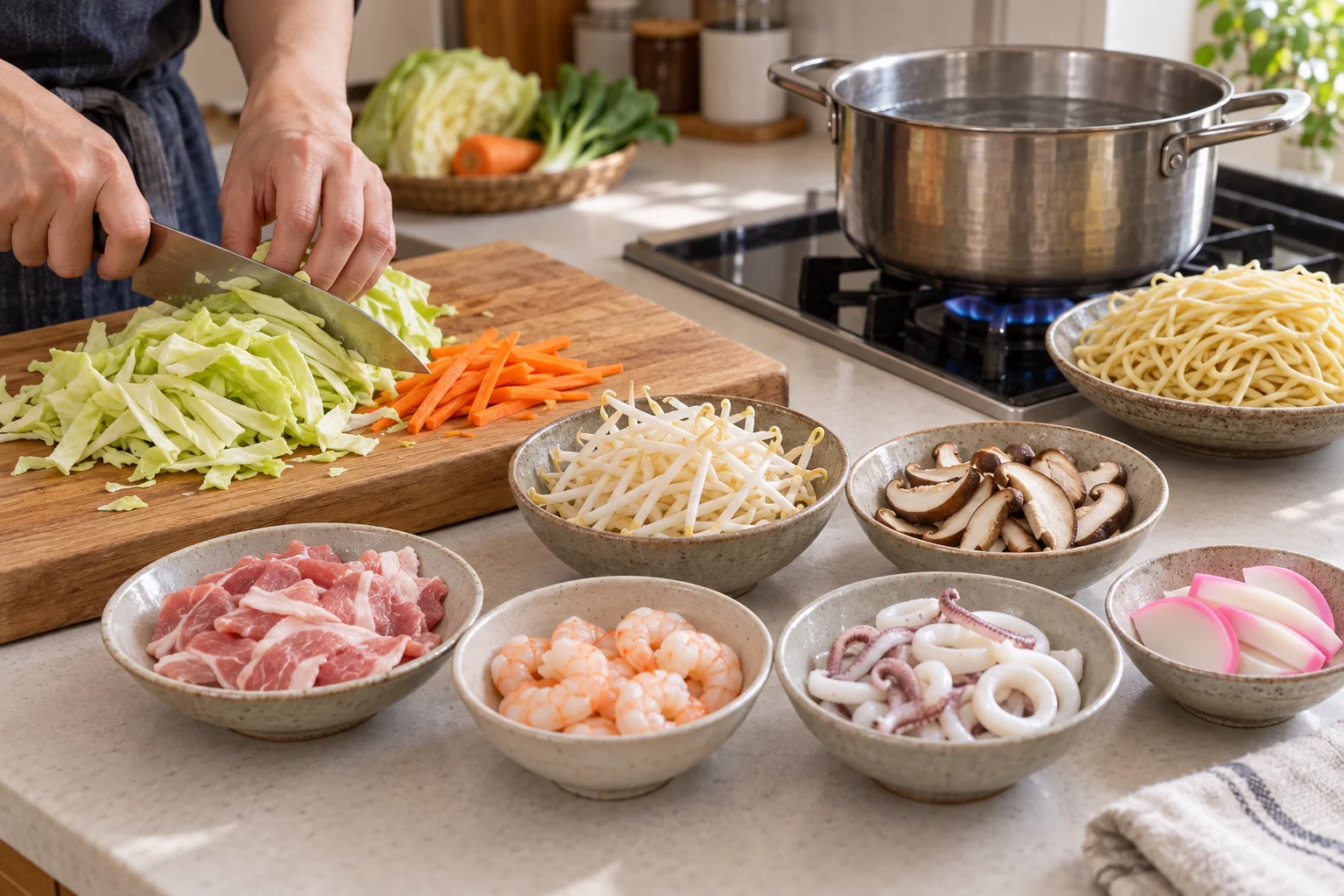
Cut the pork, squid and cabbage into bite-size pieces. Slice the carrot thinly so it cooks readily, and cut the shiitake and kamaboko. Rinse and drain the bean sprouts. Mix the water and broth seasonings in a separate vessel.
If using fresh noodles, parboil them in a separate pot according to the packet, then drain. The ministry's recipe likewise parboils the noodles before adding them to the pan of toppings. Pre-boiled or frozen noodles need the preparation specified on their own packs. Time this step so the noodles do not sit for long while the toppings cook.
2. Stir-fry the meat, seafood and vegetables
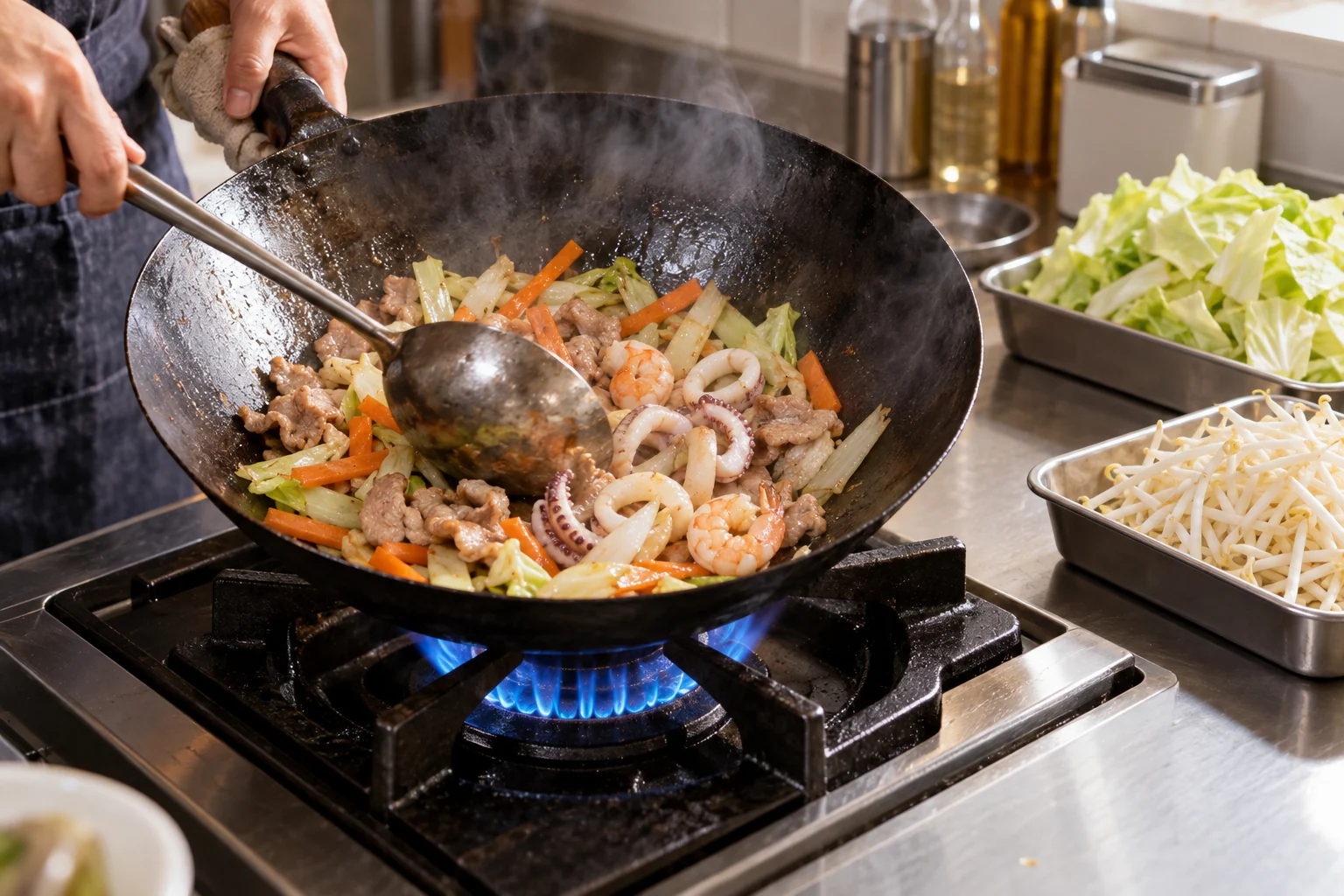
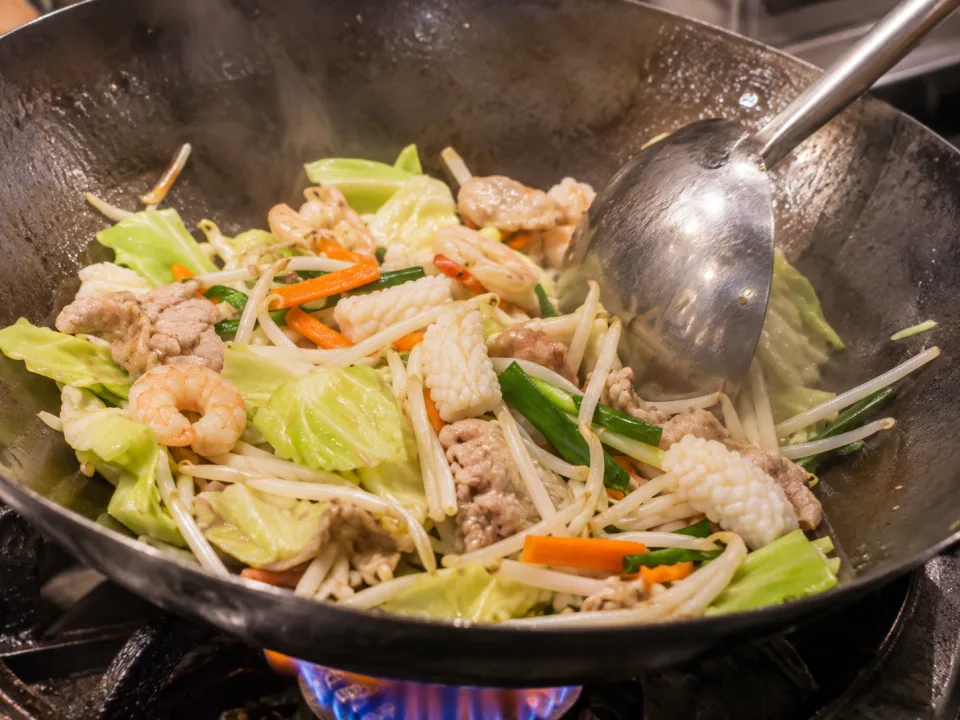
Heat a wok or deep frying pan, add oil, and stir-fry the pork, shrimp, squid and clams. Cook fresh seafood thoroughly. If using shell-on clams, clean them properly and discard any that remain closed after cooking. Ready-prepared seafood is also a practical option.
Add the carrot, cabbage and shiitake, then the bean sprouts and kamaboko a little later. A heap of ingredients left undisturbed can cool the pan and turn watery. If your pan is small, cook two batches and combine them. Our guide to the order of champon ingredients looks more closely at how they cook.
3. Simmer the broth, then finish the noodles
Pour in the prepared broth and bring it to a simmer with the toppings. Let the liquid heat properly, then taste before adjusting the salt. If your noodle kit includes broth, follow its water quantity and instructions instead of adding this article's full list of seasonings on top.
Add the prepared noodles and loosen them in the broth until heated through. Prolonged simmering changes both the noodle bite and the vegetables. Once the ingredients are cooked and the noodles are hot, transfer to two bowls. Dividing the noodles first, then the toppings and broth, helps make two balanced servings.
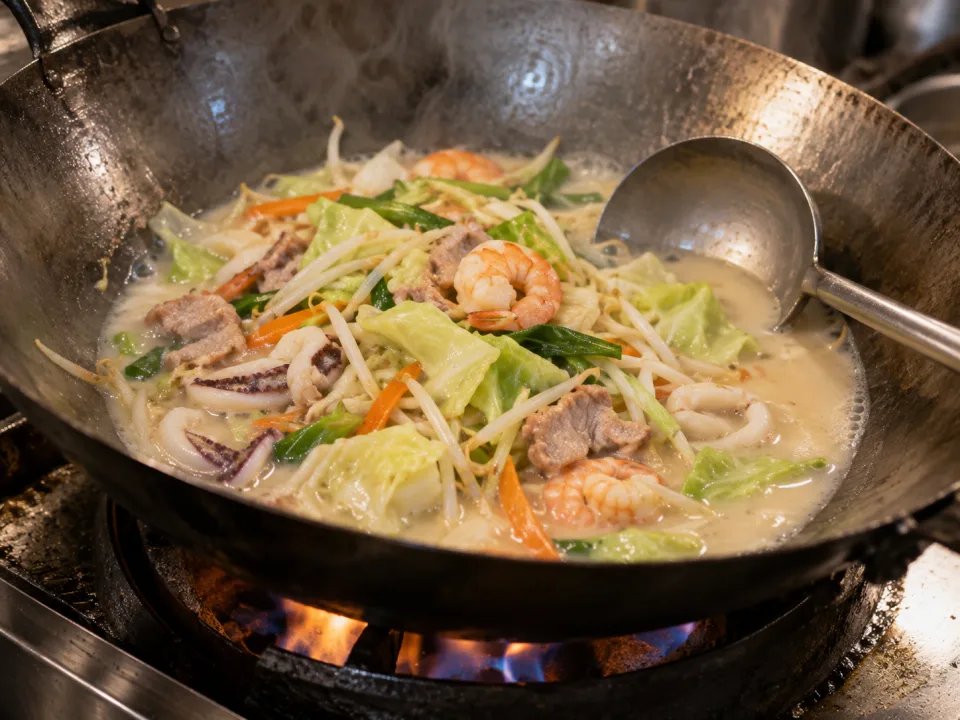
Bring the toppings and broth to a simmer
Heat the ingredient-rich liquid before adding noodles.
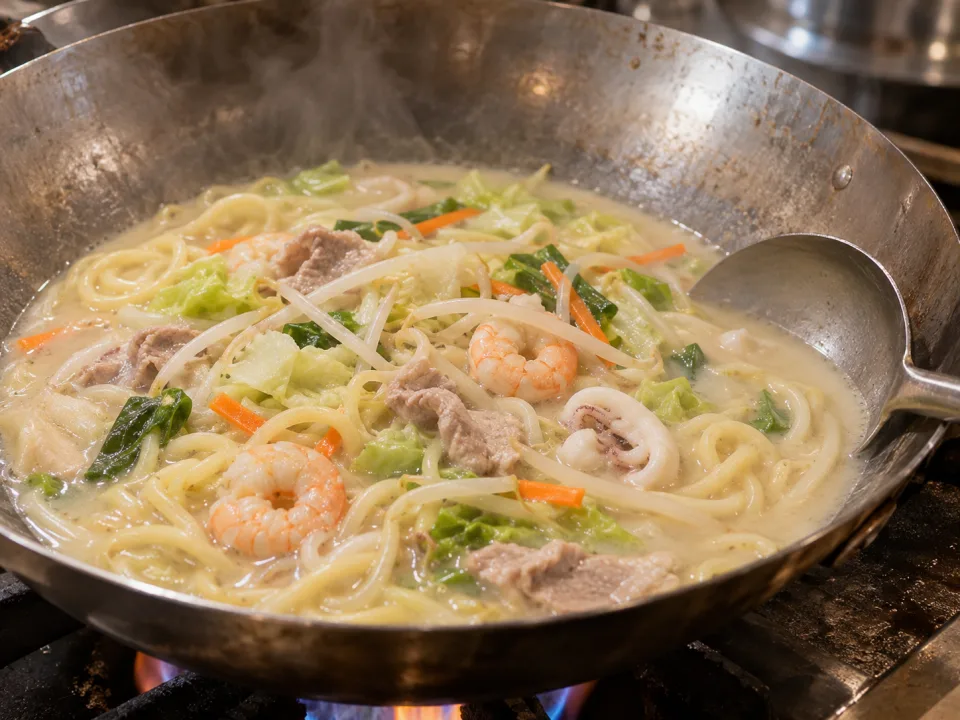
Add the parboiled noodles
Warm them through and serve in bowls.
If it is watery, too salty or soft
If the broth seems watery, look first at how much vegetable went into the pan and whether the pan cooled during stir-frying. Two servings in a small pan may cook more evenly in batches. How to keep home champon from turning watery explains this in detail.
If it tastes too salty, check whether you added both a packaged broth and the seasonings listed here. If the noodles turn too soft, finish the toppings and broth before adding them. There is more than one valid champon method, but checking the packet, stir-frying the toppings, heating the broth, and adding noodles last makes a reliable starting sequence.