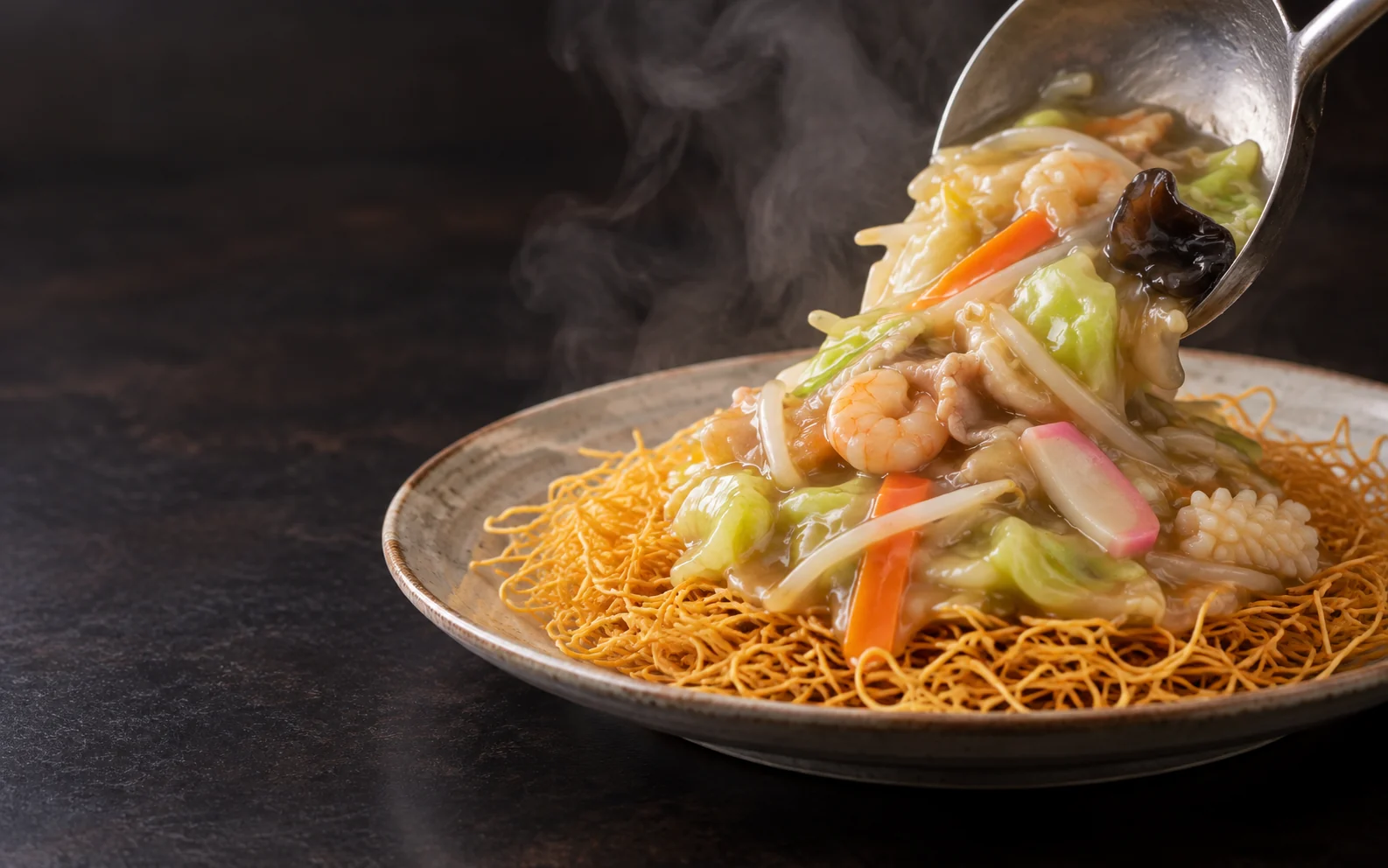
The answer: mix, boil, and cook through
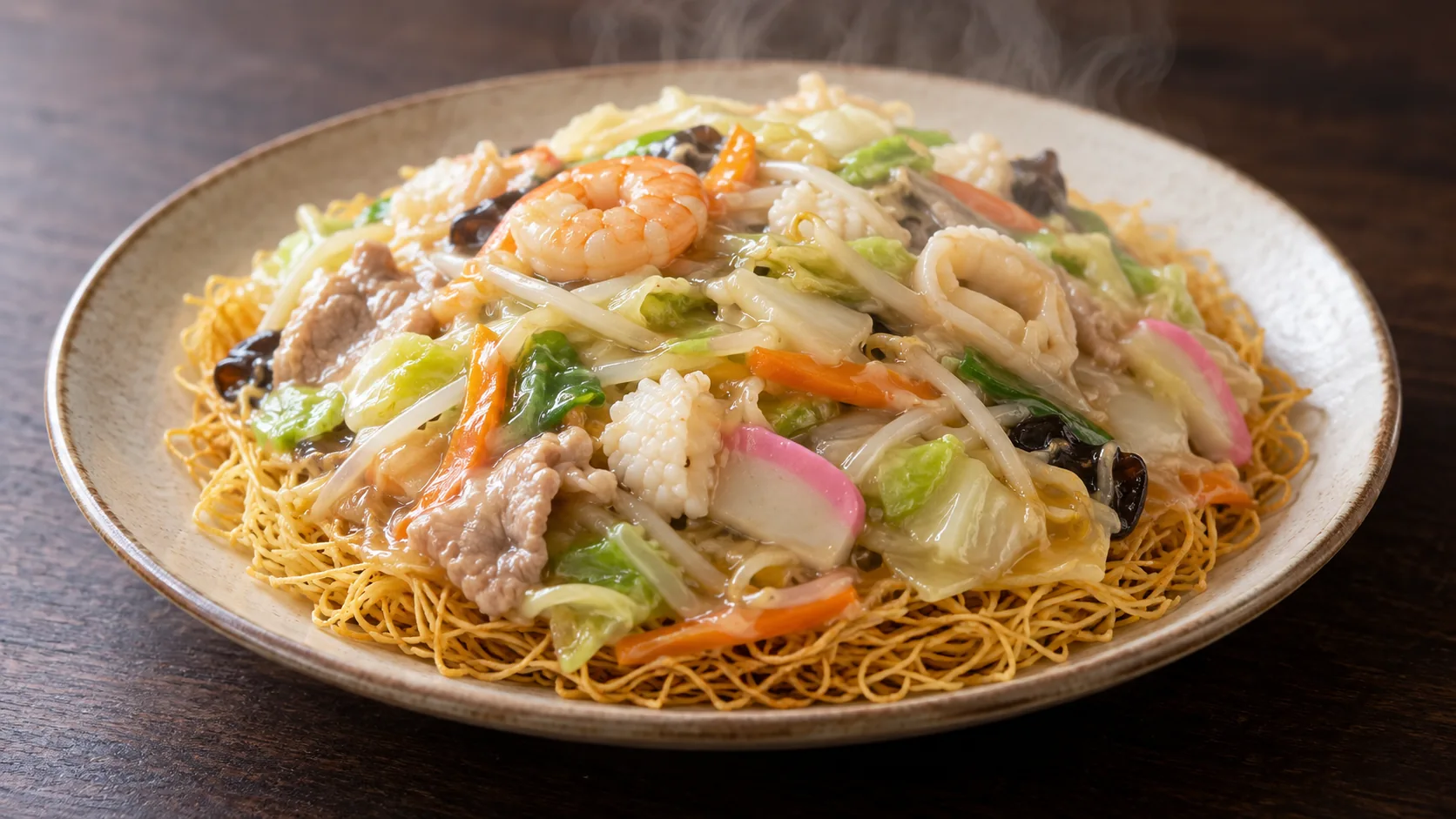
Sara udon sauce carries the flavor of the ingredients to the noodles. With thin noodles it coats them while leaving some crispness; with thick noodles it wraps the fragrant, pan-seared surface. If the sauce is too thick or too thin, that balance is lost.
At home, first mix potato starch thoroughly with roughly one to two times its volume of water. Heat the liquid well, add the slurry gradually, and cook until it turns translucent. Japan's Agriculture & Livestock Industries Corporation likewise recommends dissolving starch in twice the amount of water, adding it to simmering liquid while stirring immediately, and heating until clear.
1. Stir the slurry again just before adding it
Potato starch does not truly dissolve in water; fine particles remain suspended. They settle to the bottom over time, so stir from the bottom again immediately before adding the slurry to the pan.
Adding dry clumps directly to hot liquid cooks the outside first and easily creates lumps. Dispersing the starch evenly in cold water is the first step toward a smooth sauce.
2. Control the heat and pour in a thin stream
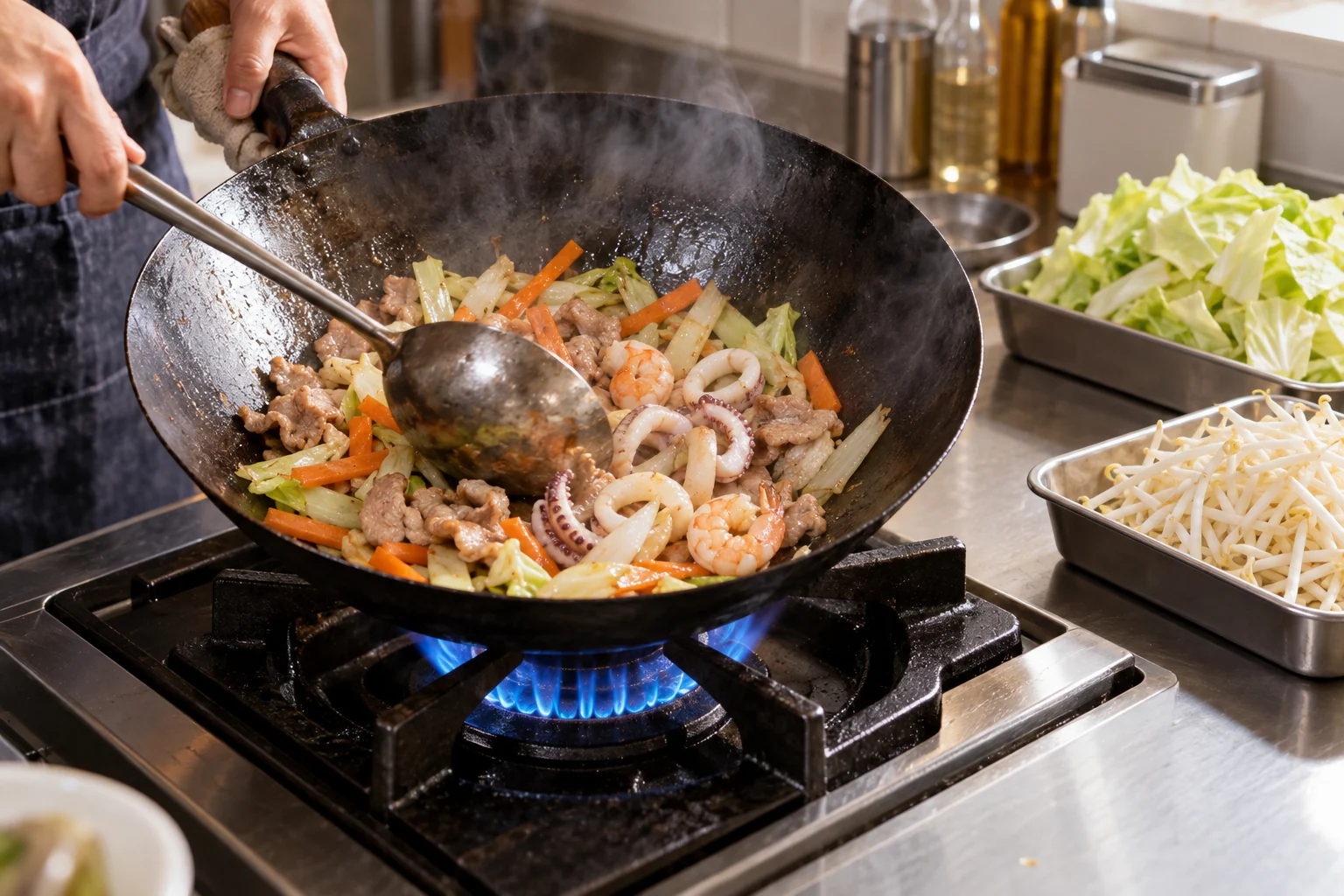
Once the ingredients have been stir-fried and the seasoned stock is thoroughly hot, do not pour the slurry into one spot. Drizzle it around the wok while moving the liquid and toppings with a metal Chinese ladle so one area does not thicken too quickly.
Ingredients may release additional water. Start with about 80 percent of the planned slurry and check the consistency. You can add more, while thinning an over-thickened sauce requires rebalancing the whole dish.
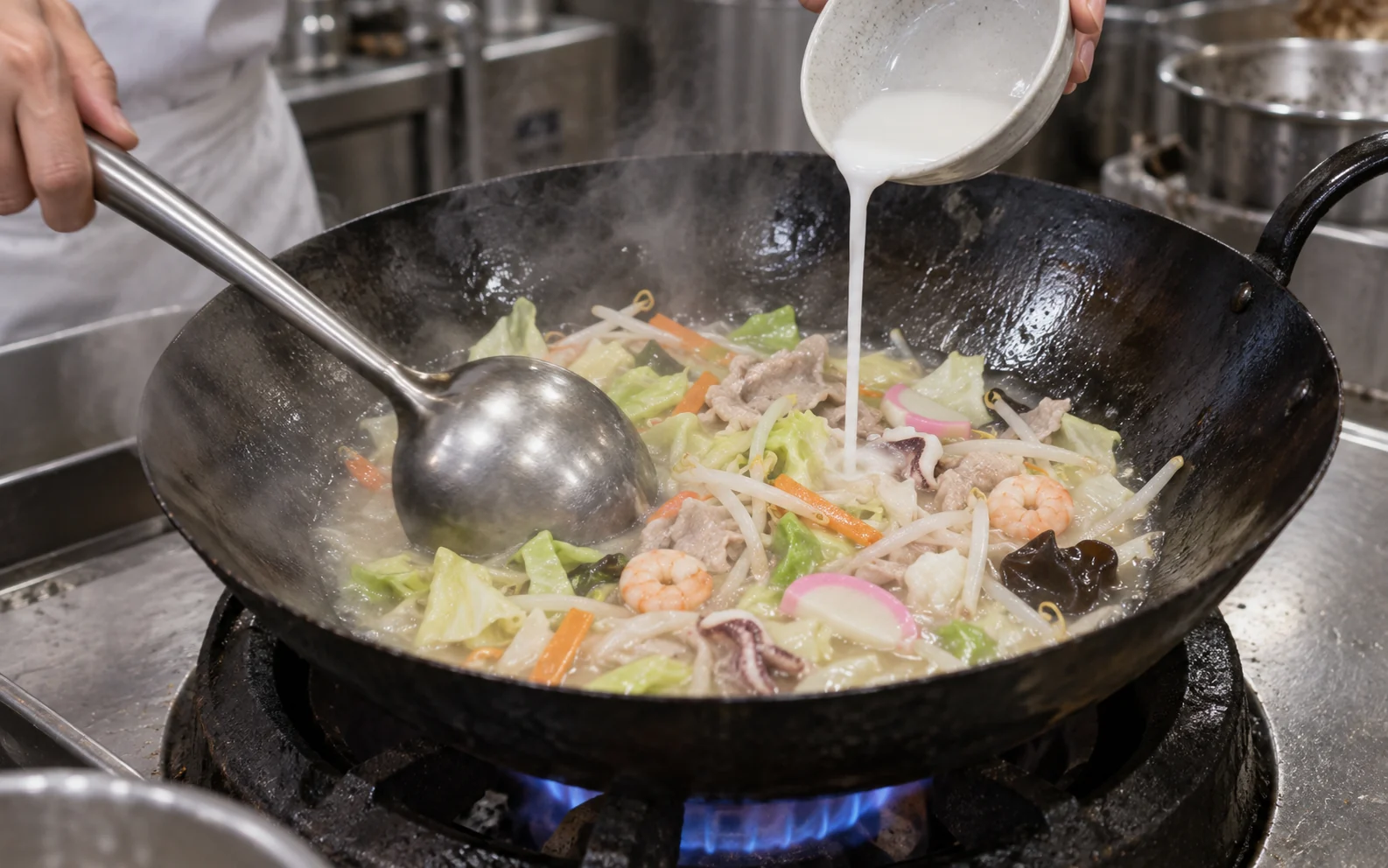
3. Keep heating briefly after it thickens
Potato starch begins to gelatinize at around 60°C, developing translucence and viscosity. Once thickening becomes visible, continue stirring and heat the whole sauce through so it does not remain floury and the texture stabilizes.
Prolonged high heat can eventually rupture starch granules and reduce viscosity. Once ready, promptly ladle the glossy toppings and sauce together onto the noodles; treat this as part of the same cooking sequence.