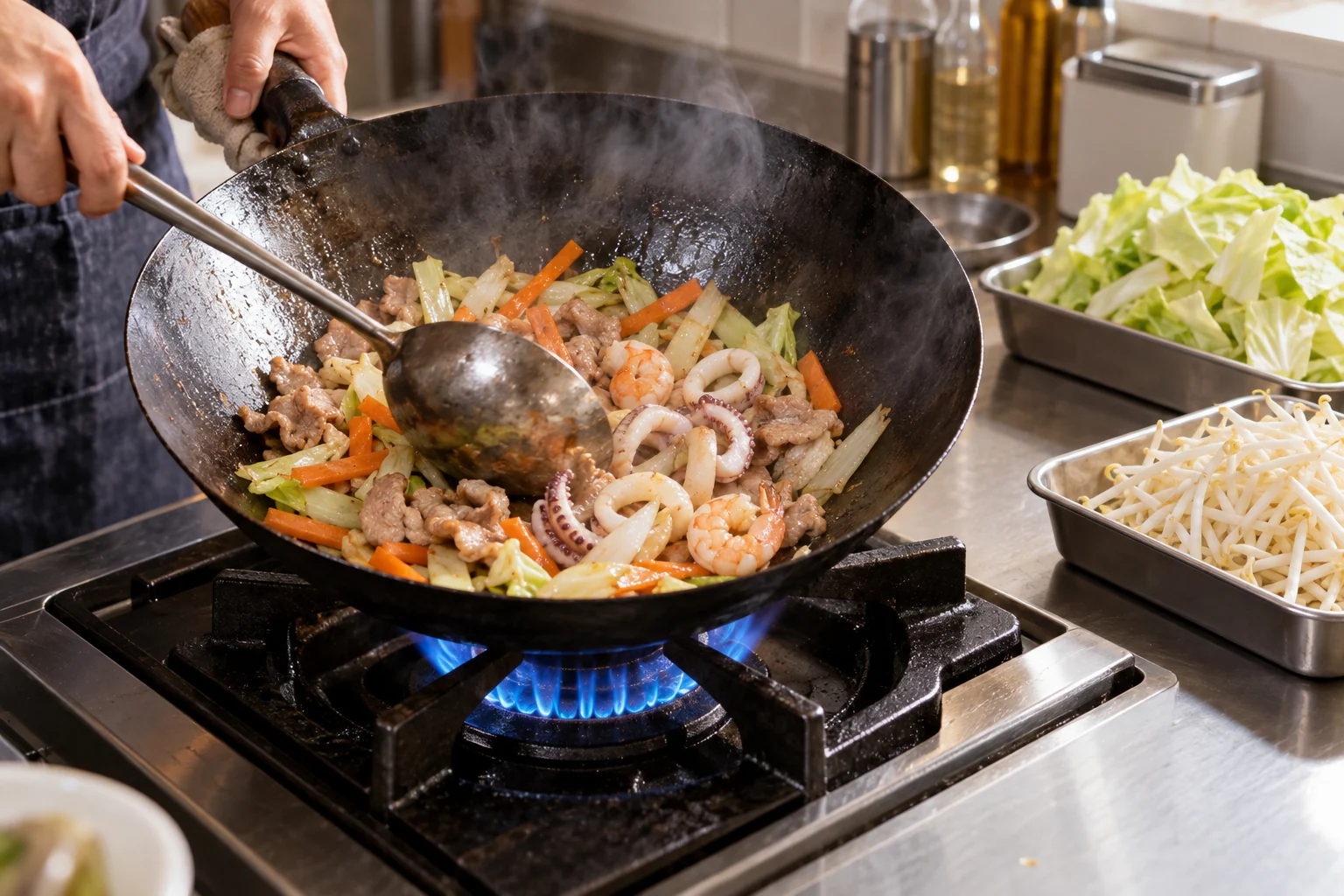
Watery champon is also a temperature problem
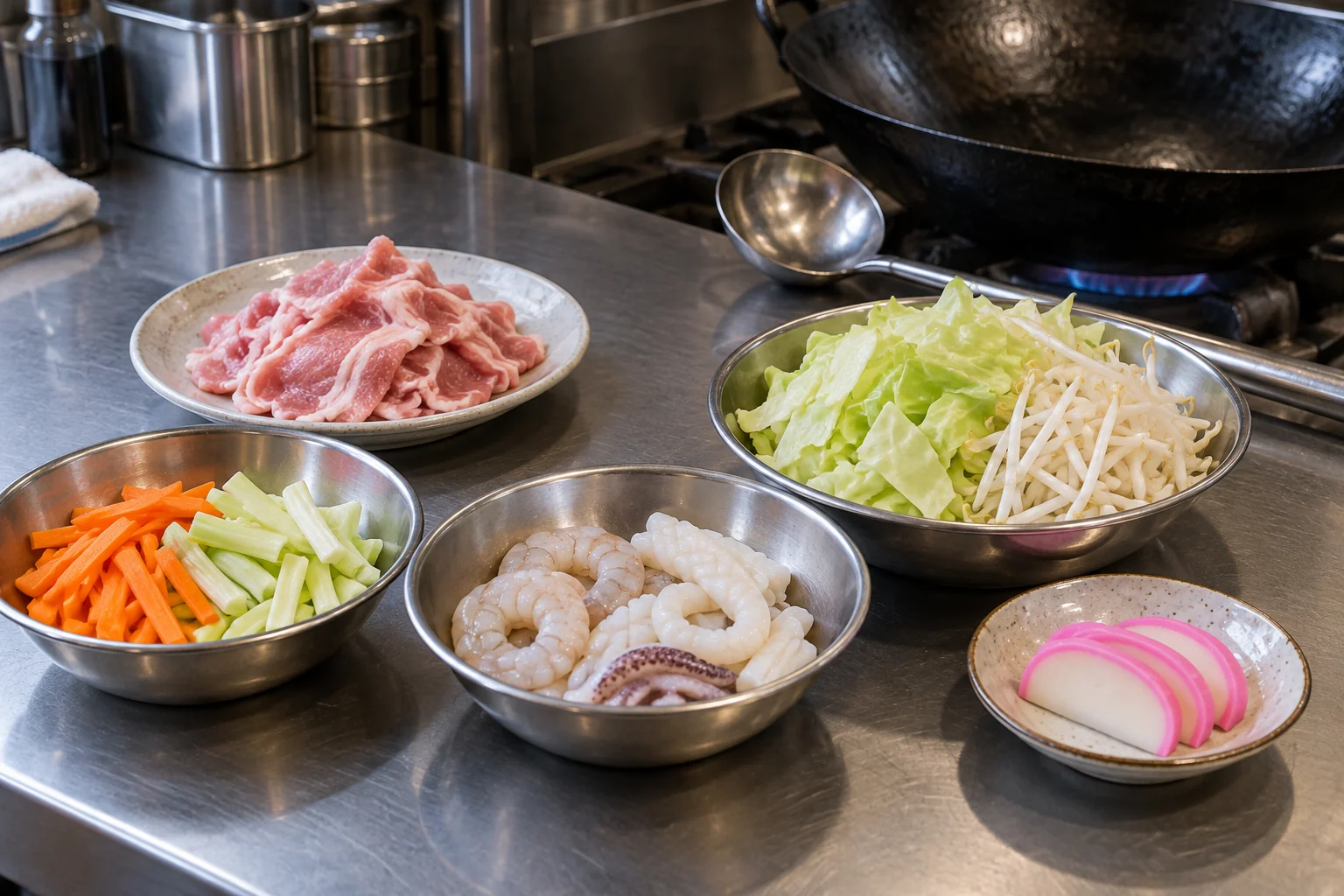
Vegetables naturally release moisture. The bigger problem is adding too many cold ingredients at once, cooling the pan and lengthening the stir-fry. For two servings, drain the cut ingredients well and mix about 400 ml of soup and the seasonings before you start.
Cook in the order that ingredients need heat
Start with pork, then carrot and cabbage stems. Add seafood next, followed by cabbage leaves and fish cake; bean sprouts need only a brief final stir-fry. On a modest home burner, cooking in two batches is often better than crowding the pan.
Once the soup goes in, do not simmer everything endlessly
Bring the prepared soup back to a full boil, then add the noodles according to the package directions. Taste once before the noodles and again at the end. If the soup is weak, adjust with a little salt or soy sauce; if it is too strong, use unseasoned stock or hot water.
A reliable sequence for two servings
- Cut ingredients evenly and dry their surfaces.
- Mix the soup and seasoning in advance.
- Heat the pan well and stir-fry in stages.
- Add noodles only after the soup boils again.
- Make the final seasoning adjustment just before serving.