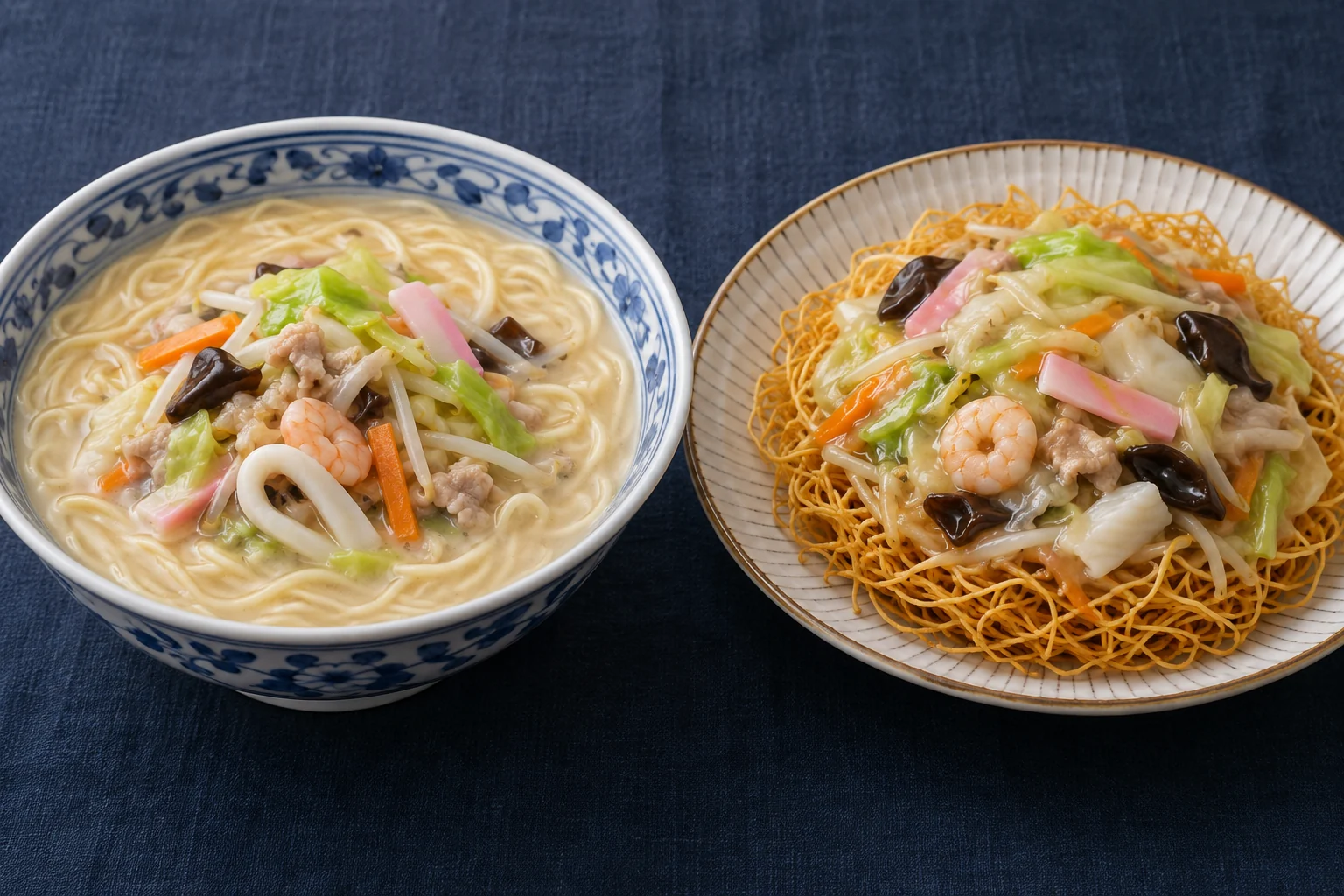
The clearest difference is where the dish comes together
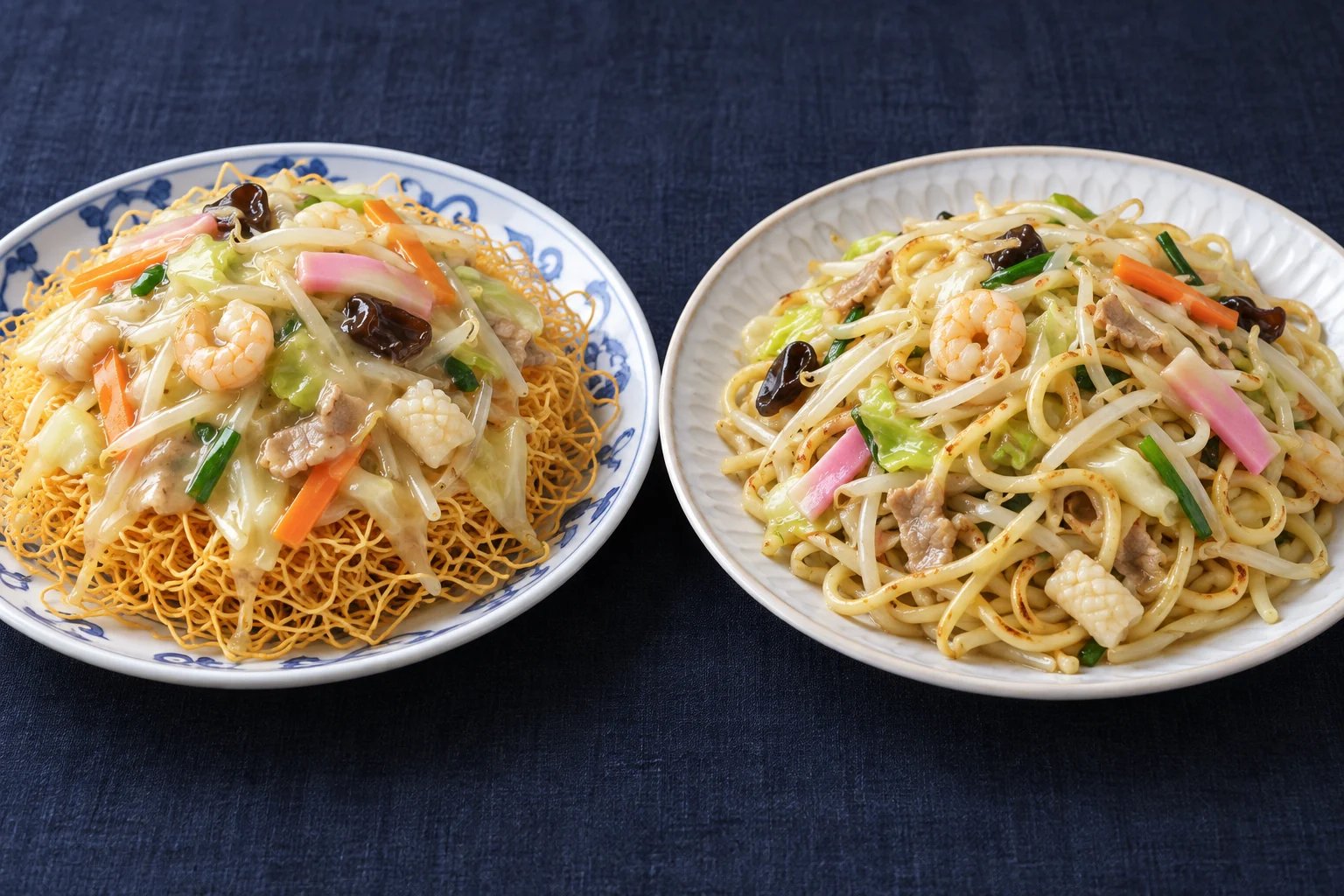
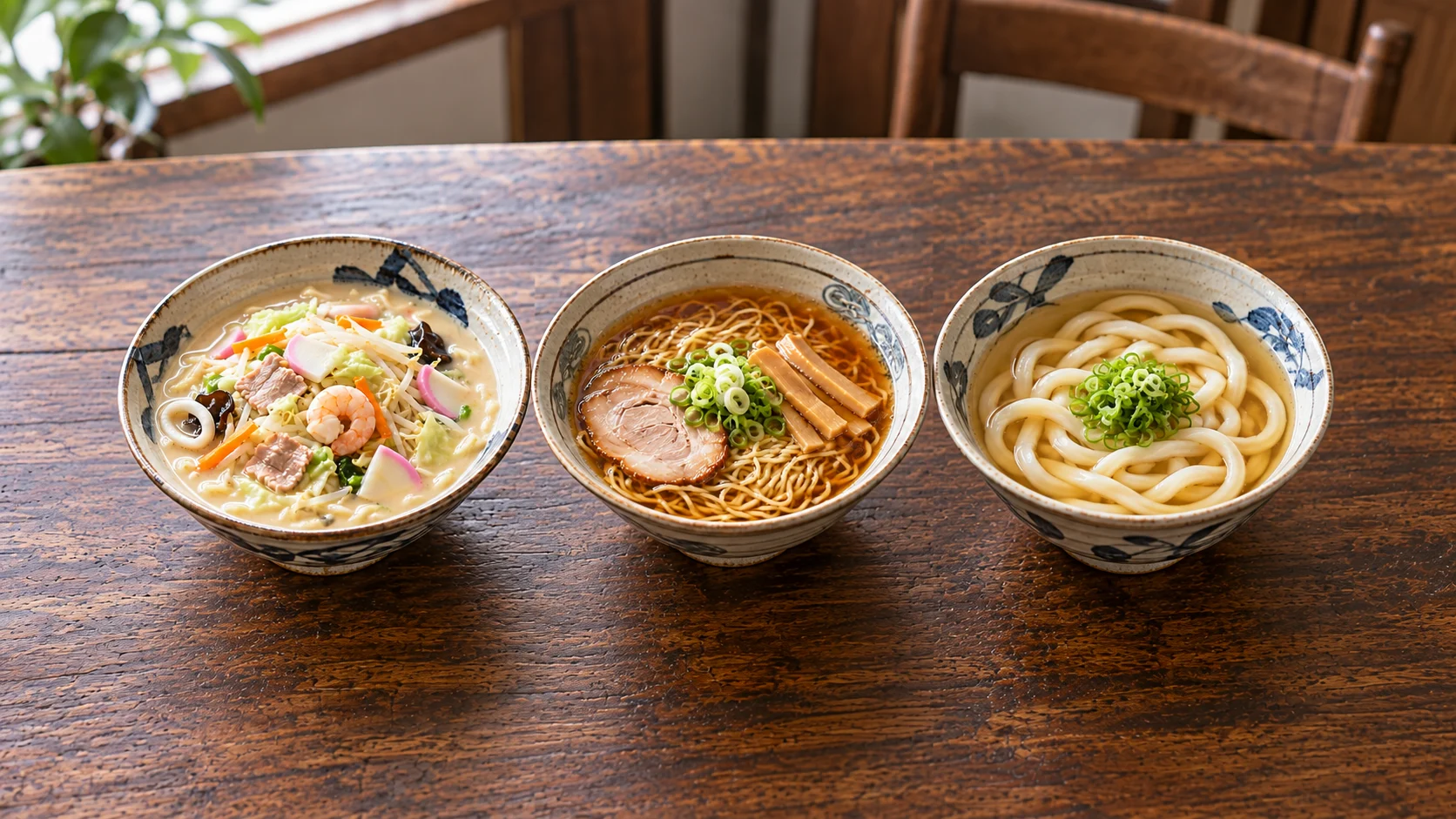
Champon is finished in broth: meat, seafood and vegetables are stir-fried, then soup and noodles join them in the same pan. Sara udon contains much less free liquid. Thick noodles absorb a little stock in the pan, while crisp thin noodles are topped with glossy, thickened ingredients on the plate.
Sara udon does not use just one kind of noodle
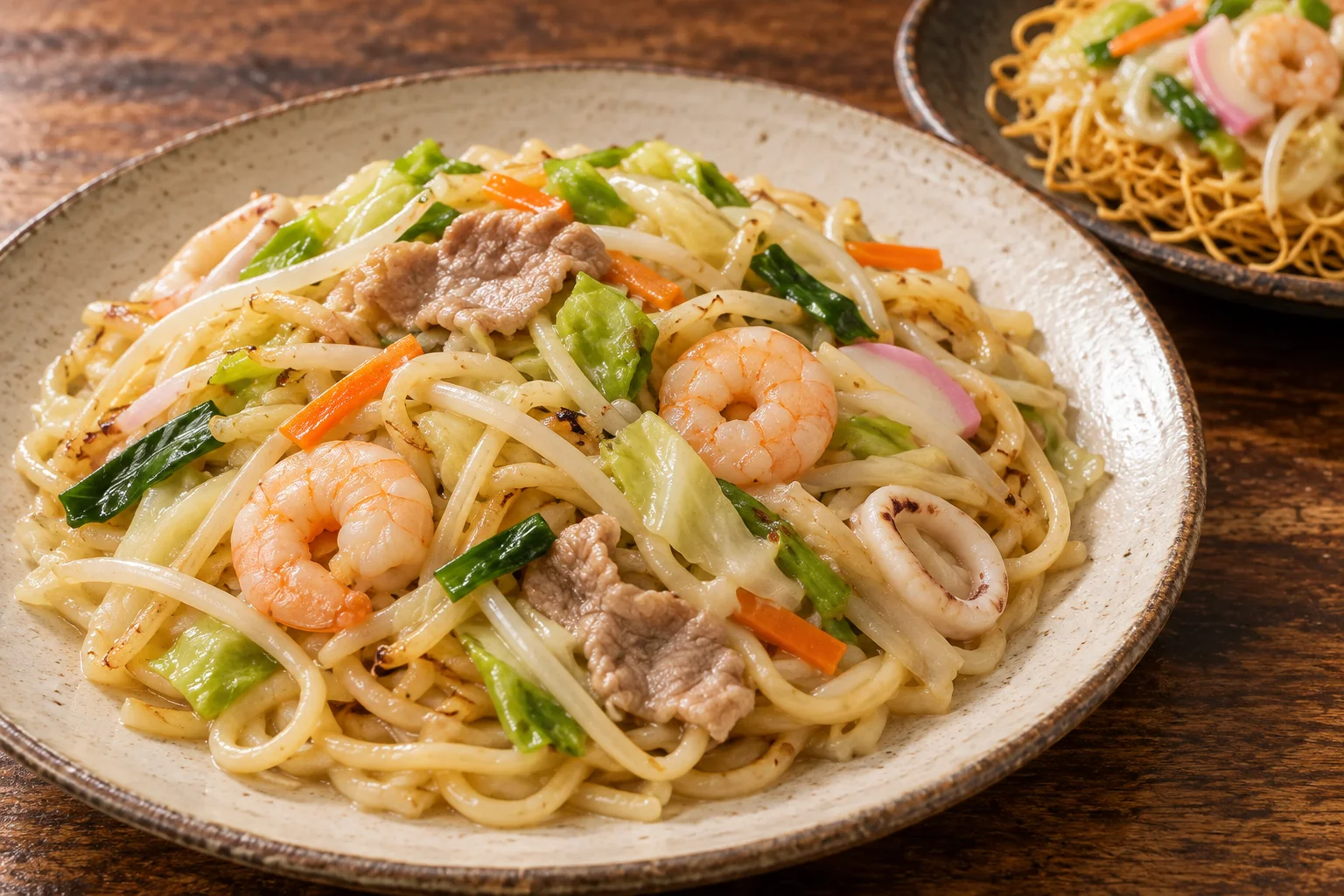
Champon usually uses resilient, round noodles that hold their shape in soup. Sara udon comes in two distinct styles: fried thin noodles that soften wherever the sauce touches, and pan-seared medium round noodles with a toasted aroma and chewy centre. In Nagasaki, asking ‘thin or thick?’ is entirely normal.
Choose by the texture you want
These are related branches of Nagasaki food culture rather than rivals. Knowing how sara udon developed from champon makes all three styles easier to appreciate.
- Hot broth and plenty of toppings: champon.
- A crisp-to-soft contrast under thickened sauce: thin-noodle sara udon.
- Toasted aroma and a chewy bite: thick-noodle sara udon.
Both began as practical, satisfying meals
Pork, seafood, fish cake, cabbage and bean sprouts can all fit into one serving, with room for seasonal and household variation. Check for broth, noodle style and the texture you want, and ordering becomes much easier.