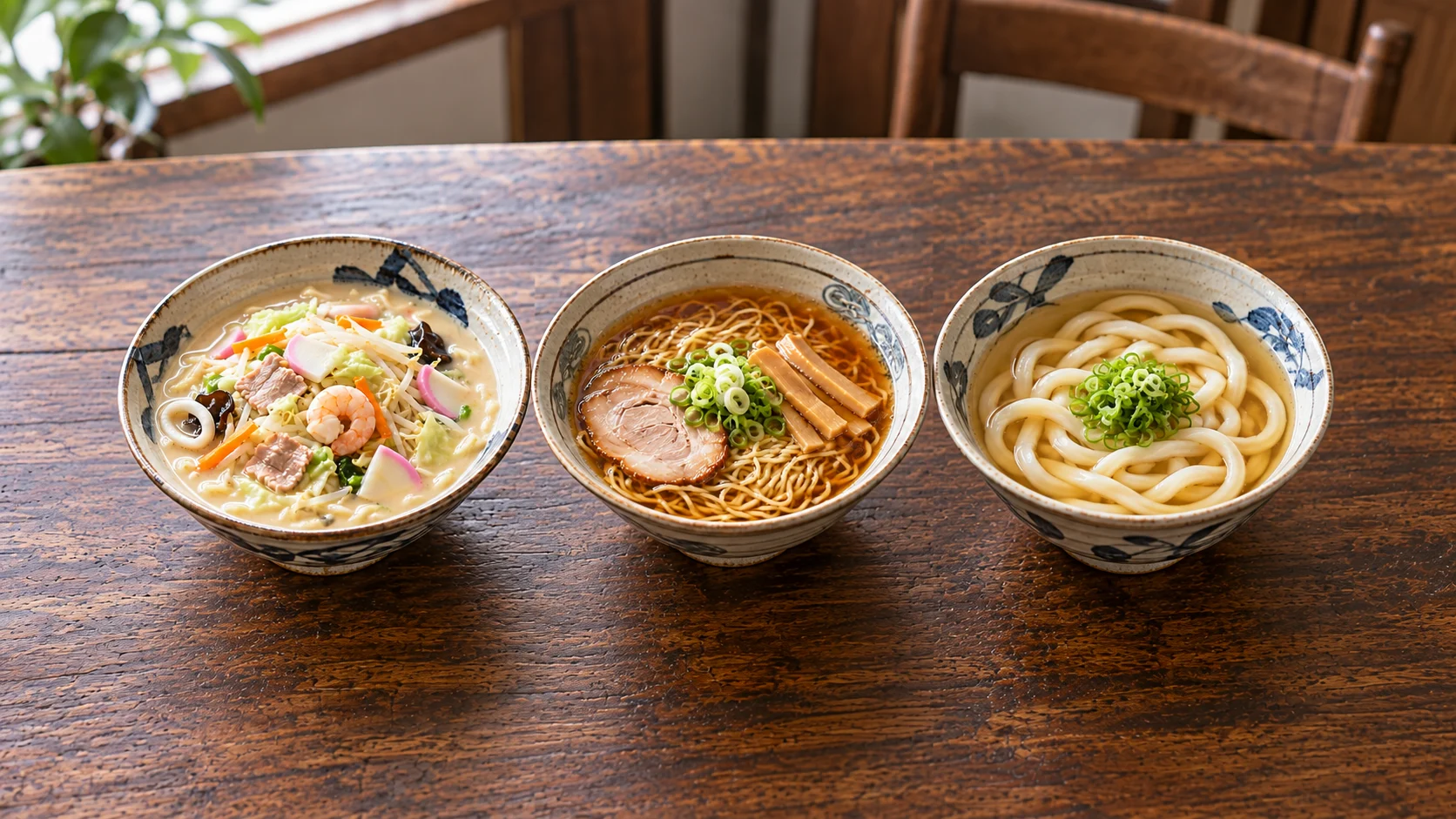
The short answer: it is the noodle's job in the finished bowl
Have you ever paused over a bowl of champon and wondered what gives its round, springy noodles that particular bite? They are not made from an entirely different grain from ramen noodles. In Japanese labeling guidance, ramen and champon both fall under Chinese-style wheat noodles made with kansui, an alkaline ingredient. Nagasaki's tōaku is a form of kansui.
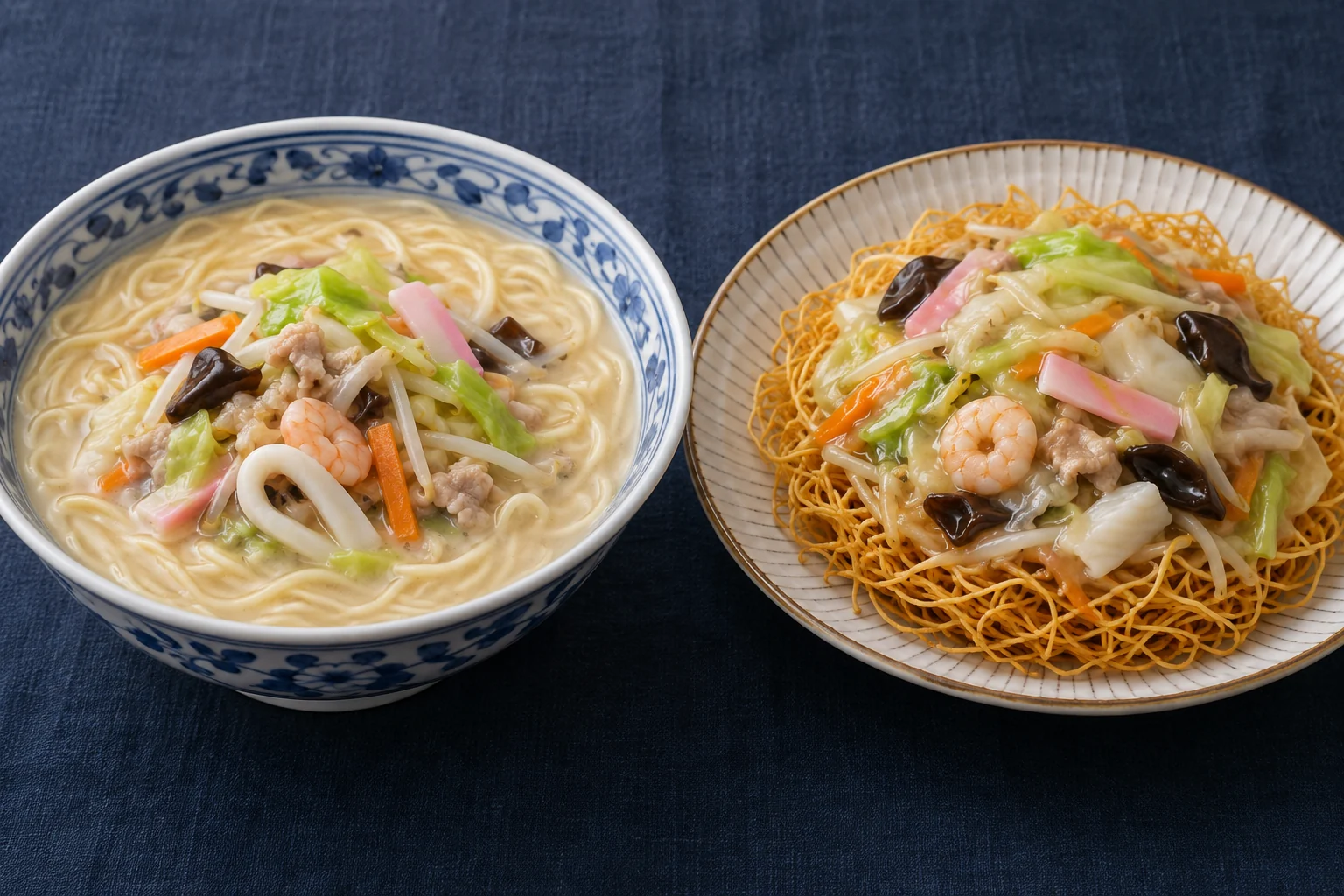
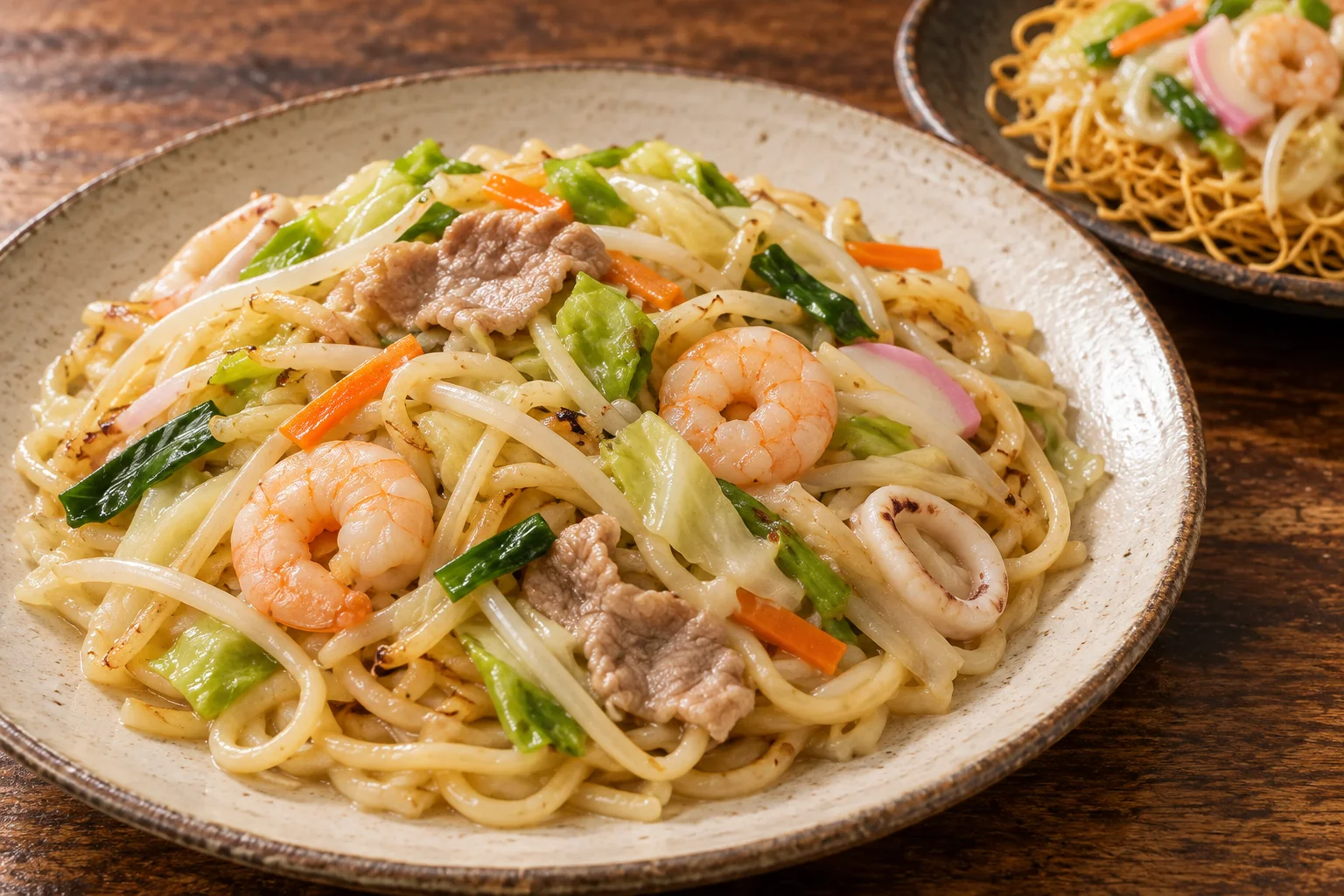
That shared classification does not make the two dishes interchangeable. In a common champon method, meat, seafood and vegetables are stir-fried; broth and noodles then finish together in the same wok. The choice of noodle makes sense in that hot, ingredient-rich broth, not as an isolated strand on a plate.
To understand why champon has its own noodles, look at the ingredients and shape, then follow the noodle into the pan and finally into the bowl.
Is tōaku different from ramen's kansui?
Tōaku often comes up when people describe Nagasaki champon. Nagasaki tourism information links it to the noodles' characteristic aroma. It can sound as though ramen uses kansui while champon uses something entirely unrelated. In fact, tōaku is one kind of kansui; both dishes use noodles from the Chinese-style wheat-noodle family.
Kansui is not a single fixed recipe. Alkaline ingredients such as sodium carbonate and potassium carbonate affect color, aroma and texture, but the combination varies by noodle maker and product. Adding tōaku does not guarantee that every champon noodle will taste the same.
Flour, water content, noodle shape and cooking also matter. For a closer look at the Nagasaki tradition, see our guide to champon noodles and tōaku.
Why does the noodle sometimes remind us of udon?
Champon noodles can look pale, round and fairly thick in a bowl. That resemblance to udon is understandable. Udon, however, is generally made without kansui, so a similar outline does not mean the same aroma or bite.
There is more than one way to make a rounded champon noodle. Mizutani Seimenjo's published process, for example, mixes flour with tōaku, rolls the dough, forms relatively thick round strands, then boils and cools them. That is one maker's process, not a rule followed by every shop in Nagasaki.
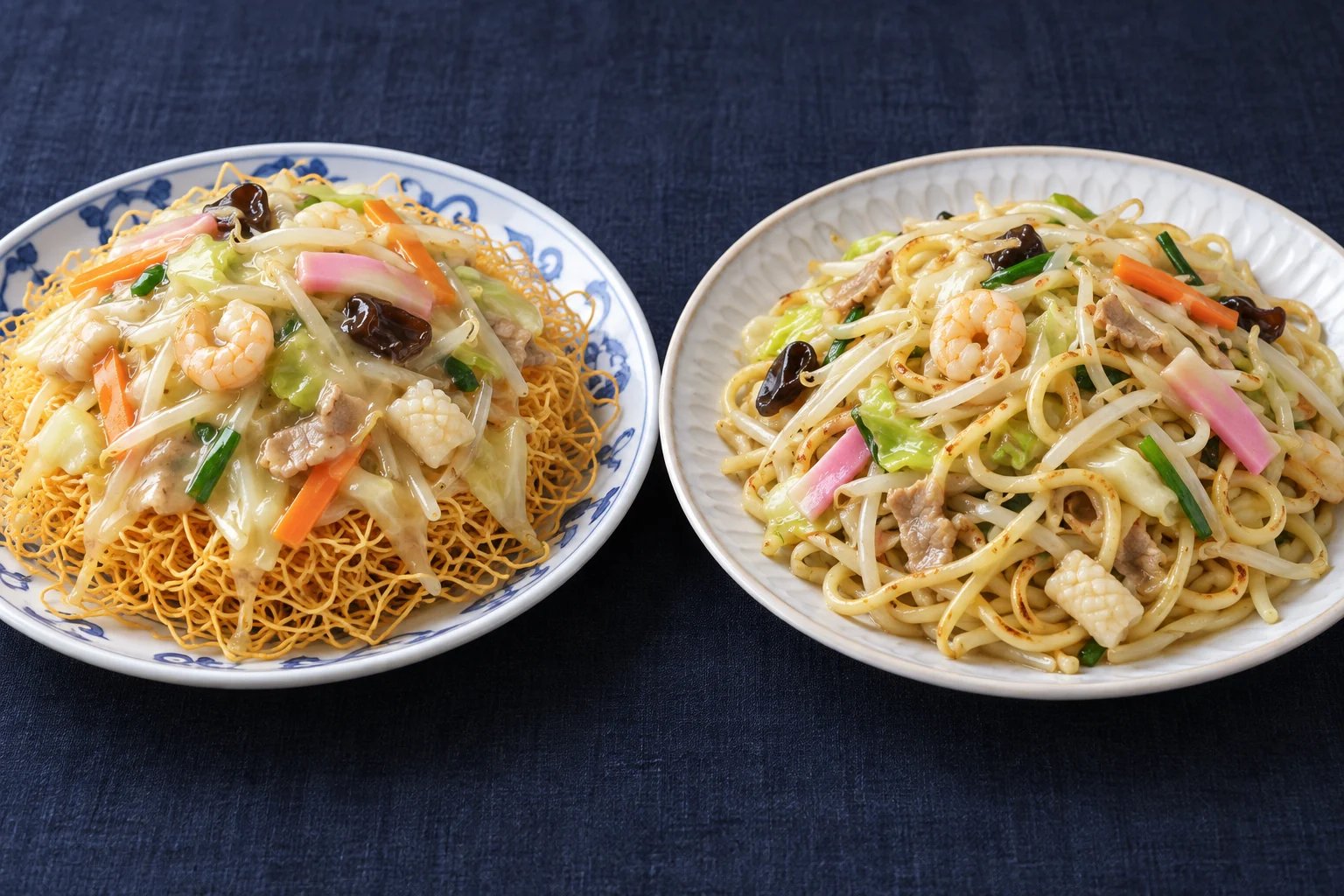
Nor is there one diameter that defines champon. Nagasaki maker Sanwa Seimen sells both thick and thin champon noodles, while ramen comes in thick styles too. The useful question is why a maker chooses a particular shape and texture for the way a dish is cooked.

What happens in the wok?
Ramen is often prepared by boiling noodles separately and bringing them together with broth in the serving bowl. The champon recipe documented by Japan's Ministry of Agriculture first parboils the noodles, then adds them to a wok containing stir-fried meat, seafood, vegetables and broth. The noodles receive their final heating in the liquid flavored by those ingredients. Individual restaurants may do things differently.
What matters is not simply how much broth the noodle absorbs. It should carry the broth and ingredients while retaining a pleasing bite at serving time. Sanwa Seimen describes its own champon noodles as smooth and chewy, able to take up flavor without quickly becoming too soft. That describes a product goal, not every noodle sold under the name champon.
Makers also offer noodles in different states. Sanwa Seimen sells both pre-boiled and fresh options; the latter can be cooked to a chosen firmness before finishing the dish. The heating needed in the wok depends on what state the noodle is in when it goes in.
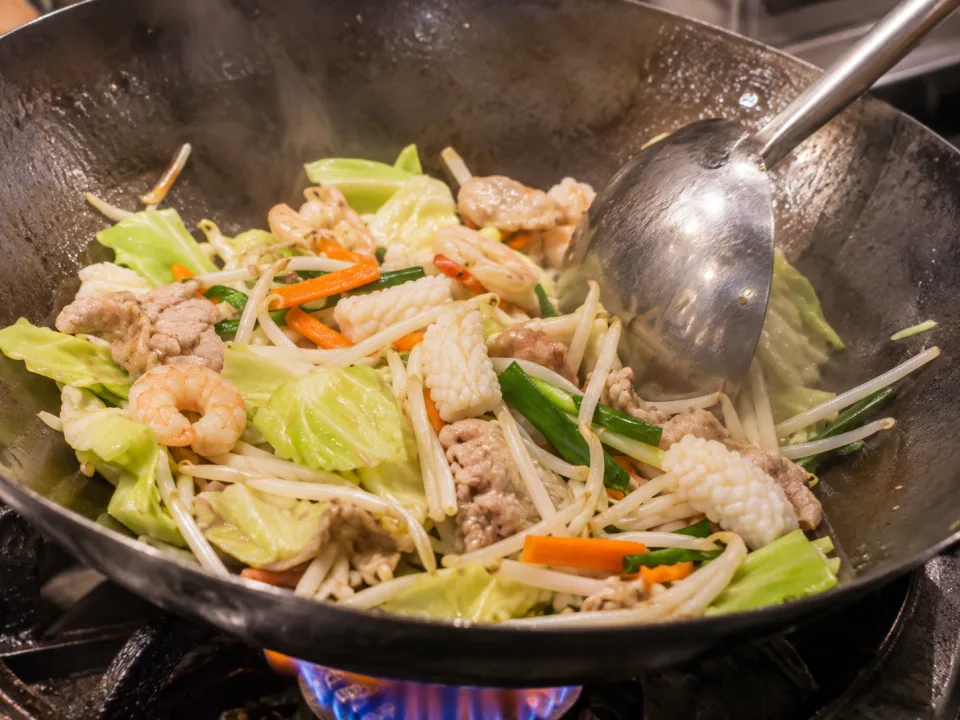
Stir-fry the toppings
Bring meat, seafood and vegetables together in a wok.
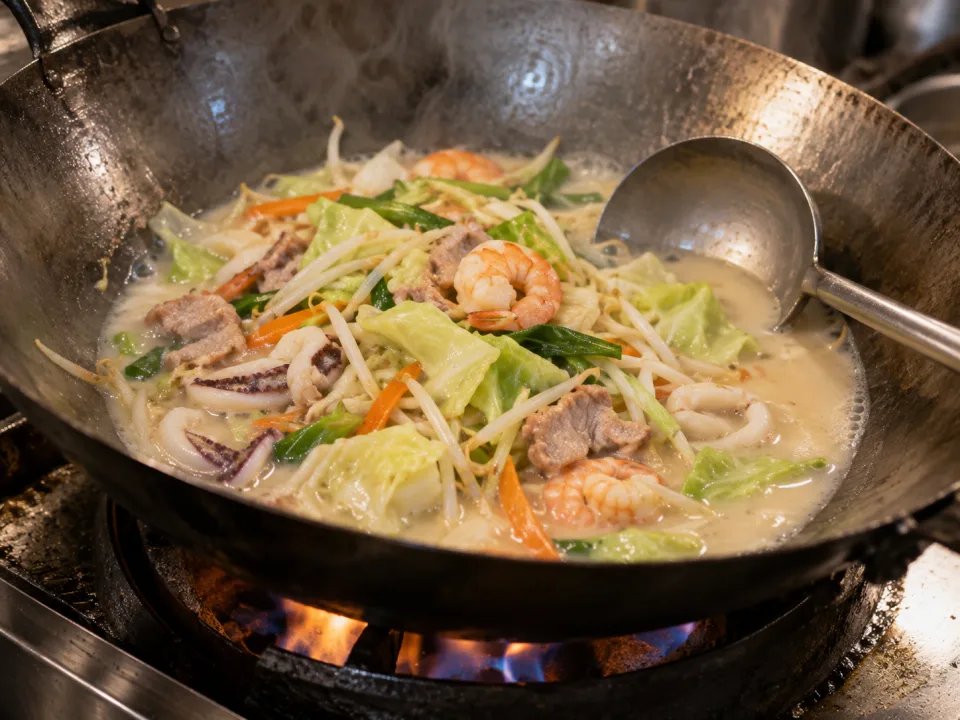
Add broth
Let the ingredients flavor the liquid.
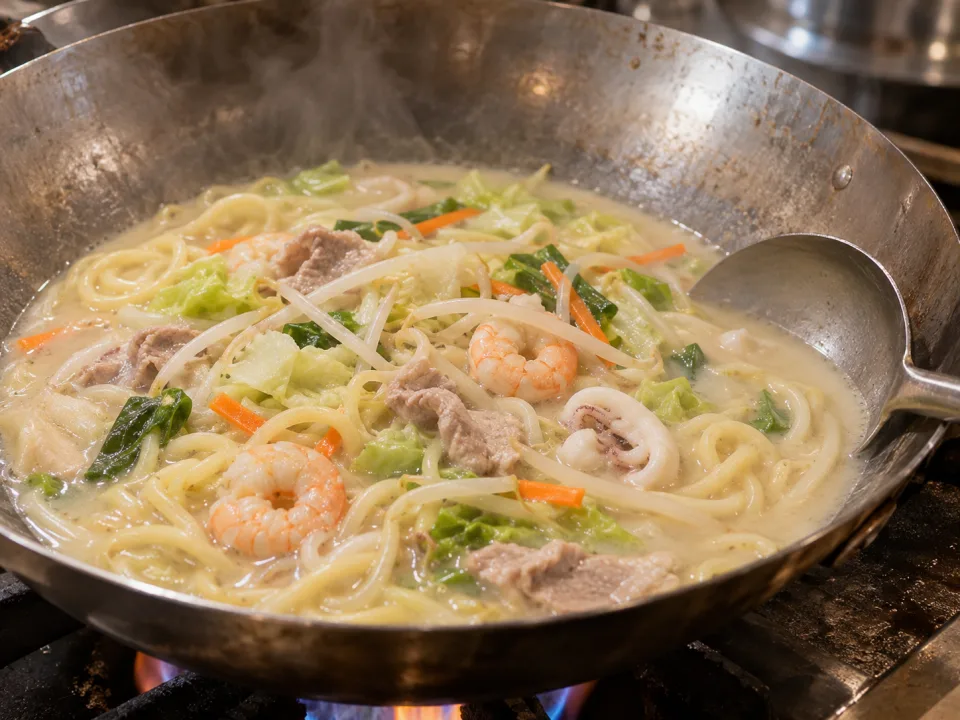
Finish with the noodles
Add separately parboiled noodles to the ingredient-rich broth.
The same noodle family, but a different dish from ramen
Calling both noodles Chinese-style wheat noodles can make champon sound like a ramen variation with extra toppings. A dish is more than a label on its noodles, though. The treatment of the ingredients, when broth and noodles meet, and how everything is eaten together define the bowl.
For champon, the meat, seafood and vegetables flavor the broth before the noodles finish in it. When you eat, the noodles carry some of that broth alongside the toppings. They are part of the combined cooking, rather than an afterthought placed into a finished soup.
You can make a tasty bowl using ramen noodles with champon-style toppings, but swapping the noodles changes the balance of texture and broth. The reverse is also true. Whether an ingredient can be substituted is a different question from whether the resulting dish tastes like the original.
Ramen itself comes in countless styles, so there is no single rule that draws a perfect boundary. Still, ramen and champon have developed as distinct dishes, each with noodles chosen for its own finished bowl.
That is why champon has those noodles
It is more helpful to notice how a noodle tastes with the toppings and broth than to insist on a single diameter. Nagasaki makers produce thick and thin, fresh and pre-boiled champon noodles because shops and home cooks want different results in the bowl.
Flour is one of those choices. Nagasaki Prefecture has introduced a wheat called Nagasaki Chanmugi for champon noodles. Our story on Nagasaki Chanmugi explains what a noodle maker may look for in wheat; using that local variety is not a requirement for every champon noodle.
Next time, try one strand by itself, then another with vegetables and broth. Notice the aroma associated with tōaku, the round bite and how the noodle works with the rest of the dish. Its identity becomes clearest when you eat champon as a whole.
Sources
- Japan MAFF: Local Cuisine, Champon
- Nagasaki Prefecture Tourism Association: Chinese Cuisine
- Sanwa Seimen: Noodle Products
- Mizutani Seimenjo: How Nagasaki Champon Is Made
- National Federation of Noodle Manufacturers' Associations: Fresh Noodle Labeling
- Oriental Yeast: Kansui
- Nagasaki Prefecture: Nagasaki Chanmugi