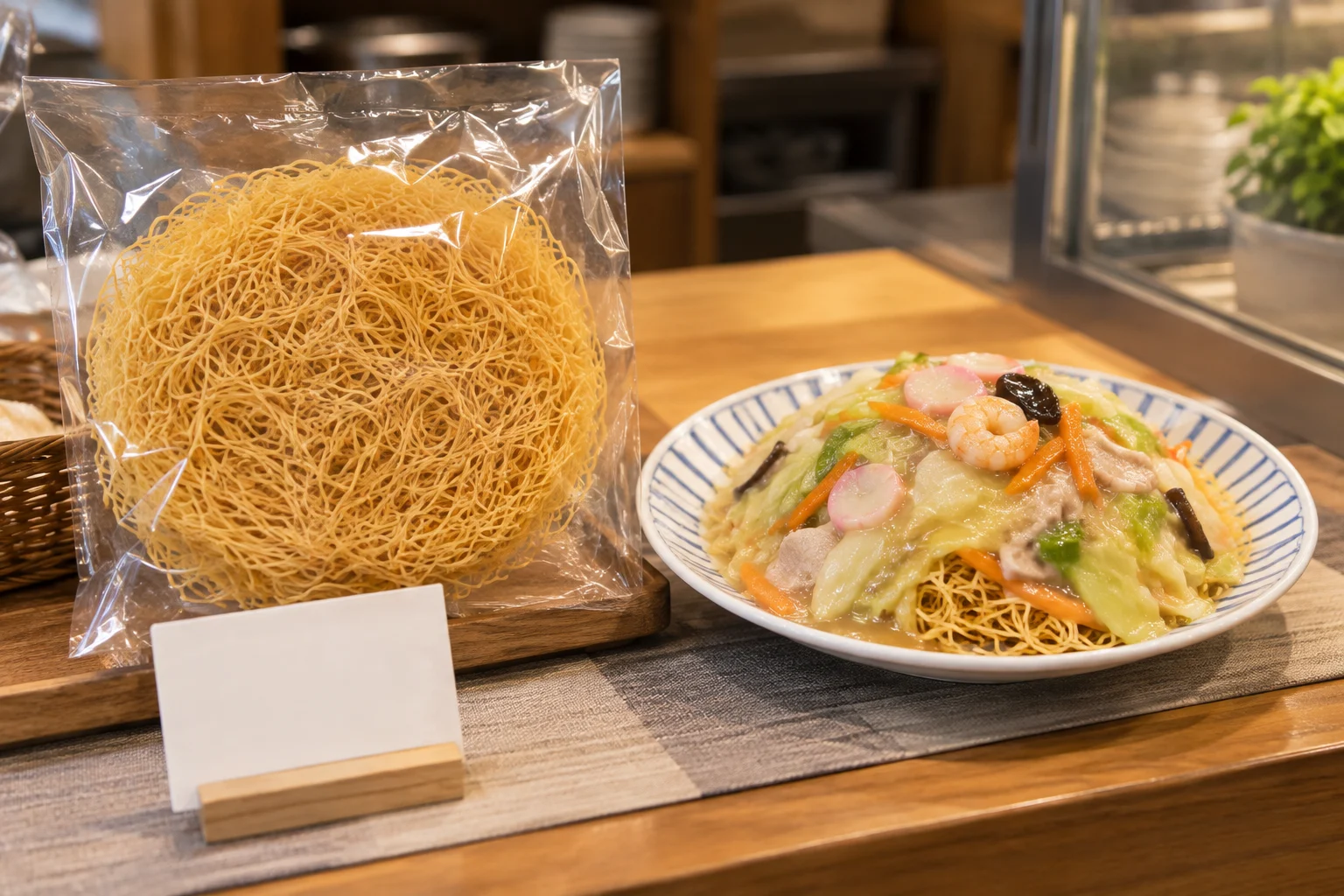
Show the finished plate before explaining the packet
Someone encountering thin-noodle sara udon for the first time may not know whether to boil the fried noodles or what belongs on top. A photo of the finished dish beside a short cooking note helps connect the packet on the shelf with a meal at home.
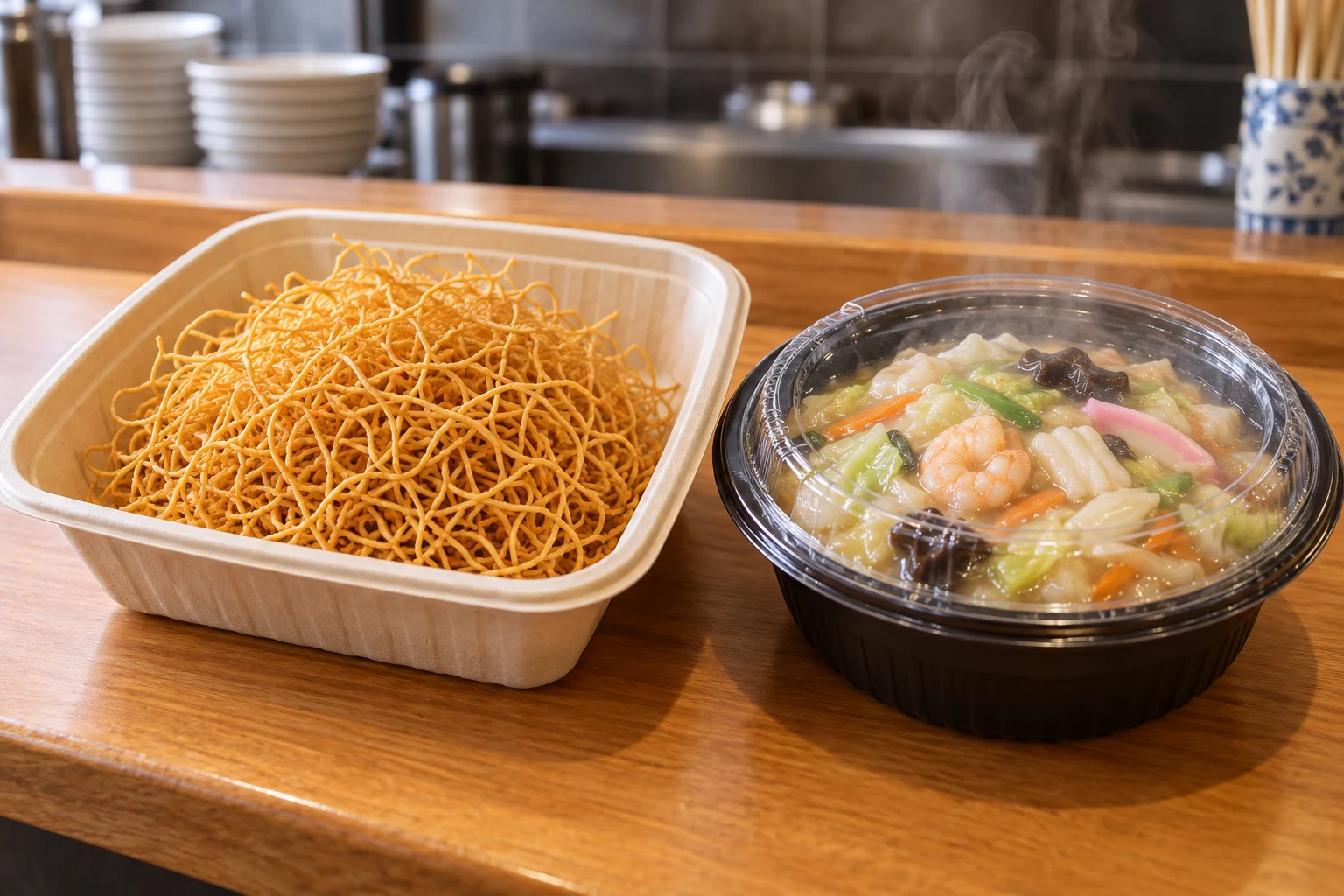
Japan's Ministry of Agriculture, Forestry and Fisheries (MAFF) describes the thin-noodle style as fried noodles topped with meat and vegetables in a thickened sauce. Make that order clear: the noodles themselves are not simmered for a long time in the pan.
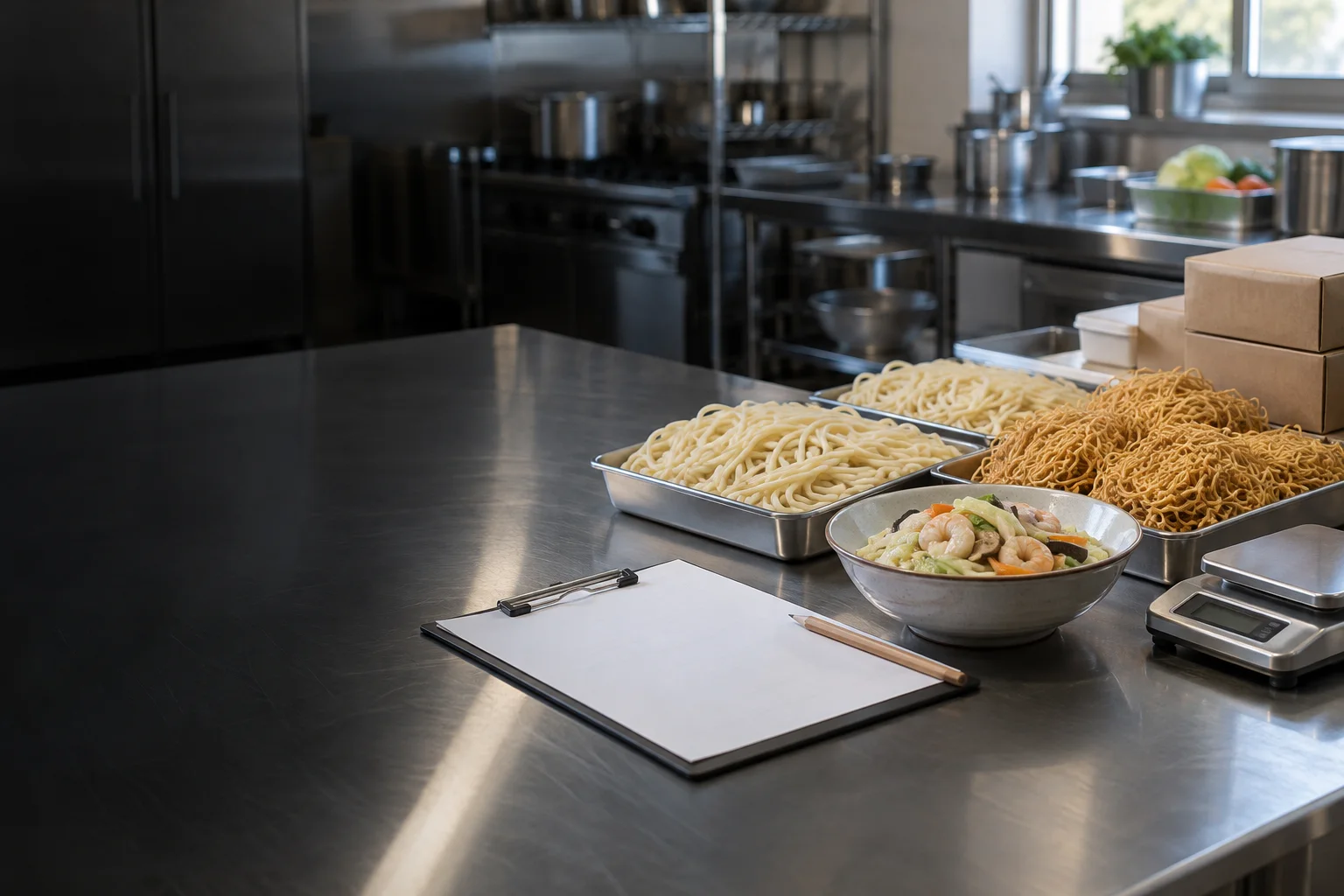
The note must match the exact item being sold. A noodle-and-sauce kit, a packet of noodles alone, and a frozen meal with toppings ask the shopper to provide different ingredients.
Three lines: texture, shopping list, finishing step
A small shelf sign is easier to scan when it answers three immediate questions instead of trying to reproduce a full recipe. Here is sample copy for a kit containing fried thin noodles and sauce mix. Adapt it to the actual contents and follow the cooking instructions on the pack.
The last line matters. Do not show vegetables placed on dry noodles and a separate clear liquid poured over them. Stir-fry the toppings, combine them with the seasoned liquid, thicken the mixture, and serve the glossy toppings and sauce together over the noodles. The picture should tell the same story as the instructions.
- Texture: ‘Crispy thin noodles meet hot, glossy toppings.’
- To buy: ‘Try cabbage, sliced pork, and fish cake.’
- To finish: ‘Thicken the toppings and sauce together; serve over the noodles just before eating.’
Suggest one achievable set of toppings
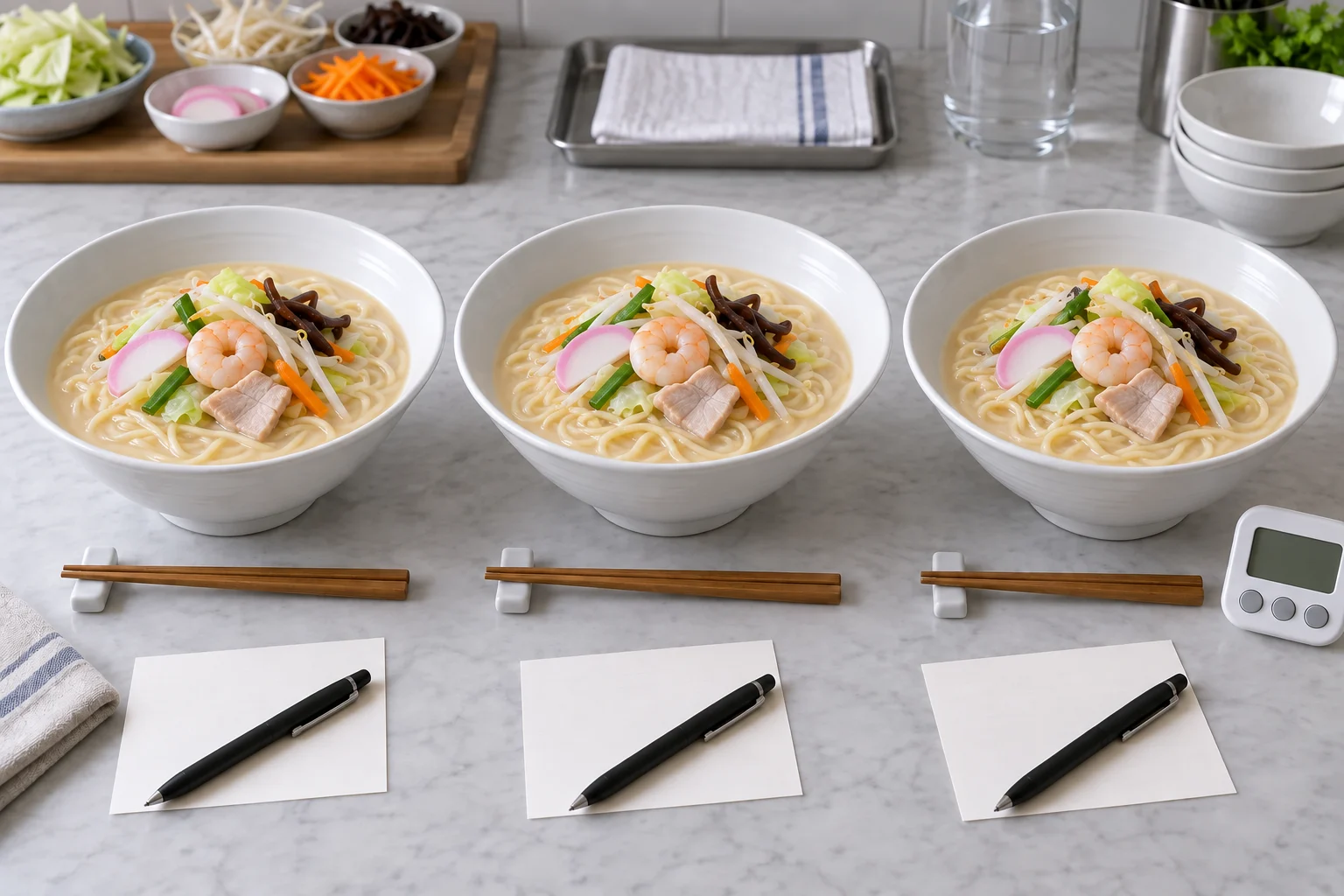
MAFF lists ingredients such as cabbage, bean sprouts, pork, seafood, and kamaboko fish cake for sara udon. They do not all have to go into every plate. A short, achievable shopping suggestion is more useful at the shelf than a long list that makes the dish look difficult.
For example, start with cabbage, sliced pork, and fish cake; peeled shrimp can be an optional extra. If the product includes a sauce mix, direct shoppers to its stated water quantity and cooking method rather than inventing new measurements for the sign.
Keep the finished-dish photo close to the suggested ingredients. A photograph piled high with shrimp and squid beside a vegetable-only shopping list sets a different expectation from what the shopper will make.
Change the sign when the product changes
Carino Shokuhin's product catalogue includes different kinds of sara udon, including a fried-noodle-and-sauce kit and a frozen version with toppings. Reusing one sign for both could suggest that ingredients or sauce are included when they are not.
Shelf copy supplements the official package information. Check the actual product's storage conditions and heating instructions before adding any guidance, and make sure the sign does not contradict them.
- Noodles only: explain how to make the topping and point out any additional stock or starch needed.
- Noodles plus sauce: suggest toppings and point shoppers to the pack for water quantity and heating steps.
- Frozen meal with toppings: follow the product's heating and storage directions rather than proposing a different method.