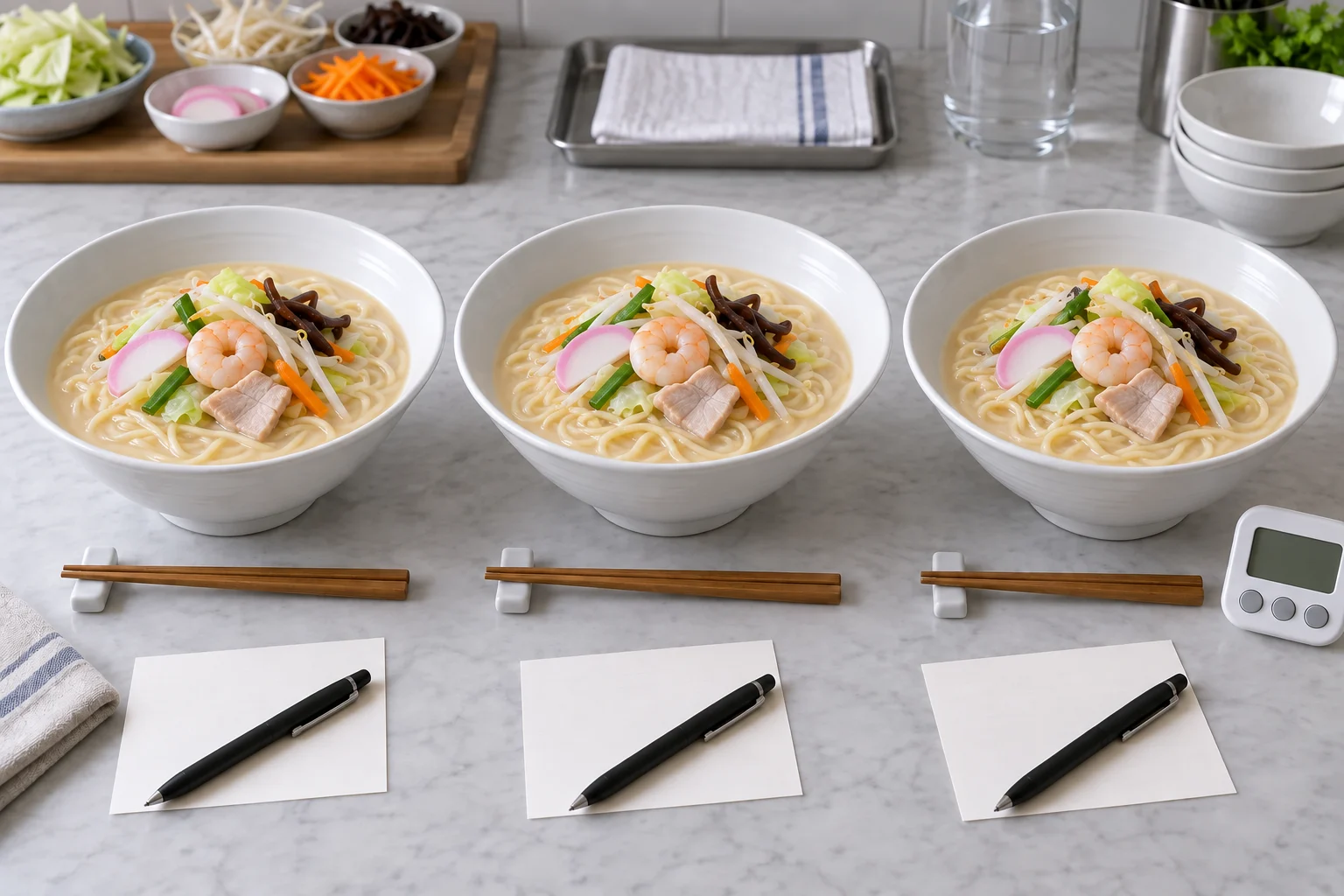
Decide what will stay constant
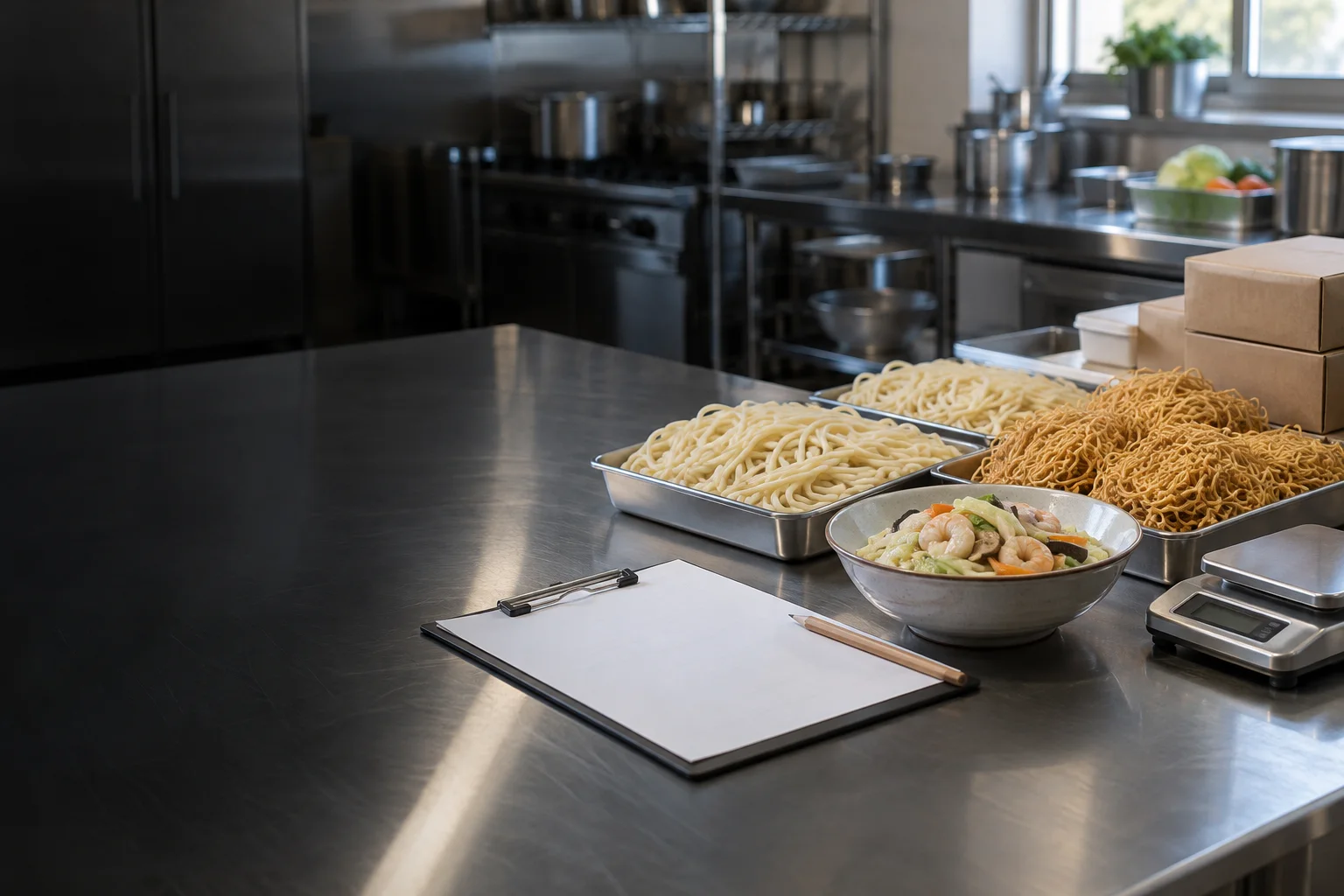
If soup volume, toppings, pan, heat, starting temperature and cooking time change with every sample, you cannot identify what the noodle changed. Set one standard bowl, change only the noodle and record noodle weight, start time and plating time.
Use the same five criteria
Write observable changes rather than only ‘good’ or ‘bad’. A note such as ‘the surface softens after three minutes while the centre stays springy’ is useful for the next trial.
- Handling: removal, separation and ease of adding to the pan.
- Appearance: thickness, color, gloss and portion volume.
- Texture: firmness, spring, bite and surface smoothness.
- Integration: how the noodle carries soup or sauce and balances aroma.
- Holding quality: immediately after plating, then after three and five minutes.
Test the variation that real kitchens create
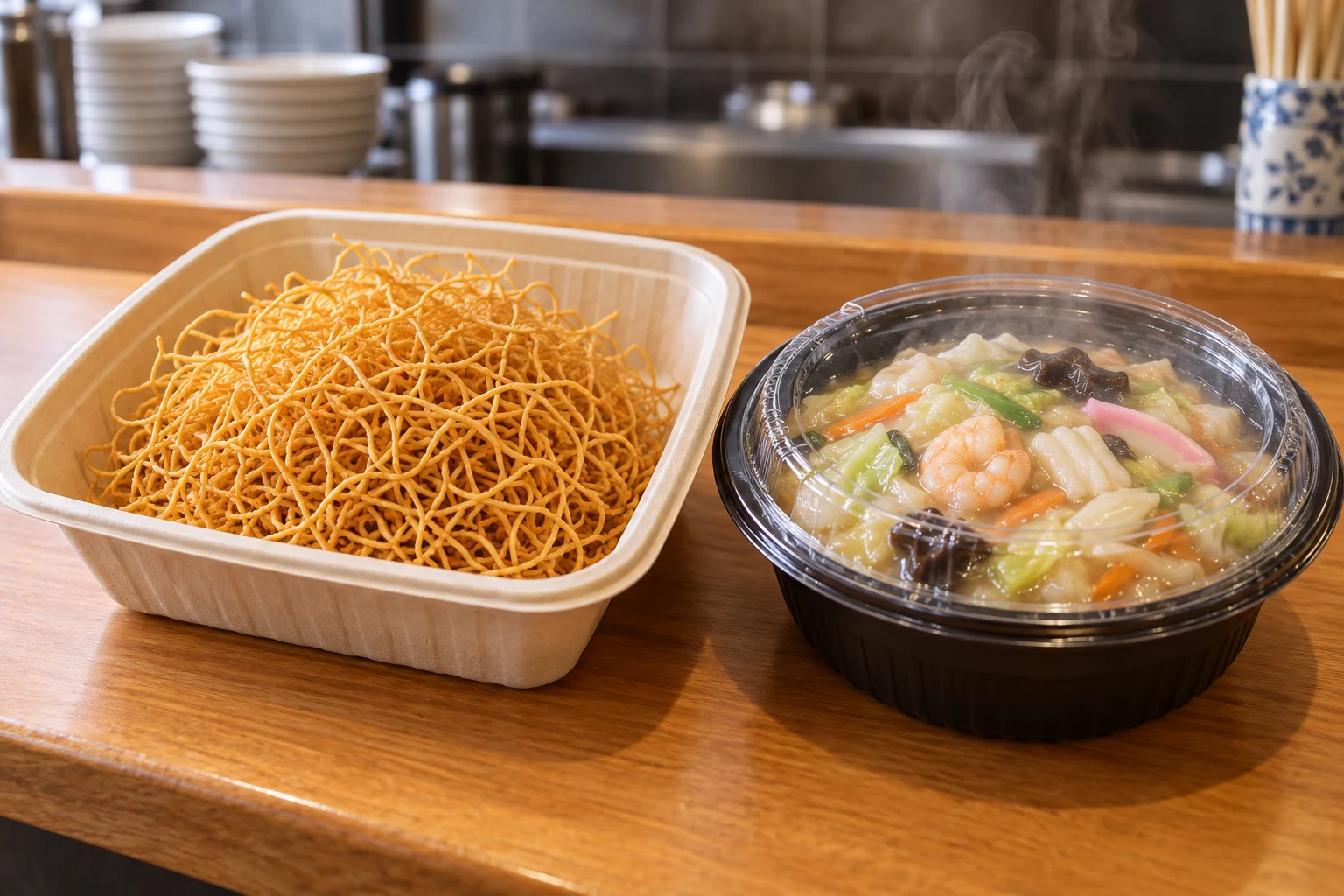
After narrowing the candidates, extend cooking by 30 seconds, hold the bowl for five minutes or increase the toppings. In volume service, compare the first and fifth portions. For retail products, reproduce the appliances and heat levels customers are likely to use.
Record the reason for choosing one noodle
Finish with one concrete sentence, such as: ‘It suits our strong soup cooked one portion at a time and retains spring five minutes after serving.’ A clear reason survives menu changes, staff turnover and later retesting.