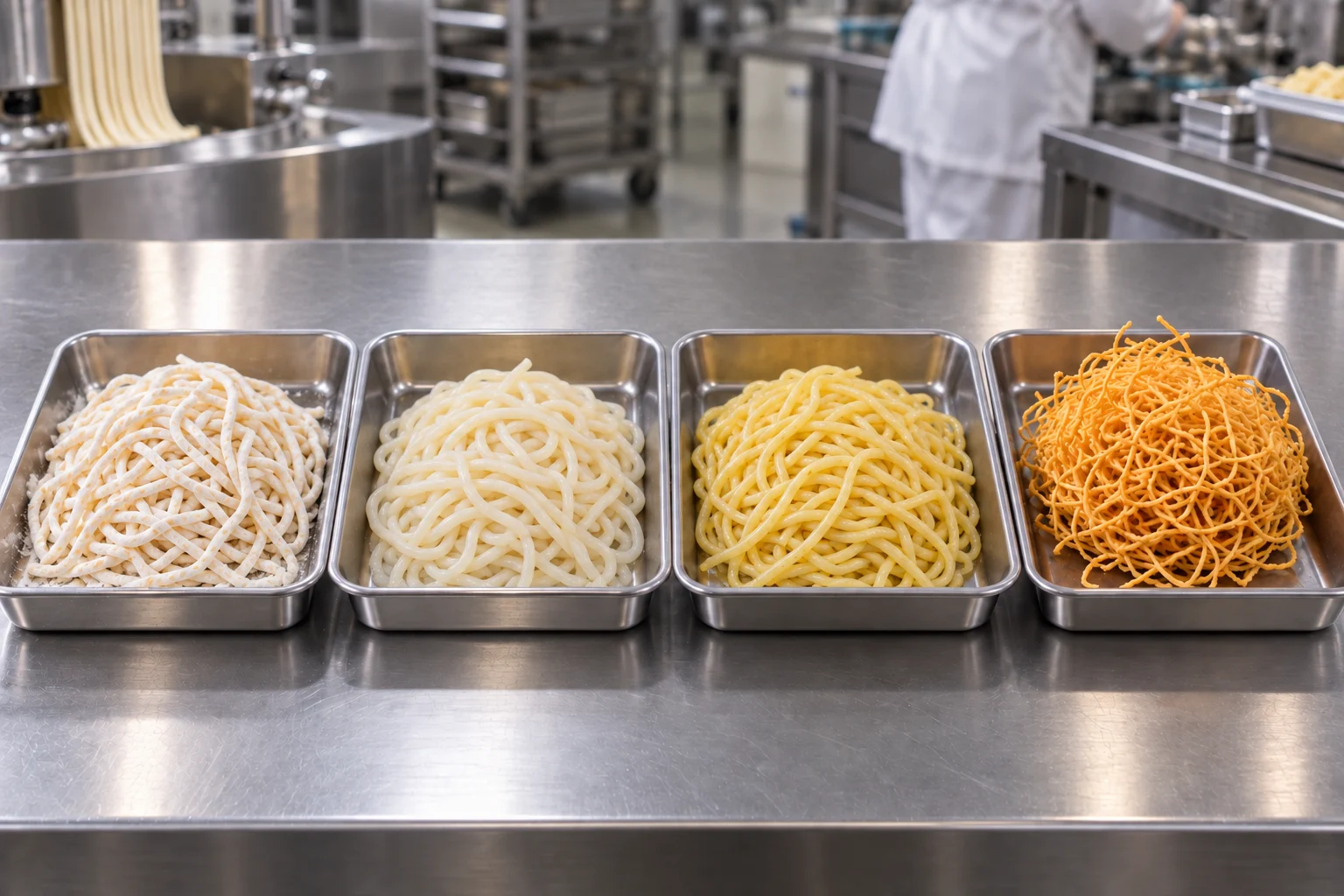
Fresh noodles develop their texture during cooking
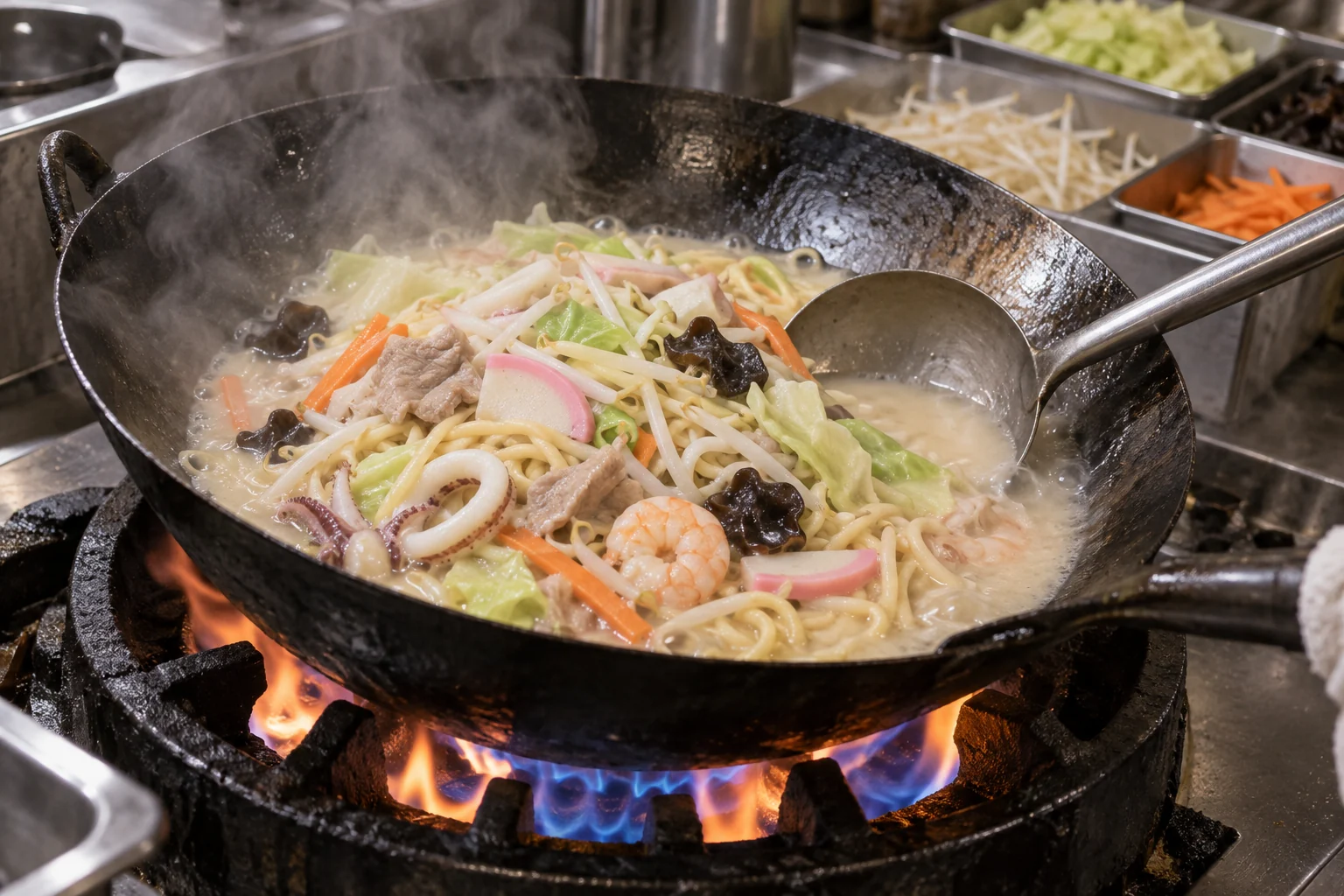
Fresh noodles contain moisture but have not been fully cooked. They may be boiled or, depending on the product, simmered directly in soup. Follow the specified time, keep chilled products cold and protect opened noodles from drying and odors.
Pre-boiled noodles save time but dislike excess heat
Pre-boiled noodles arrive already cooked and may need only reheating or a short simmer. They simplify home and high-volume cooking, but repeated heating can make them soft. Check how easily they separate from the package and how long they retain the desired texture in soup.
Steamed and fried noodles serve different jobs
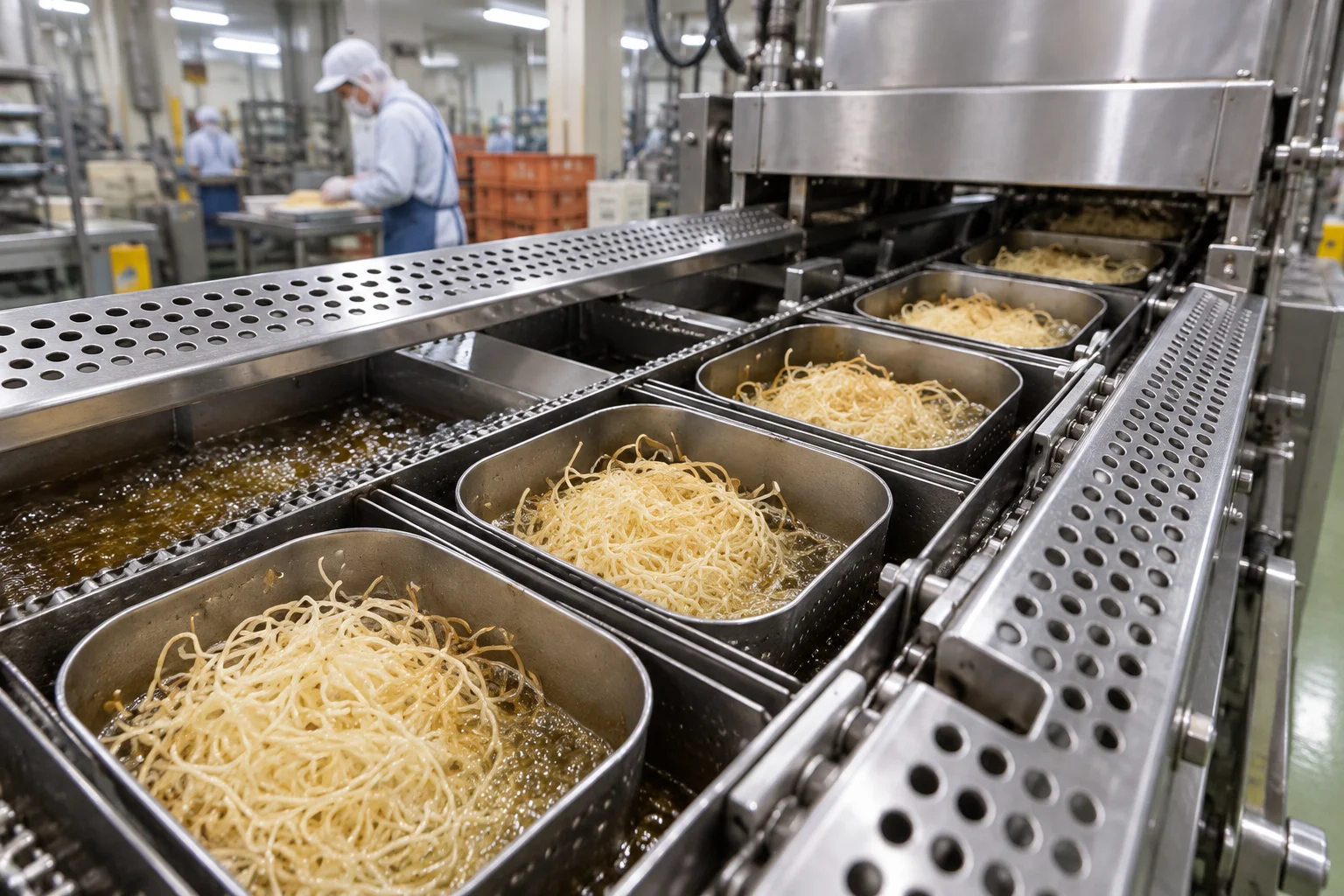
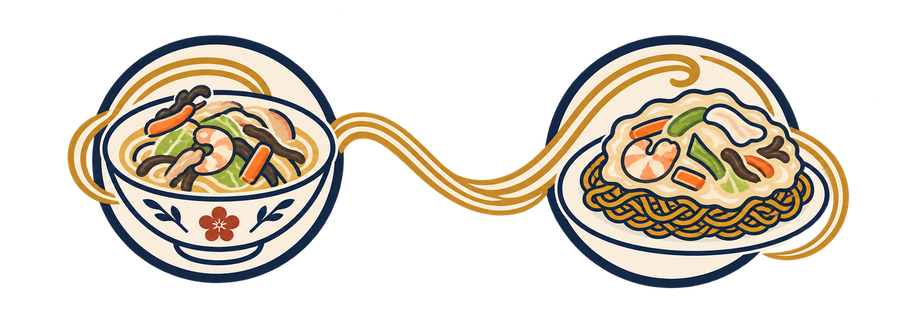
Steamed noodles are convenient for stir-frying and may carry a little surface oil to help them separate and brown. Fried noodles have lost moisture in oil; thin sara udon noodles need protection from humidity and must be judged after the sauce begins to soften them.
Read five items before substituting one format
- Storage temperature.
- Use-by or best-before date and handling after opening.
- Recommended boiling, simmering or stir-frying method.
- Portion weight and intended amount of soup or sauce.
- Ingredients and allergen information.