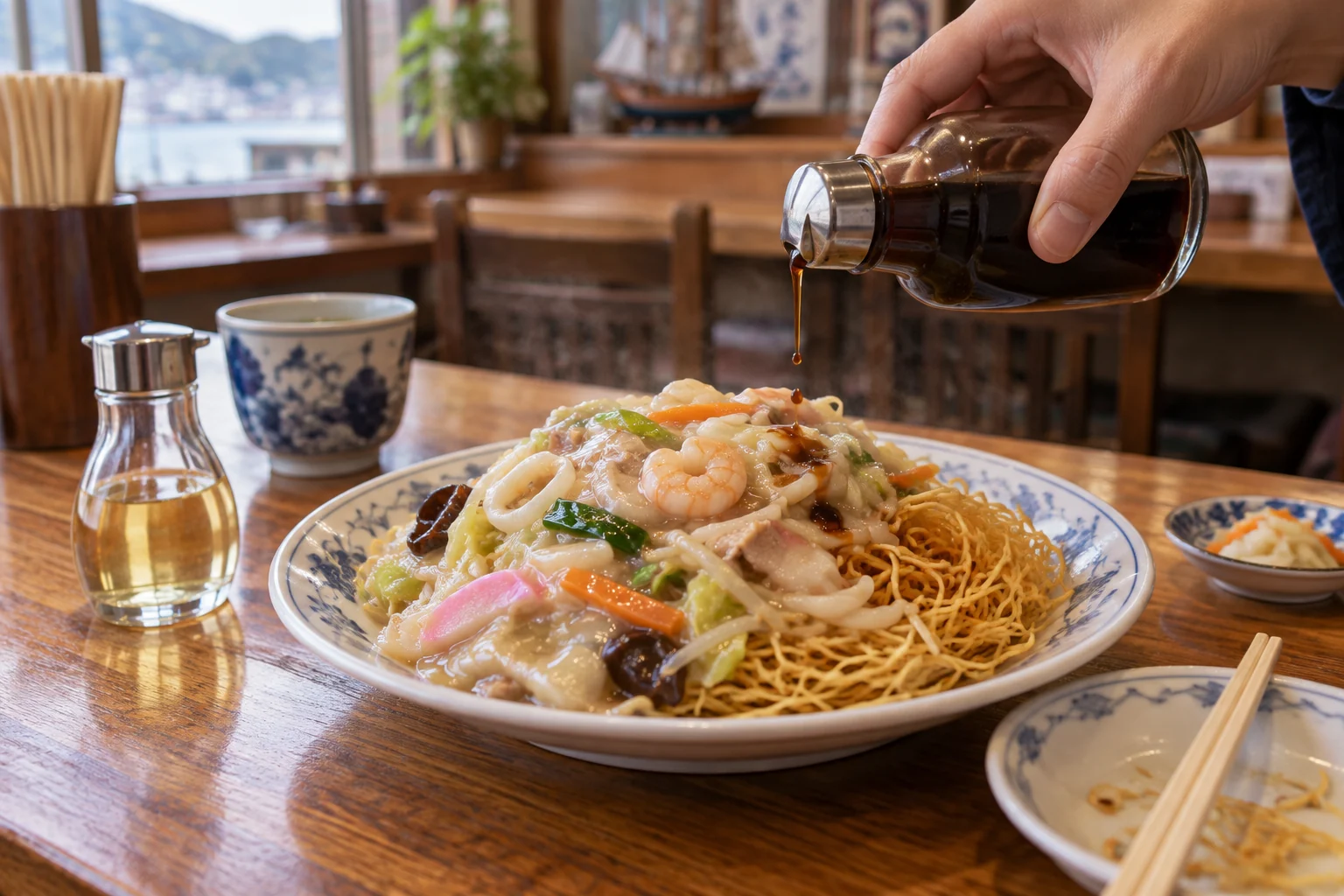
In Nagasaki, sauce belongs to the sara udon table
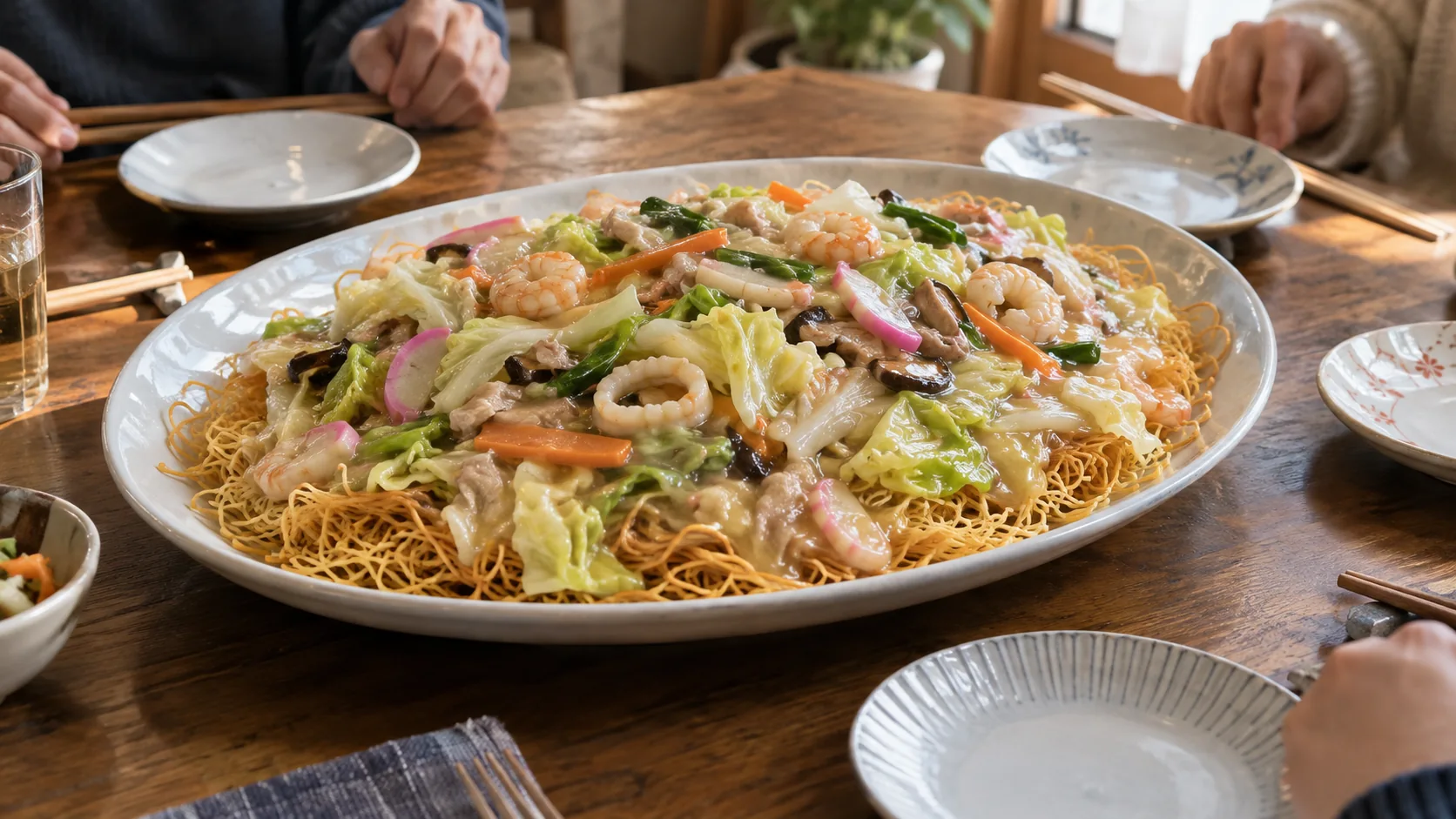
Japan's Ministry of Agriculture describes a local custom of adding Worcestershire-style sauce or vinegar to both thin- and thick-noodle sara udon. The bottle on a restaurant table is part of the dish's local setting, although there is no need to cover the whole plate at once.
Acidity and spice sharpen the sauce
Worcestershire sauce contributes acidity, sweetness, salt and spice. A few drops can tighten the finish and change how pork and seafood taste. Some local sauces are deliberately lighter so they do not overpower the thickened topping; try a little at the edge first.
Vinegar offers a different change
Vinegar cuts through sweetness and the lingering richness of oil. Neither choice is the correct one. With thin noodles, spread a small amount rather than soaking one spot; with thick noodles, test it on a small portion of noodles and toppings.
Taste first, then change one part
- Take the first bite with the original sauce.
- Add a small amount of Worcestershire sauce partway through.
- Try vinegar on another section if you want more acidity.