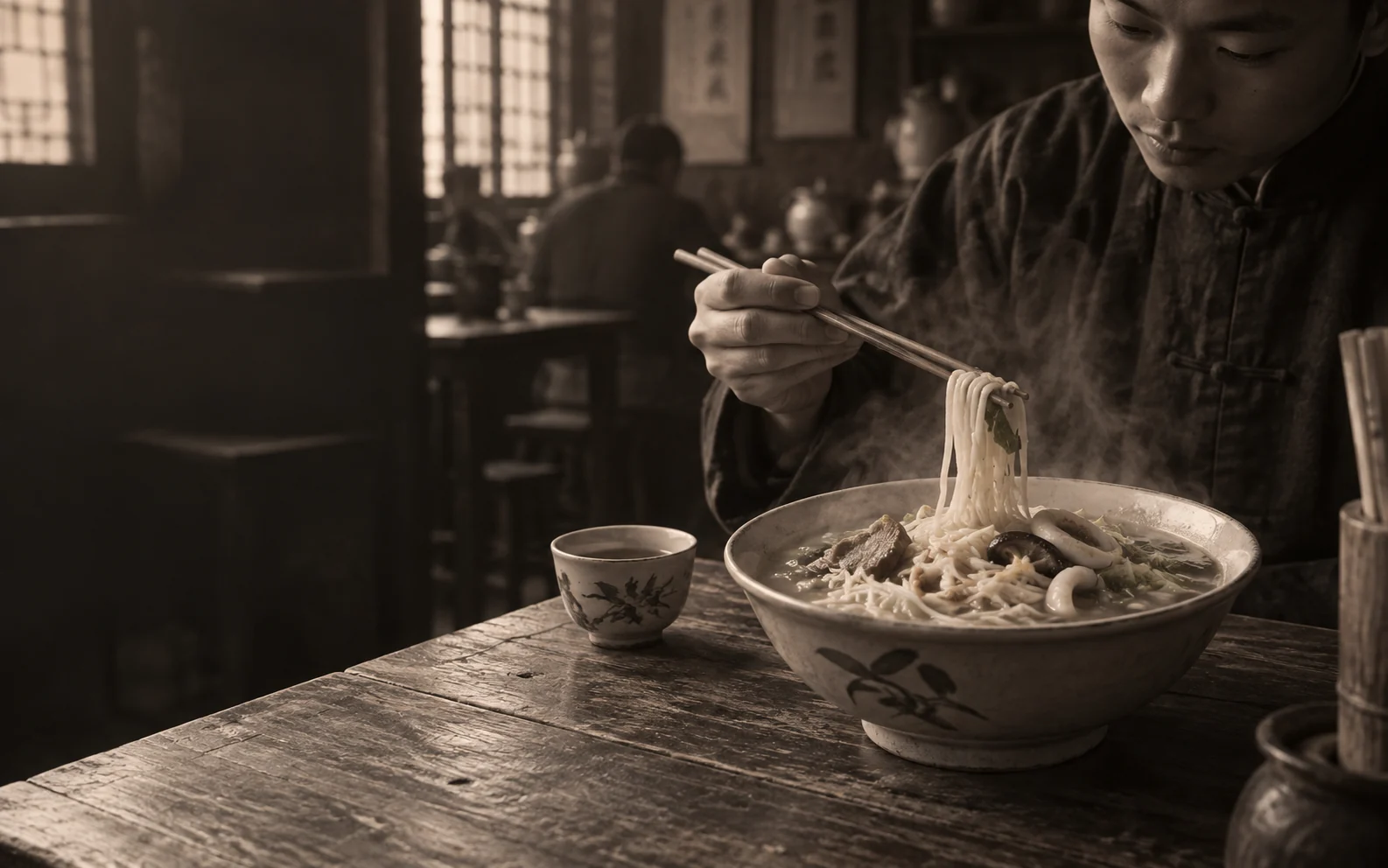
1899, from a Chinese restaurant in Nagasaki
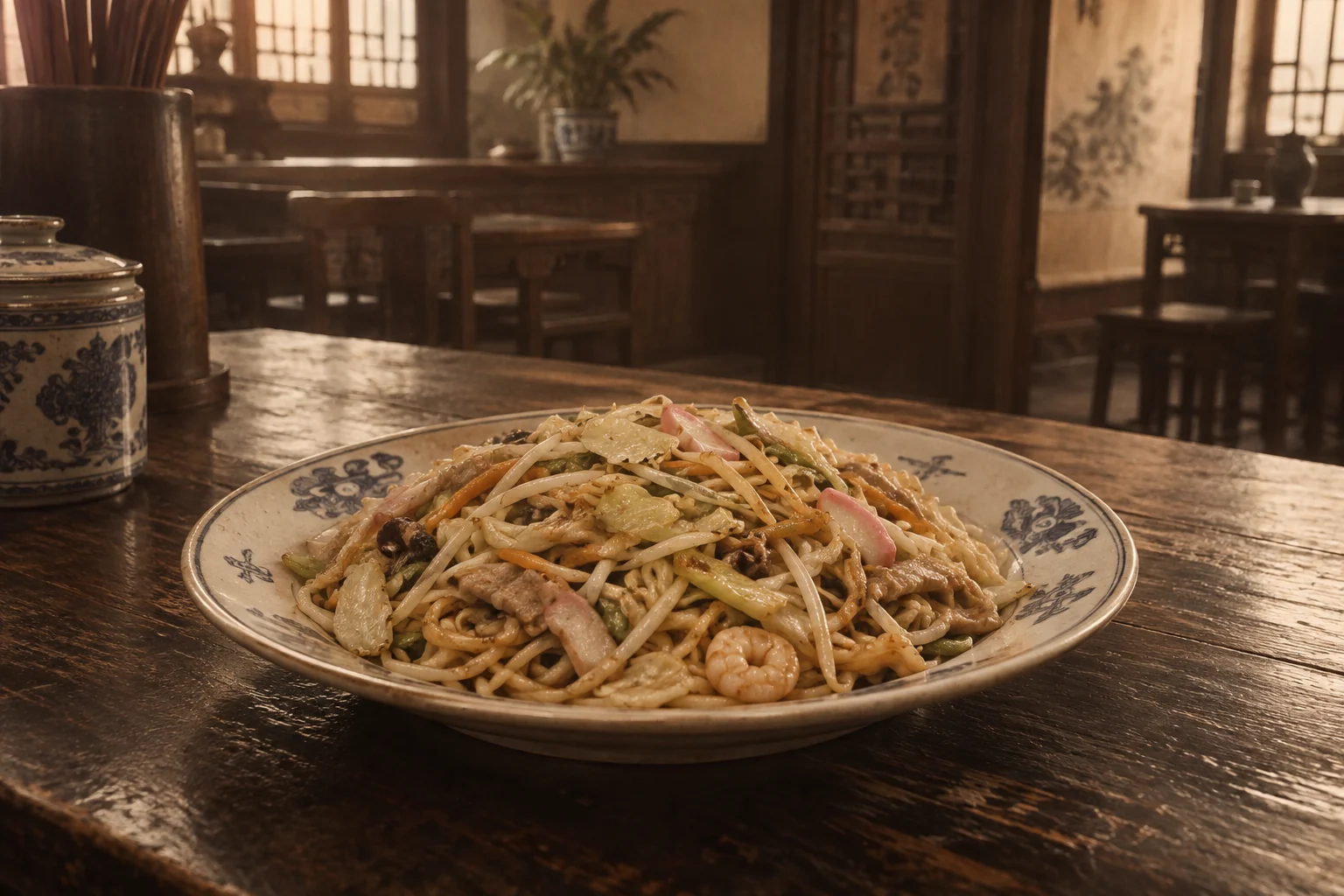
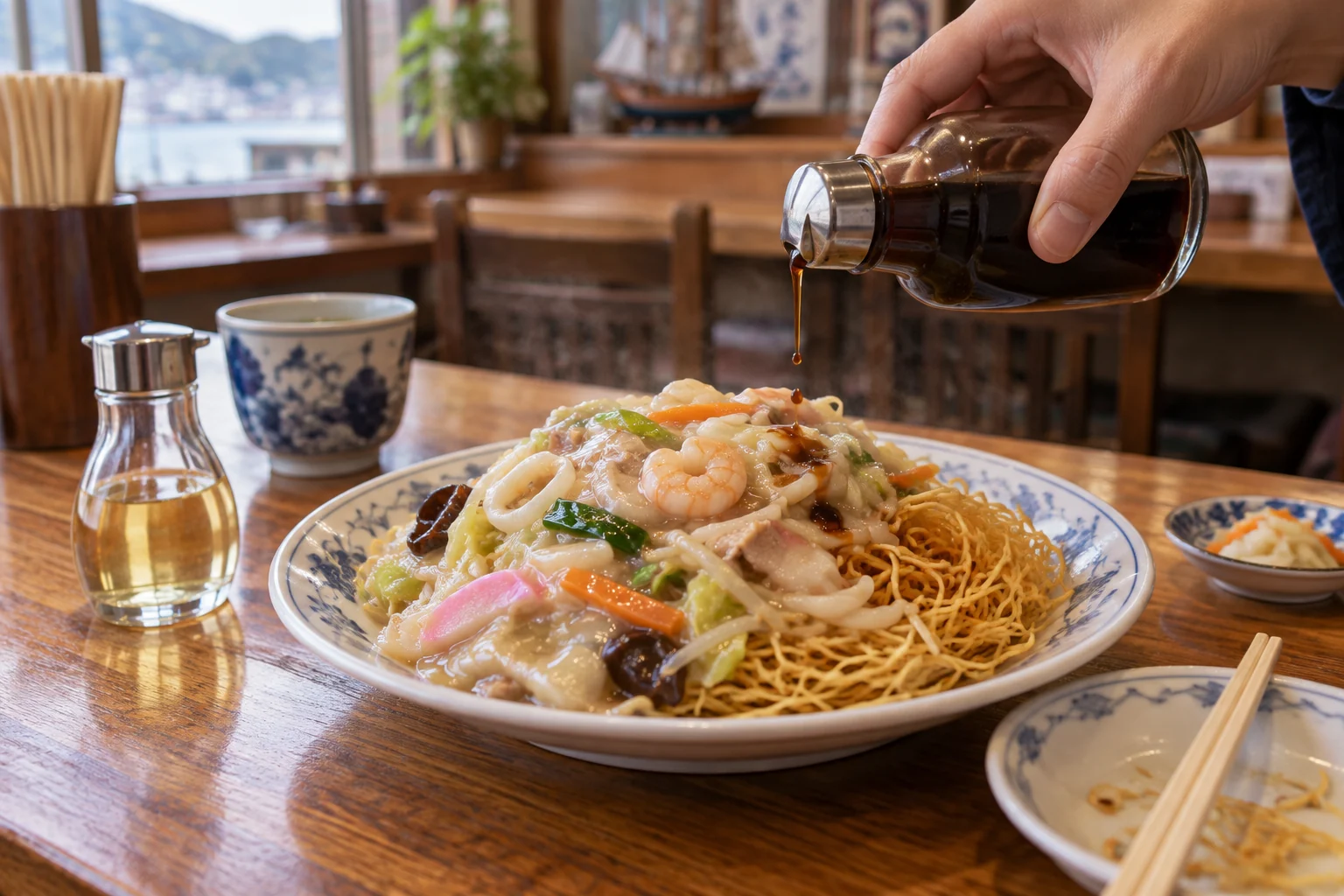
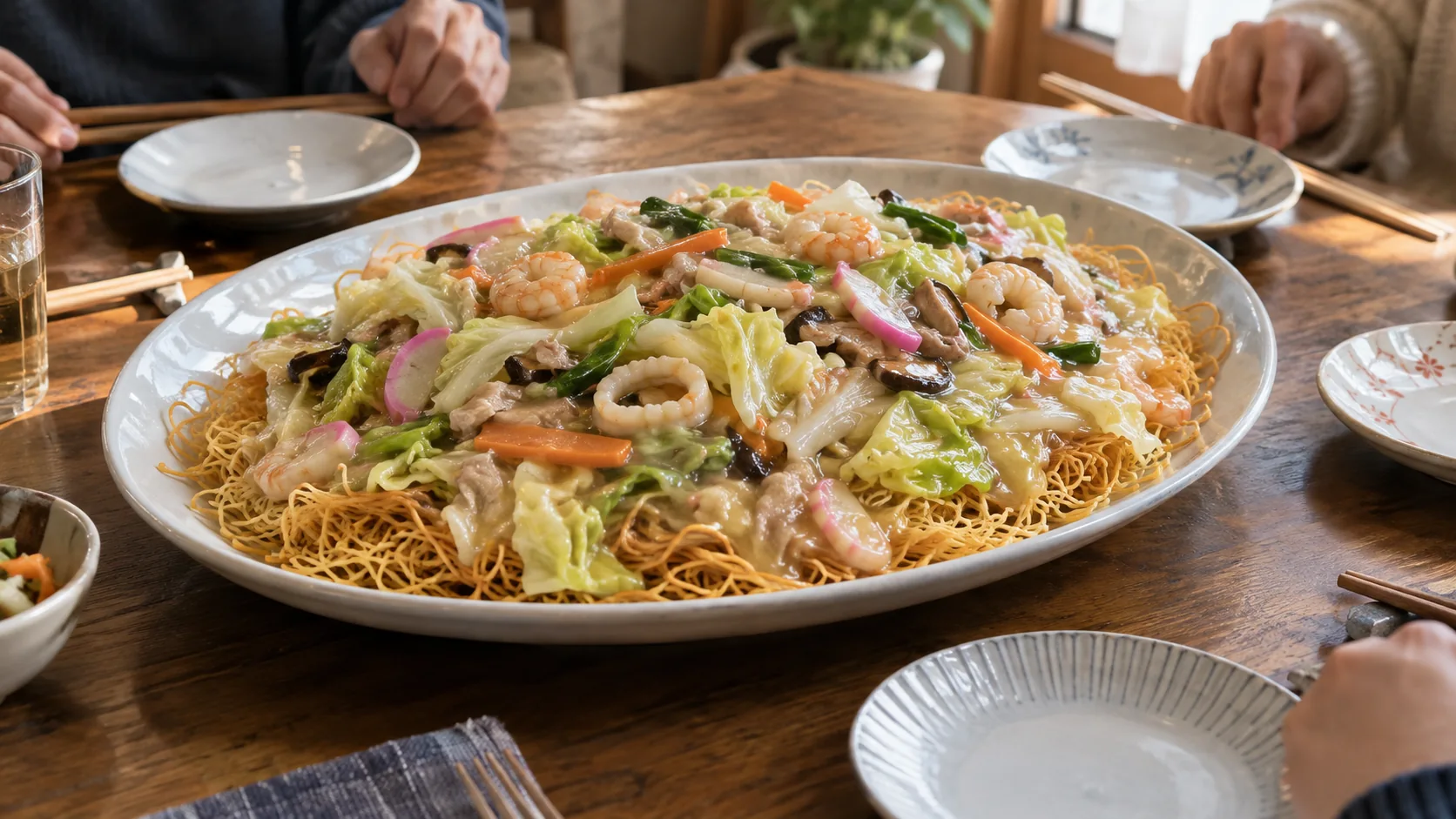
Nagasaki City identifies 1899 as the year champon was created in Nagasaki. Its inventor is said to be Chen Pingshun, a native of Fujian, China, who founded the Chinese restaurant Shikairō.
He wanted Chinese students in Nagasaki to have an inexpensive, nutritious, filling meal. Champon is said to have begun as vegetables and meat stir-fried together, then simmered with Chinese-style noodles in soup.
What was Japan like in 1899?
The year 1899 was Meiji 32, about four decades after Japan opened its treaty ports. Japan was building the institutions of a modern state while the movement of people and goods across its borders was expanding. In Nagasaki, centuries-old ties with China overlapped with new exchanges fostered by the foreign settlement established after the port opened.
In July of that same year, the foreign settlement system ended in Nagasaki and other treaty ports, widening where foreign residents could live and travel within Japan. Yet only four years had passed since the end of the First Sino-Japanese War. Nagasaki's Chinese community was still recovering after wartime departures.
International tension and the everyday lives of people sharing the same city existed side by side. Seen in that setting, the bowl created for young students living far from home takes on a more tangible warmth.
The things that could meet in Nagasaki
Nagasaki's long history of overseas exchange through its port created fertile ground for Chinese culture and food. Nagasaki City records that Shikairō's original location stood near the former Chinese settlement.
Champon was not simply a Chinese dish transplanted unchanged. It is easier to understand as a dish born when Fujian-style soup noodles met ingredients available in Nagasaki and a restaurateur's concern for students far from home.
Noodles and ingredients finished in one pan
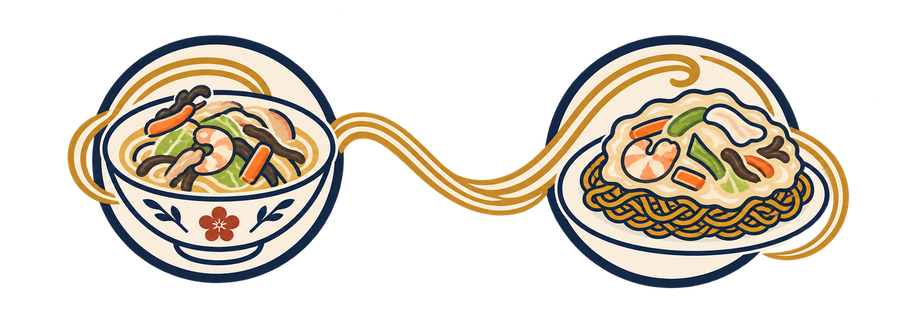
A defining feature of champon is that the noodles can be finished in the same pan as the stir-fried ingredients and soup, rather than always being boiled separately and transferred. The flavor of vegetables, meat, and seafood enters the broth, and the noodles absorb that broth.
Its practicality as a complete meal and the flavor created when everything comes together may help explain how it grew from a meal for students into a Nagasaki specialty.
Do not reduce the name to one theory
Several explanations exist for the word champon, including links to the Chinese expression chīfàn and to Portuguese. Nagasaki City also presents the origin as a matter of multiple theories.
Because the evidence remains unsettled, no single explanation can be treated as established fact. Reading documented evidence separately from stories passed down over time makes the still-unknown parts of the dish's history easier to understand.