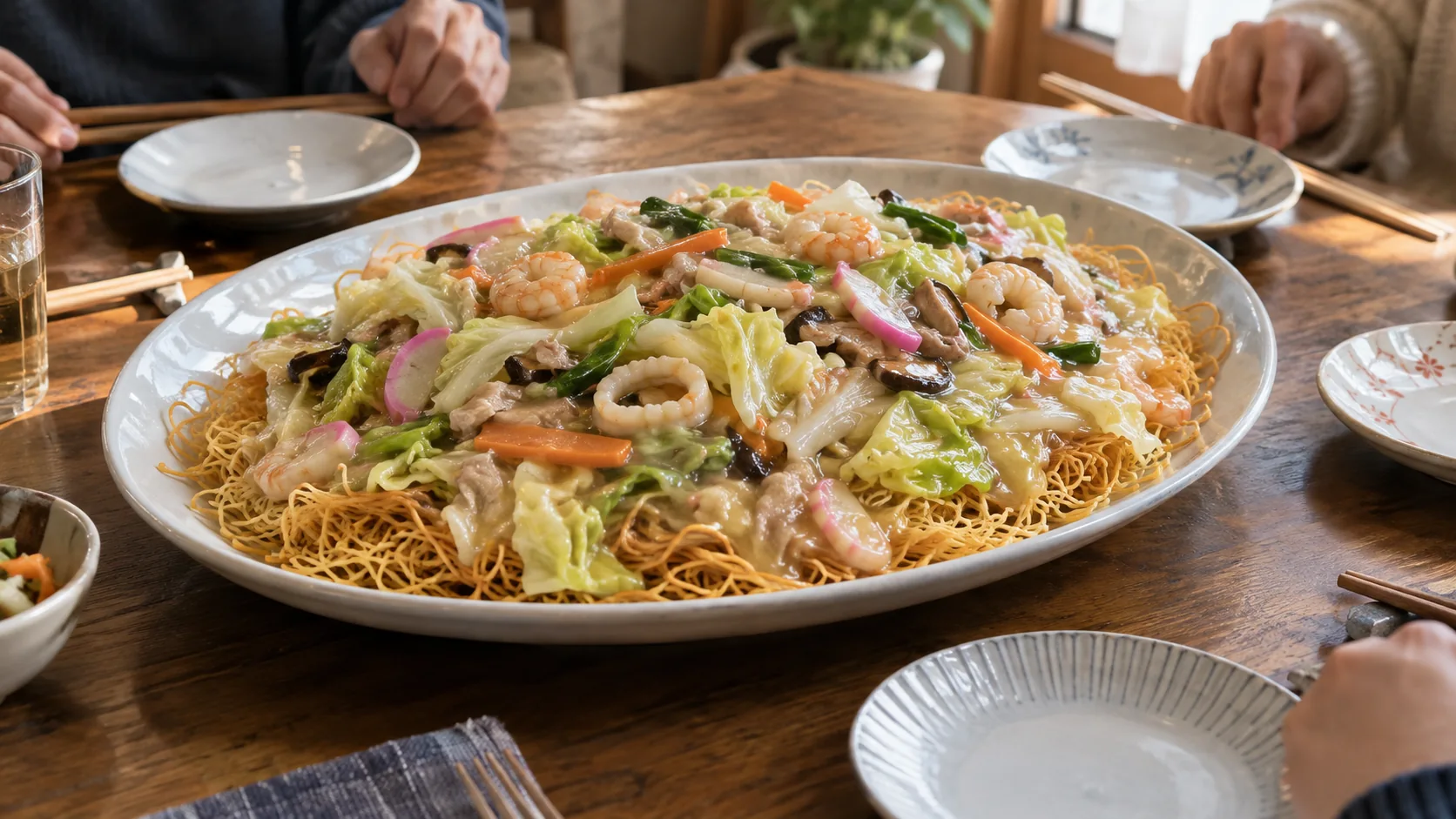
One plate per person is only one way to eat it
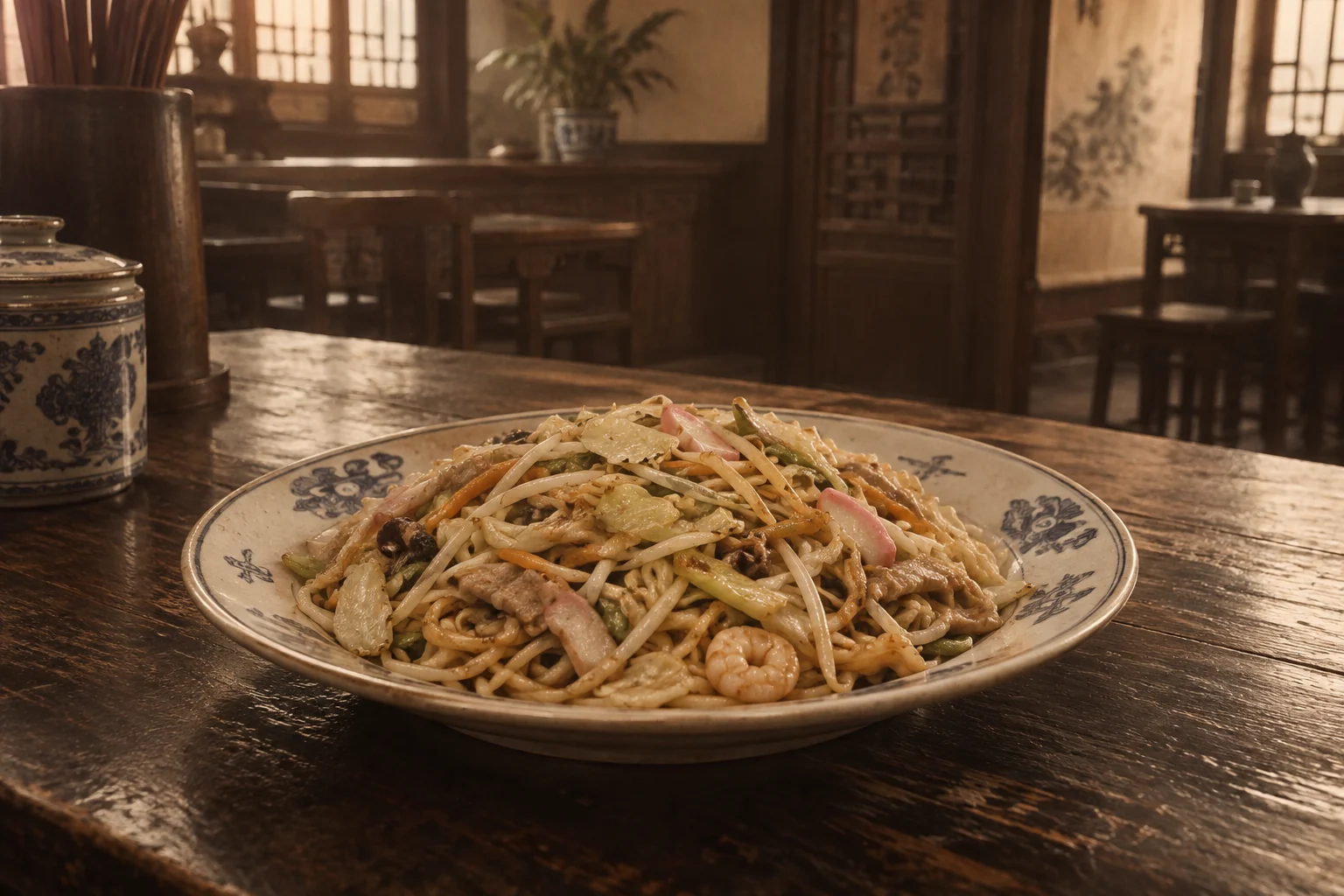
Ordering a personal plate of sara udon is perfectly ordinary. Yet Nagasaki also has a tradition of bringing several portions together on one large platter. Nagasaki City's tourism site notes that delivery orders for three or four people can arrive piled on a single plate.
Japan's Ministry of Agriculture likewise describes households ordering a large platter from a nearby Chinese restaurant for Obon, New Year gatherings and visiting relatives or guests. Sara udon belongs both to everyday meals and to occasions when people meet.
A big platter changes the table
Separate servings and a shared platter create different rhythms. Everyone takes noodles and toppings onto a smaller plate, chooses a portion and keeps talking as the meal goes on. Children and adults can eat from the same central dish.
This is not a claim that every Nagasaki family eats the same way. Platter size and toppings depend on the restaurant and the gathering. Still, the image of a shared dish offered to guests shows that sara udon has served as hospitality, not just convenient takeaway.
Delivery helped make that custom possible
A Nagasaki City feature recalls the usefulness of sara udon delivery when guests arrived unexpectedly. Rather than preparing several dishes, a household could bring a generous platter to the table. Nearby Chinese restaurants made that option part of everyday life.
The texture changes during the journey. Sauce softens the thin fried noodles wherever it touches them; a delivered dish will not be crisp in exactly the same way as one eaten immediately at the restaurant. The ministry even mentions families who enjoy sara udon the following day. Different stages of crispness and softness have their own fans.
When visiting Nagasaki, look at the size of the plate
If you are eating sara udon in Nagasaki with companions, ask whether a restaurant offers a platter for sharing as well as individual servings. Portion sizes and ordering rules vary, so confirm them for your group.
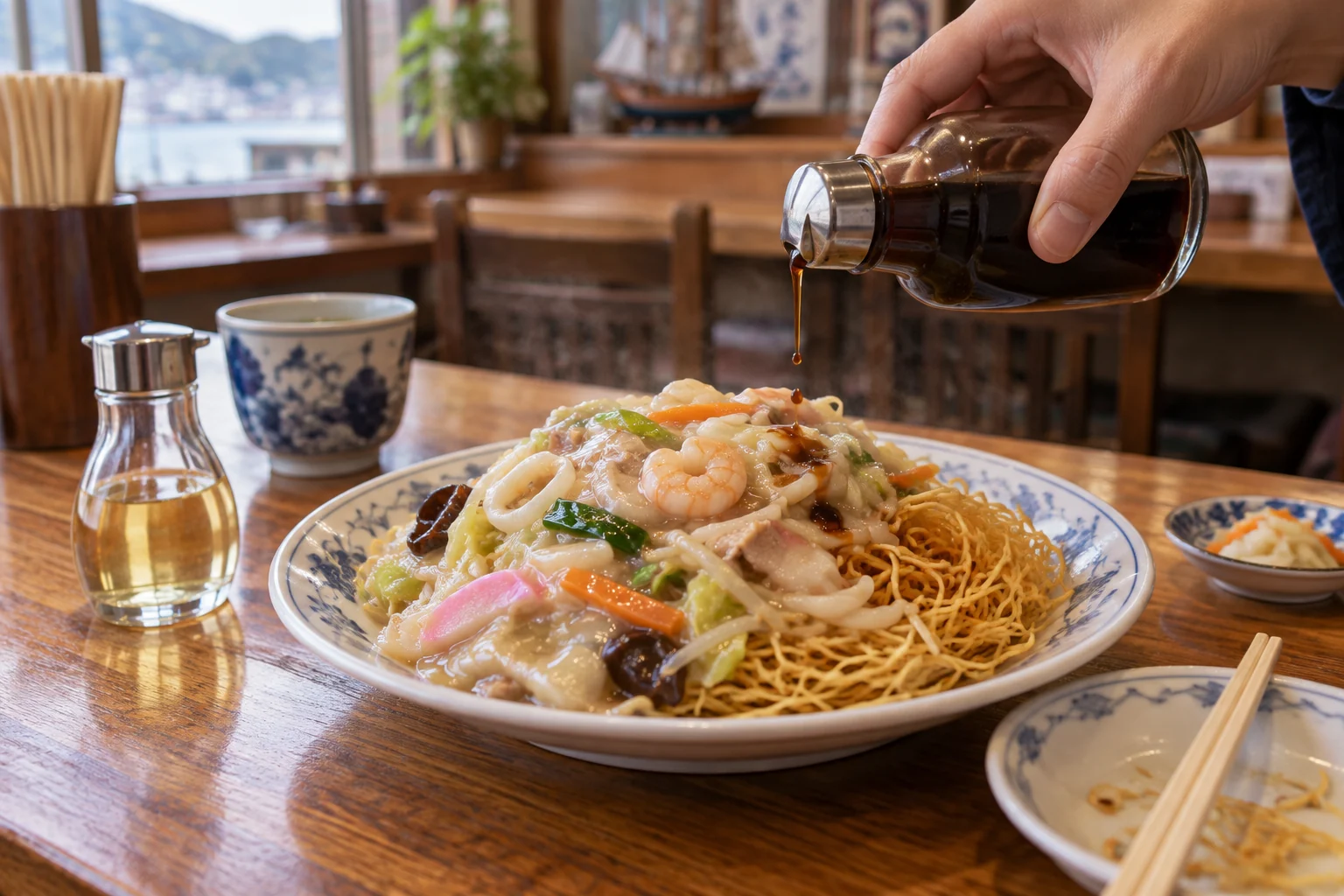
On one platter, some noodles remain dry and crisp, others soak up sauce, and some bites carry more toppings. Each small plate can taste slightly different. For a local way to season your own portion, read why Nagasaki diners add Worcestershire sauce to sara udon. The people around the plate are part of the story of this dish.