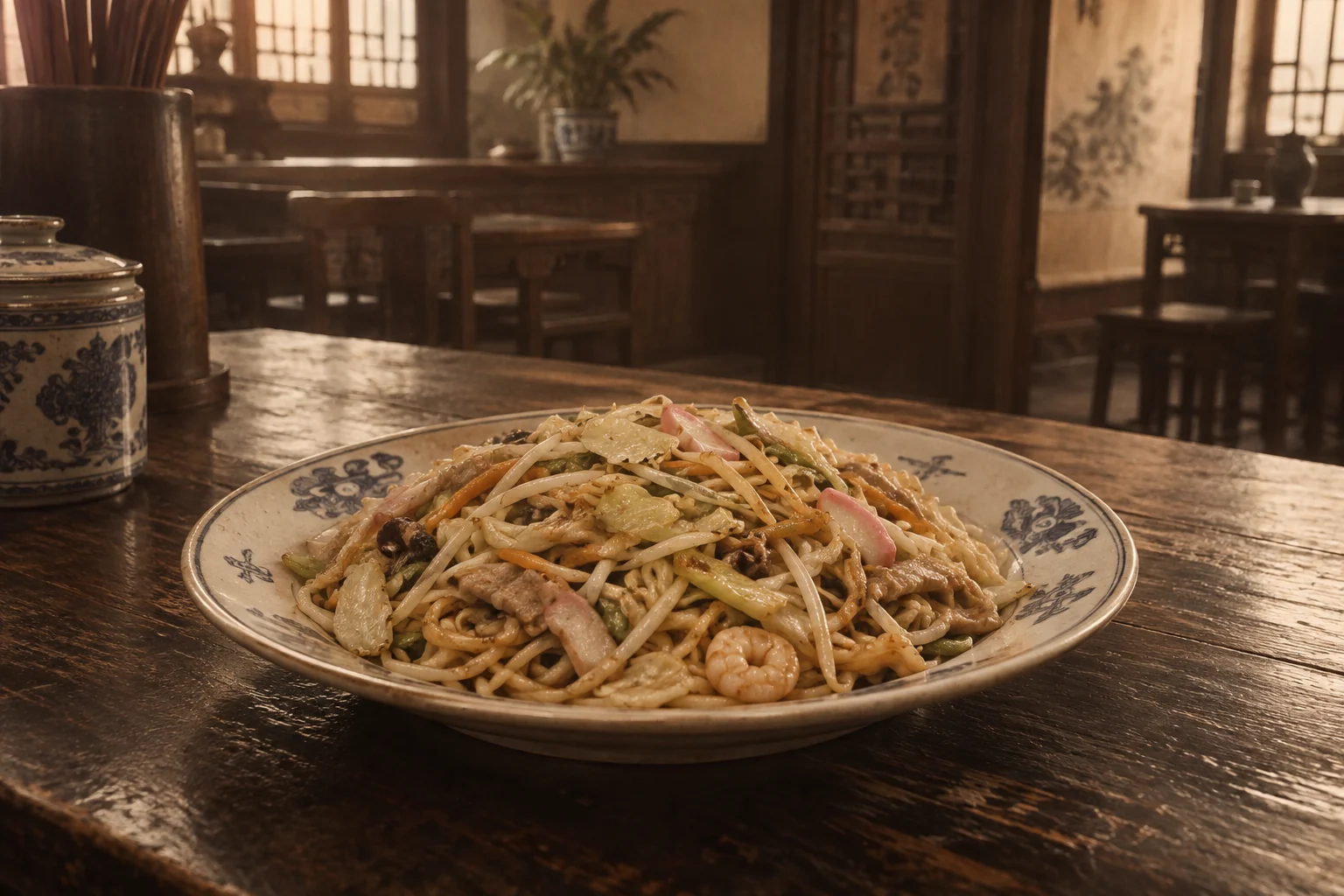
A brothless dish that grew out of champon
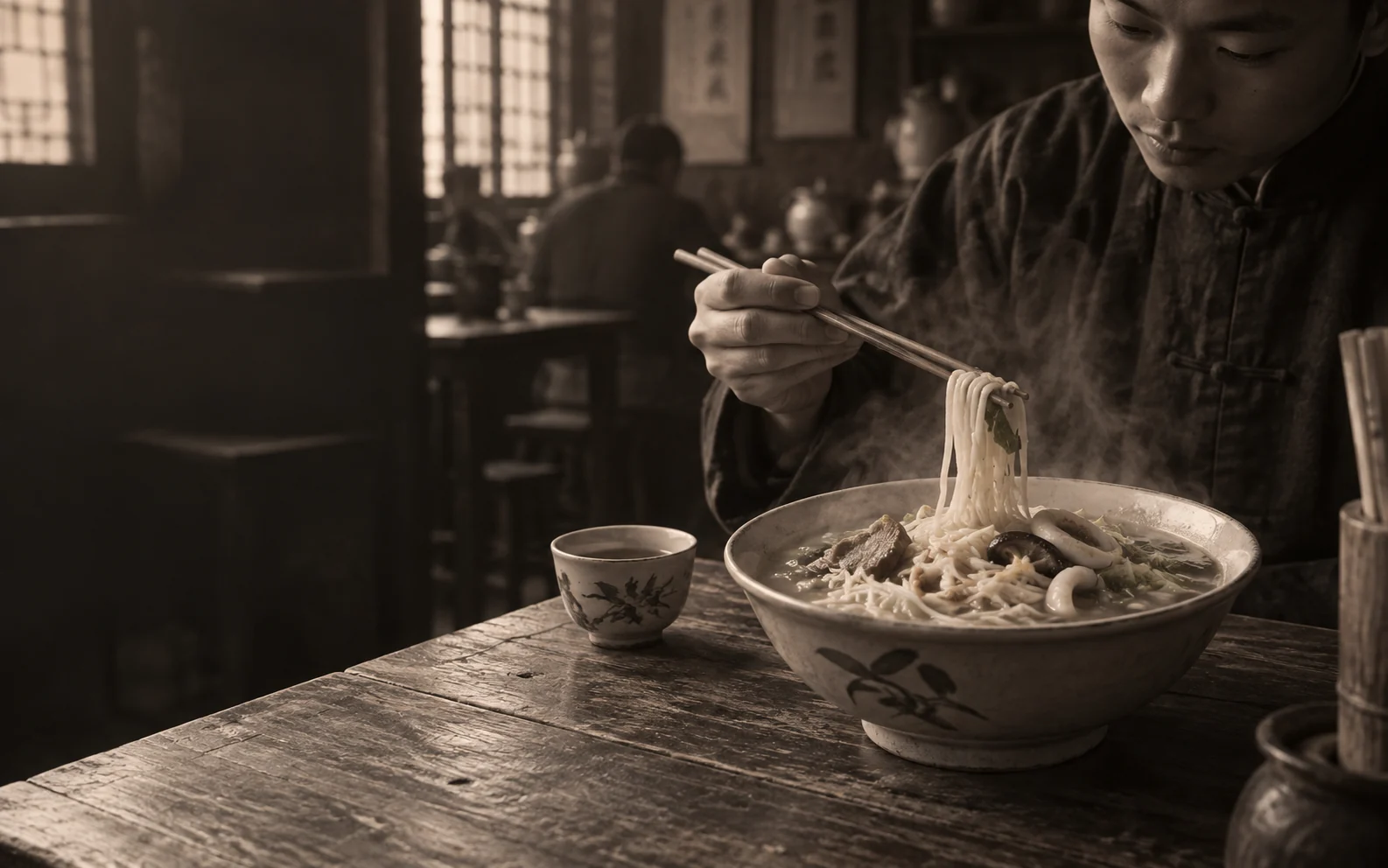
Shikairō describes founder Chen Pingshun creating sara udon as a variation on champon: champon noodles were seared, cooked with toppings, moistened with a small amount of stock and served on a flat plate. This is the style now called thick-noodle sara udon.
Why is it called ‘udon’?
At a time when noodle dishes were commonly served in bowls, a low-moisture noodle dish on a flat plate looked unusual. Here, udon does not mean the thick white Japanese noodle familiar today; the name is linked to the appearance of substantial noodles served on a plate.
Thin fried noodles helped the dish spread
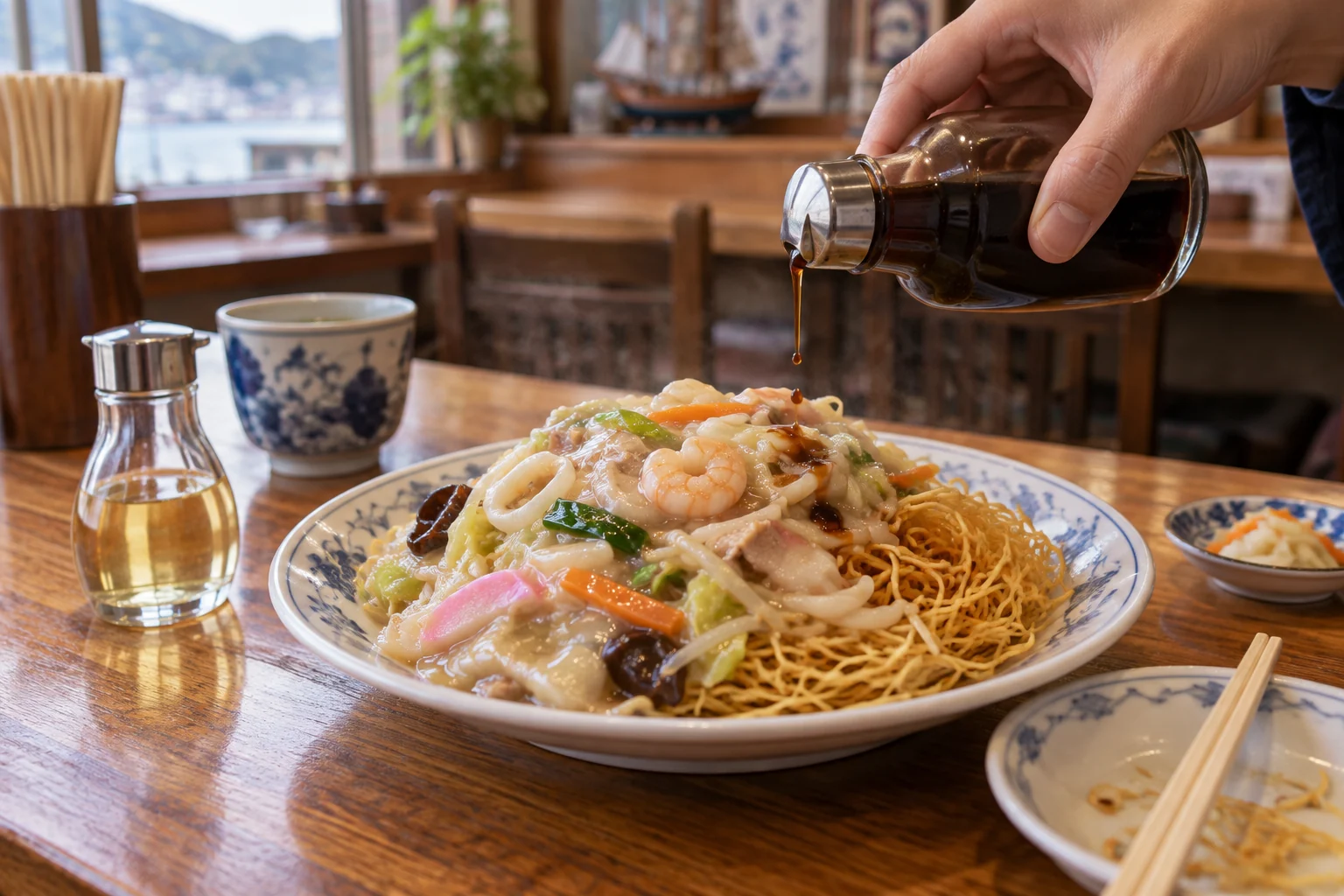
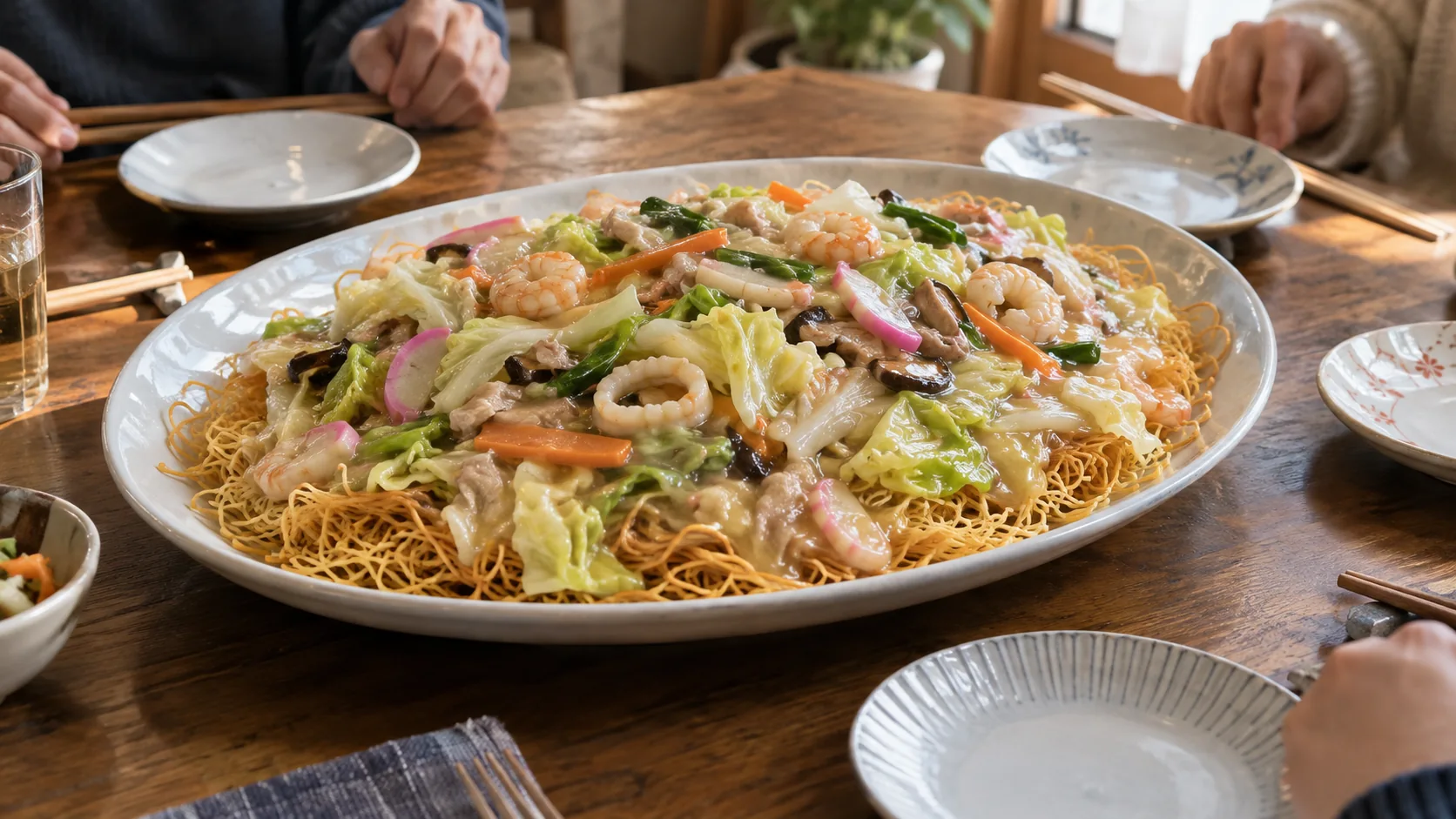
A later style used very thin fried noodles topped with thickened vegetables, pork and seafood. The noodles could be prepared ahead and finished quickly with hot toppings, which suited homes and busy restaurants. The older thick-noodle style nevertheless remained part of Nagasaki's food culture.
History gives you two dishes to taste
Thin noodles offer fried aroma and a texture that changes under the sauce. Thick noodles bring seared edges, a chewy centre and the flavor of a little absorbed stock. Trying both traces sara udon's development through taste.