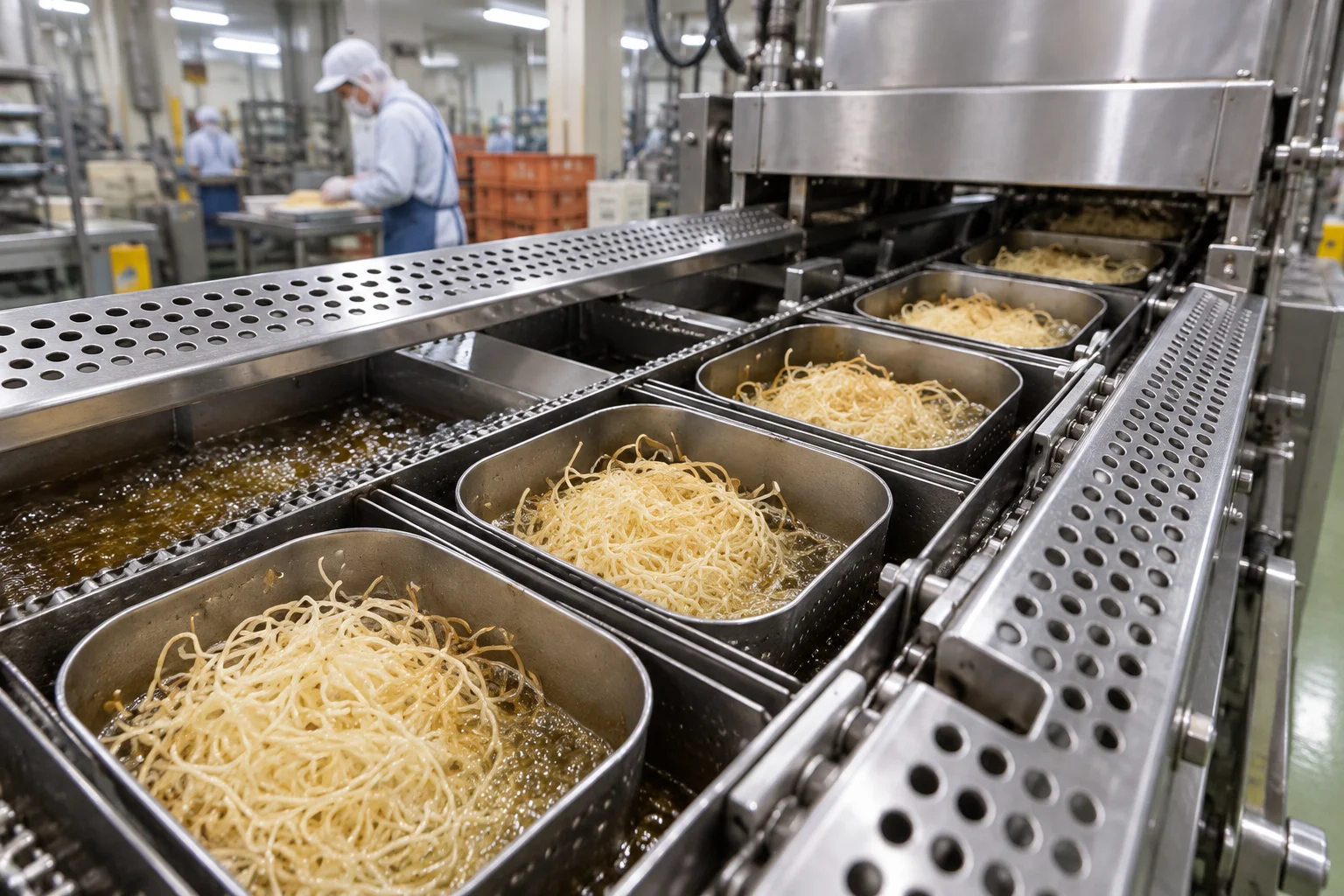
Thin strands take up heat quickly
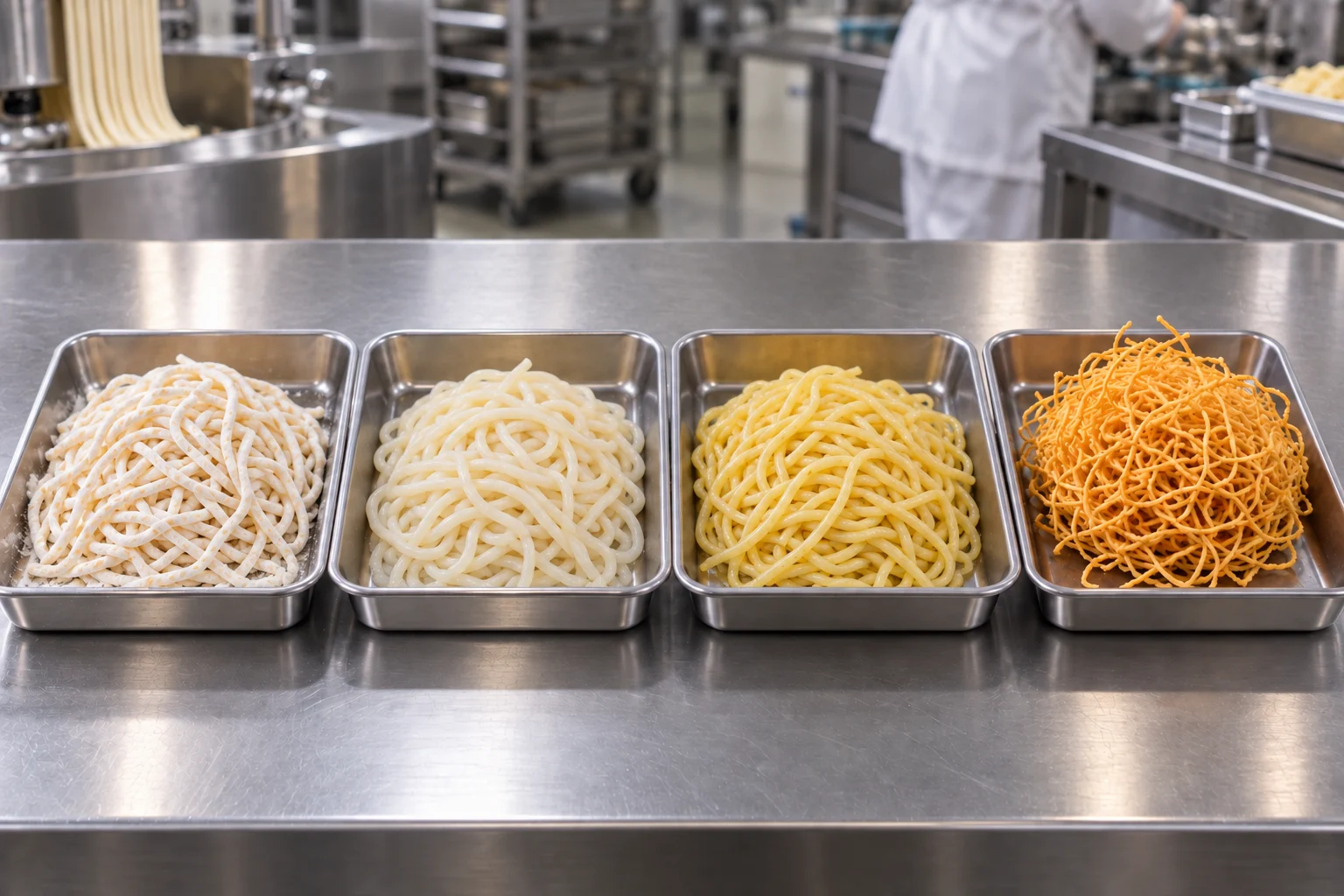
Sara udon's thin noodles are fried to reduce moisture and create a light crunch. Thickness matters, but so do the dough formula, condition before frying, oil temperature and frying time. These variables change hardness, aroma and how readily the noodle softens.
The sauce completes the design
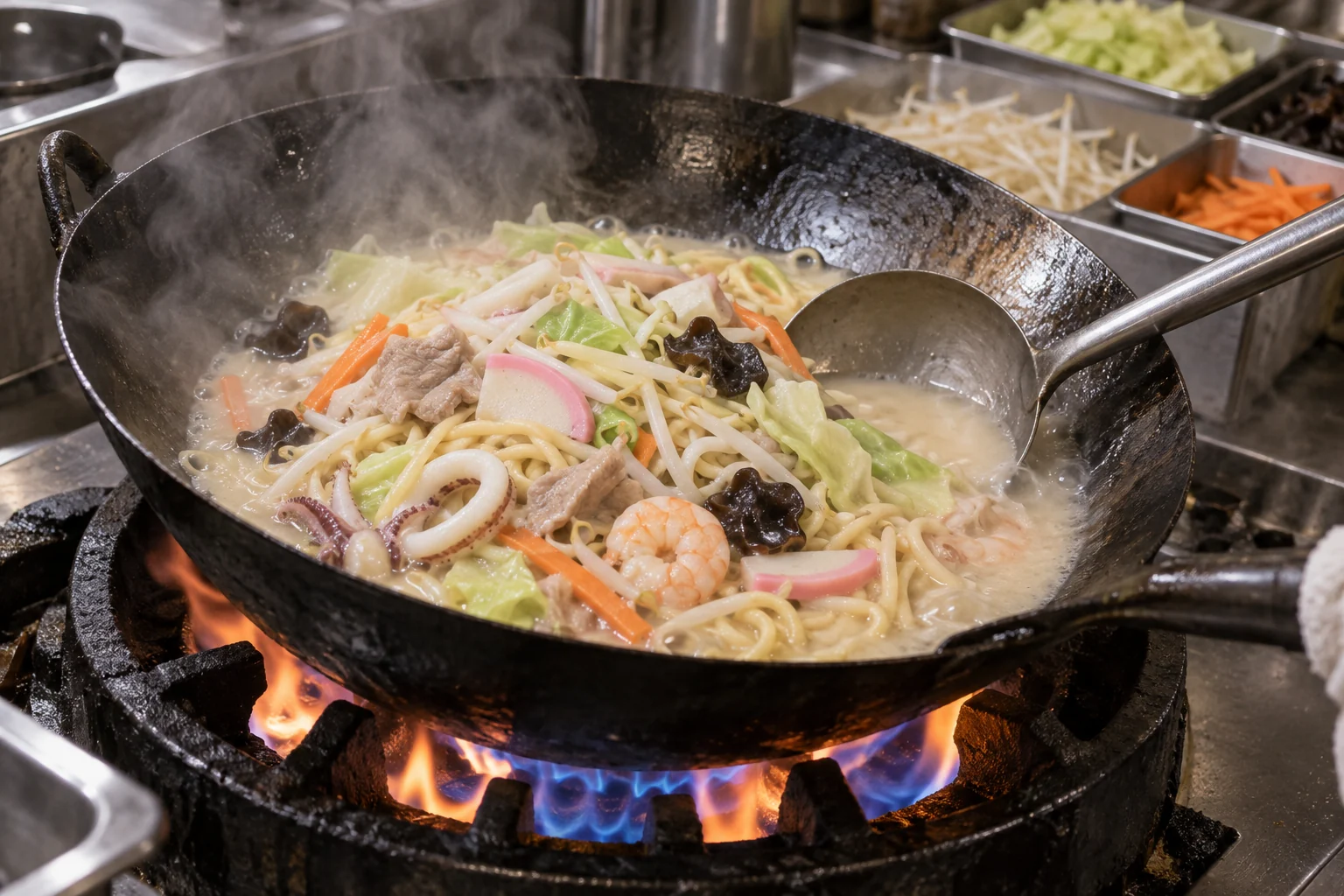
A fried portion contains countless gaps. Sauce coats some strands, seeps between others and leaves a few dry, producing crisp, soft and in-between textures in the same plate. That change over time is part of the dish, not simply deterioration.
Look beyond thickness when choosing noodles
Restaurants also need speed and consistency; home cooks benefit from portions that are easy to handle.
- Portion shape and size after it is spread on the plate.
- Breakage and the amount of loose fragments in the package.
- Whether the frying aroma overwhelms the sauce.
- Texture one, three and five minutes after saucing.
Protect fried noodles from humidity and odors
Reseal opened packages as directed, keep them away from damp places and strong smells, and do not stack heavy items on top. Small broken pieces can still be placed beneath the toppings and enjoyed as part of the texture.