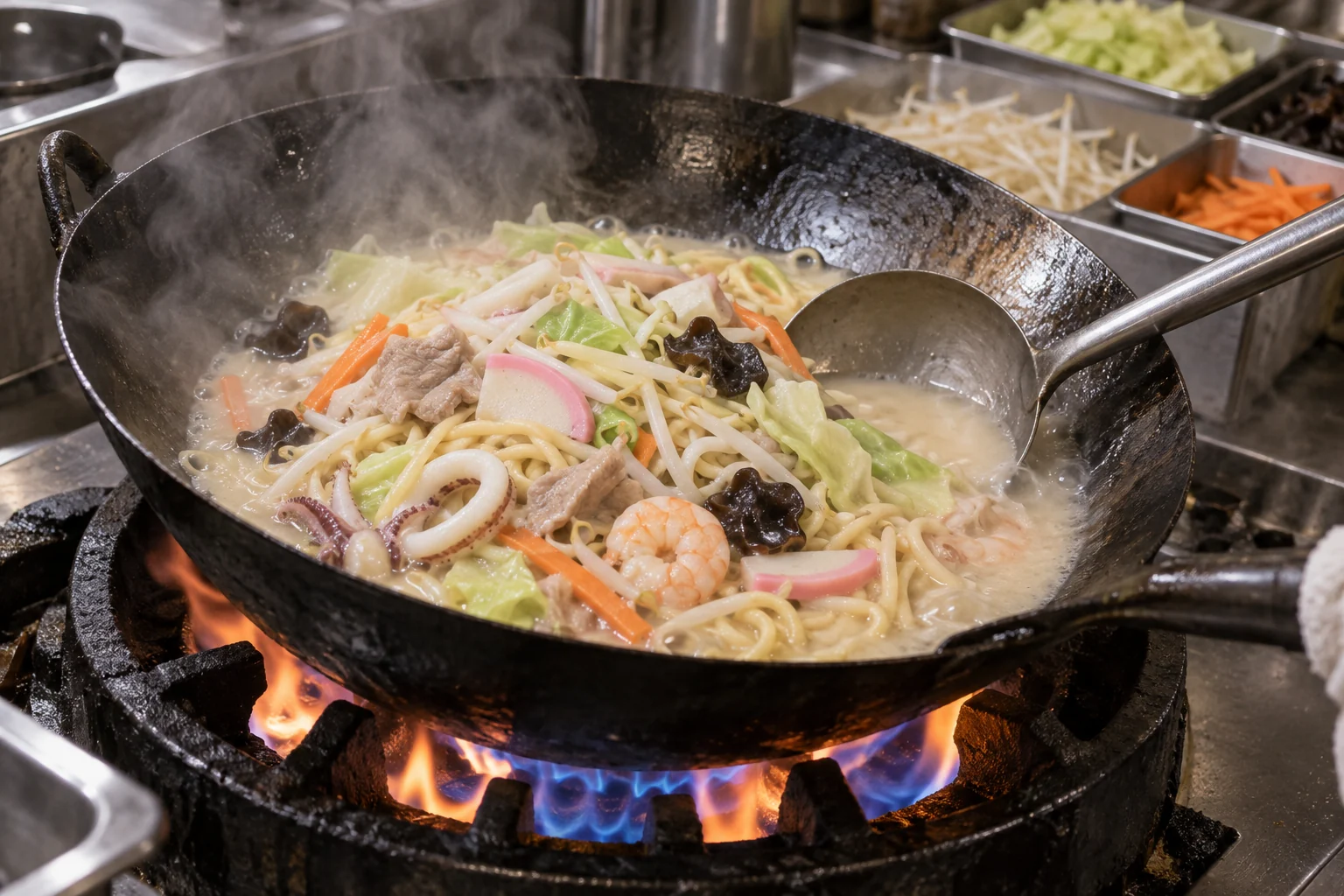
The difference is more than thickness
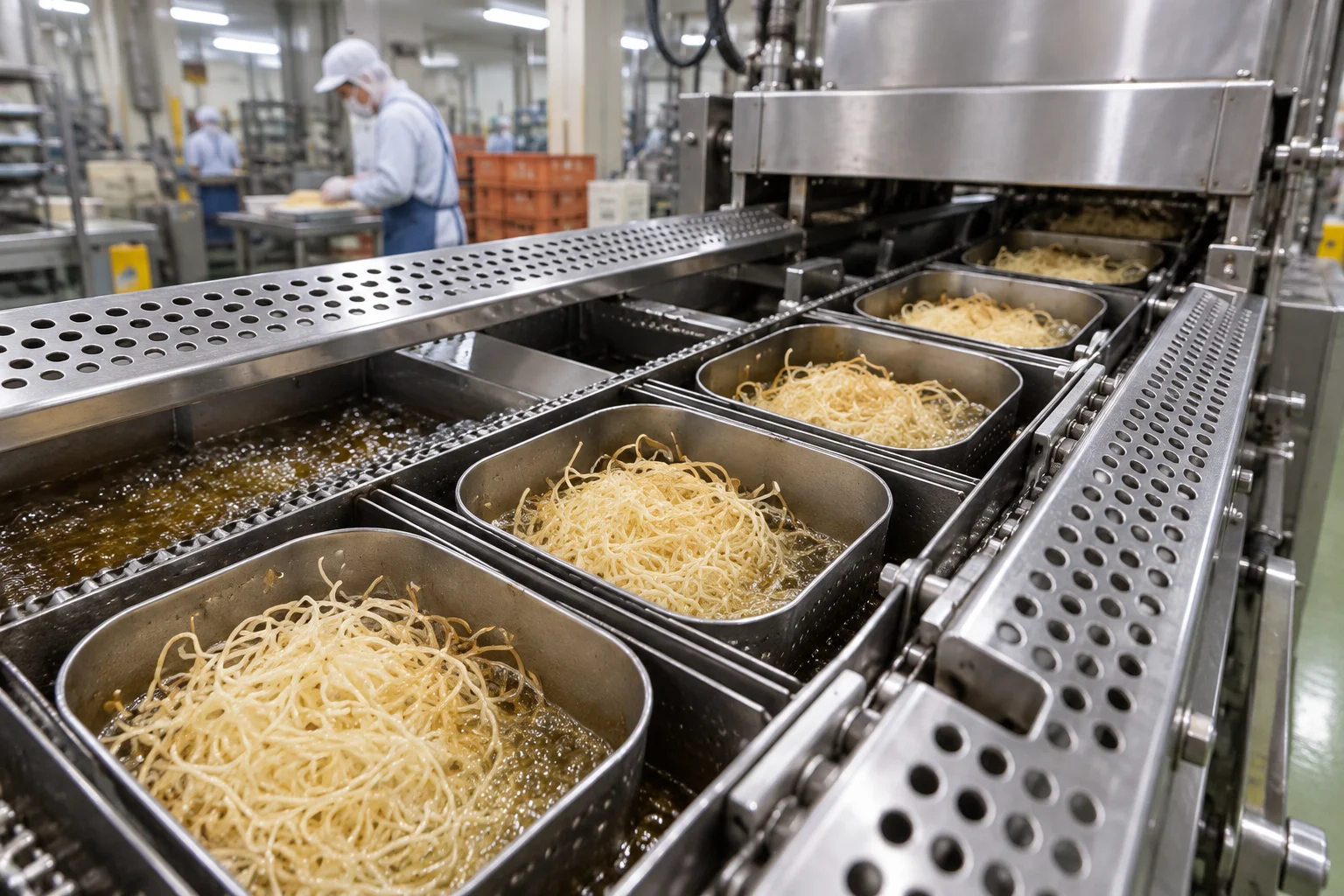
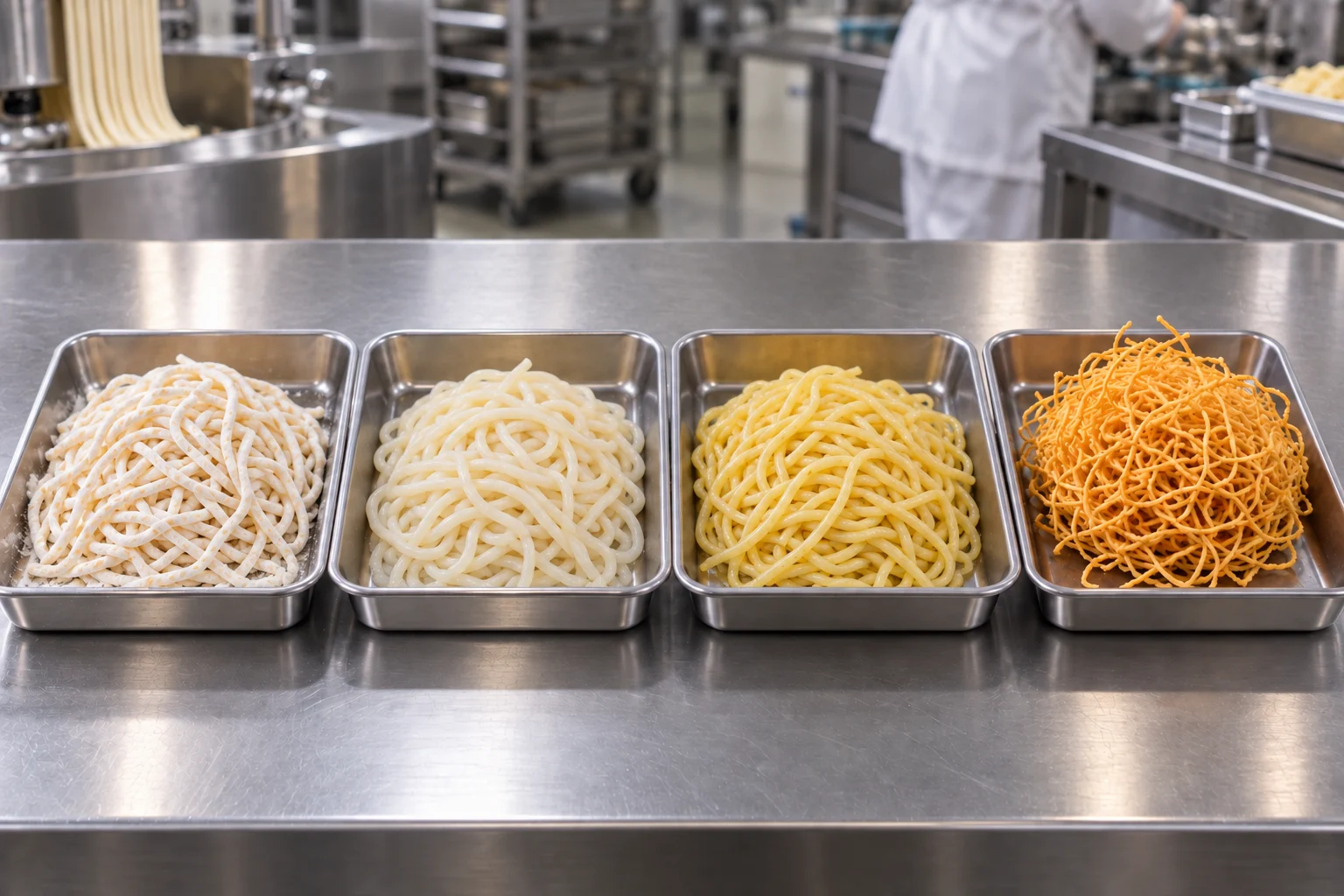
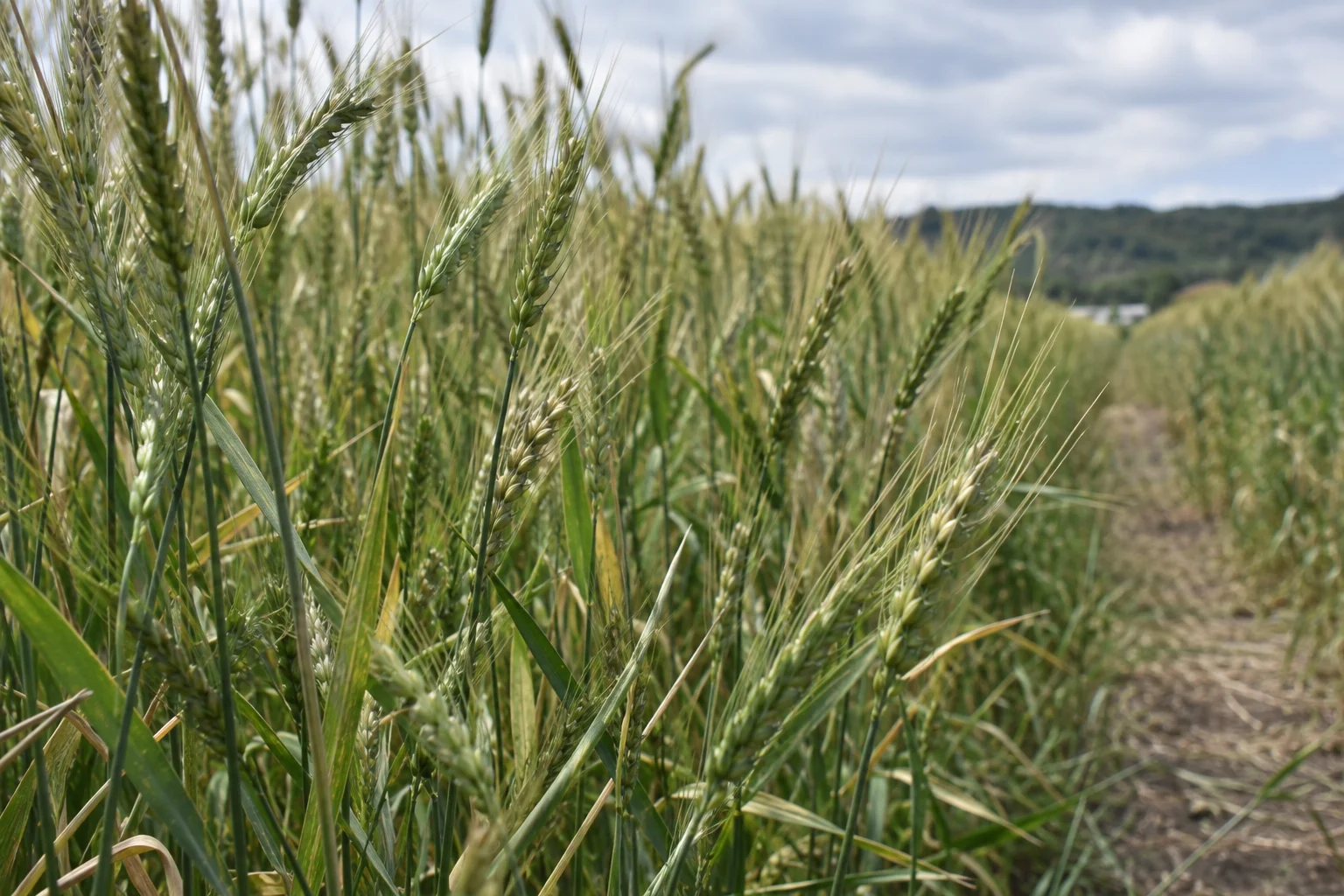
Rounded, thick noodles are often the first image associated with champon. Thickness alone, however, does not determine character. Flour selection, hydration, alkaline agents, mixing, sheet formation, and heat treatment can all change texture and cooking performance.
Look beyond the product name and thickness to what goes into the noodles, how they are made, and how they finish in the pan. Tōaku and cooking method are useful places to begin.
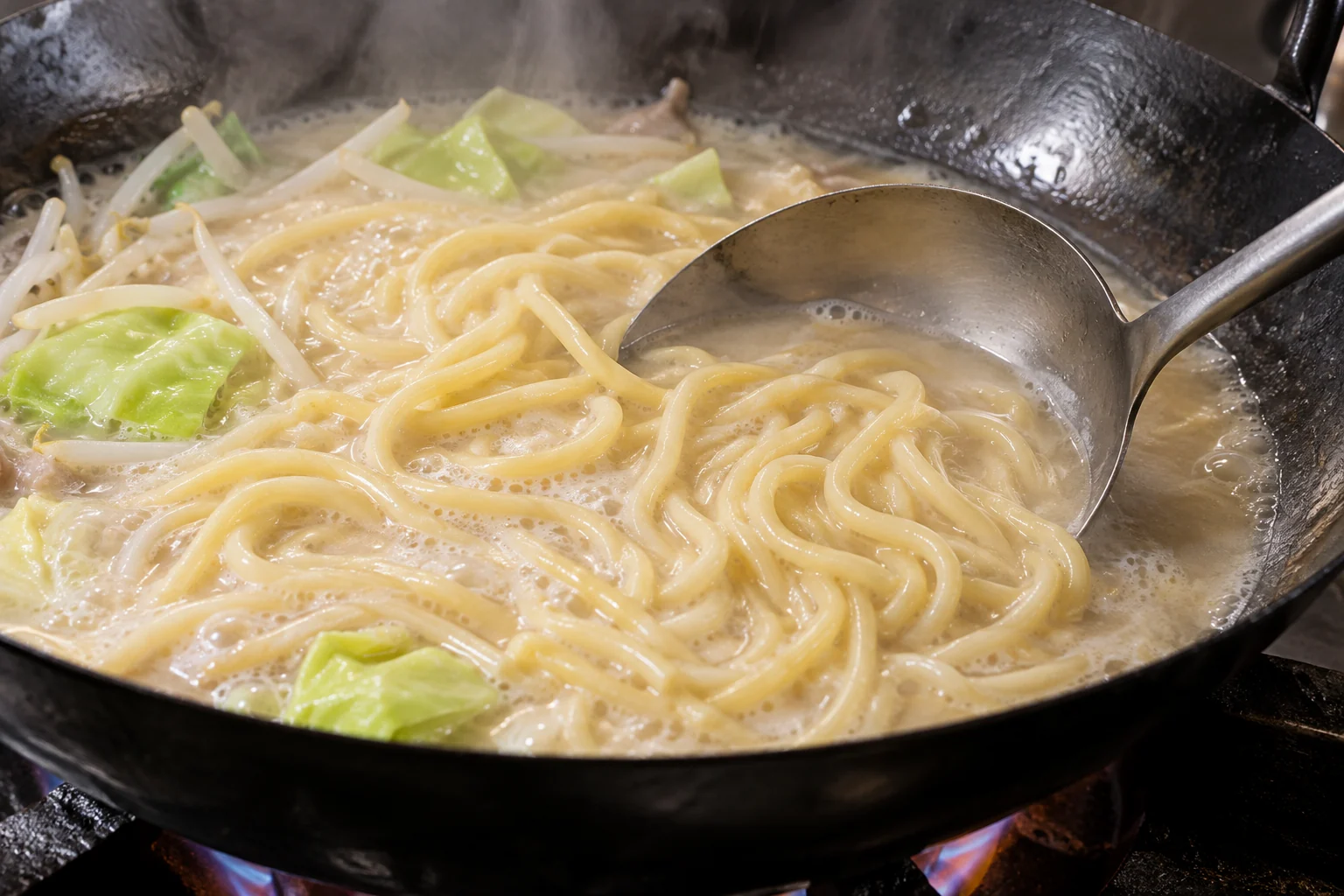
Tōaku, a Nagasaki tradition
Nagasaki Prefecture's tourism information describes tōaku as a Nagasaki-specific alkaline solution used for champon noodles, associated with their distinctive aroma and soft yet springy bite.
Actual formulas and processes differ by manufacturer and product. Not every champon noodle uses the same tōaku or the same formulation. Checking labels and specifications—and asking the maker when necessary—is the reliable approach.
Designed to finish in the pan
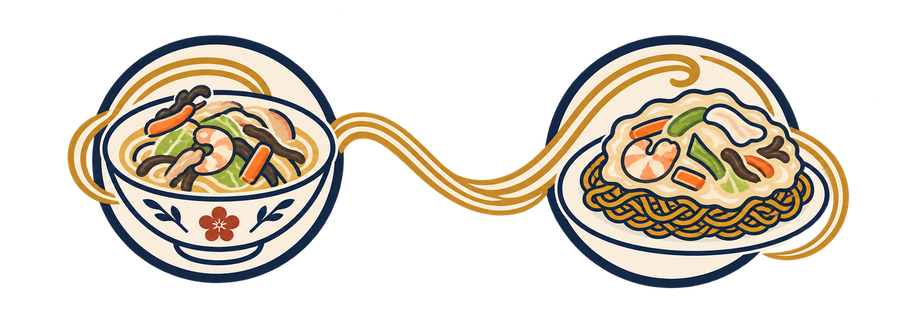
A representative champon method adds soup to stir-fried ingredients and finishes the noodles in that same pan. The noodles remain in contact with heat and a broth enriched by the ingredients.
Selection therefore involves more than firmness at the instant of boiling. Consider texture during continued heating, how the noodles take up soup, and the time before serving. Home cooking, single portions in a restaurant, and high-volume kitchens demand different durability and handling.
Four questions to ask a noodle maker
Formulations and processes vary by maker and product. Labels, specification sheets, and direct questions to the manufacturer reveal differences that thickness alone cannot show.
- Recommended cooking method and time: whether the noodles need pre-boiling or can be simmered directly.
- Condition at delivery—fresh, boiled, steamed, or frozen—and storage requirements.
- Portion weight and how the noodle is designed for the intended amount of soup.
- How quickly the texture changes after cooking.