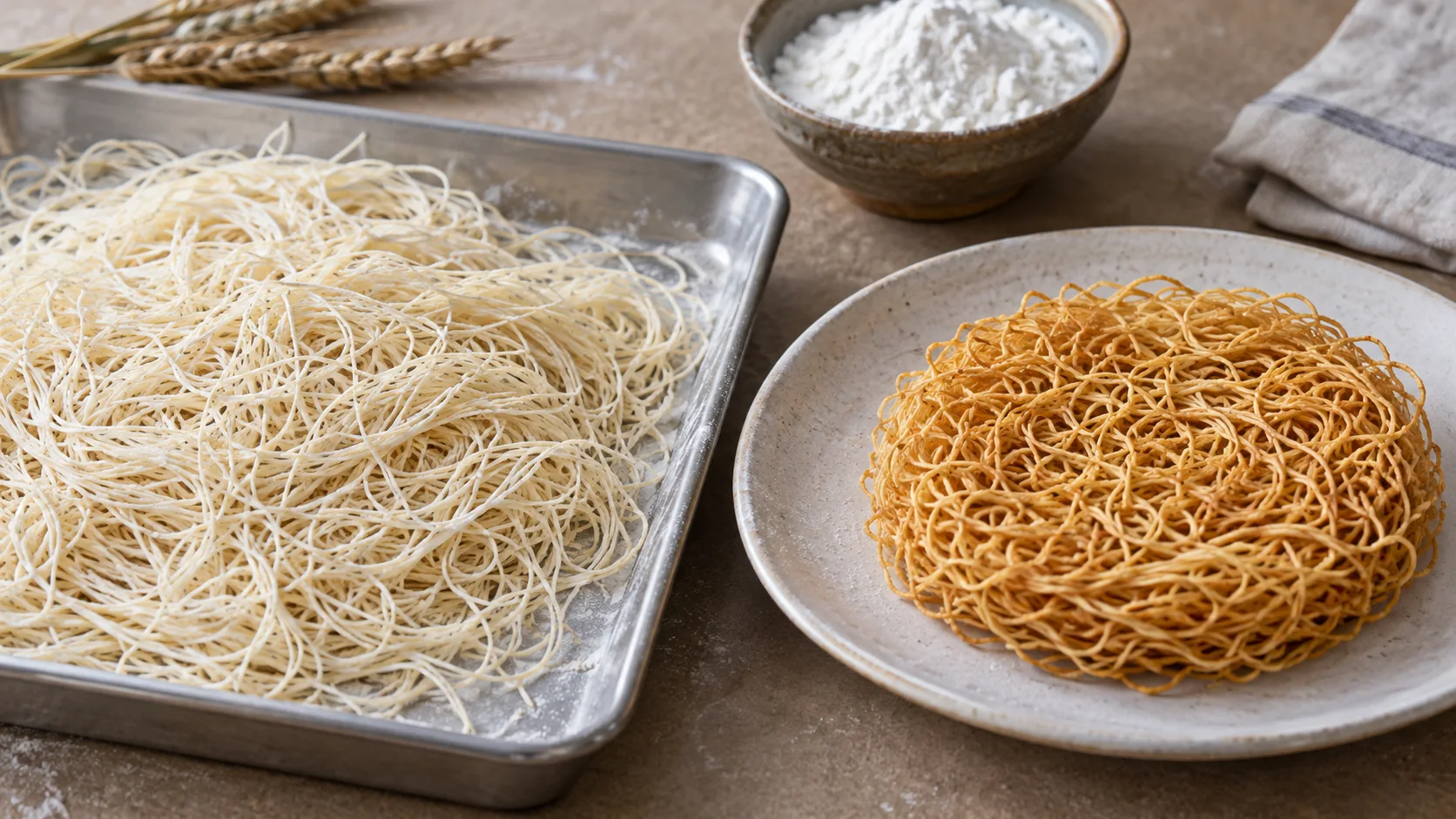
Thin strands and frying create the crunch
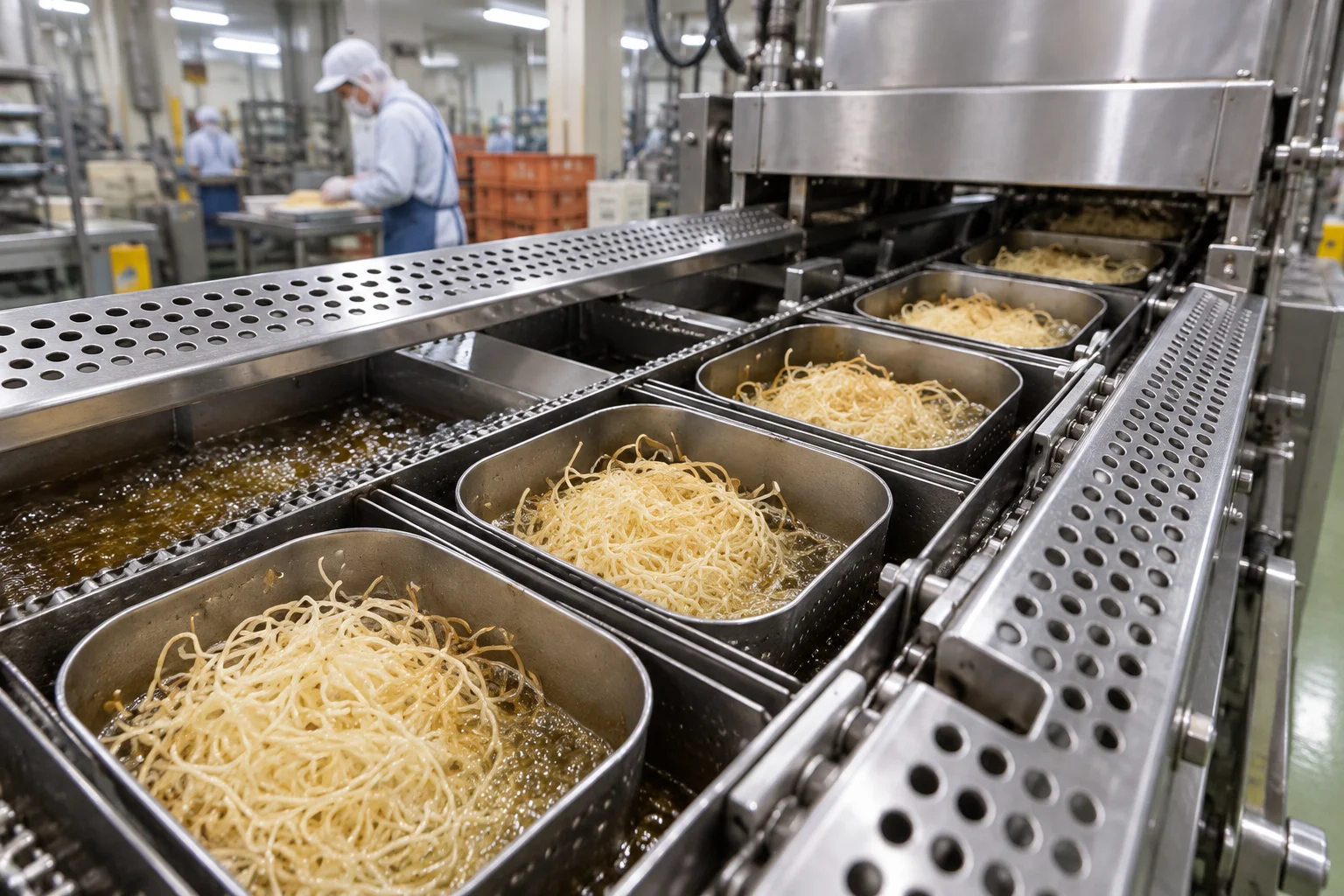
Thin-noodle sara udon uses fried Chinese-style wheat noodles that are ready to eat before the topping goes on. Frying removes moisture and gives the fine strands their light, brittle crunch. Once hot sauce-coated ingredients reach the plate, the covered parts soften while uncovered strands stay crisp.
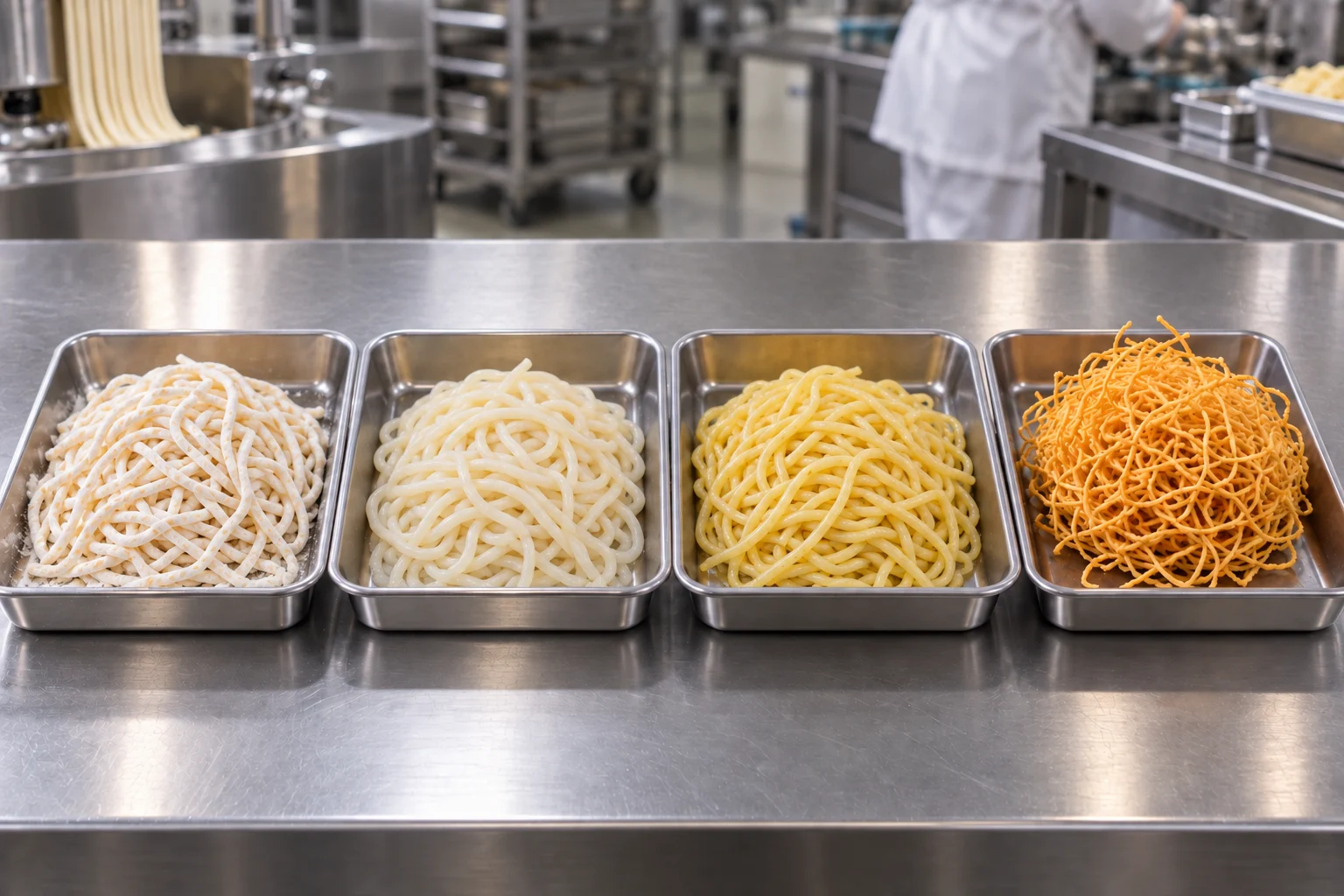
You do not simmer these ready-fried noodles at home first. Thick-noodle sara udon is another style, sometimes made with noodles closer in size to champon noodles and cooked in a pan. Before talking about 'sara udon noodles,' check which style the product actually contains.
What does the ingredient list say?
One frozen sara udon product with toppings sold by Carino Shokuhin separates its ingredients into noodles, toppings and soup. Under 'noodles,' it lists wheat flour, vegetable oil, salt, kansui and gardenia coloring. Wheat flour forms the noodle; the fried product also contains oil. Kansui is an alkaline ingredient used in Chinese-style noodles and affects their color and texture. Do not mistake the topping or soup ingredients for the noodle's own ingredients.
That is one product, not a universal formula. A packet of fried noodles sold alone or a product from another maker may use different ingredients and organize its label differently. An ingredient list cannot tell you the exact strand diameter, oil temperature or frying time. Do not infer an undocumented production process from the picture on the pack.
If you need to avoid wheat, check the allergen declaration on the particular product. Wheat is among the ingredients that must be declared under Japan's packaged-food allergen labeling rules.
Shape, oil and storage also affect the bite
The spaces between the fine fried strands let the sauce settle into the noodle nest. Strand thickness and how tightly the noodles are packed affect how fast they soften and how much crunch remains. In a store, look past the serving photograph and check the noodle shape and portion size in the package.
Because this is a fried product, packaging and storage conditions matter too. Follow the stated best-before date and storage directions; use an opened pack as instructed. Noodles sold alone and a kit containing soup require different extra ingredients and preparation steps.
The back of the pack is also a cooking guide
Wheat flour, oil and kansui point to a fried Chinese-style noodle rather than fresh udon. Then look for portion size, whether soup is included and the cooking directions. Together, those details tell you what else you need to make dinner. For more on why the strands stay crunchy, read how thin sara udon noodles are fried.
An ingredient list is not a ranking of taste. Aroma and texture in the final plate depend on the condition of the noodles and how they meet the hot topping. Use the label as a starting point, then judge the finished dish.