Describe the bowl before asking for a diameter
When buying commercial champon noodles, it is tempting to begin with millimeters. But noodles of the same thickness can eat very differently depending on how long they simmer, how many vegetables go into the pan and how long the finished bowl waits before serving. Start with the dish your kitchen intends to make.
Is the broth light or rich? Are generous toppings part of the appeal, or is the noodle the focus? Will the noodles finish in the wok, or be heated separately before combining? Tell the noodle maker your actual sequence. It helps them suggest options that a diameter alone cannot distinguish.
1. Delivery state and portion size
Fresh, pre-boiled and frozen noodles differ in heating time and storage requirements. Portion weight is more than a choice between regular and large: it determines how the noodles balance the broth and toppings after cooking.
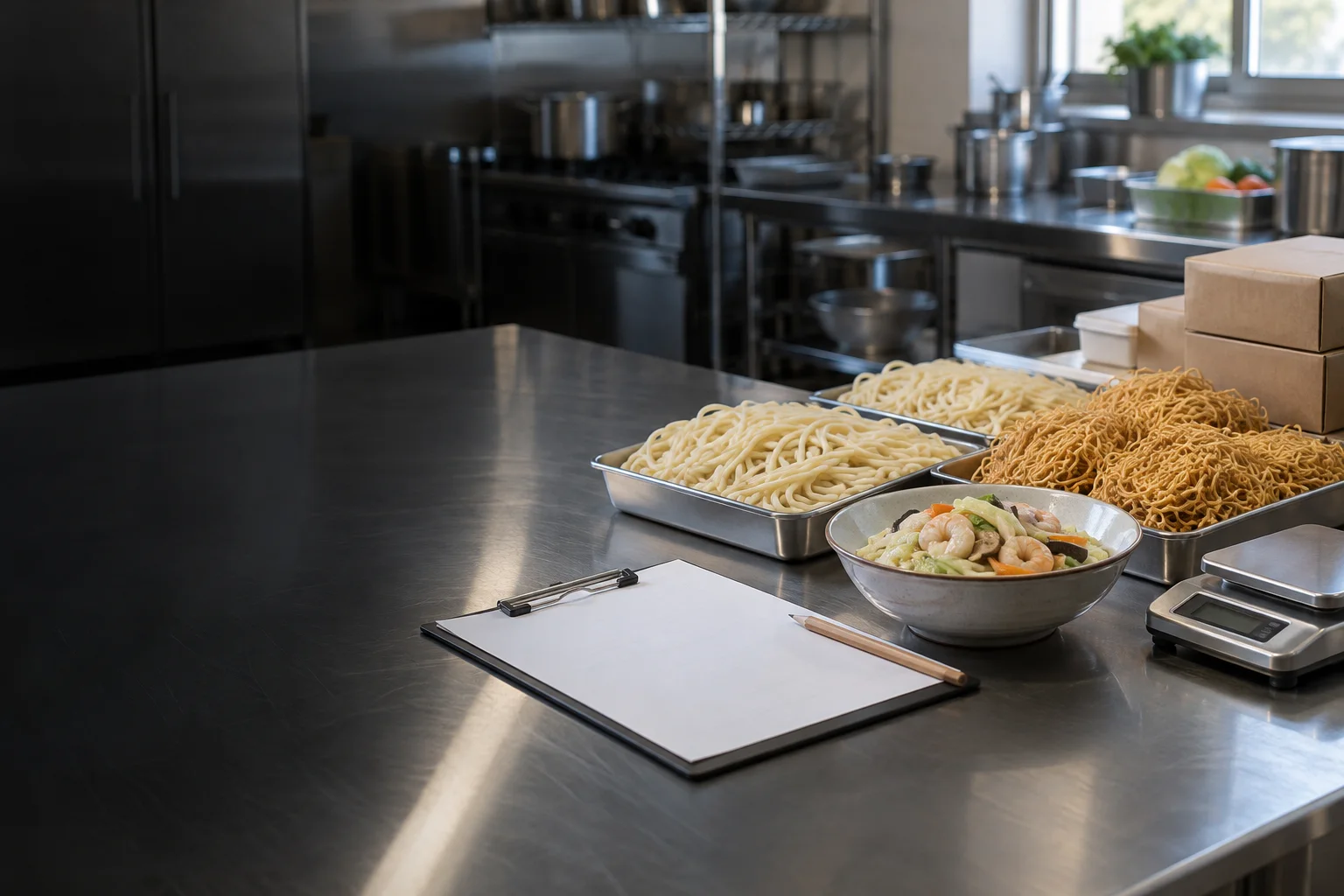
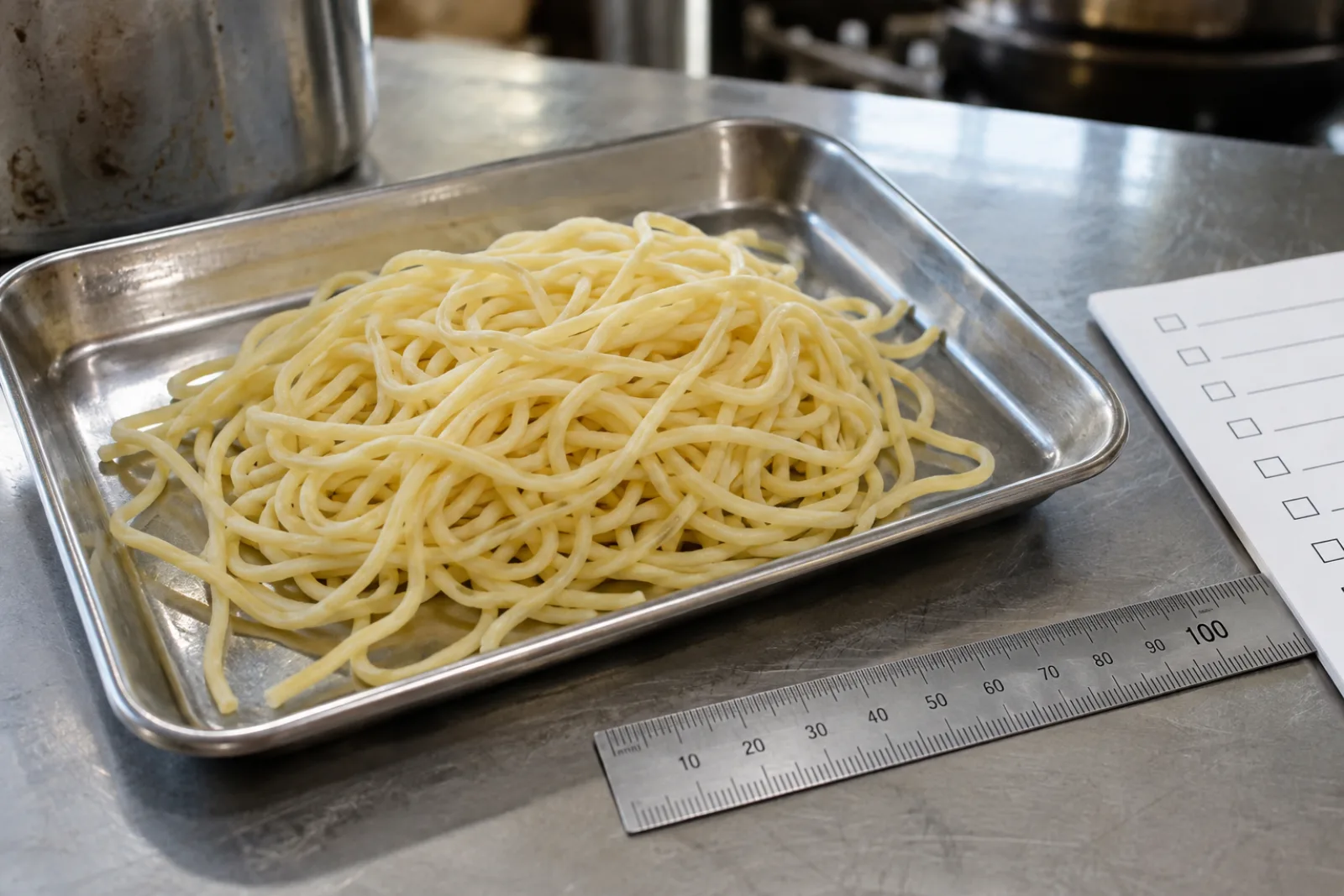
When samples arrive, record the product name, delivery state, weight per serving and packing unit. Numbers cannot predict texture on their own, so cook candidates under the same serving conditions before comparing them.
2. Wok time and texture at service
A common Nagasaki champon method finishes noodles in broth with stir-fried toppings. Test a sample immediately after the recommended heating time, then again at the point it would actually reach a customer.
Notice surface smoothness, bite and how the noodle works with the broth. A few minutes of waiting may matter in a busy service, but there is no universal pass/fail time. Judge it against your menu and kitchen flow.
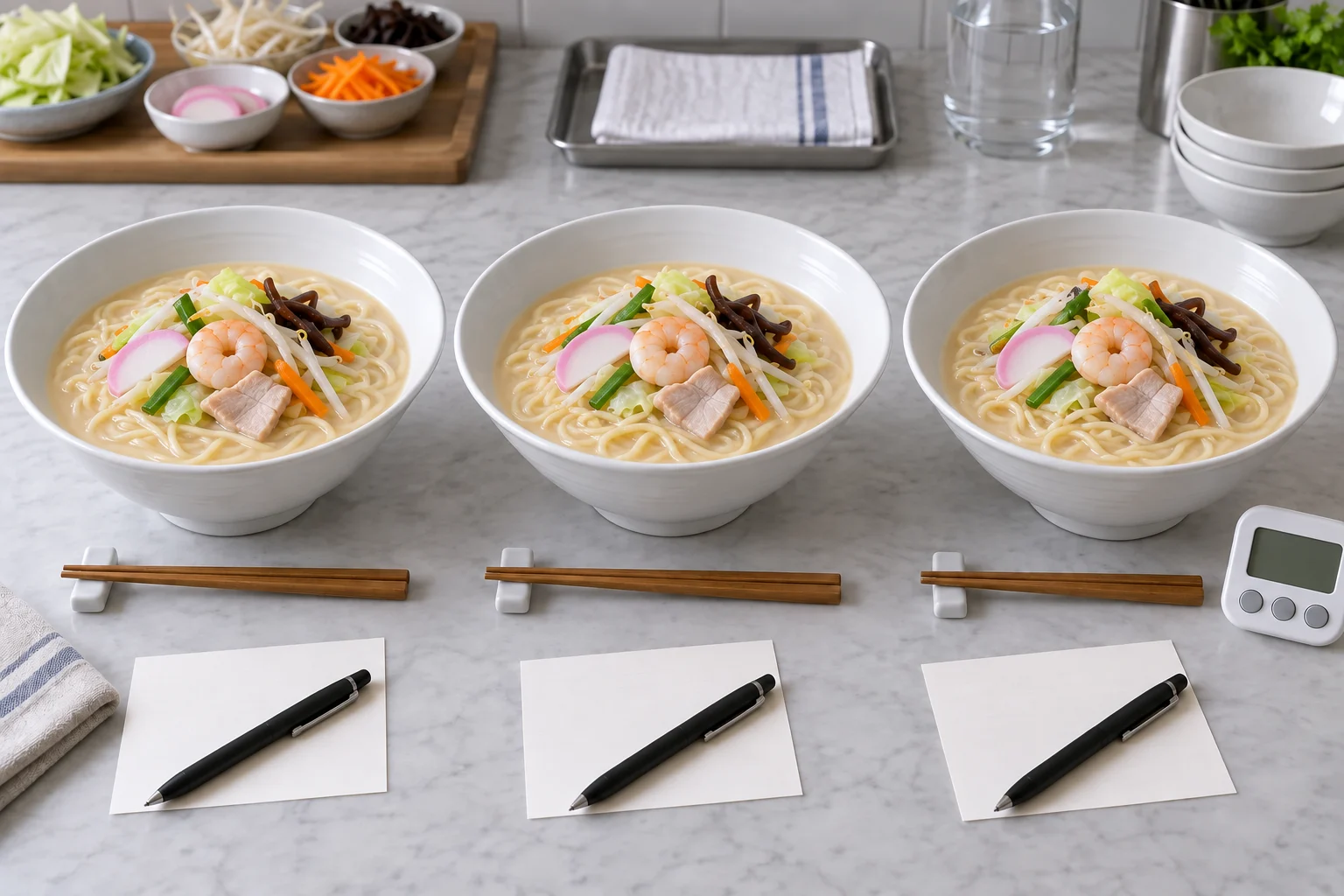
Keep topping amounts, broth temperature and cooking times consistent across samples. Otherwise you may compare two cooking methods rather than two noodles. Write down when the noodles went into the wok, when the bowl was plated and when it was tasted. The commercial noodle tasting checklist offers more points to record.
3. Storage space and daily use
Where will the noodles live—refrigerator, freezer or shelf—and how many servings can the kitchen handle at once? A noodle can suit the dish yet be awkward to store or use up. Confirm the actual product's storage conditions and dates on its label or specification sheet.
Sharing expected daily sales and busy-day swings helps the maker discuss case size and order quantities. To reduce waste, calculate how many days it takes to finish a case, rather than looking at shelf life alone.
If a case holds more than a day's sales, check how opened packs must be stored and used. If weekends may need extra stock, ask about normal delivery days and order cutoffs. Texture tests and inventory calculations can happen separately, but both belong in the decision.
4. Labeling and the place of service
Ingredients, allergens and the stated cooking and storage directions affect menu information and food handling. Check each candidate's declaration for wheat rather than relying on the dish name. Keep specification sheets on hand so everyone in the operation uses the same product information.
5. Ordering and delivery
Finally, note the delivery region, preferred order unit, usual and peak quantities, and when stock is needed. Minimum orders, prices and lead times are product- and supplier-specific; ask the noodle maker directly. If you want a trial batch, describe the bowl, how you cook it and how many servings you expect.
Carino Shokuhin publishes information on its champon and sara udon noodles. Whether an existing item fits or you need to discuss a particular use, a short brief makes the conversation more productive.
- Dish: What broth, toppings and finishing method?
- Product: What delivery state, serving weight and pack unit?
- Kitchen: How much heating and waiting before service?
- Management: What storage space, usage and specification sheets?
- Supply: Which delivery region, quantities and dates?