The short answer: it was a noodle dish served on a plate
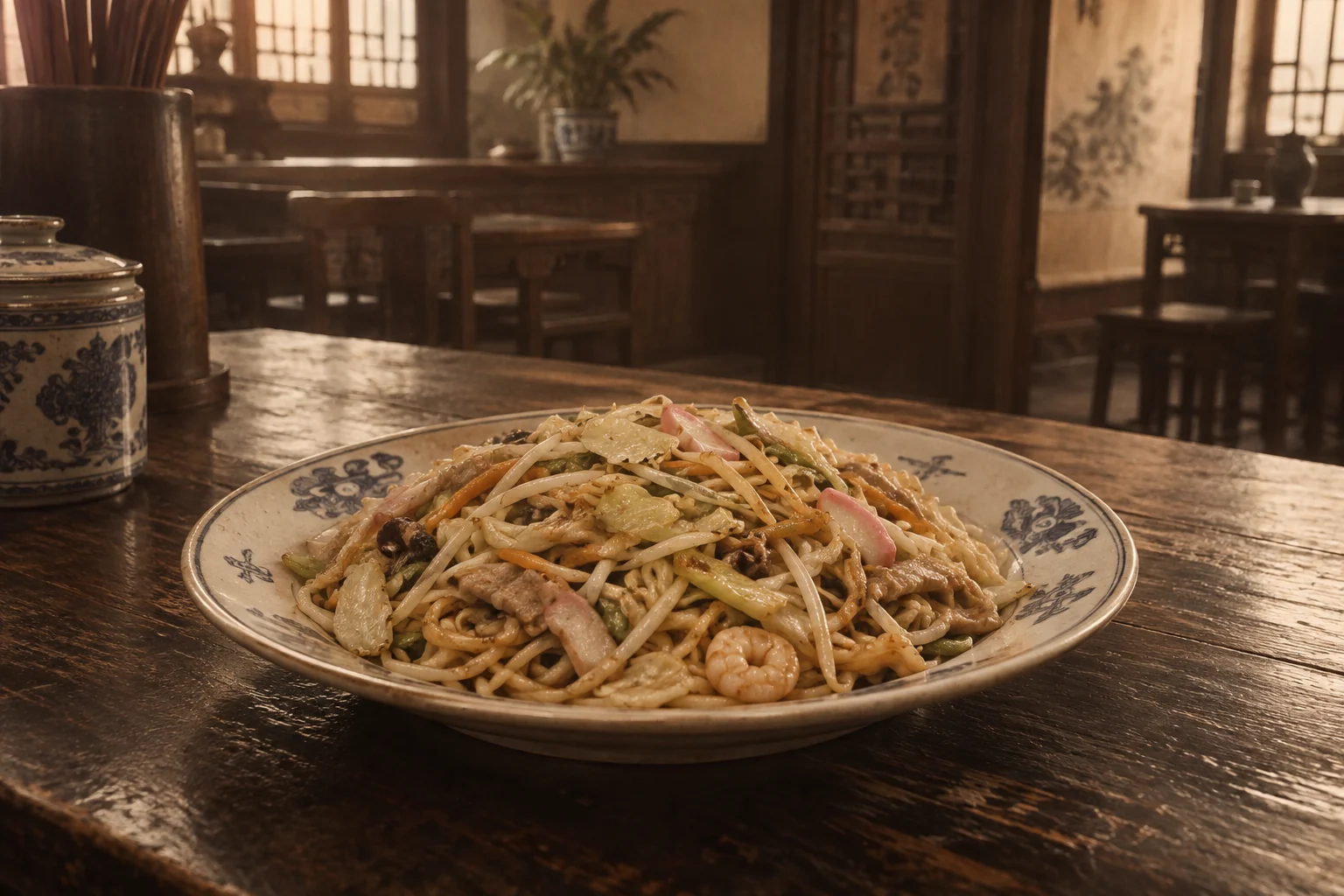
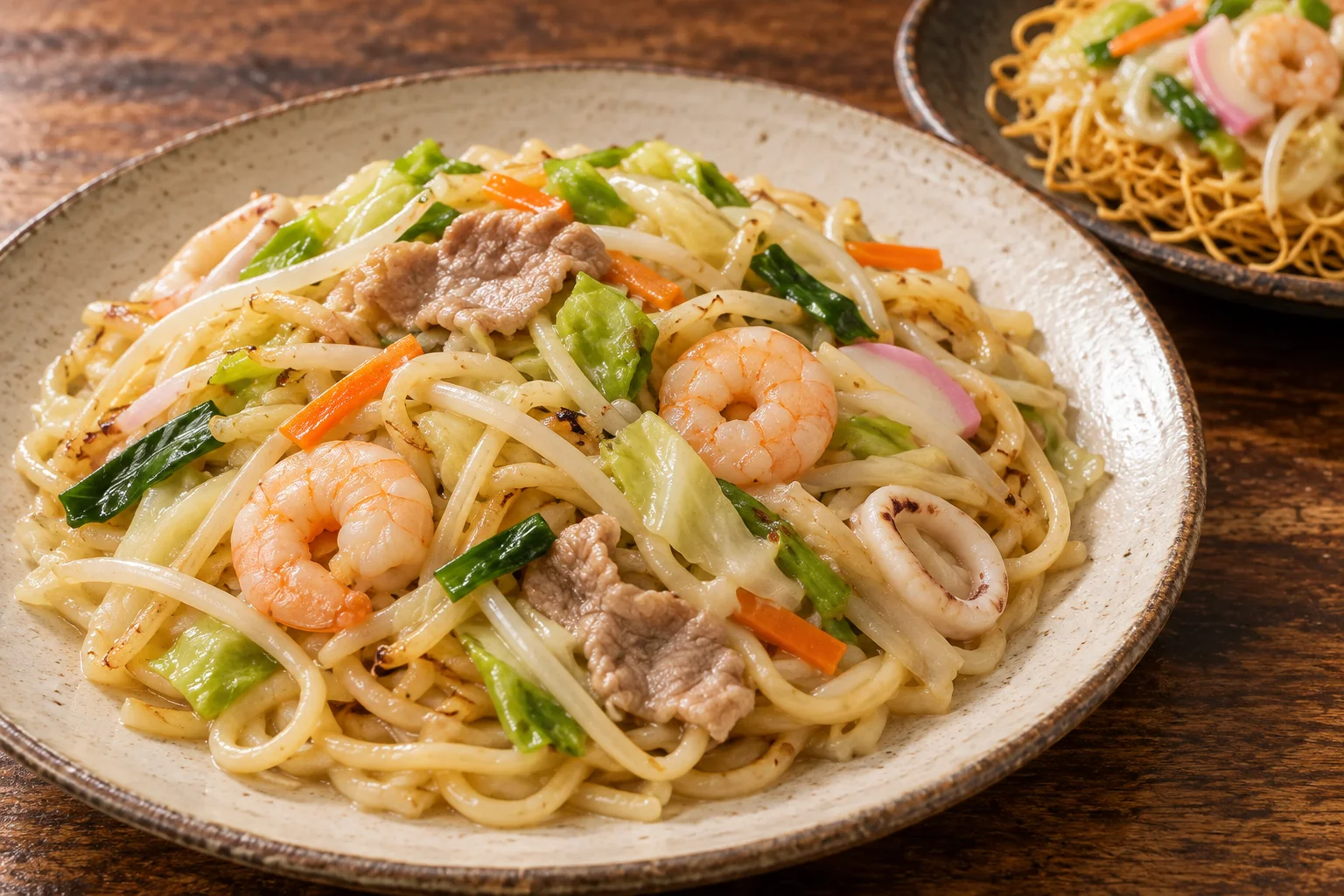
The word udon in sara udon does not promise that the dish contains the thick, white Japanese noodles called udon. Japan's Ministry of Agriculture describes the original sara udon as a kind of “fried champon”: it used noodles of the same family as champon. One explanation for the name is that serving a noodle dish on a flat plate, rather than in a deep bowl, was striking at the time.
Shikairō, the restaurant associated with the dish's beginnings, describes lightly cooking champon noodles, stir-frying them with toppings, letting a small amount of broth soak in, and serving the result on a plate. The name points back to that dish, not to the crispness of the fine fried noodles familiar today.
We cannot reconstruct every step by which a name spread more than a century ago. The sources present the plate as the accepted explanation, not an independently proven naming event. For more on the early dish, read how sara udon began with thick noodles.
The original thick style and today's familiar crispy style
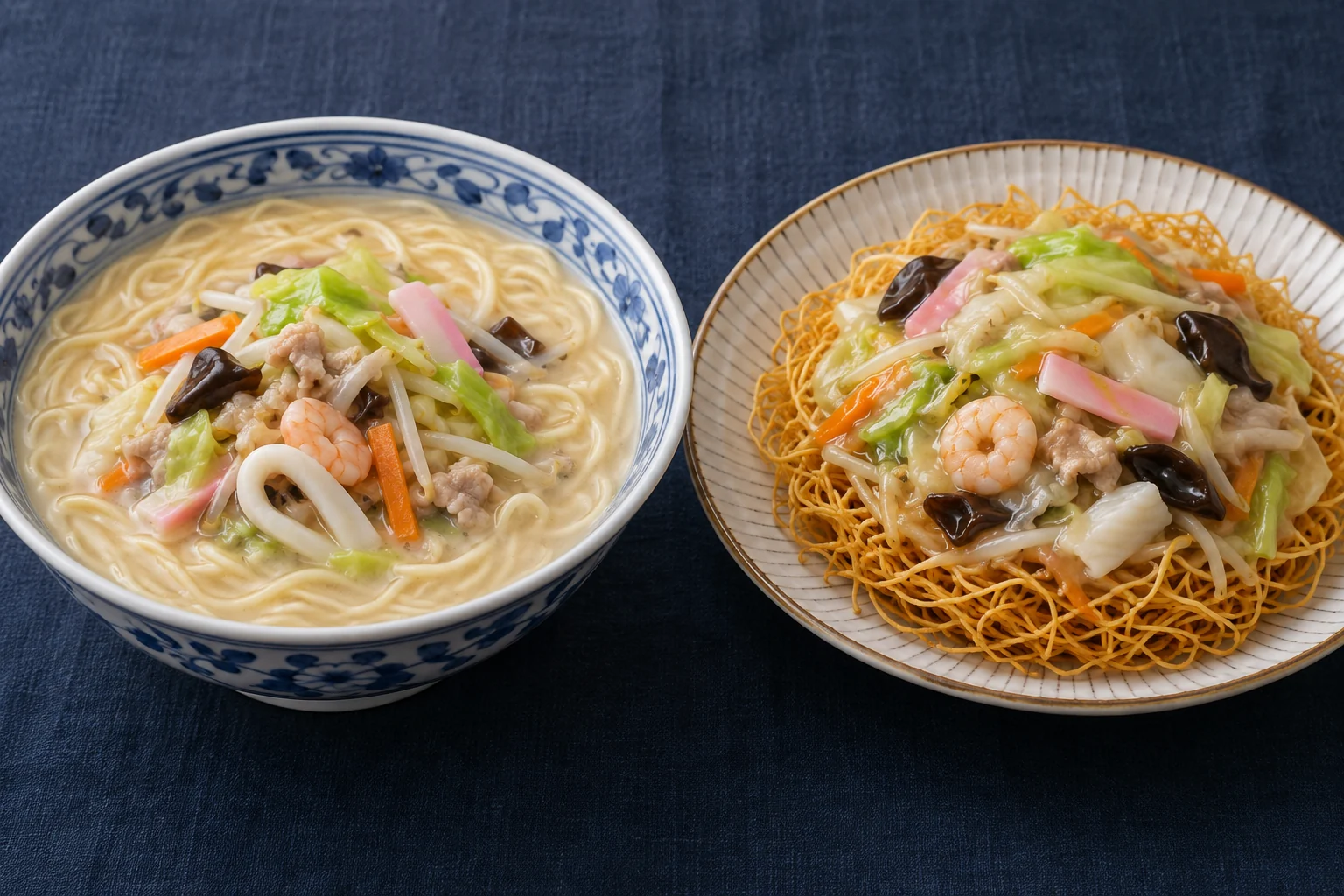
In Nagasaki, thick-noodle sara udon uses rounded noodles related to champon noodles. They are not oversized udon strands. The noodles are pan-seared, combined with toppings, and cooked until little free liquid remains. Their toasty surface and the way they absorb flavor are central to the dish.
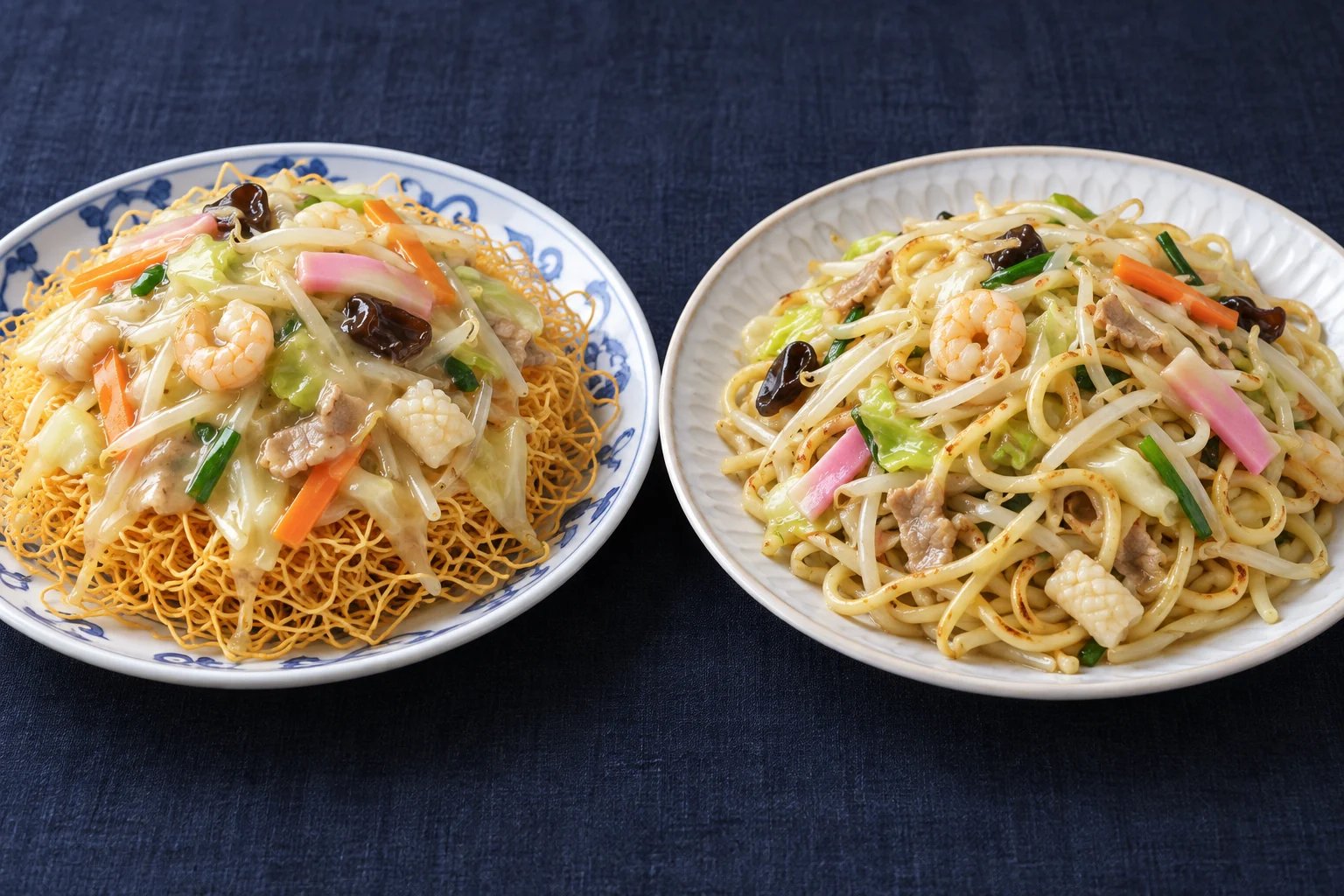
The version many people picture outside Nagasaki uses extremely fine fried noodles. Vegetables, pork and seafood are cooked into a glossy thickened sauce, then spooned onto the crisp noodles together. The sauce is not poured on separately after dry toppings have been added. As you eat, some strands stay crisp while others soften.
The ministry describes both as sara udon styles recognized in Nagasaki. Their noodles and cooking methods differ enough to make two distinct eating experiences. Our comparison of thin and thick sara udon explains what to look for on the plate.
When ordering, ask about the noodles
At an unfamiliar restaurant, check whether its sara udon comes with thin or thick noodles. Thin noodles begin crisp beneath the sauce. Thick noodles bring a lightly seared surface and a springier bite. Both belong to Nagasaki's sara udon tradition.
If the name makes you ask, “Where are the udon noodles?”, that is a reasonable question. Looking at the noodle itself, how the toppings meet it, and how much liquid remains tells you more about the dish than the name alone. Try the two styles and decide which you like best.