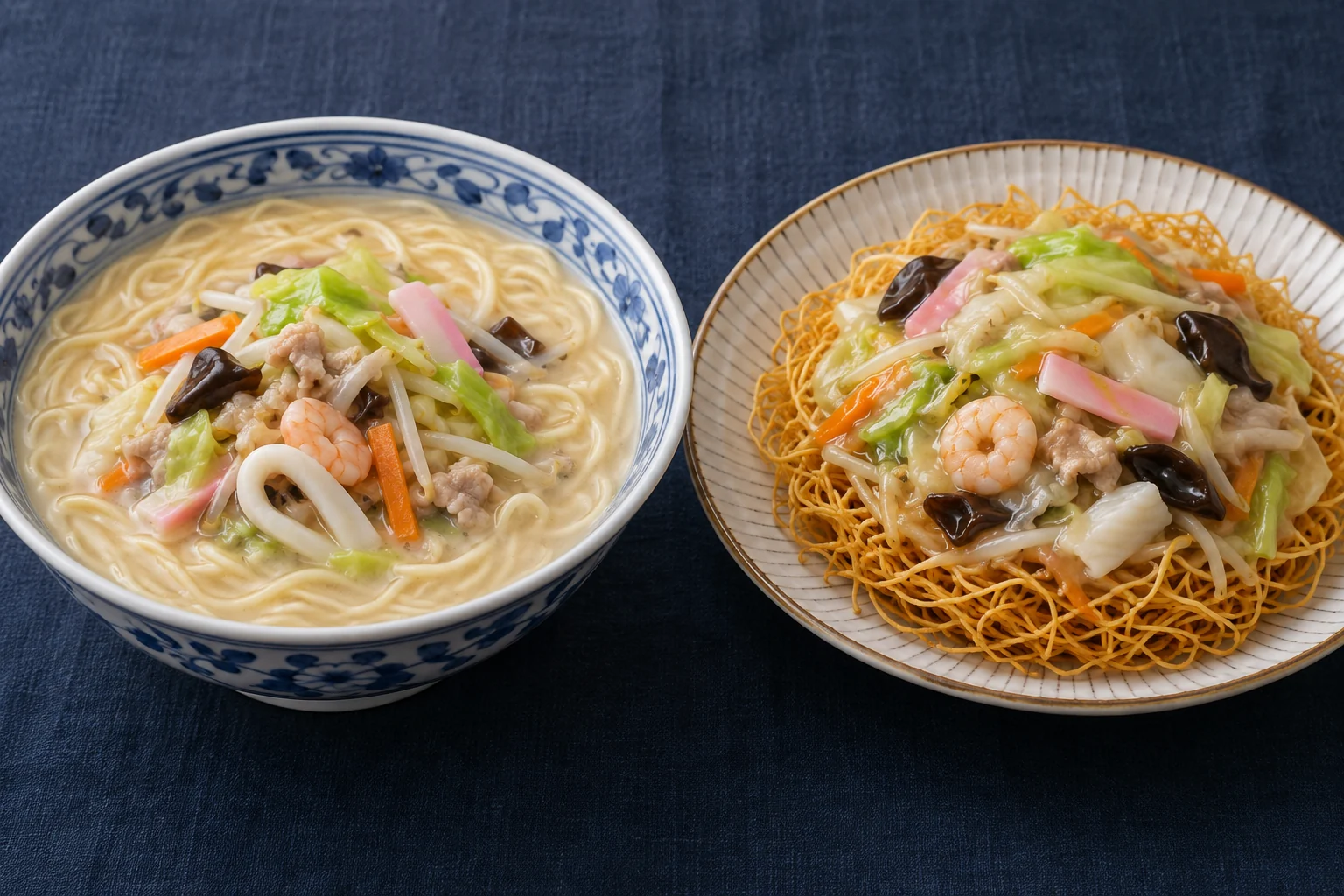
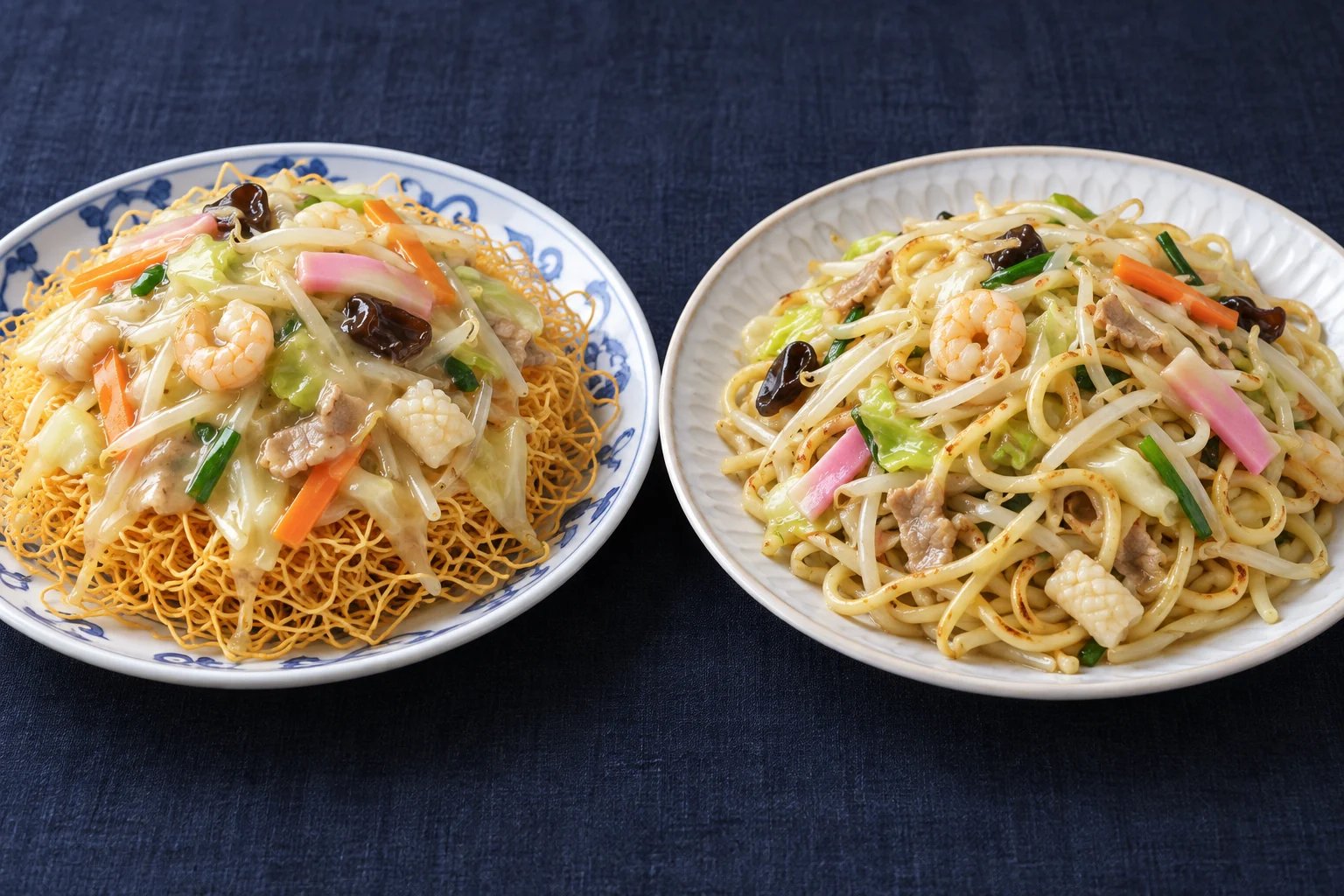
Thin noodles meet the sauce on the plate
Crisp fried noodles are spread on a plate and topped with glossy meat, seafood and vegetables. Dry strands keep a sharp crunch while coated strands soften, so several textures develop within one serving.
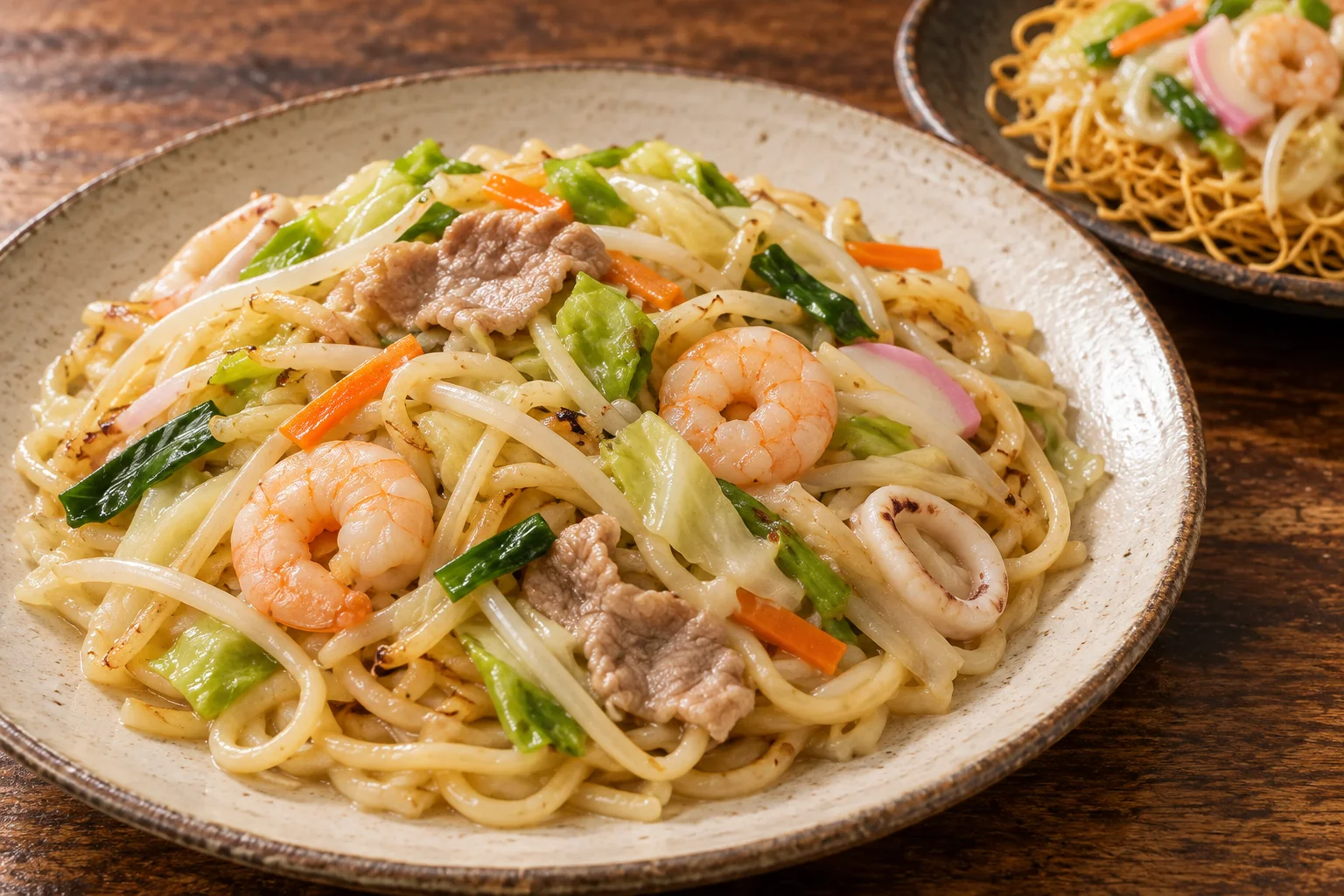
Thick noodles take up flavor in the pan
Nagasaki's ‘thick’ sara udon uses medium round champon noodles, not udon-sized noodles. They are seared, combined with toppings and a small amount of stock, then cooked until the liquid clings to and enters the noodles. The result is toasted outside and chewy within.
The finishing method cannot simply be swapped
Thin noodles need a flowing sauce that reaches their gaps. Thick noodles need enough moisture to carry flavor without becoming soupy. Check labels such as fried, thick or pan-seared and follow the method intended for that product.
Let texture make the decision
- Light crunch that changes as you eat: thin noodles.
- Toasted aroma and a chewy bite: thick noodles.
- For a first visit, order one of each and share.
Thin and thick sara udon are two cooking styles, not merely two sizes of the same noodle.