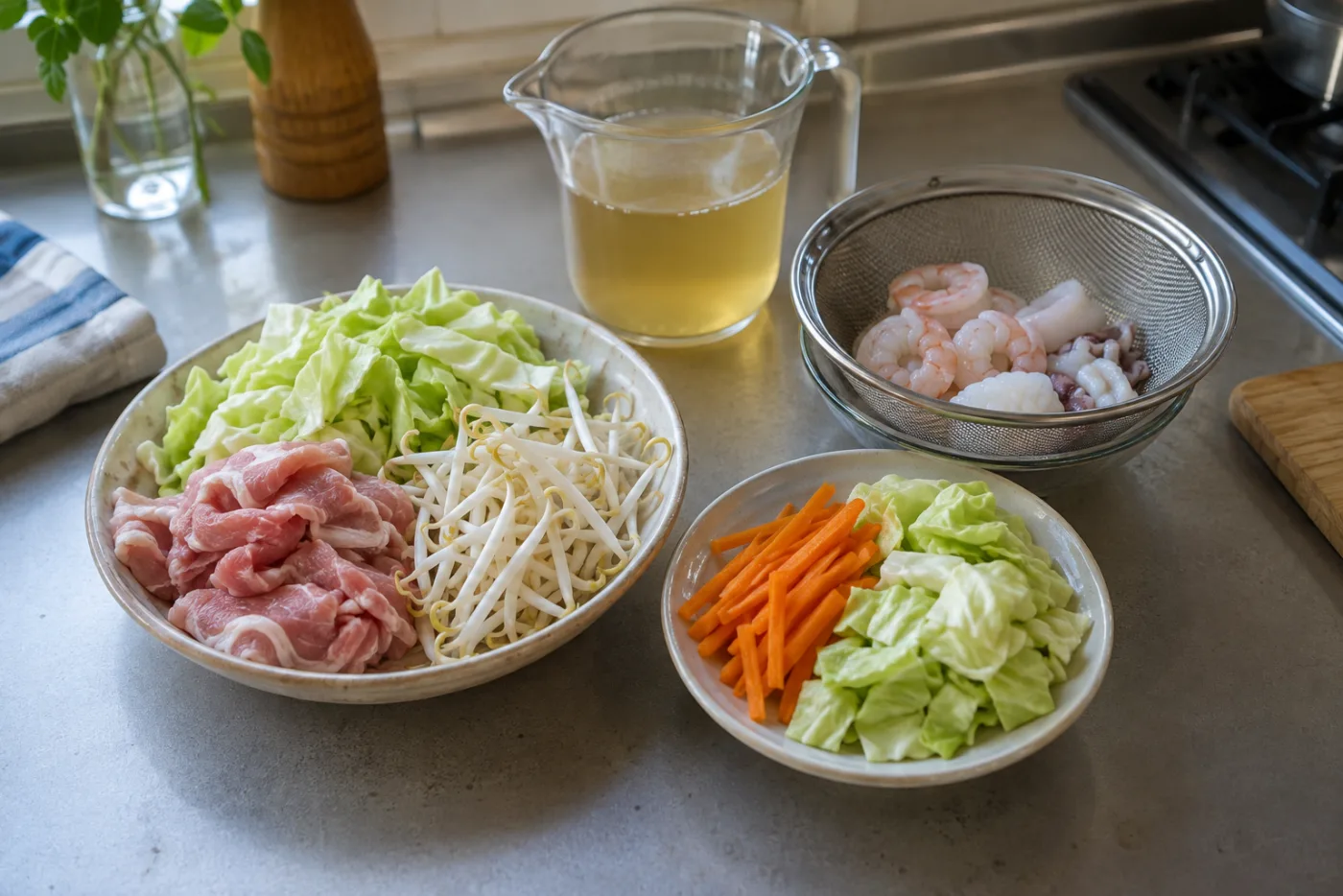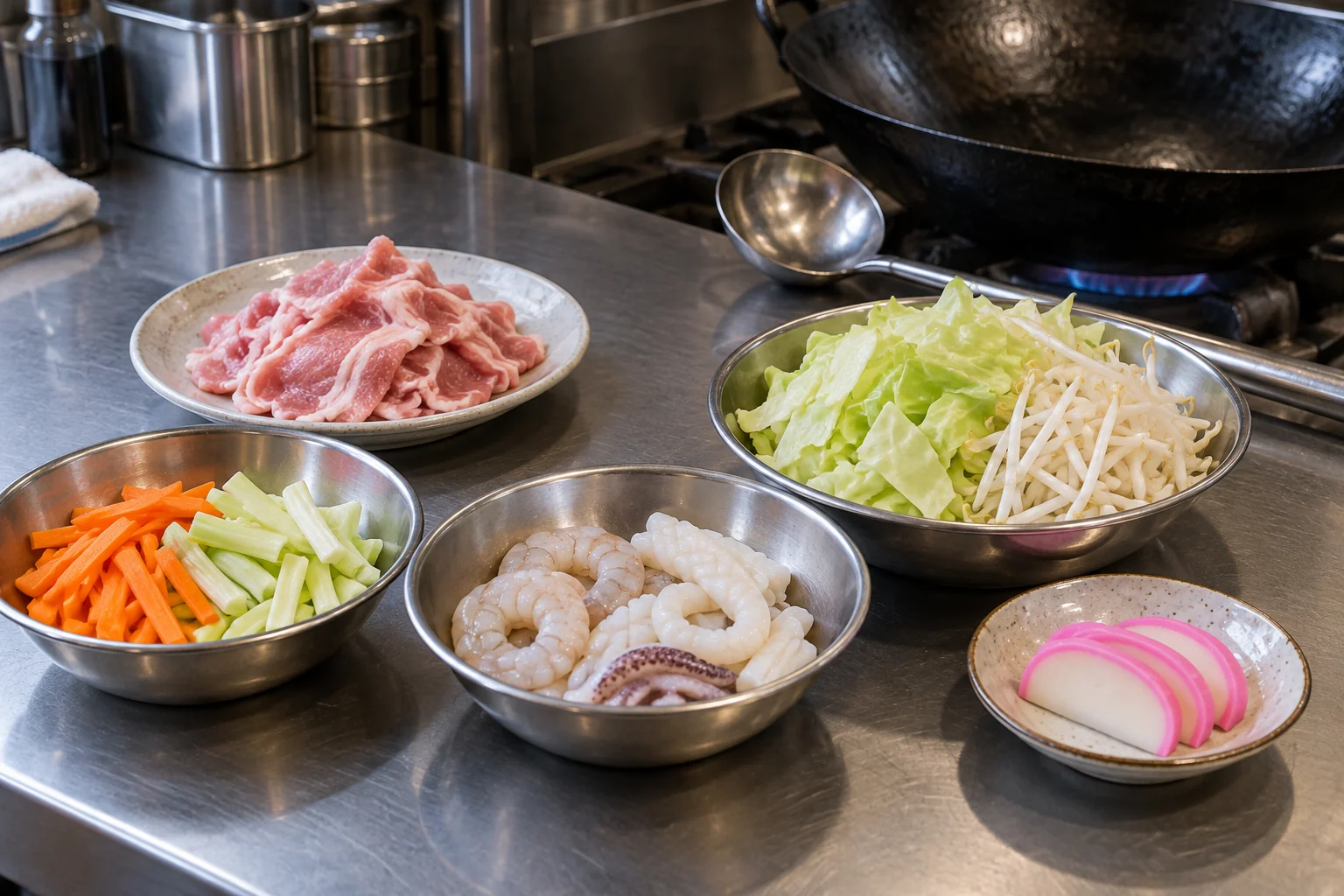
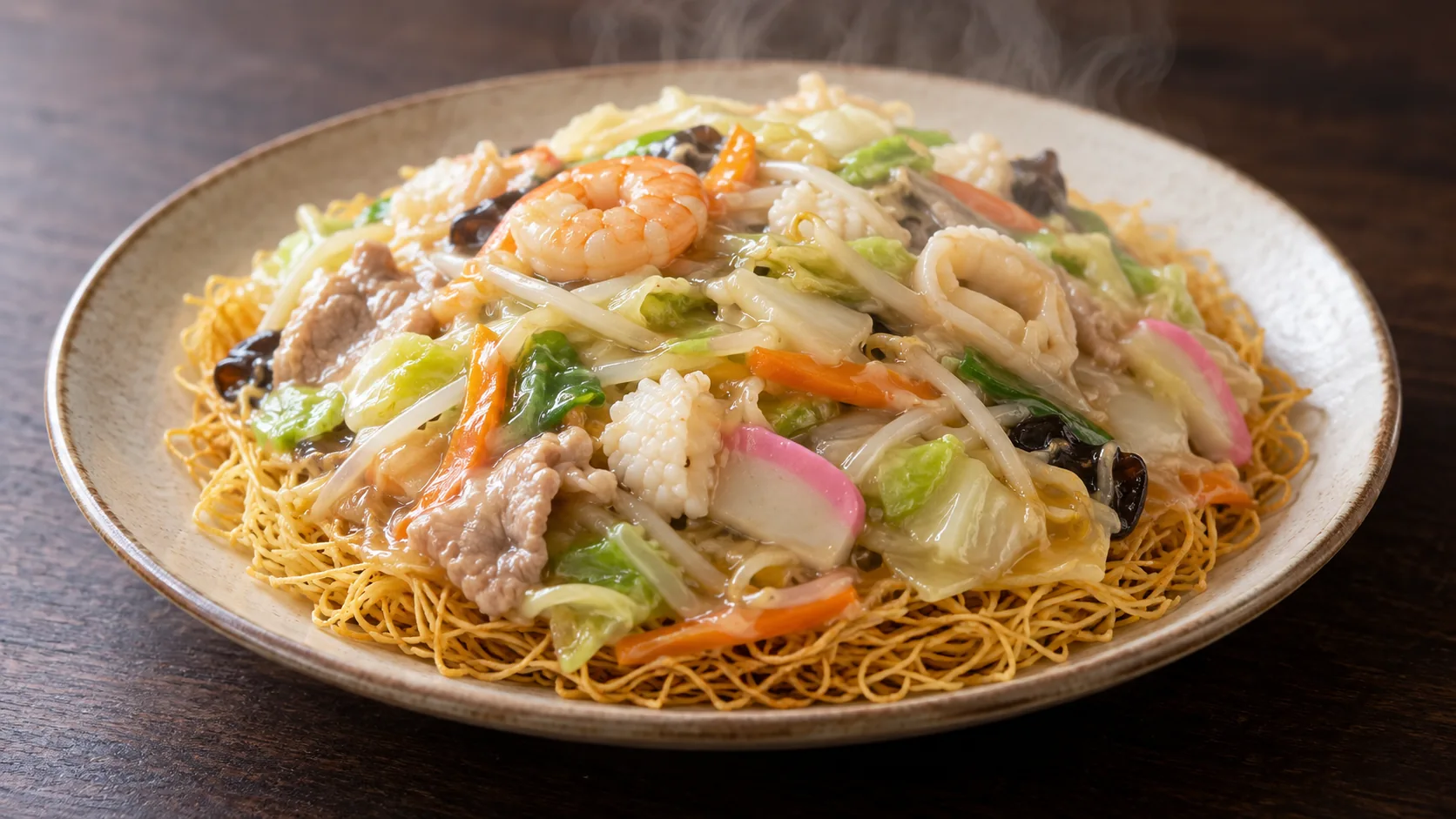
Ingredients for two servings
These quantities follow the two-serving recipe in Japan's Ministry of Agriculture local-cuisine guide, with the home-cooking sequence set out below. Use ready-fried thin noodles. If your product includes a seasoning sachet or sauce, follow its instructions for water and seasoning instead of combining two recipes.
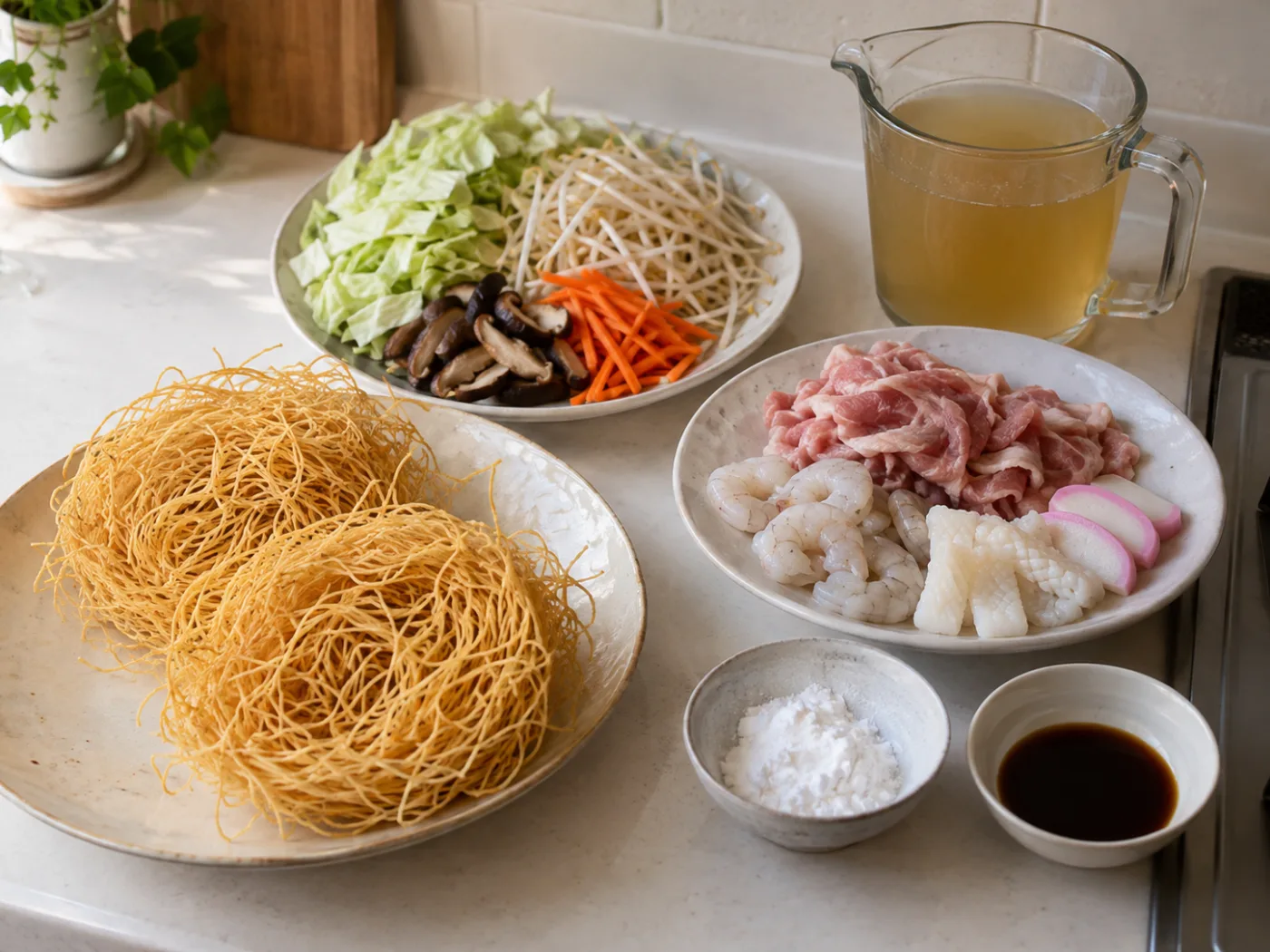
- Ready-fried thin noodles: two servings (check the pack; often two individual portions).
- Thinly sliced pork: 100 g; peeled shrimp: 100 g; squid: 100 g; kamaboko fish cake: 30 g.
- Cabbage: 120 g; bean sprouts: 100 g; carrot: 30 g; shiitake: 2–3 mushrooms.
- Water: 400 ml; chicken-stock powder: 2½ teaspoons; soy sauce: 2 teaspoons.
- Potato starch: 2 tablespoons; water for the slurry: 2–4 tablespoons; oil for stir-frying, salt and pepper as needed.
Cut everything and prepare the plates
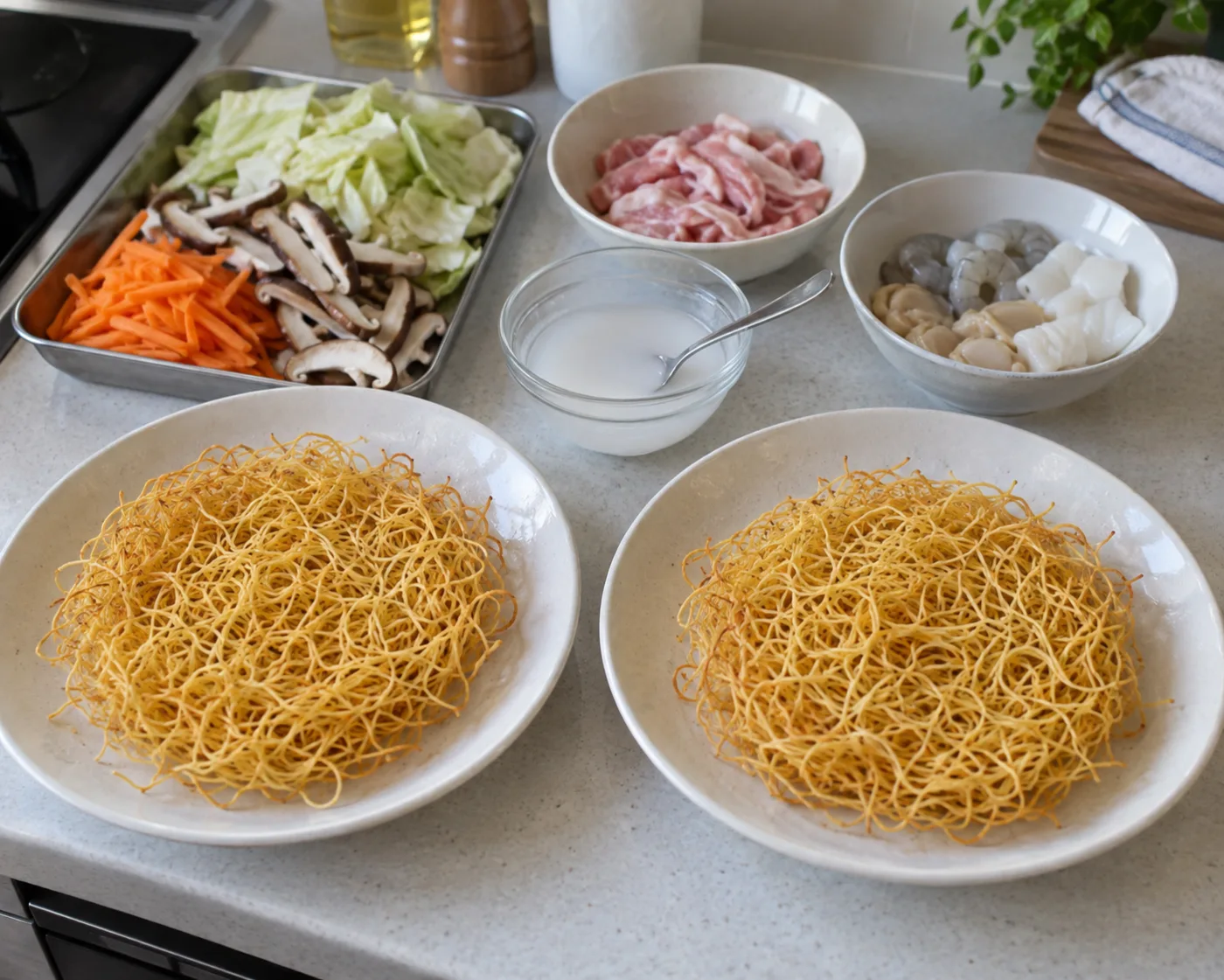
Cut the cabbage into bite-size pieces, slice the carrot thinly and the shiitake into strips. Cut the pork, squid and kamaboko into bite-size pieces. Remove the shrimp's vein if needed and pat the seafood dry. Prepare everything before turning on the heat; once stir-frying starts, there is little time to stop and chop.
Divide the fried noodles between two plates and gently loosen them. Do not boil them or stir them into the wok sauce. The hot topping goes on just before serving. Part of the pleasure is the contrast between still-crisp strands and noodles that gradually soften where the sauce lands.
Mix the potato starch with water in a separate small bowl. It will settle if left standing, so stir from the bottom again immediately before adding it to the wok. For help avoiding lumps or watery sauce, see three keys to thickening sara udon sauce.
Stir-fry the toppings and add broth
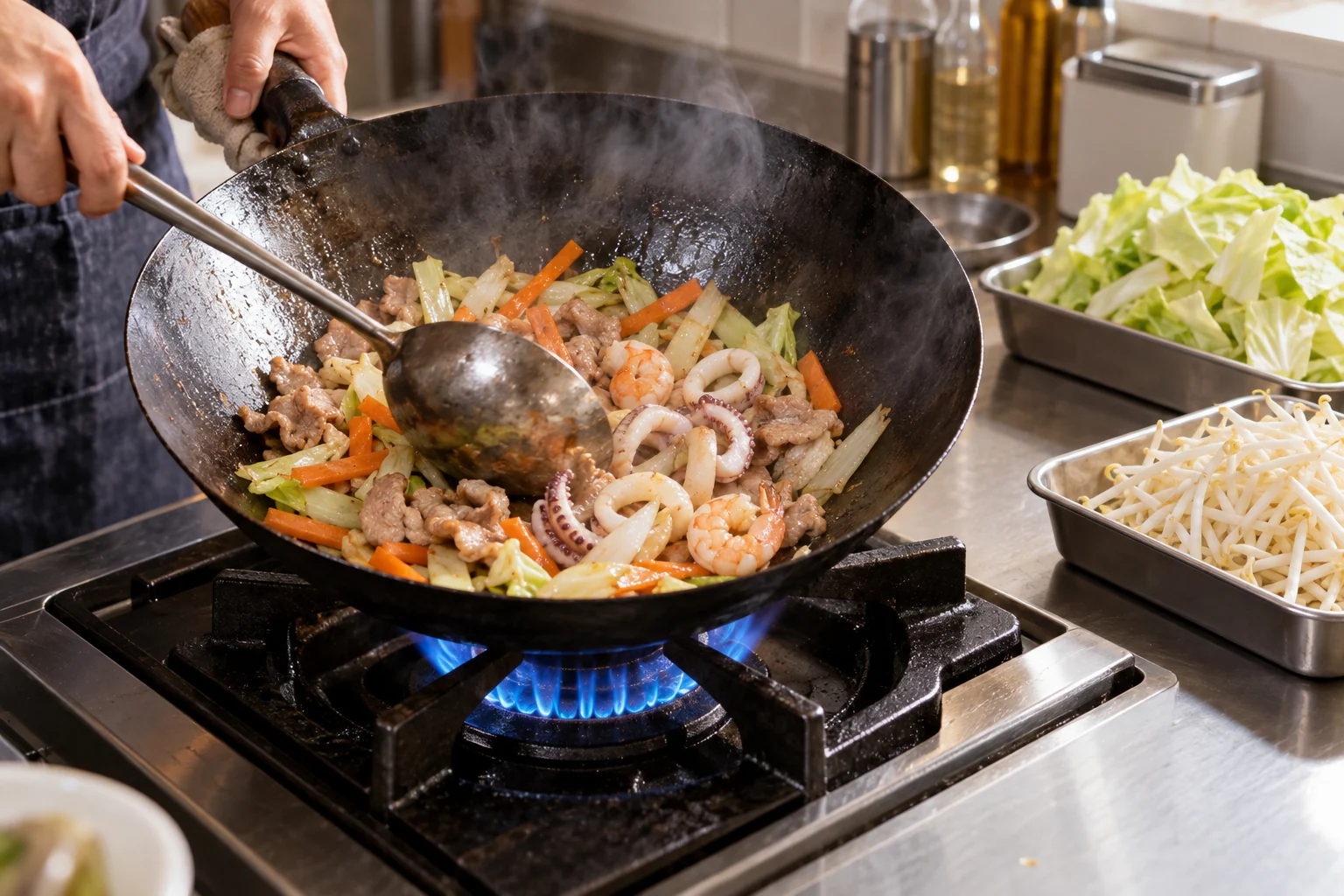
Heat a little oil in a frying pan or wok and cook the pork first. Once it changes color, add carrot, shiitake and cabbage. Follow with shrimp, squid, kamaboko and bean sprouts. Cook the seafood through without simmering the vegetables until limp. If the pan is small, stir-fry in two batches and bring everything together at the end.
Add 400 ml water, the stock powder and soy sauce, then heat until the ingredients are cooked. Taste before adding salt and pepper: brands of stock powder and soy sauce differ in saltiness. Do not leave the shrimp and squid boiling for long, or they may toughen.
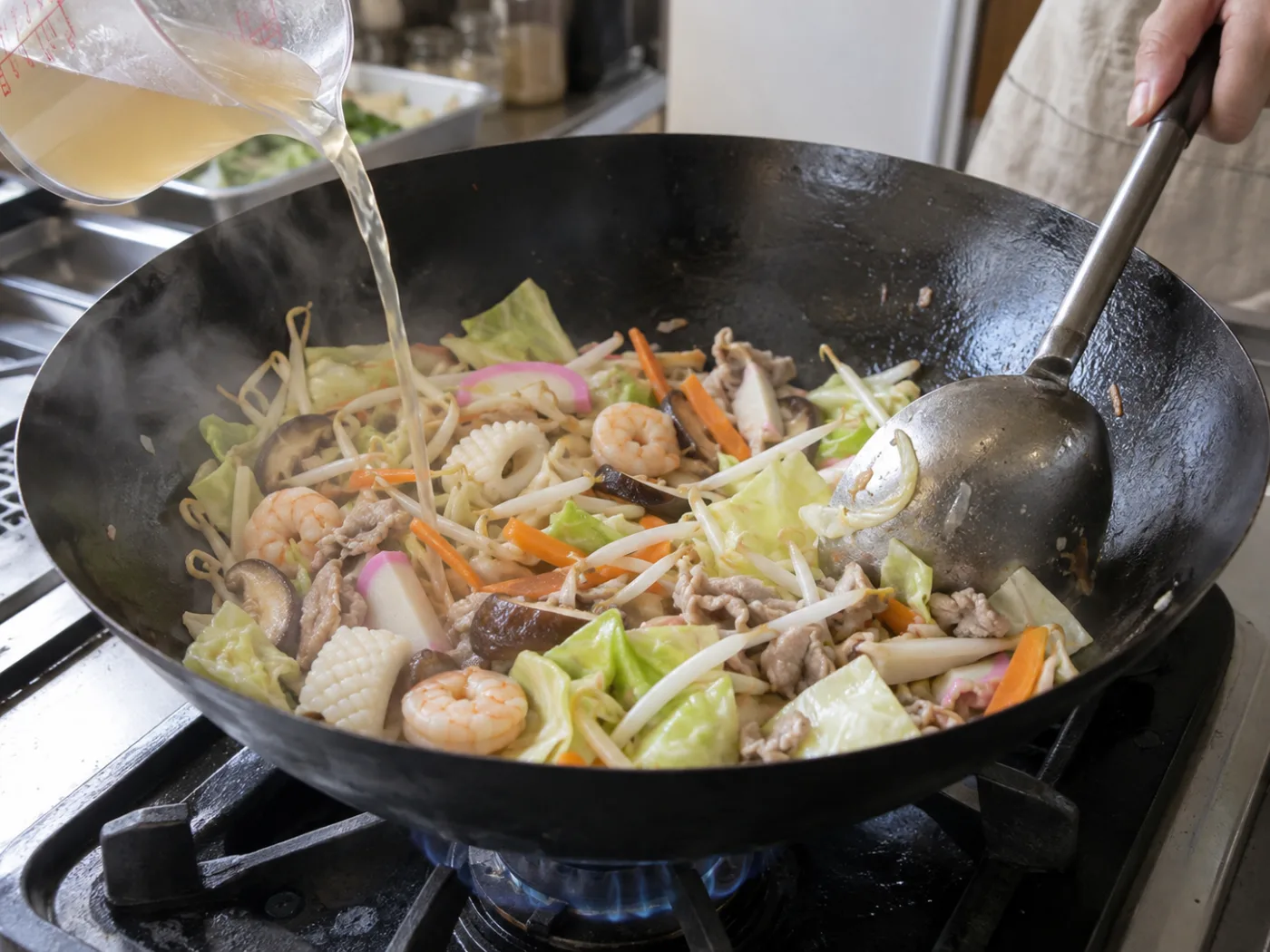
Thicken the whole topping, then serve
Lower the heat once the broth is hot. Stir the potato-starch slurry again, then pour it in gradually while moving the contents with a metal ladle. Heat briefly until the sauce turns glossy and translucent. Vegetables release different amounts of water, so start with less slurry and add more if needed. Aim for a sauce that still flows rather than a stiff paste.
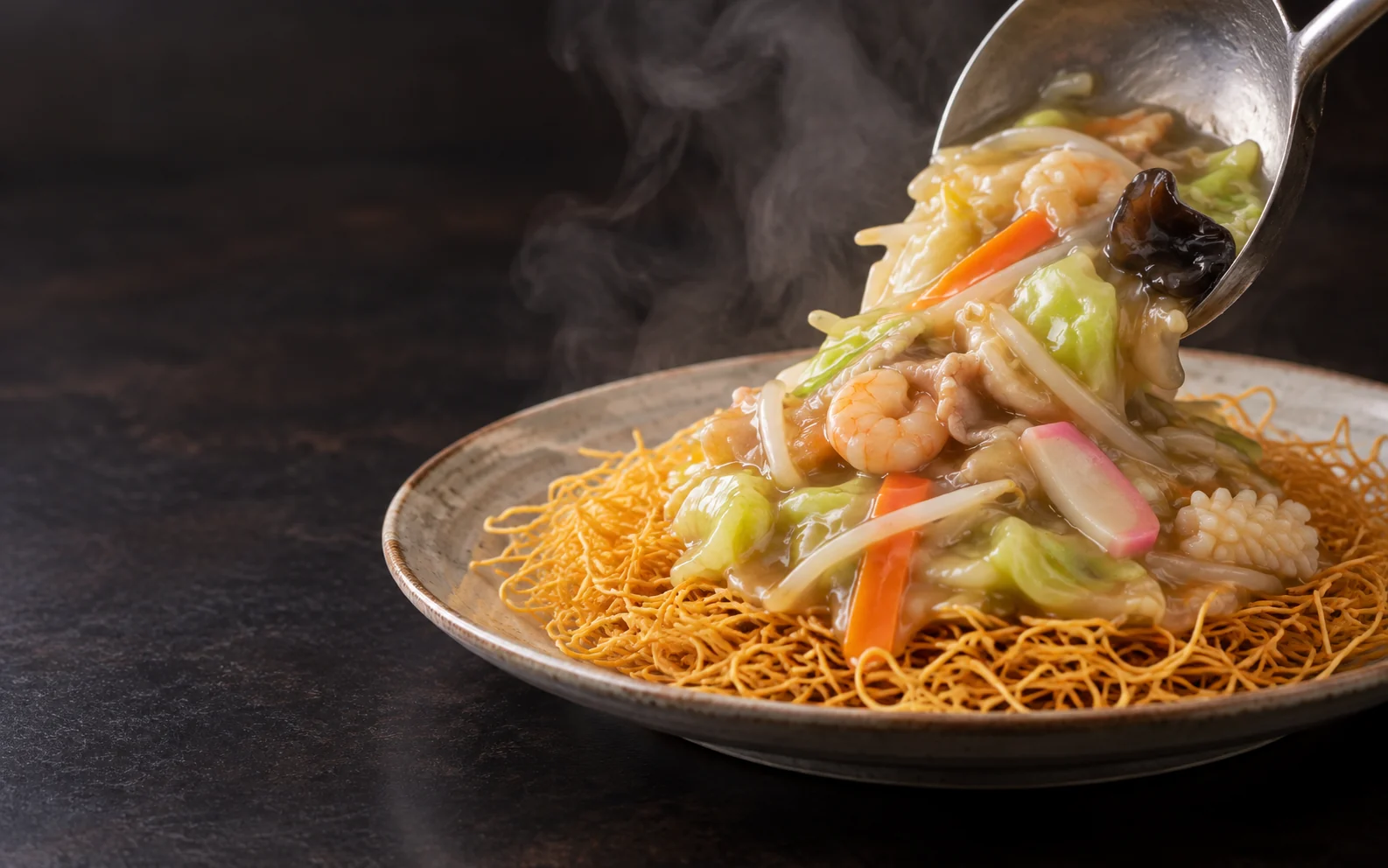
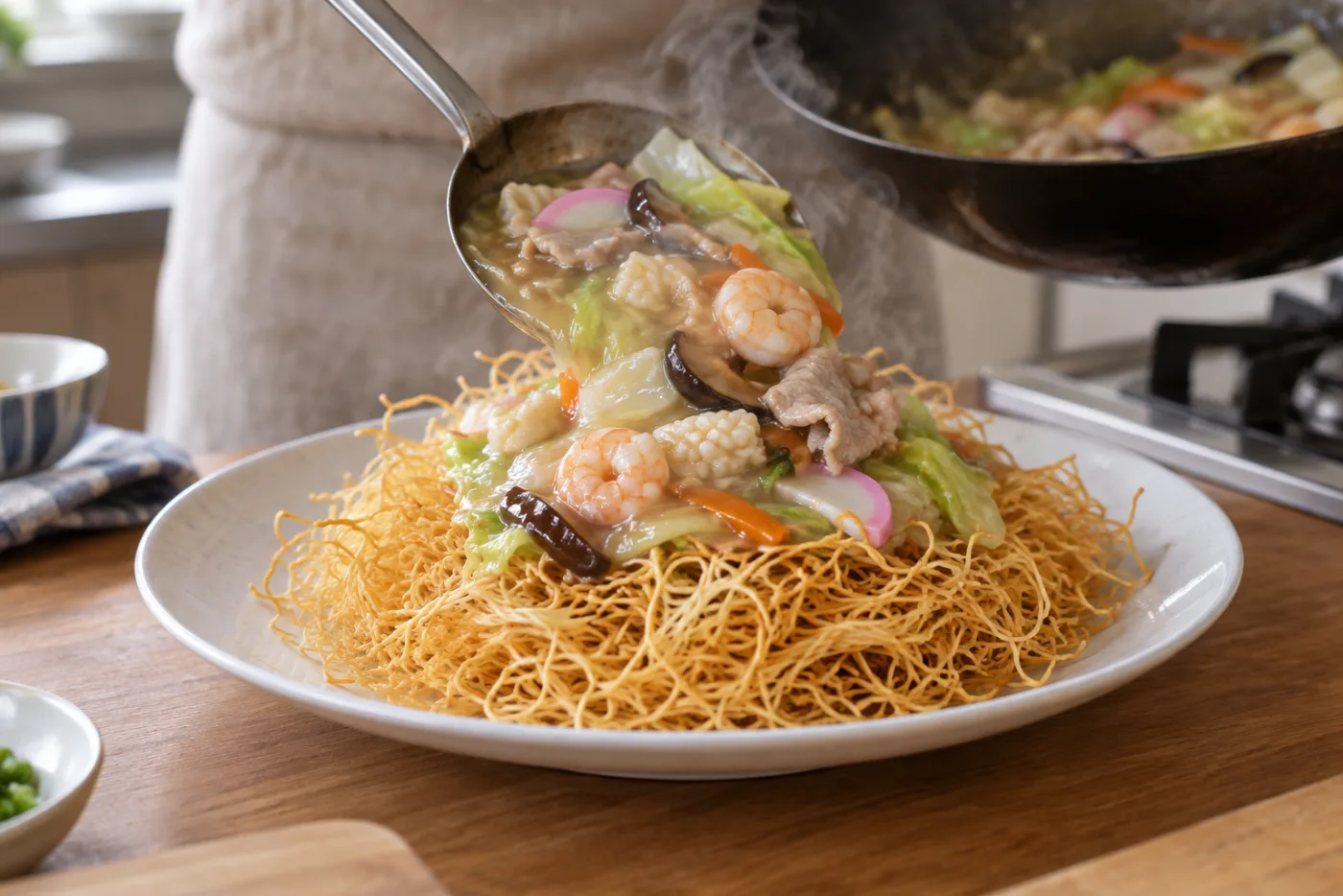
Scoop up the ingredients together with the sauce and spoon the mixture over the center of each noodle nest. Do not pile up dry toppings first and pour a separate clear sauce over them afterward. Leave some noodles uncovered so they keep their crispness as the sauced part softens.
In Nagasaki, some diners add a little Worcestershire sauce at the table. Taste the dish as it is first, then adjust to your liking.
Changing ingredients? Watch the moisture and cooking time
If shrimp or squid are unavailable, pork and vegetables alone can still make a satisfying plate. But simply replacing all the seafood with extra vegetables may release more water and thin the sauce. If you increase cabbage or sprouts substantially, hold back some of the 400 ml broth at first and add it only as needed.
For frozen mixed seafood, thaw according to the package and drain excess liquid before stir-frying. Whatever ingredients you choose, finish them in the sauce and serve them together over the noodles. The hot topping and crisp fried strands matter more than reproducing every ingredient exactly.