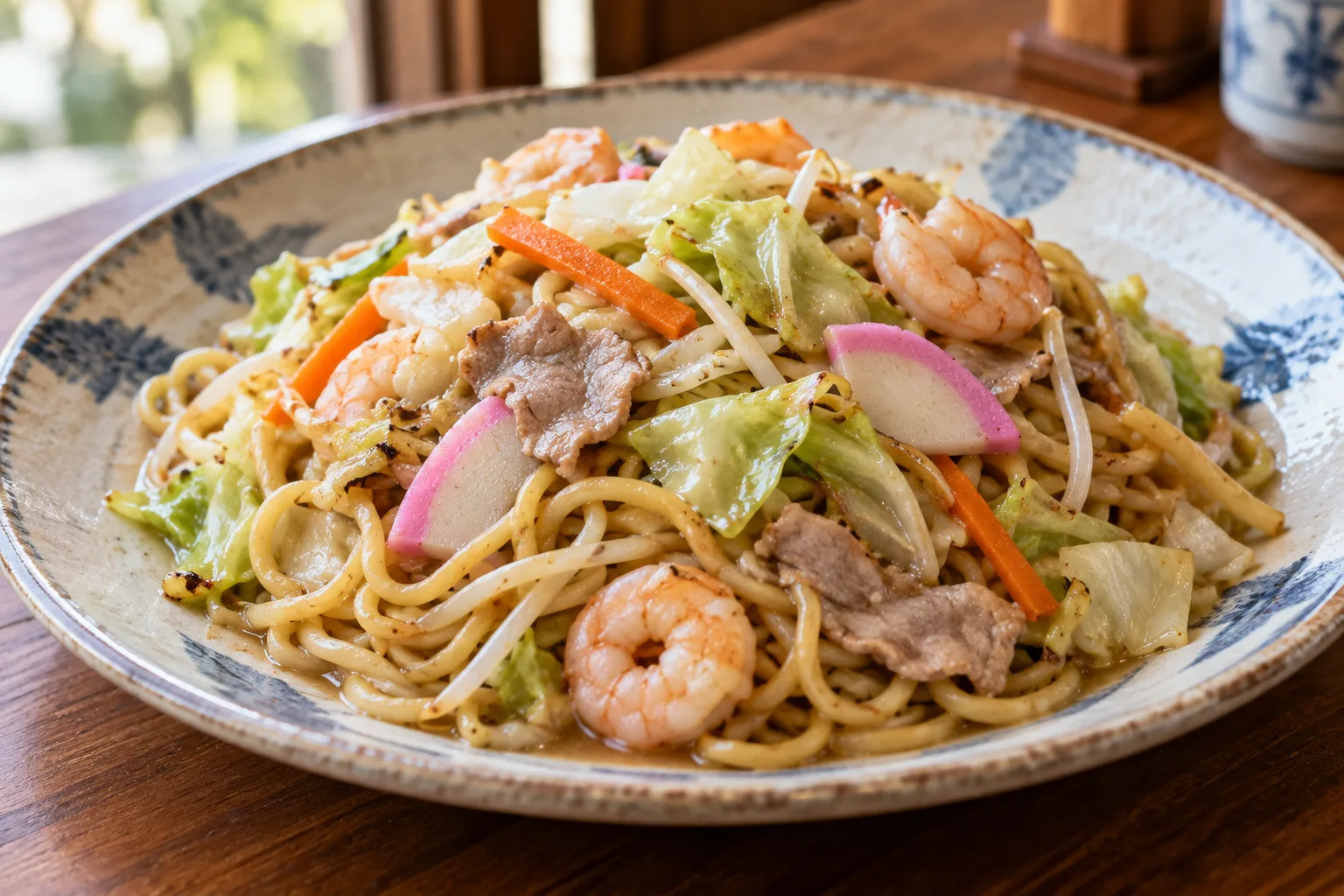
This version tosses the noodles and toppings together
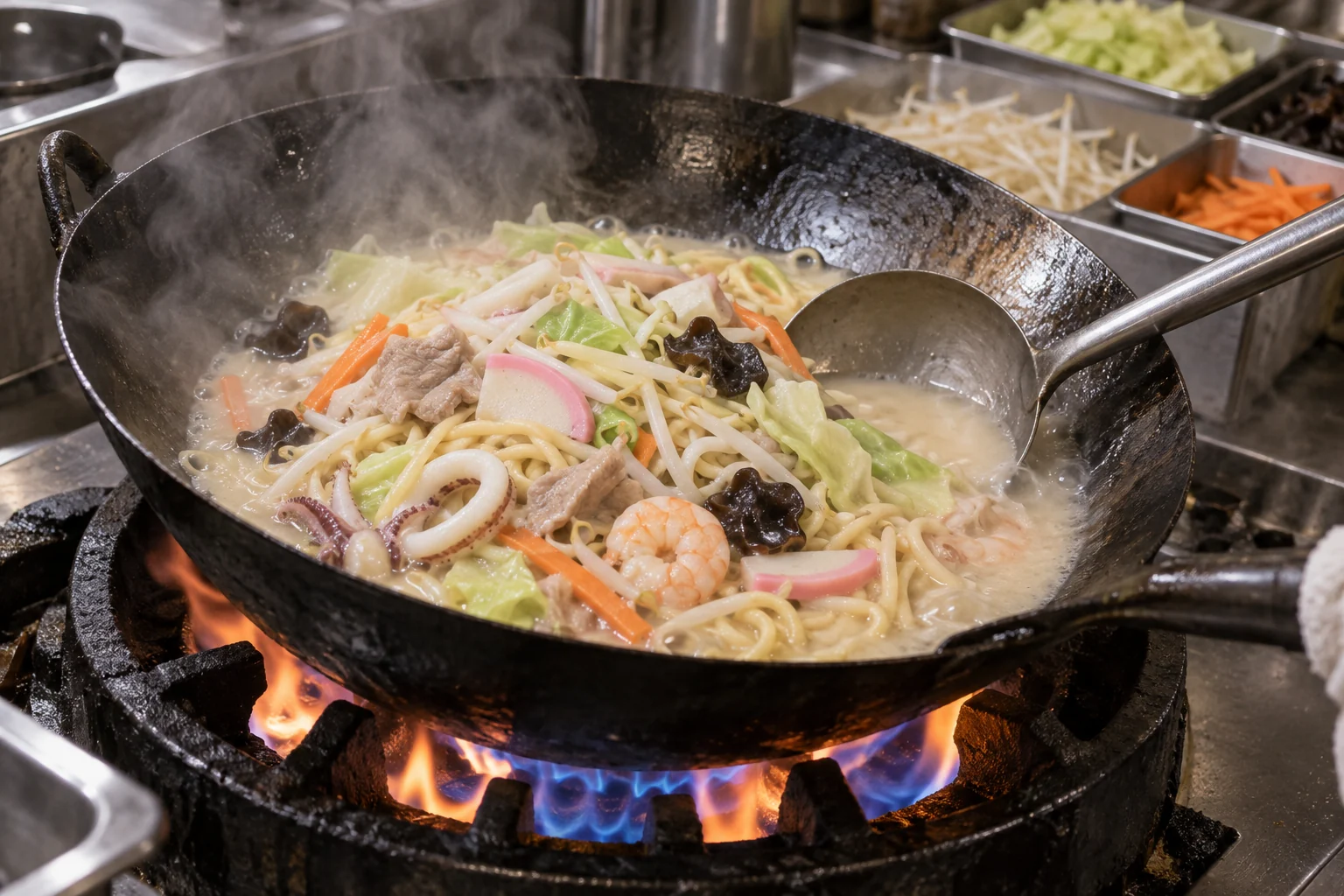
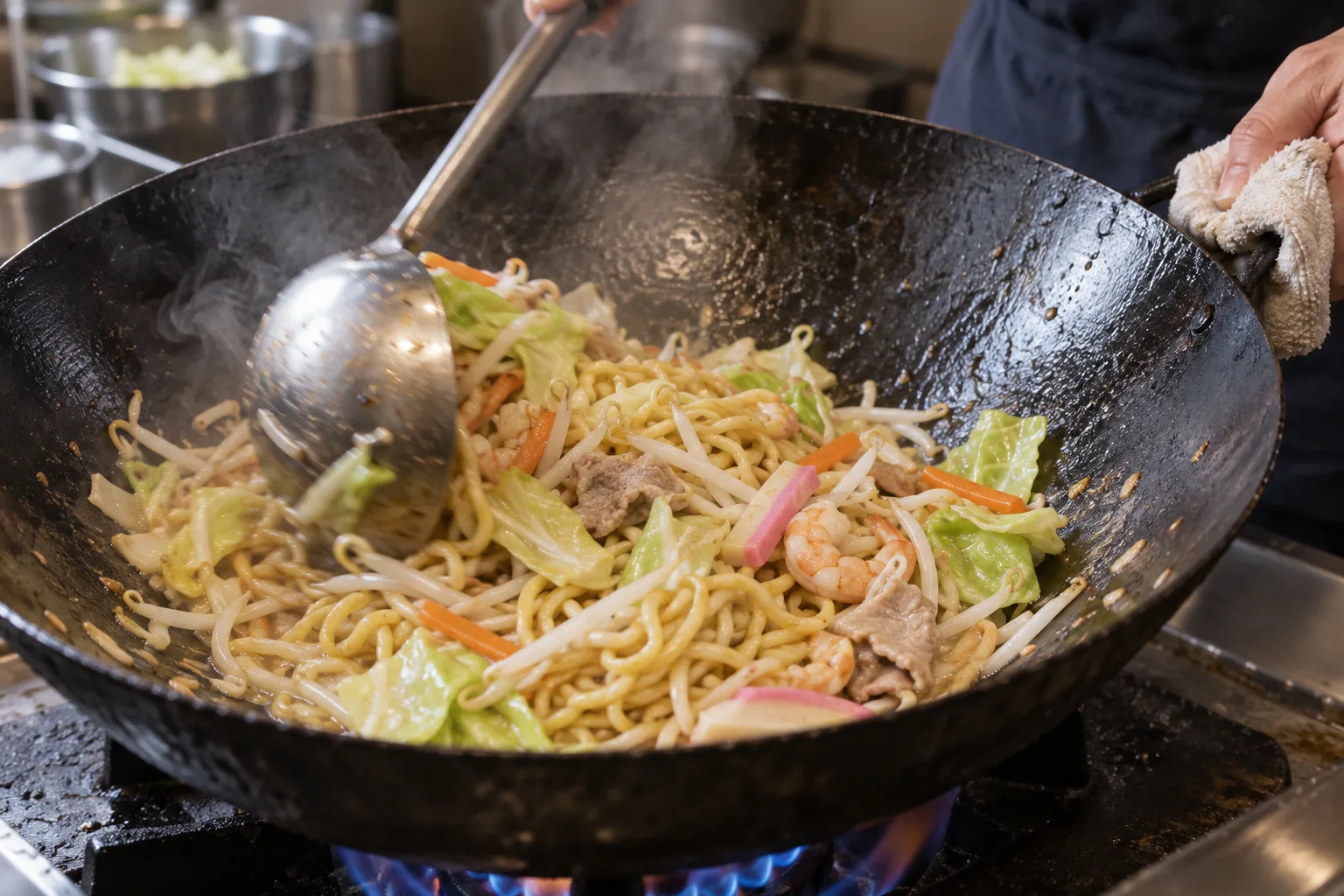
One Nagasaki style of thick-noodle sara udon pan-fries champon-style noodles, then tosses them with the toppings until most of the broth is absorbed. Japan's Ministry of Agriculture describes the early dish as a kind of ‘fried champon.’ This is one way to recreate that character in a home frying pan. The dish's thick-noodle beginnings explain how it differs from the fried fine-noodle version.
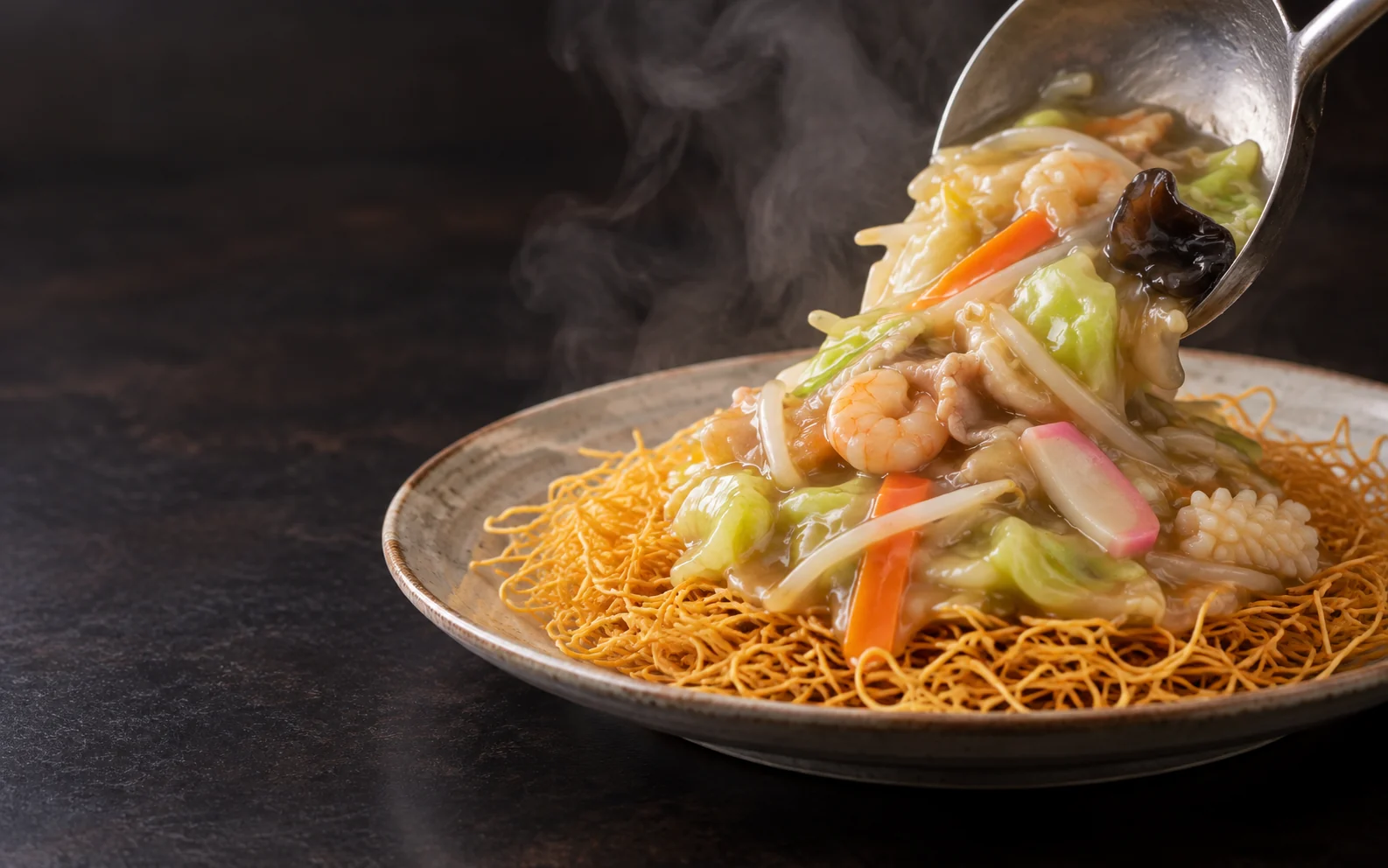
Today, some restaurants and kits instead place a thickened topping over pan-seared thick noodles. Mirokuya's recipe takes that approach. Both are called thick-noodle sara udon; this recipe chooses the drier, tossed-together finish.
Ingredients for two
Look for noodles labelled champon or thick-noodle sara udon. Fresh, pre-boiled and frozen noodles need different preparation, so follow the packet first. If a kit includes a soup sachet, do not add the seasonings below as well; use its water quantity and method.
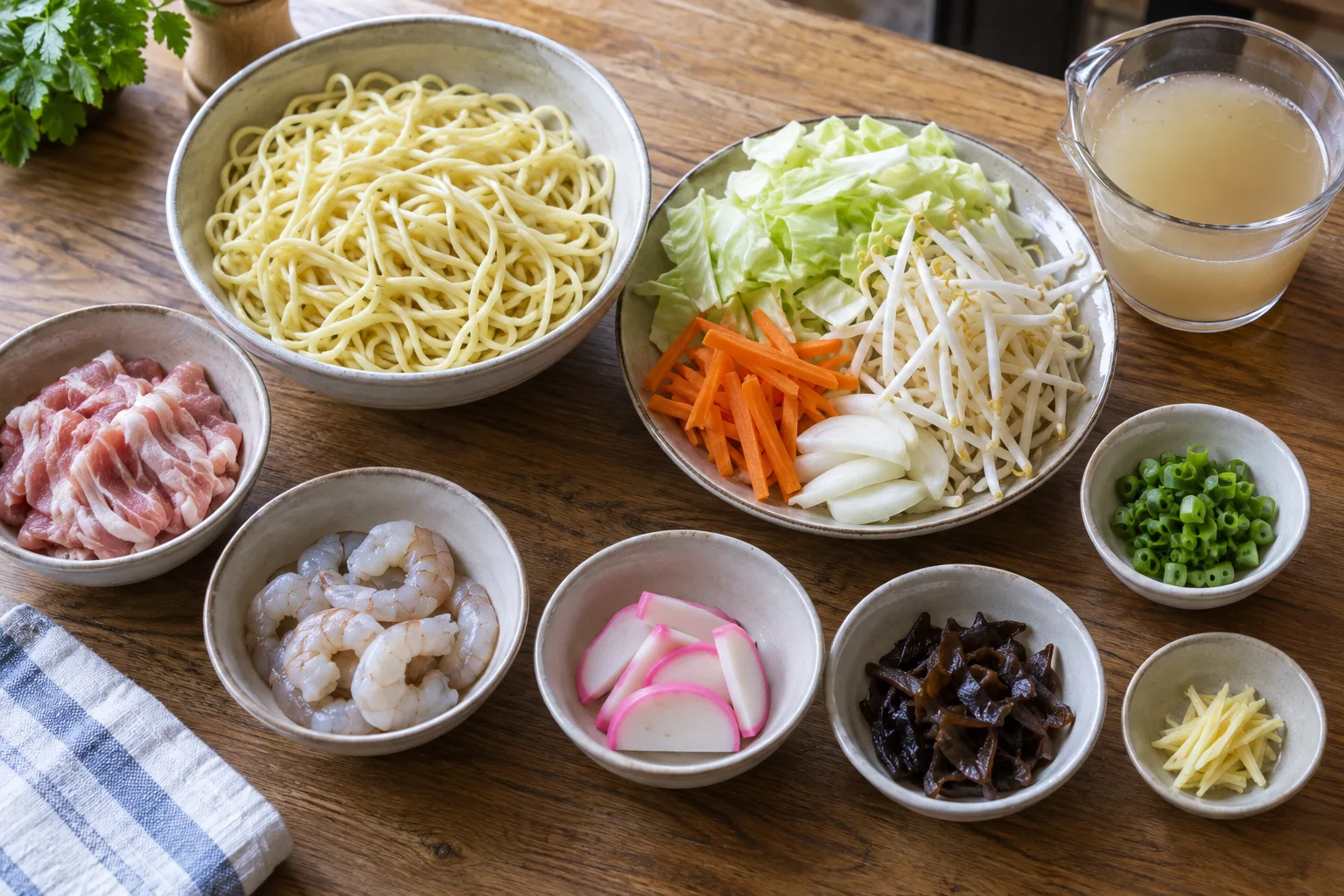
- Medium champon-style or thick-noodle sara udon noodles: 2 servings
- Thinly sliced pork: 80 g; peeled shrimp: 6; kamaboko fish cake: 40 g
- Cabbage: 150 g; bean sprouts: 100 g; carrot: 40 g; onion: ¼. A little rehydrated wood-ear mushroom is optional
- Broth: 120 ml water, 1 tsp chicken-stock powder, 2 tsp soy sauce, 1 tbsp sake, 1 tsp oyster sauce
- 1–2 tbsp oil for frying; a little salt and pepper after tasting
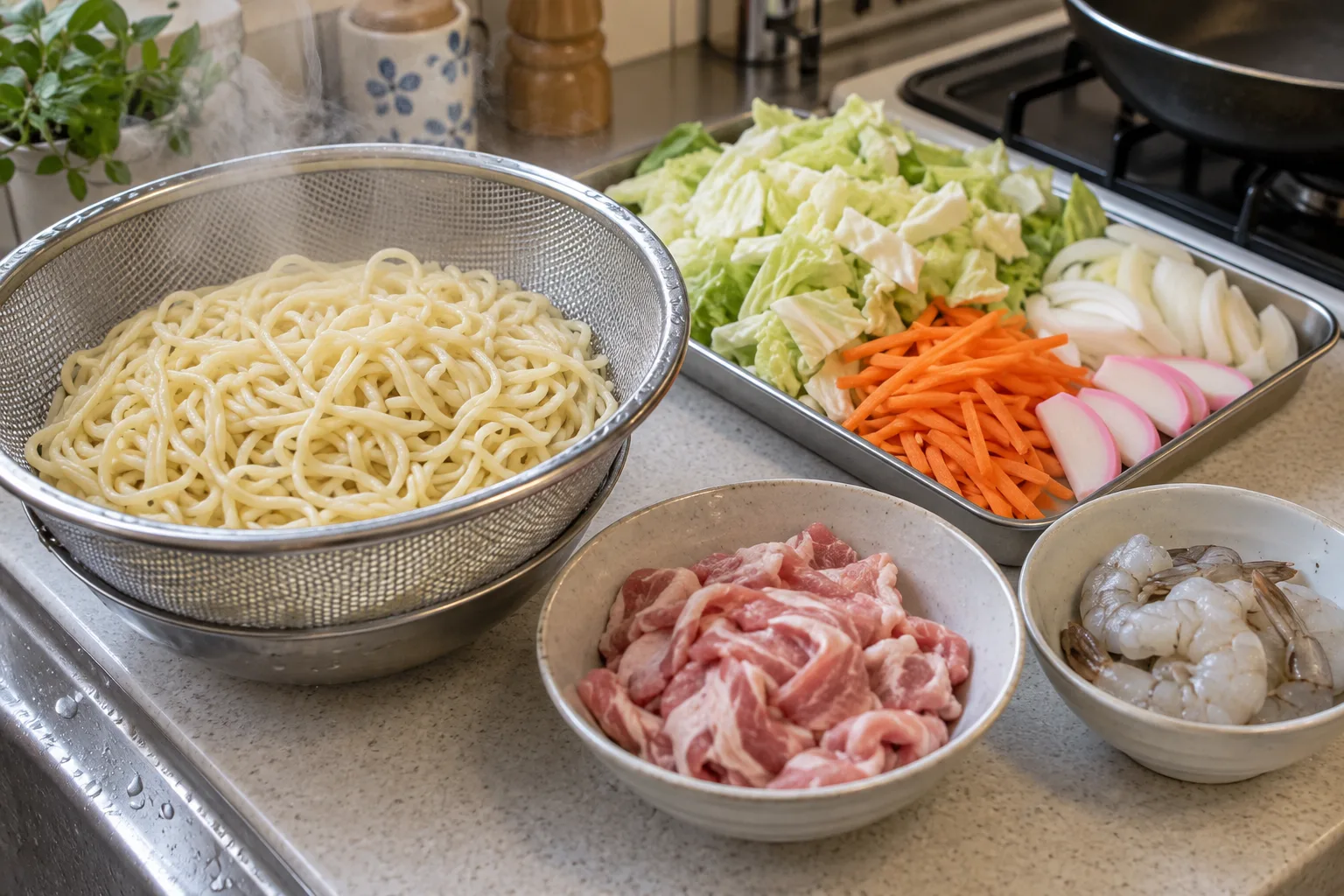
1. Prepare the toppings and noodles
Cut the cabbage and pork into bite-size pieces. Julienne the carrot; thinly slice the onion and fish cake. Devein and dry the shrimp, then rinse and drain the bean sprouts. Mix the broth ingredients before turning on the heat.
Boil fresh noodles separately for the time printed on the packet and drain well. Loosen pre-boiled or frozen noodles as their packaging directs. Excess surface water steams the noodles instead of letting them brown.
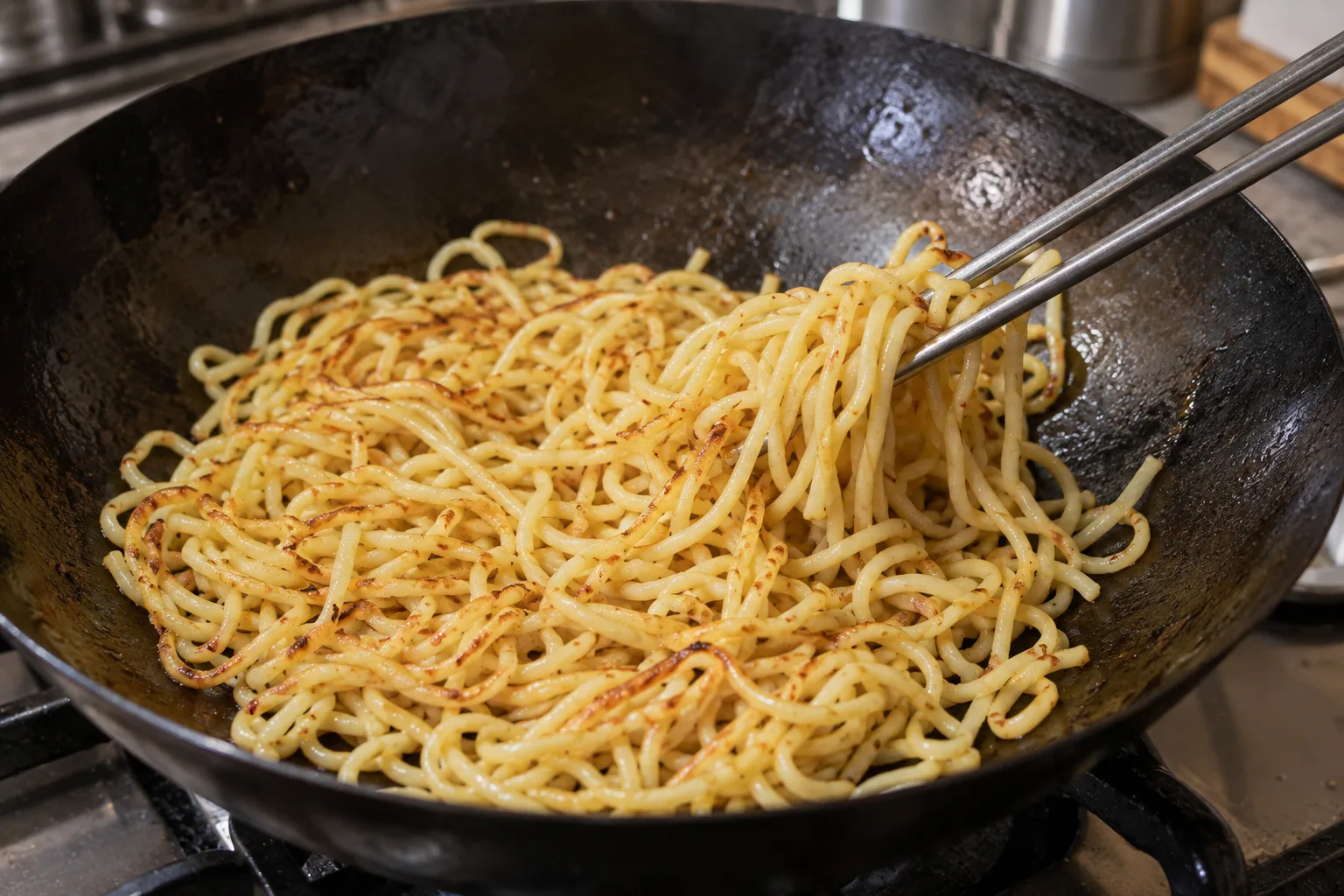
2. Give the noodles a light sear
Heat half the oil in a large frying pan over medium heat. Spread out the noodles and leave them briefly until the underside takes on a little color. Turn, lightly brown the other side and remove. If two servings crowd the pan, cook them one at a time.
The goal is not to deep-fry every strand hard. A few toasted patches alongside springy noodles give the dish its contrast. Compare thin and thick sara udon for the difference from crisp fried noodles.
3. Cook the toppings and toss with a little broth
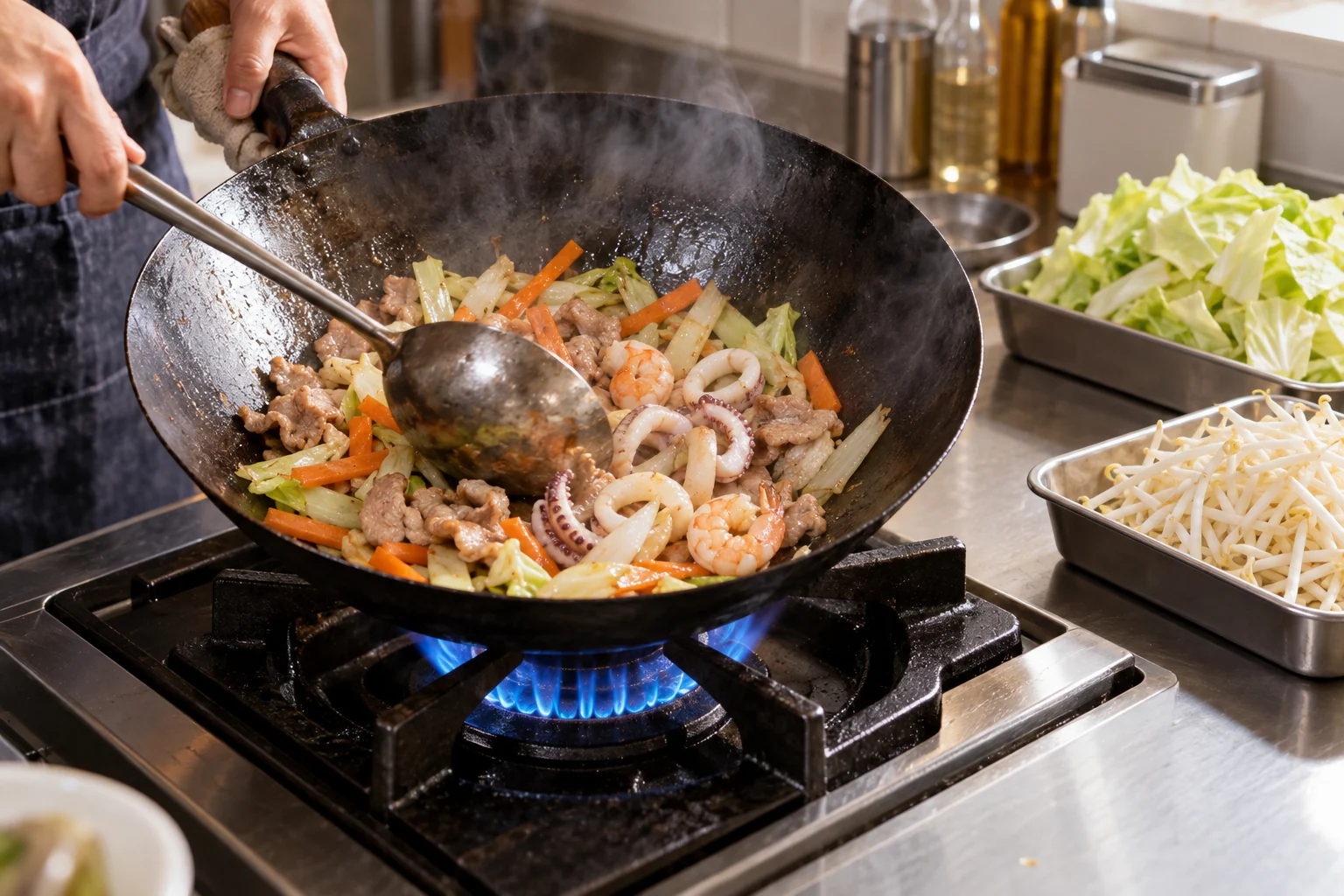
Add the remaining oil and cook the pork and shrimp thoroughly. Stir-fry the carrot, onion and cabbage; add the sprouts, fish cake and wood-ear mushroom shortly afterward. If your pan is small, work in batches rather than steaming an overcrowded pile.
Add the mixed broth and let it flavor the toppings. Return the noodles, loosen and toss until hardly any liquid remains visible at the bottom of the pan. Taste before adding a little salt or pepper, then divide between two plates while hot.
Short on time? Make the no-chopping, three-item version
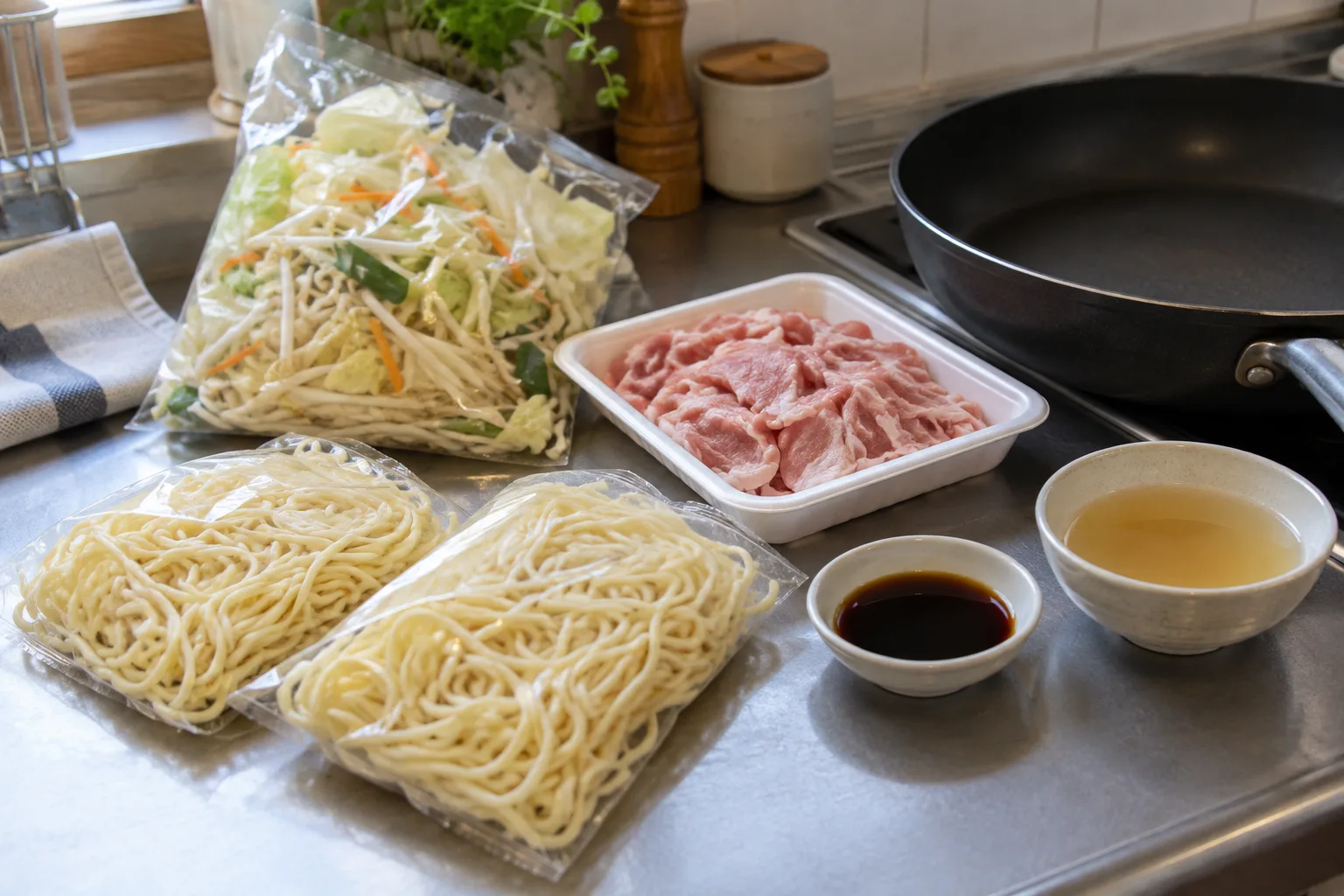
You do not need shrimp, fish cake and several separate vegetables every time. For two, use 2 packs of pre-boiled champon noodles, 1 bag of ready-cut stir-fry vegetables (about 250 g) and 100 g thinly sliced pork. Mix 100 ml water, 1 tsp chicken-stock powder and 2 tsp soy sauce. Have 1–2 tbsp oil ready. Follow the noodle packet for warming or loosening it.
First, loosen and drain the noodles, then lightly sear both sides in an oiled pan and set aside. Next, cook the pork thoroughly and quickly stir-fry the bagged vegetables. Finally, add the mixed seasoning liquid, return the noodles and toss until most of the liquid is gone. Taste and add a little salt or pepper if needed. The photographs in steps 2 and 3 above show the same key movements.
If your noodles come with a soup sachet, do not combine it with this seasoning liquid. Follow the kit's stated water quantity and method. A kit that asks you to spoon a thickened topping over seared noodles makes a different, equally valid thick-noodle sara udon.
If it turns watery, adjust these points next time
Check how wet the vegetables were and whether the pan was crowded. You can add only about half the broth at first, then judge how much liquid the vegetables release. If the pan looks too wet, reduce the liquid a little before returning the noodles; if it threatens to scorch, add a small splash.
If the noodles soften too much, avoid leaving them for long after boiling and searing. For more toastiness, let them sit undisturbed a little longer while searing. When you want a generous thickened topping poured over the noodles, treat that as another style rather than forcing this drier recipe to become it.