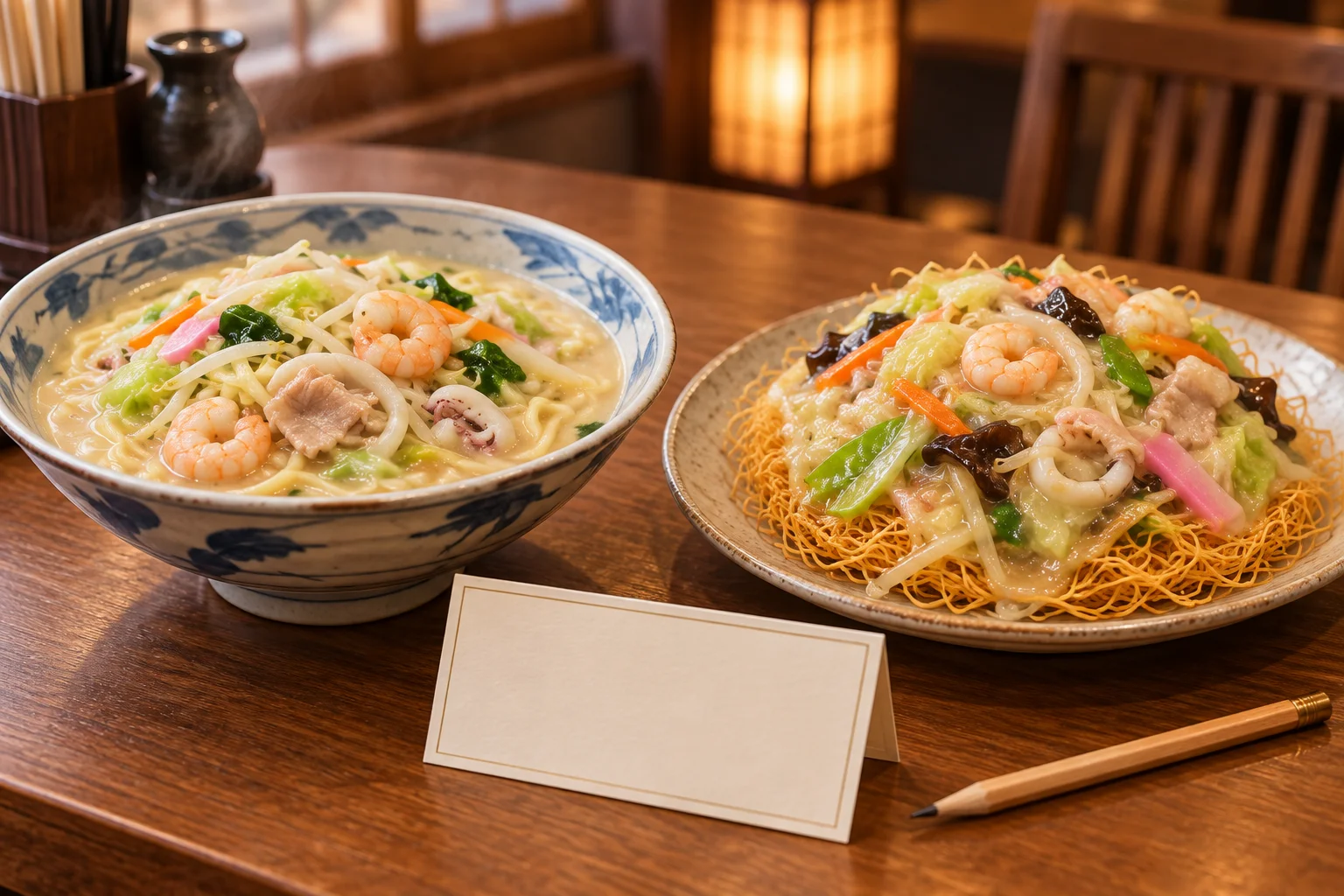
Keep the dish name, then explain it in one sentence
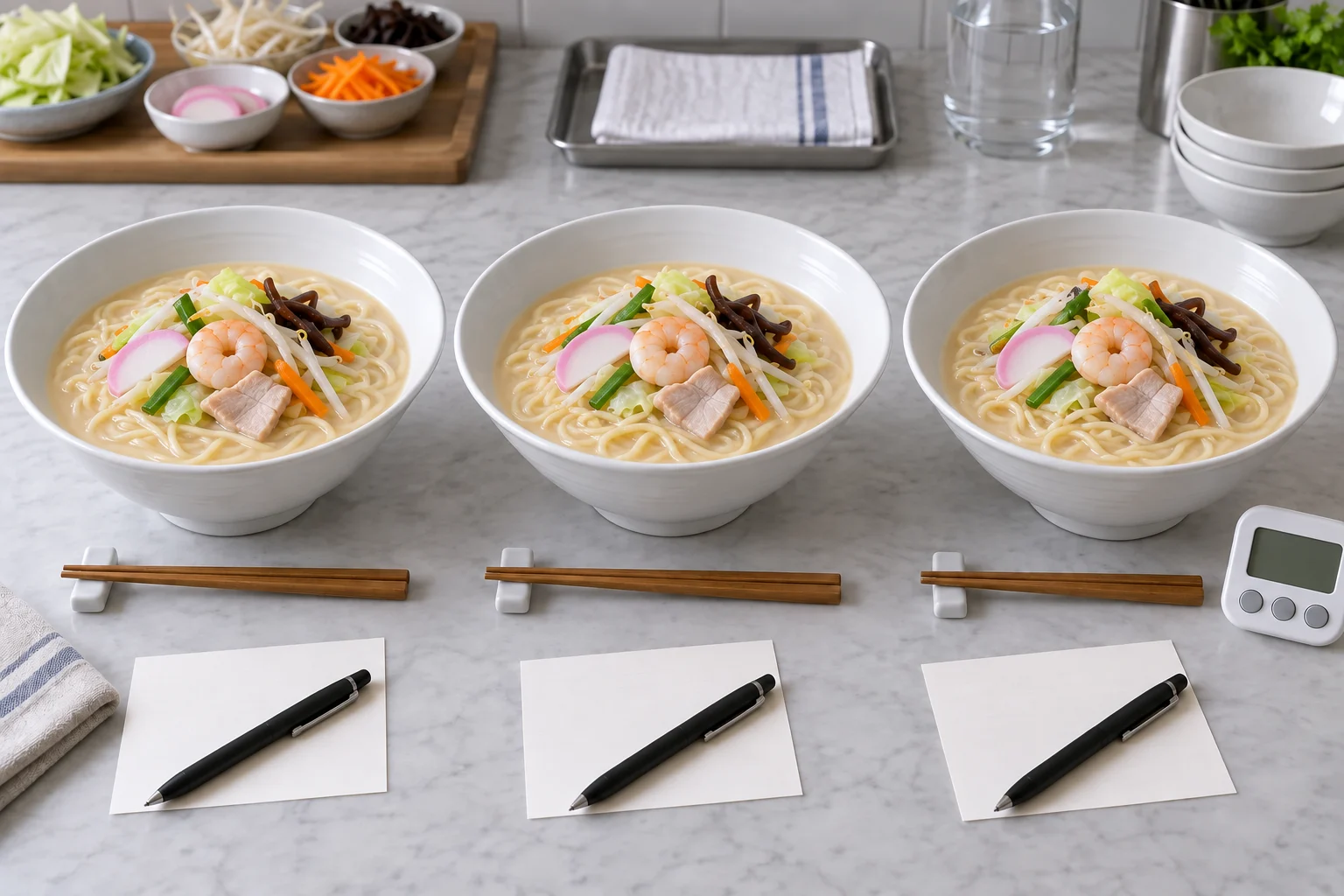
To someone visiting Nagasaki, “noodle soup” may not say enough about champon, while “fried noodles” may not describe the sara udon arriving at the table. Keep each dish's own name and add its vessel, noodle, toppings and liquid in plain language.
For example: “Nagasaki Champon — noodles with vegetables, pork and seafood in a savory broth.” For a thin-noodle dish: “Sara Udon — crispy thin noodles topped with vegetables, pork and seafood in a thickened sauce.” Japan's Ministry of Agriculture also uses the dishes' names in its English introductions. These are templates, not ready-made descriptions for every restaurant: change any ingredient that does not match your plate.
Specify thin or thick sara udon noodles
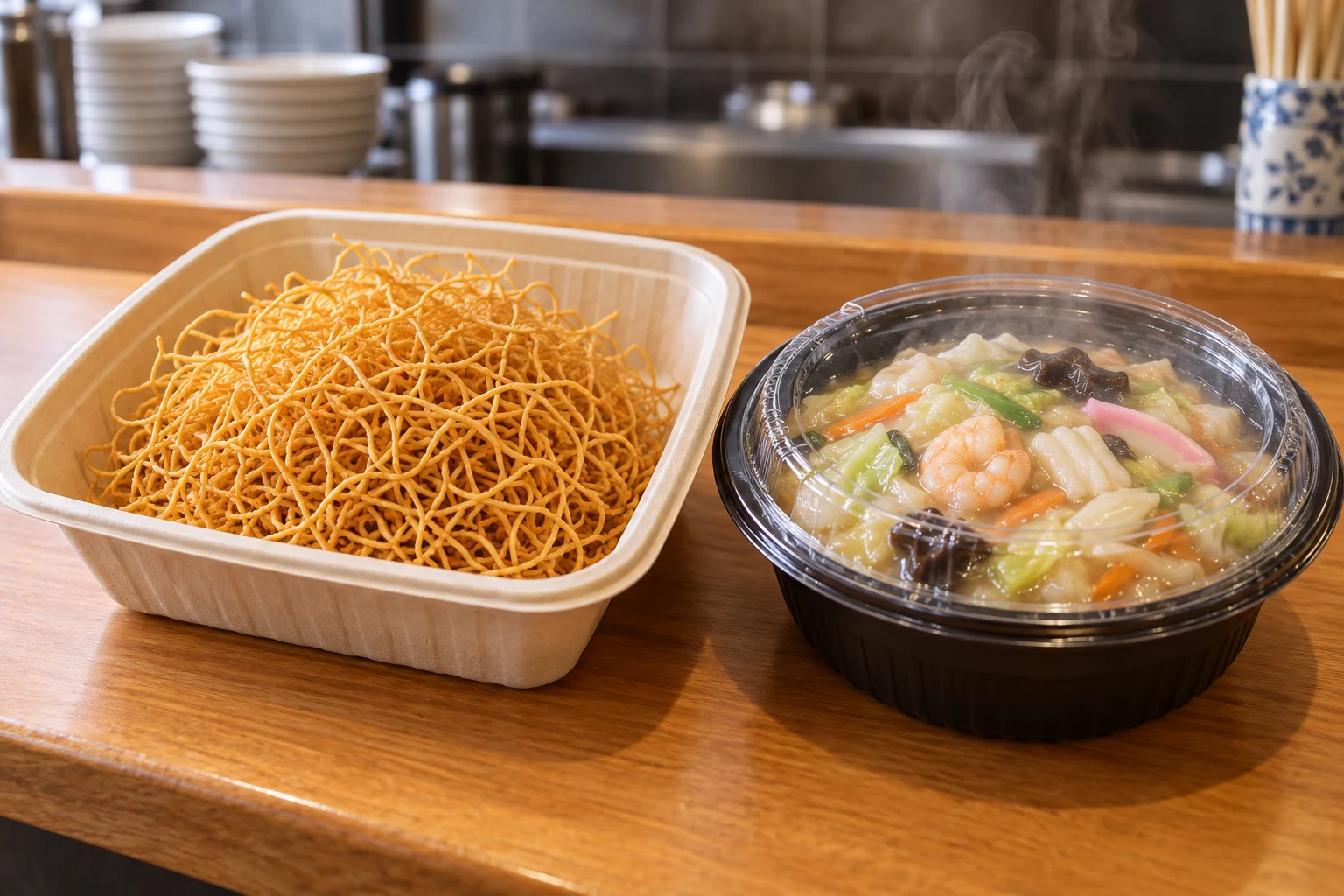
The “udon” in Sara Udon may lead an unfamiliar diner to expect a thick white Japanese noodle. For the thin style, say upfront that the noodles are fine, fried and crisp. For the thick style, explain that rounded noodles related to champon are pan-fried with toppings. One sentence can turn a surprise into an invitation to try the dish.
If both styles appear on the same menu, a separate photo of each, taken so the noodles are visible, helps. Our guide to thin and thick sara udon sets out the difference. If you have only one photo, identify which style it shows.
Ingredient and allergy information must reflect your kitchen
A tempting description is not an allergy statement. Wheat noodles, shrimp, squid or processed fish cakes may be used in these dishes, but actual ingredients vary by restaurant and product. Never use a generic translated sentence to promise that an ingredient is absent from the dish you serve.
Japan's Consumer Affairs Agency provides guidance for restaurants and prepared-food sellers on sharing food-allergy information. Record ingredients you can confirm, and have a way to check suppliers' labels and the kitchen's process when a guest asks. If the answer is uncertain, do not guess that a dish is safe. A reliable process helps even when the guest and staff speak different languages.
Four checks before the description goes on a menu
The shorter the menu line, the more important it is that it matches the plate. When someone asks what the dish is, add one detail about the noodle's texture and how to eat it. That conveys a Nagasaki specialty in its own right, rather than treating it as another kind of ramen.
- Which noodle does your kitchen use: champon, fine fried sara udon, or pan-fried thick sara udon?
- Do the photo and words match your toppings? Do any change with season or supply?
- Is it a broth-filled bowl, a plate with thickened sauce, or a drier stir-fried dish?
- Who checks the product ingredients and kitchen process before answering an allergy question?