Flour, liquid and the way they are mixed
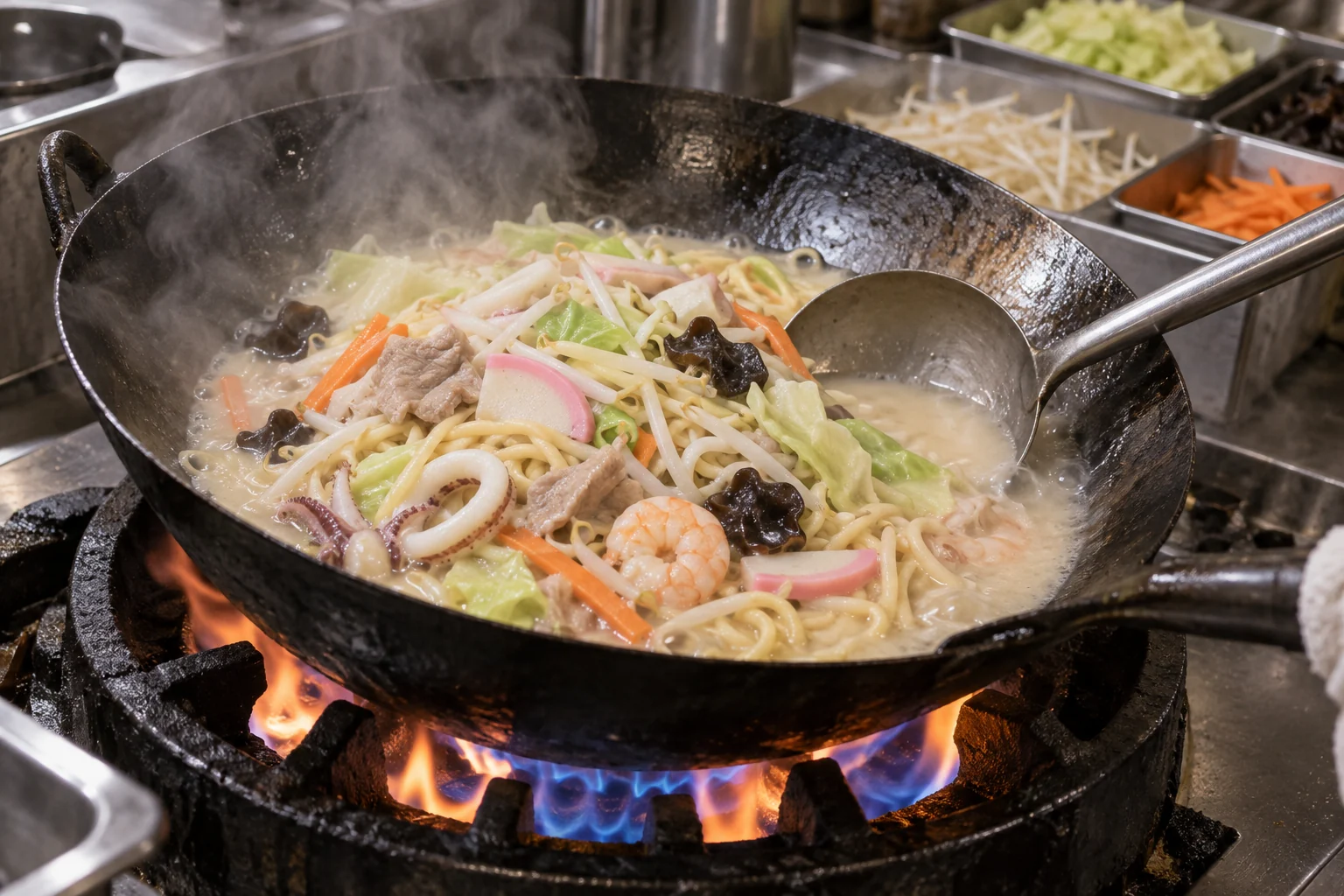
The rounded, smooth noodle stands out in a bowl of Nagasaki champon. Is that shape simply a matter of the final cutter? A process published by Mizutani Seimenjo begins earlier: wheat flour and tōaku, Nagasaki's alkaline ingredient, are mixed into a crumbly dough before strands are formed.
Tōaku contributes to champon noodles' characteristic flavor, but it does not determine texture on its own. Sanwa Seimen says it adjusts water content with daily temperature and humidity, along with mixing, dough formation, resting, cutting and boiling or steaming. The noodle you eat is the result of many connected decisions. Our article on tōaku and champon noodles explains the ingredient side.
From crumbly dough to a continuous sheet
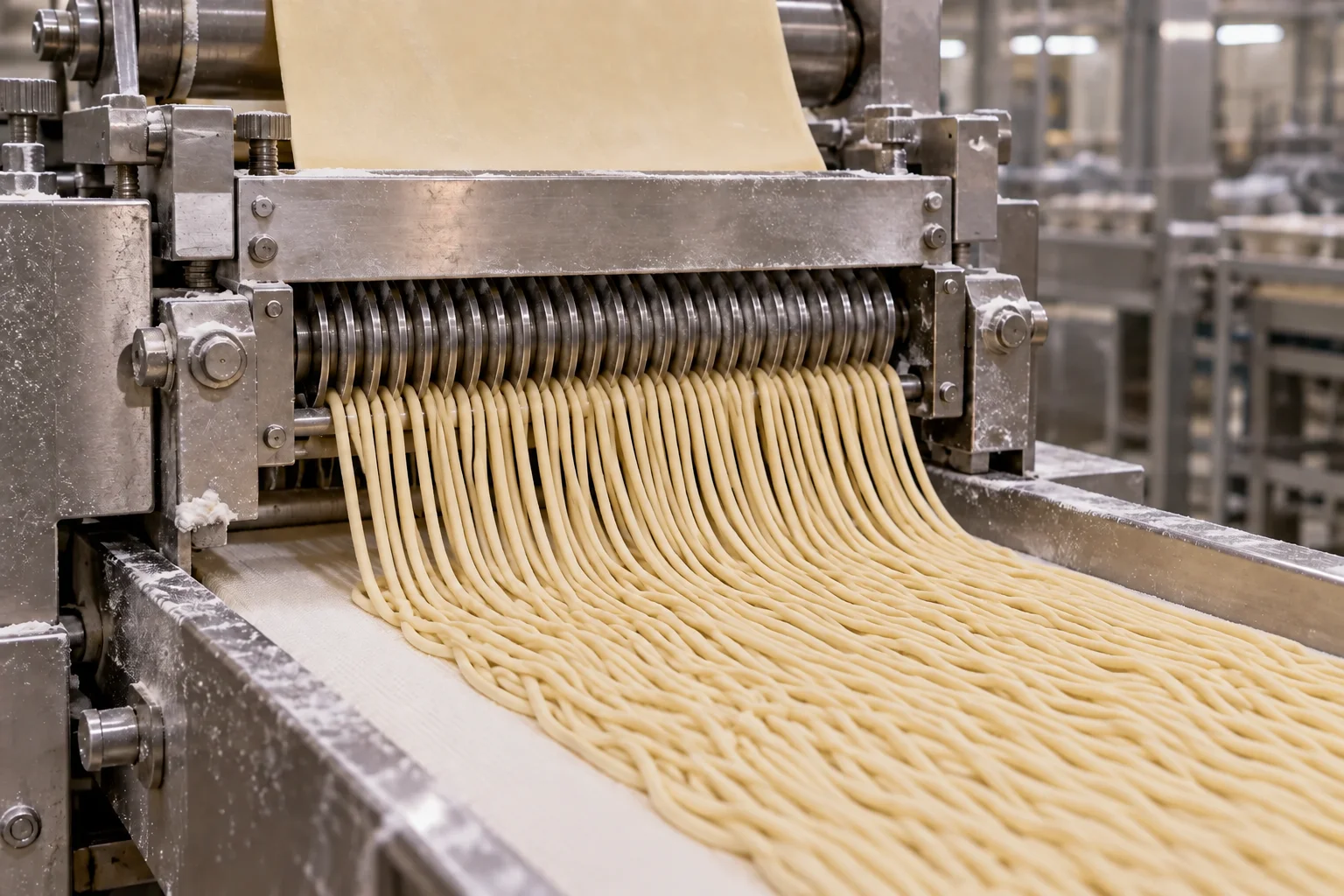
Rather than starting with a perfectly smooth ball, Mizutani's process mixes a crumbly dough and rolls it into a continuous sheet, or mentai. The sheet provides a consistent base for the next shaping stage.
You might picture a cook cutting strands one by one with a knife. In a factory, the sheet passes through equipment that forms the shape required for the product. Equipment and finer details differ between makers, however. The sequence described here is one documented example, not a claim about every Nagasaki noodle factory.
Shaping the round strands
Mizutani's published process forms its sheet into relatively thick, round strands. What seems like a simple curve in the bowl depends on getting the dough sheet and forming stage right, so the cooked noodles have a consistent feel.
There is no single diameter shared by every champon noodle. Sanwa Seimen lists both thick and thin champon products. Makers choose shape with the finished dish in mind: how the noodles will heat in a pan and feel with broth and toppings. Why champon has its own noodles explores that relationship at the table.
Boiling, cooling and the route to the kitchen
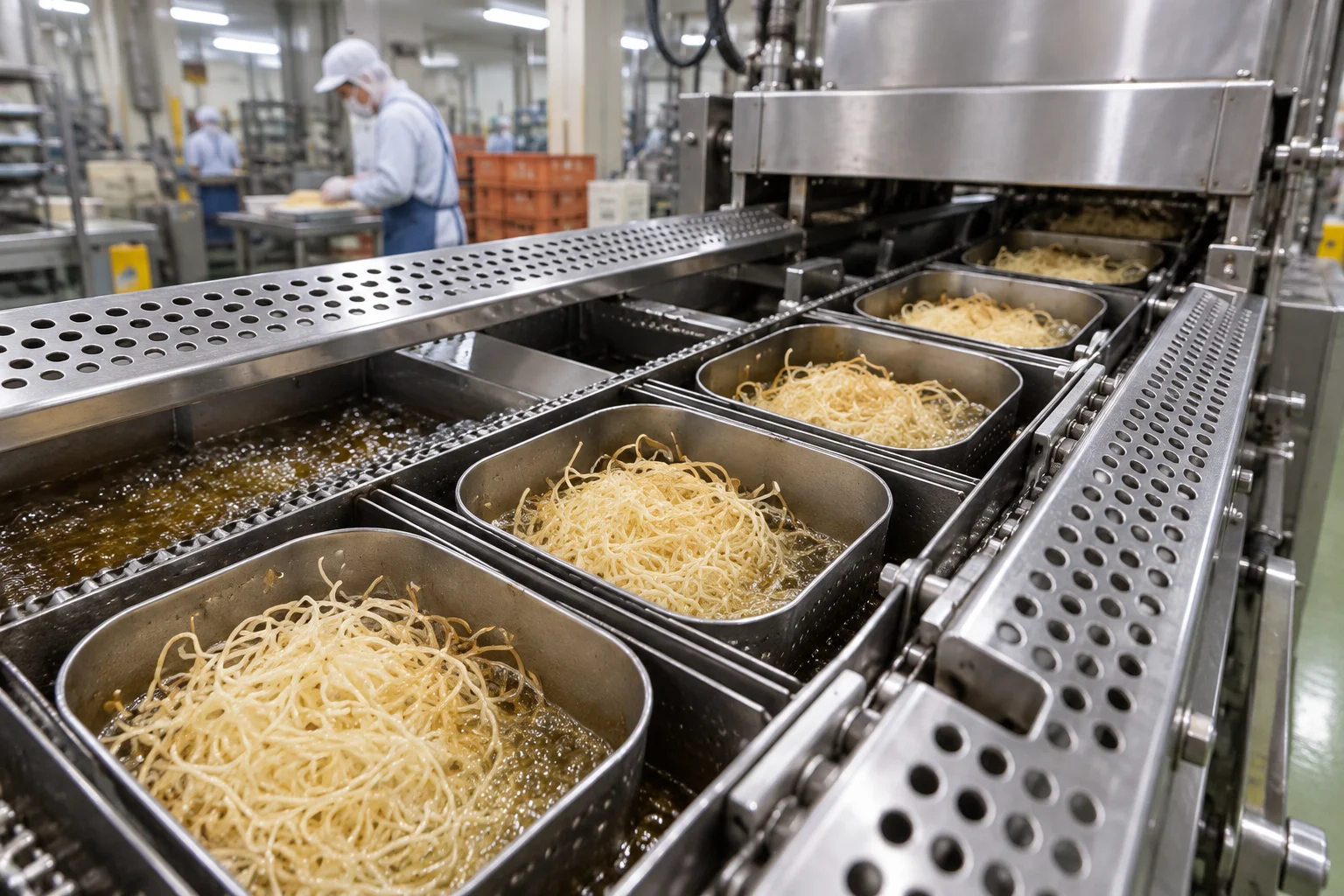
For the pre-boiled noodles in Mizutani's example, the formed strands enter a boiling kettle and are then cooled. Those stages prepare the noodles for cooks. The cooling conditions shown by that maker are specific to its published process, not a standard imposed on every champon noodle.
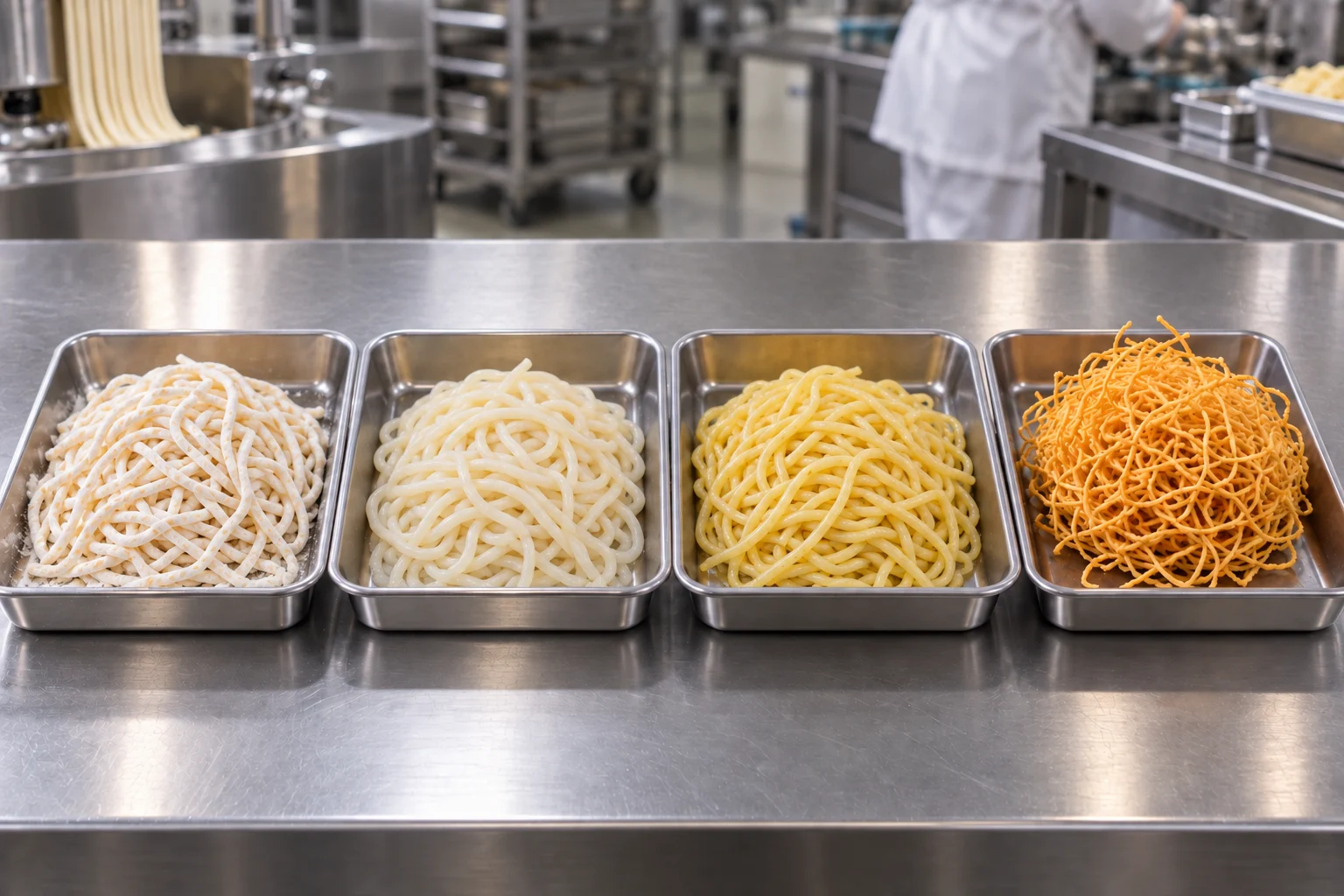
Champon noodles can also be sold fresh. A cook using fresh noodles does not start with the same product state as one using pre-boiled noodles. Our guide to fresh, boiled and other noodle formats explains why the cooking instructions differ even when the packet says “champon noodles.”
Next time you eat a bowl, look for one noodle beneath the toppings. Its rounded shape and bite bring together the mixing, rolling, forming and, where applicable, boiling that happened long before it reached the wok.