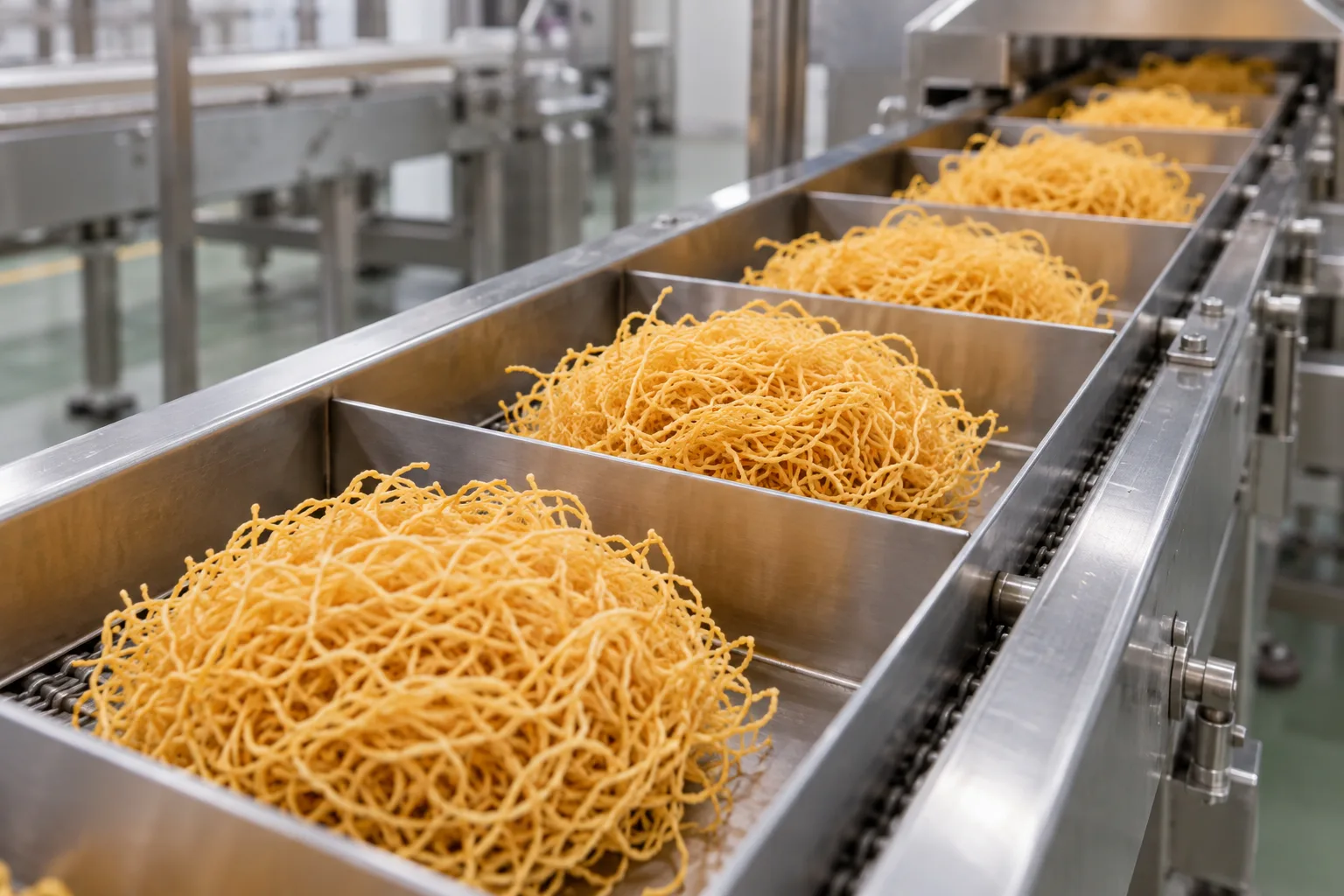
One piece is easy to count and serve
Fine fried sara udon noodles often come as a round or rectangular piece. One practical reason is portioning: Mirokuya sells fried noodles as a one-serving product, while MUJI's cooking directions start by putting one serving of noodles on a plate. The shape helps mark the amount as well as the appearance.
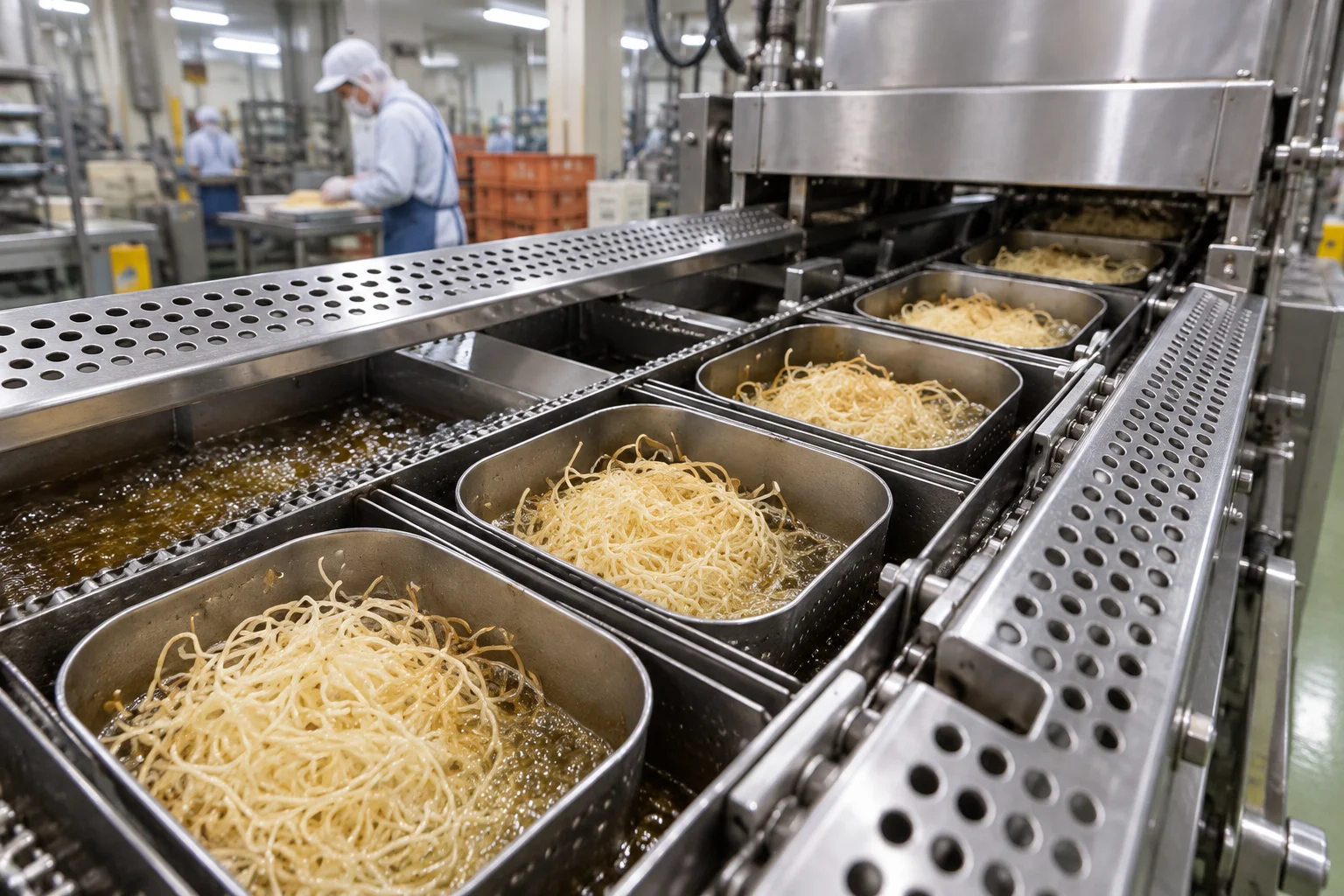
That does not mean every maker uses the same mold or machine. Shape, thickness and weight vary. Karino Foods shows its fried-noodle production on its official site, but photographs alone cannot establish precise oil temperatures, frying times or shaping methods.
Loose, delicate strands would be harder to handle
The many fine strands form the texture of this dish. A contained portion is easier to move onto a plate and forms a base for the saucy toppings. In packing and distribution, a defined unit can also be counted and fitted into a bag or tray. These are practical observations about the product, not a claim about one factory's design decisions.
Some products are low and round; others are angular. Check the package or the product itself rather than imagining a tall bird's nest as the only authentic shape.
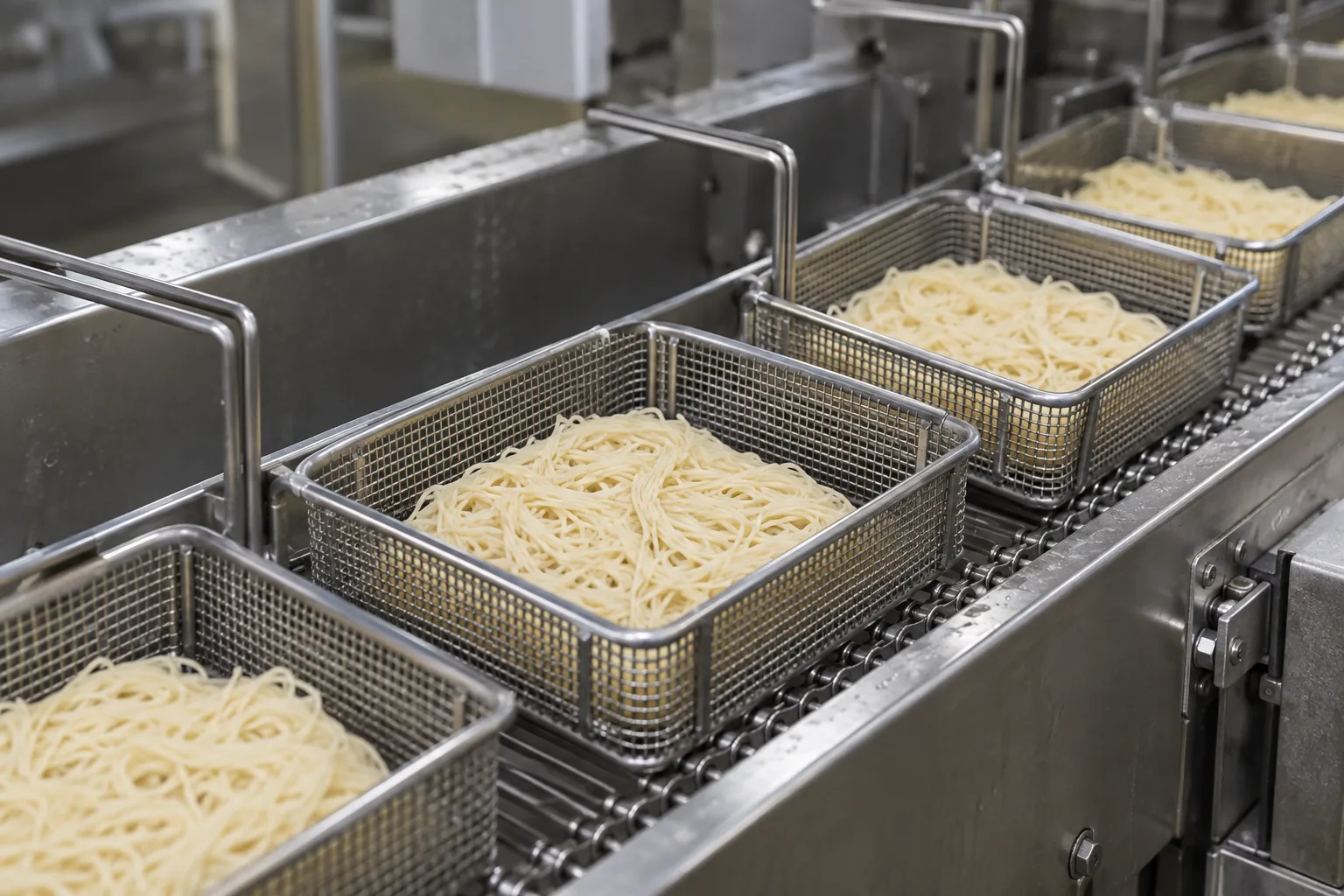
On the plate, gently loosen the bundle
You need not eat the noodles as one solid block. MUJI's directions suggest gently pressing the portion with both hands after placing it on the plate. Products differ in how easily they break, so check the packet and avoid crushing them too forcefully.
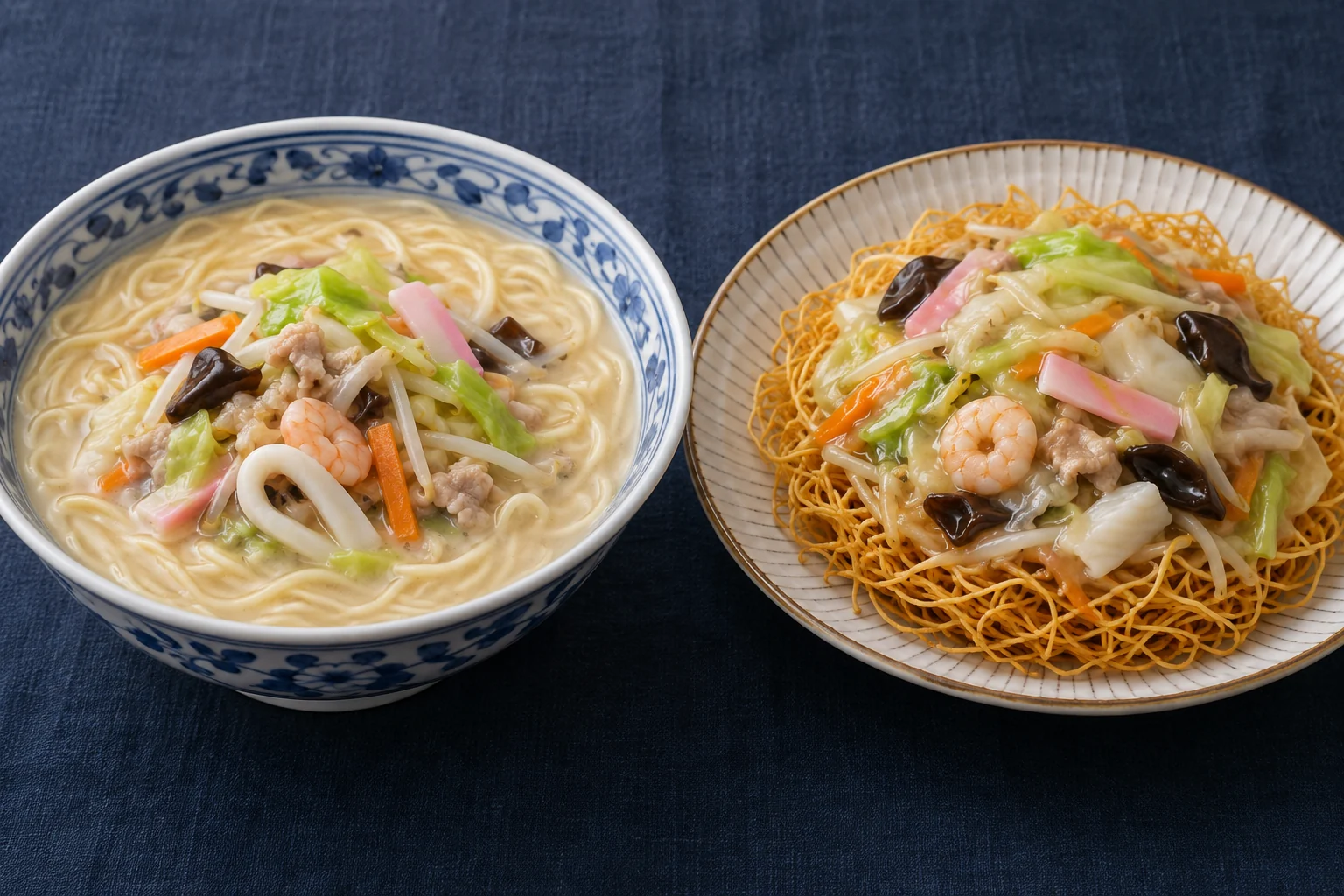
Spoon the hot toppings together with their thickened sauce over the spread-out noodles. The center softens while the edges can stay crisp. Why the fine noodles are crisp explains what their fineness contributes. The portion shape is a starting point for serving, not the final plated dish.