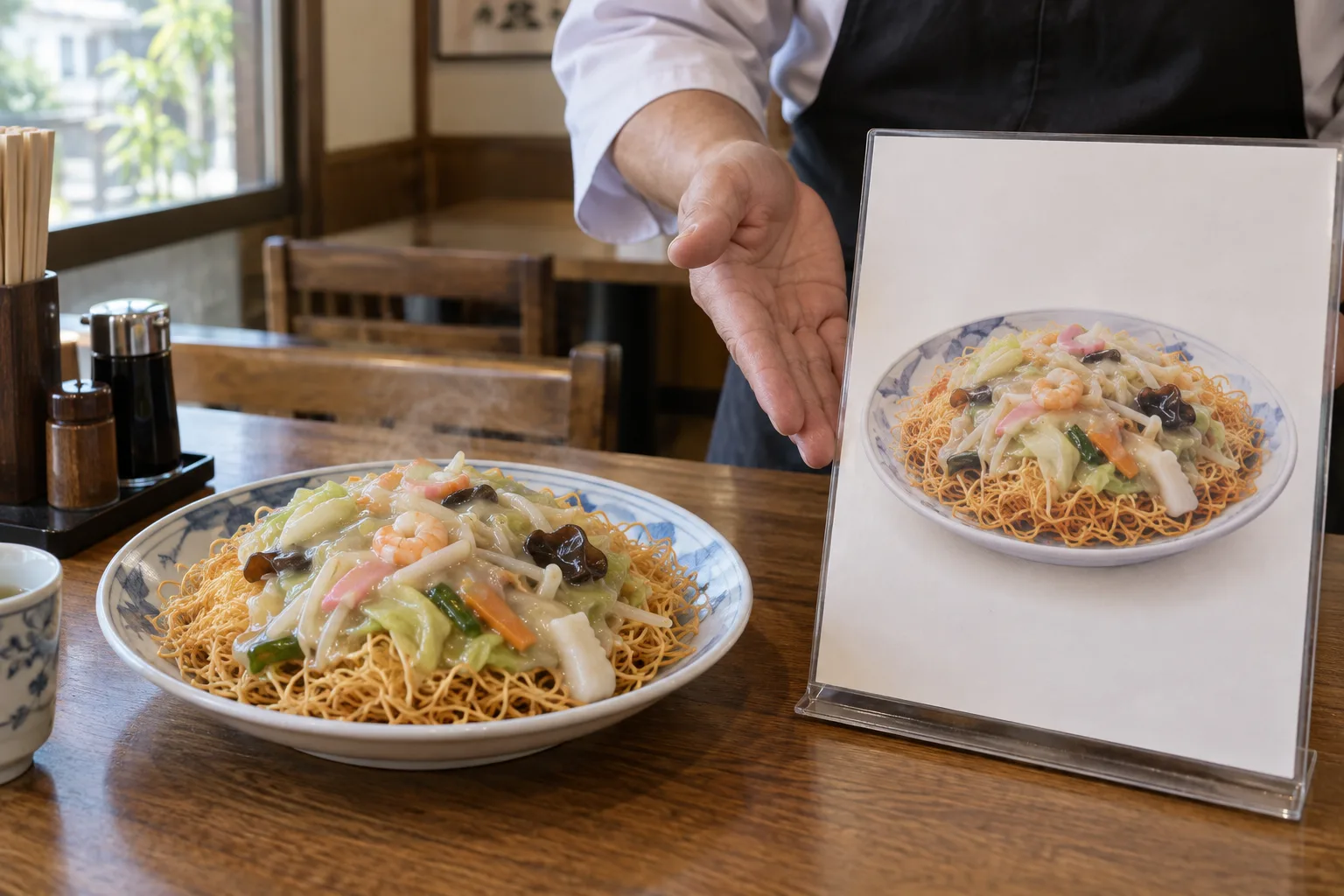
First, show the noodle style and the dish you actually serve
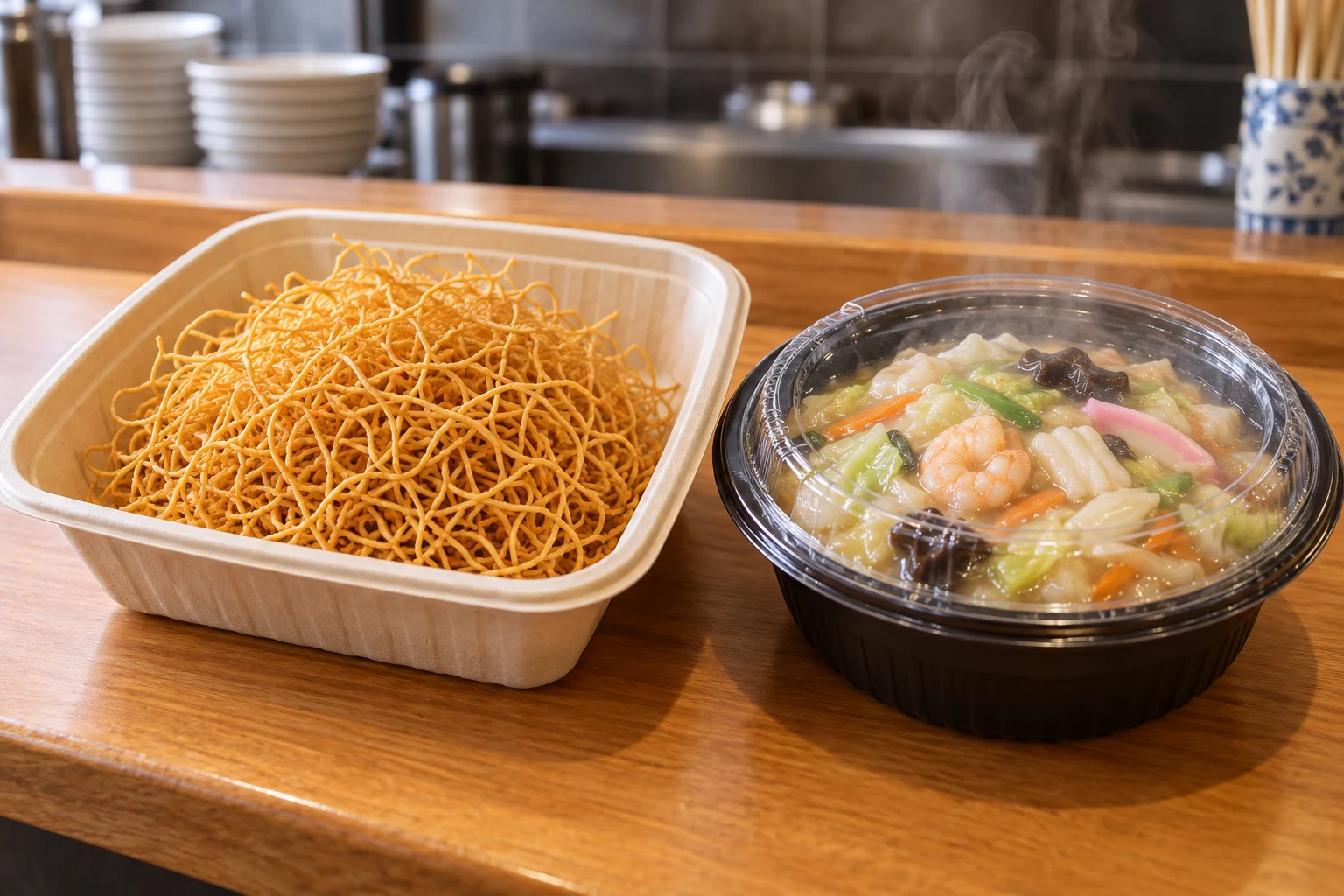
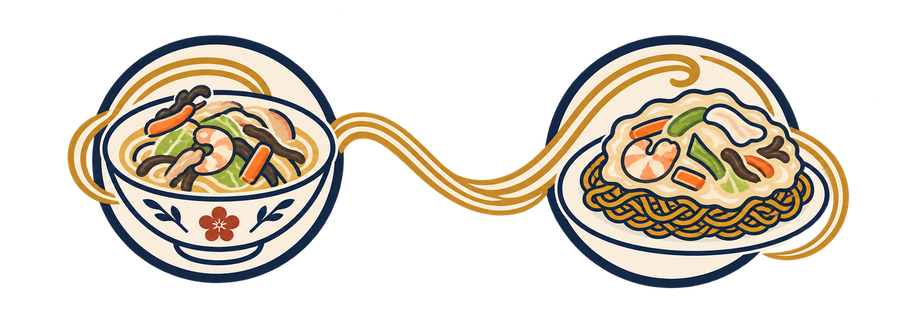
Sara udon may mean fine fried noodles topped with a thickened mixture, or pan-seared medium noodles. Since the two look and eat differently, choose the noodle your restaurant really serves before taking the menu photo. Do not illustrate a thick-noodle menu item with a thin-noodle plate. If you serve thick noodles, make clear whether they are tossed with the toppings or covered by a thickened sauce. The two noodle styles show why the difference matters.
Japan's Consumer Affairs Agency says a discrepancy between a menu representation and the actual dish is assessed in light of the overall impression customers receive. The practical aim is not an unappealing photo; it is an honest picture of the features people use to choose their meal.
Compare the photo plate with an ordinary serving
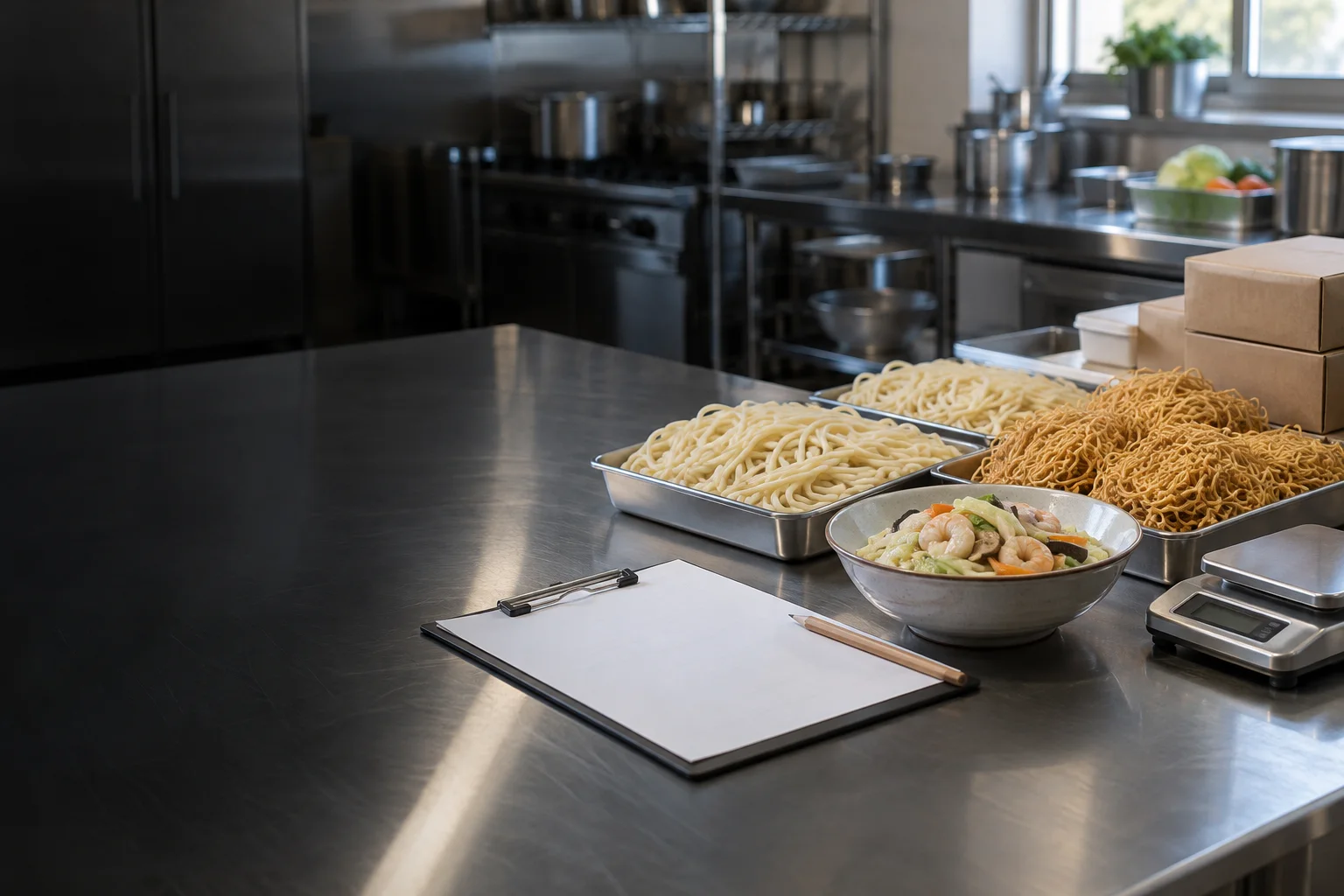
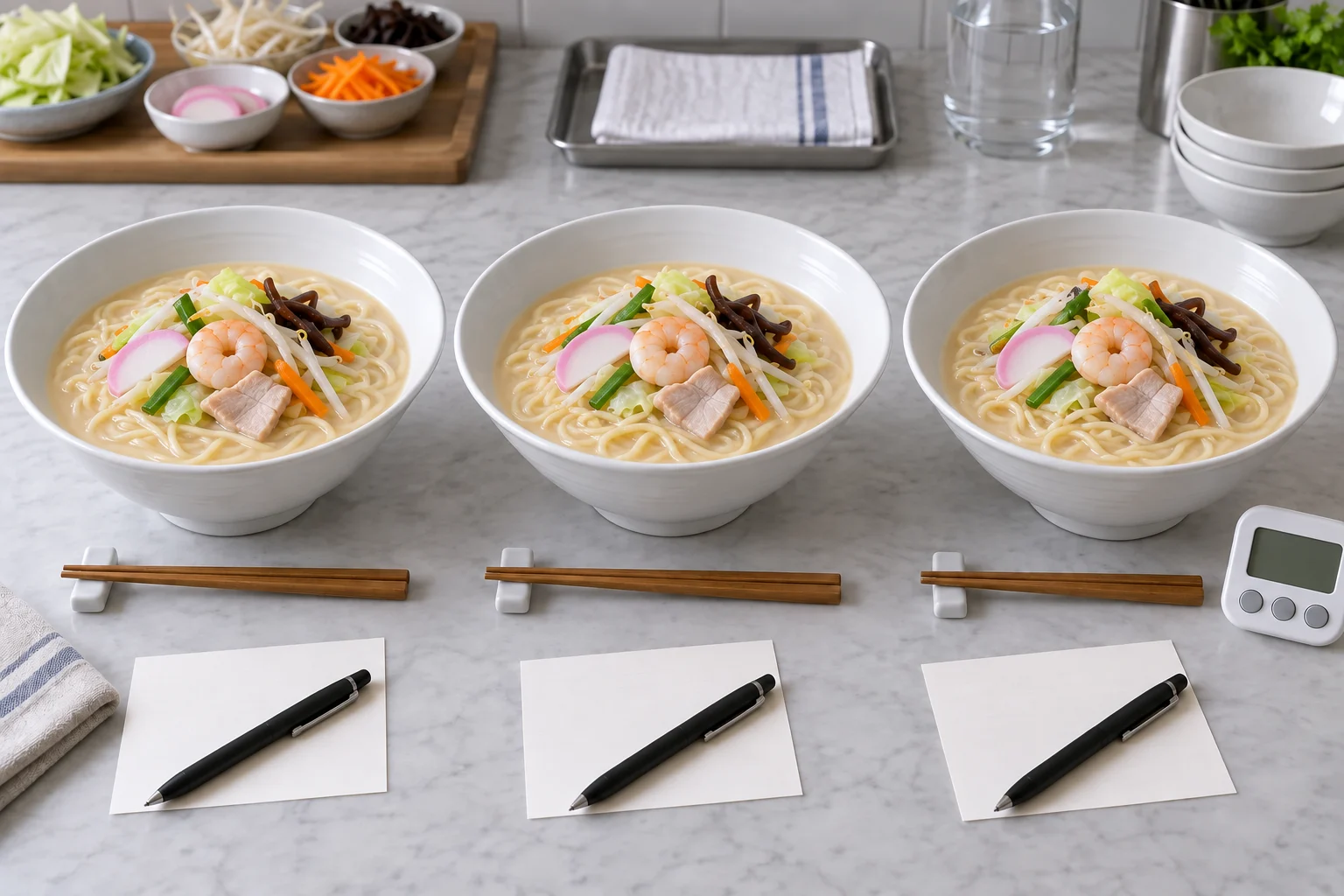
Arranging toppings toward the camera or showing the edge of the noodles can make a useful photo. Adding shrimp only for the shoot, using a much larger plate, or presenting a seasonal topping as permanent can create the wrong expectation. Before shooting, prepare a normal serving and compare noodle quantity, ingredient kinds and counts, plate and amount of sauce.
For thin noodles, show the ingredients coated in their thickened sauce, not dry toppings followed by a separate pour of clear starch sauce. If ingredients change, update the menu copy too.
- Noodles: can customers tell fine fried noodles from pan-seared medium ones?
- Toppings: are seafood, pork and fish cake close to the usual kinds and amounts?
- Plate and finish: are the vessel, topping quantity and overall height realistic?
- Copy: does it avoid promising ingredients that depend on season or supply?
Keep the kitchen and menu in sync after the shoot
A photo does not stay accurate automatically. When the noodle supplier or size, presentation or shrimp topping changes, compare the menu image and wording with the new plate. A quick record of an ordinary serving helps the next staff member make the same comparison. This is a practical workflow, not a claim that one legal rule fits every case.
Explaining the dishes to visitors from abroad recommends describing noodle type, toppings and amount of liquid rather than relying on the name alone. A menu photo should do the same: help a first-time guest imagine the plate they will receive.