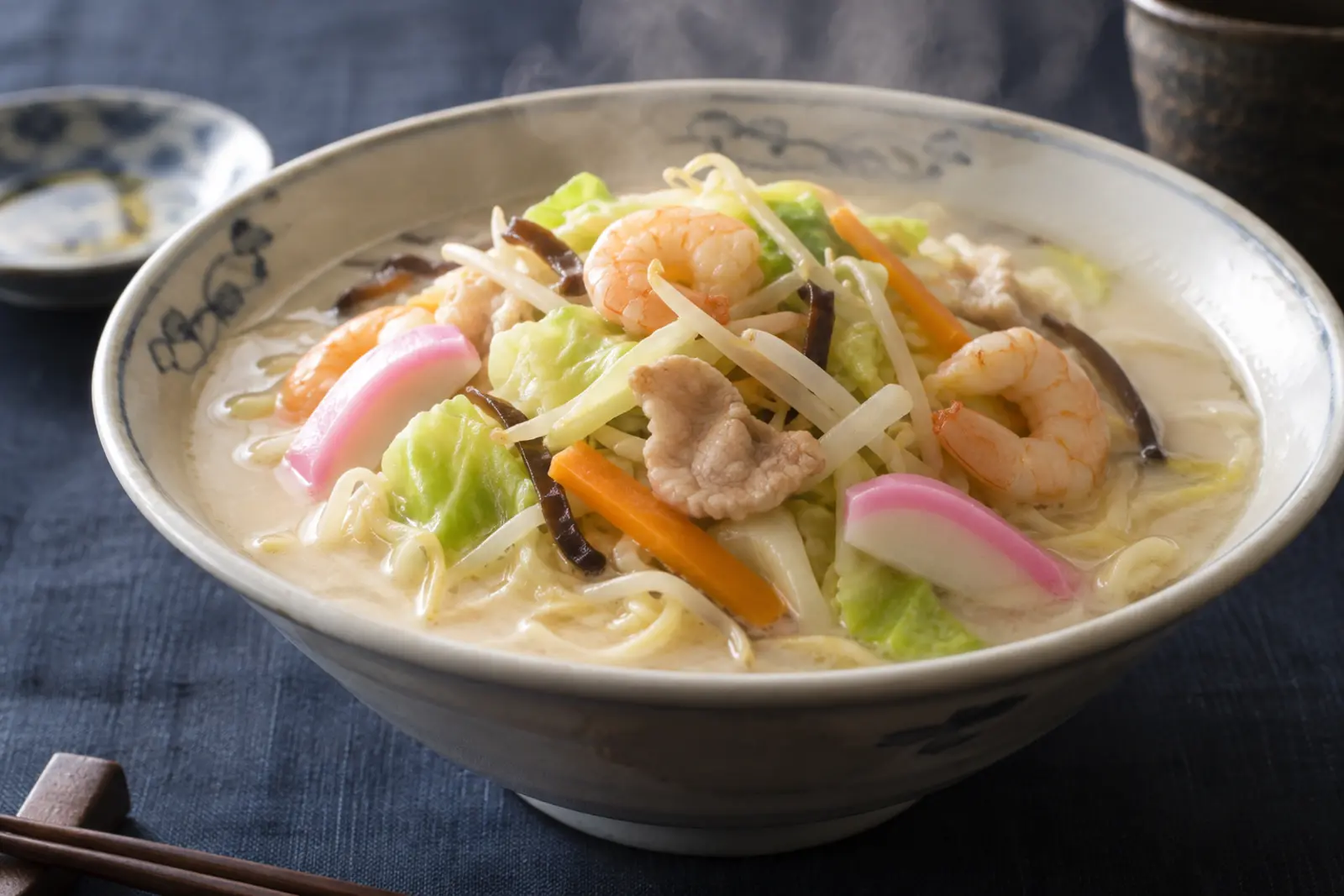
No: many bowls are pale, but white is not a rule
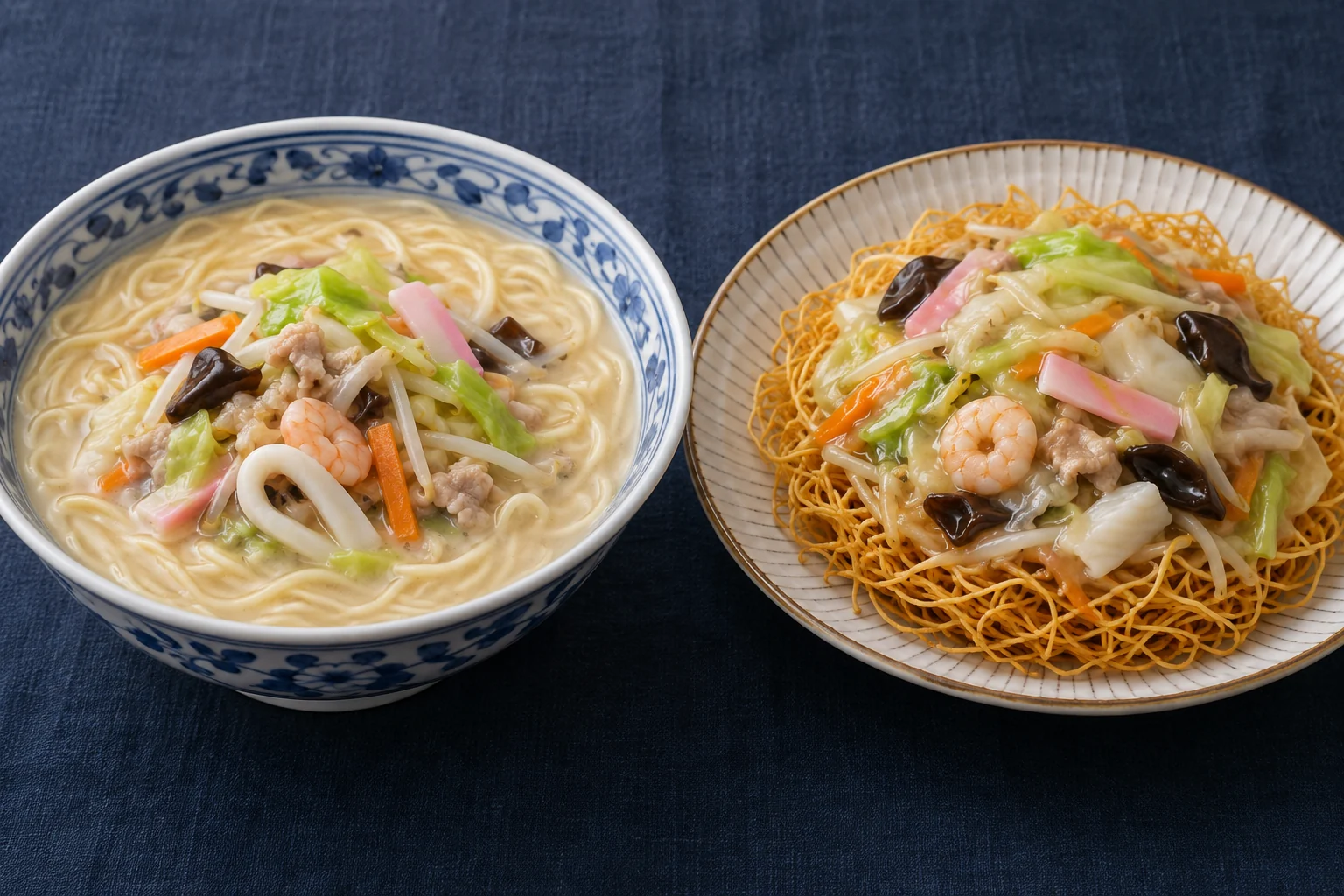
Milky-looking broth appears in many photos of Nagasaki Champon. Yet assuming every bowl must be stark white, or that pork bones are its only possible base, misses the range of actual cooking. The Nagasaki Prefecture Tourism Association describes a version simmered with pork and chicken bones, spring onion and ginger. Its restaurant guide also features a shop known for a lighter chicken-stock soup.
Color is not a measure of strength. A pale broth may be salty or gentle; a clearer one may still carry considerable flavor from its toppings. The first sip tells you more than the photograph.
The pan adds the flavor of its toppings
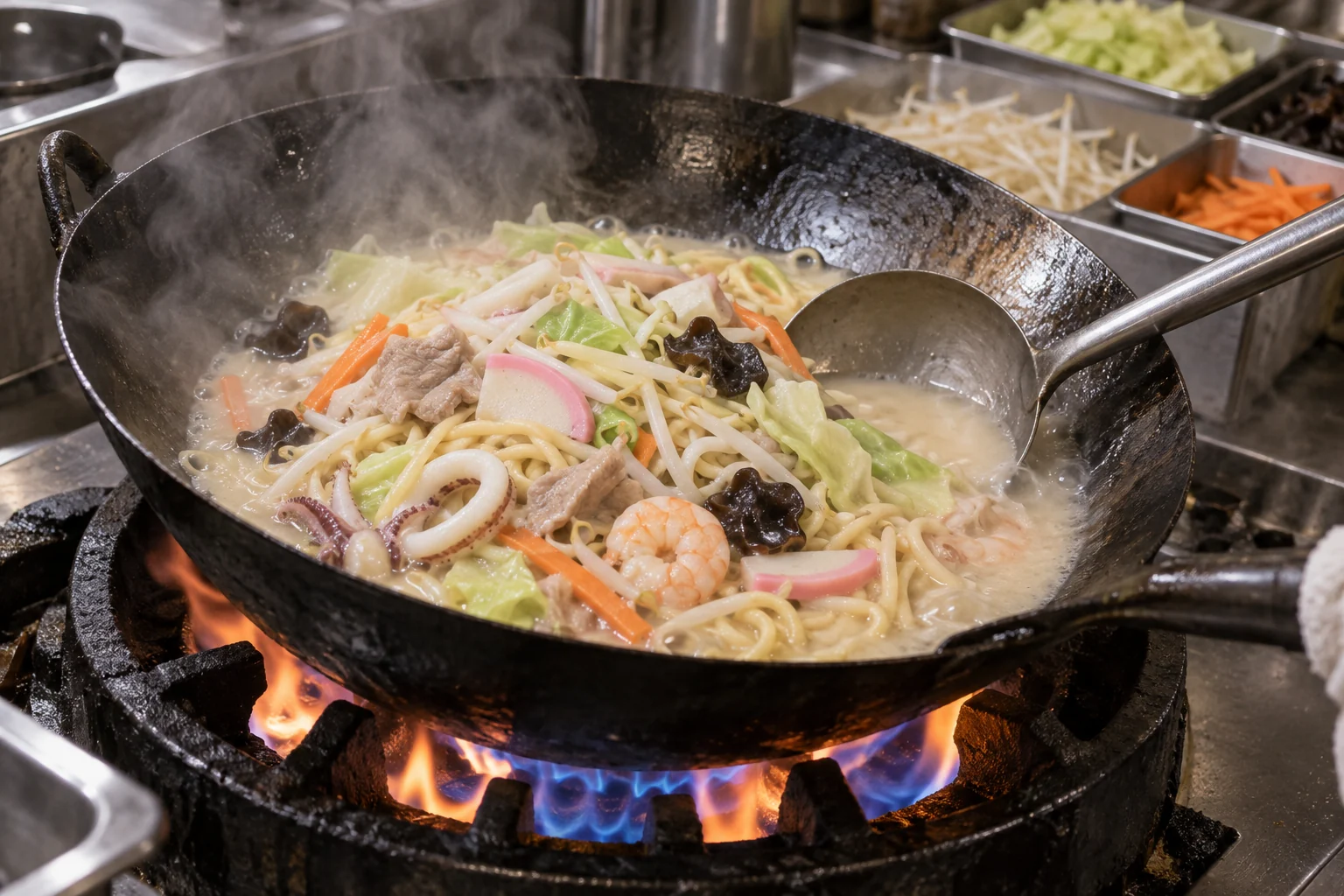
Think beyond soup prepared separately and poured into a bowl. In a method described by Japan's Ministry of Agriculture, meat, seafood and vegetables are stir-fried, seasoned broth is added, and the noodles finish in the same pan. Pork, shrimp and cabbage all leave traces in that broth.
Restaurants use different ingredients and sequences. Our basic home recipe shows one path from stir-fried toppings to soup and noodles. Bringing those parts together matters more than reproducing a particular shade of white.
Why this is not simply tonkotsu ramen
Both dishes can use pork bones and a cloudy broth, but they are not interchangeable. The generous toppings, the stir-frying of meat, seafood and vegetables, and the way champon noodles finish in the soup shape the whole bowl. The noodles are not just ramen noodles made wider.
Why champon has its own noodles compares them with ramen and udon. Rather than sorting dishes by soup color, look at the noodles, toppings and cooking method together.
Three things to notice in your next bowl
There is no need to grade a bowl on how white it is. A light chicken-forward version and a fuller bone-stock version can both be worth trying. These three comparisons will help you find the champon you like across different shops.
- First sip: do pork, chicken or seafood notes stand out?
- After a bite of toppings: how do vegetables and seafood change the broth?
- With noodles: does the broth's strength suit their texture?