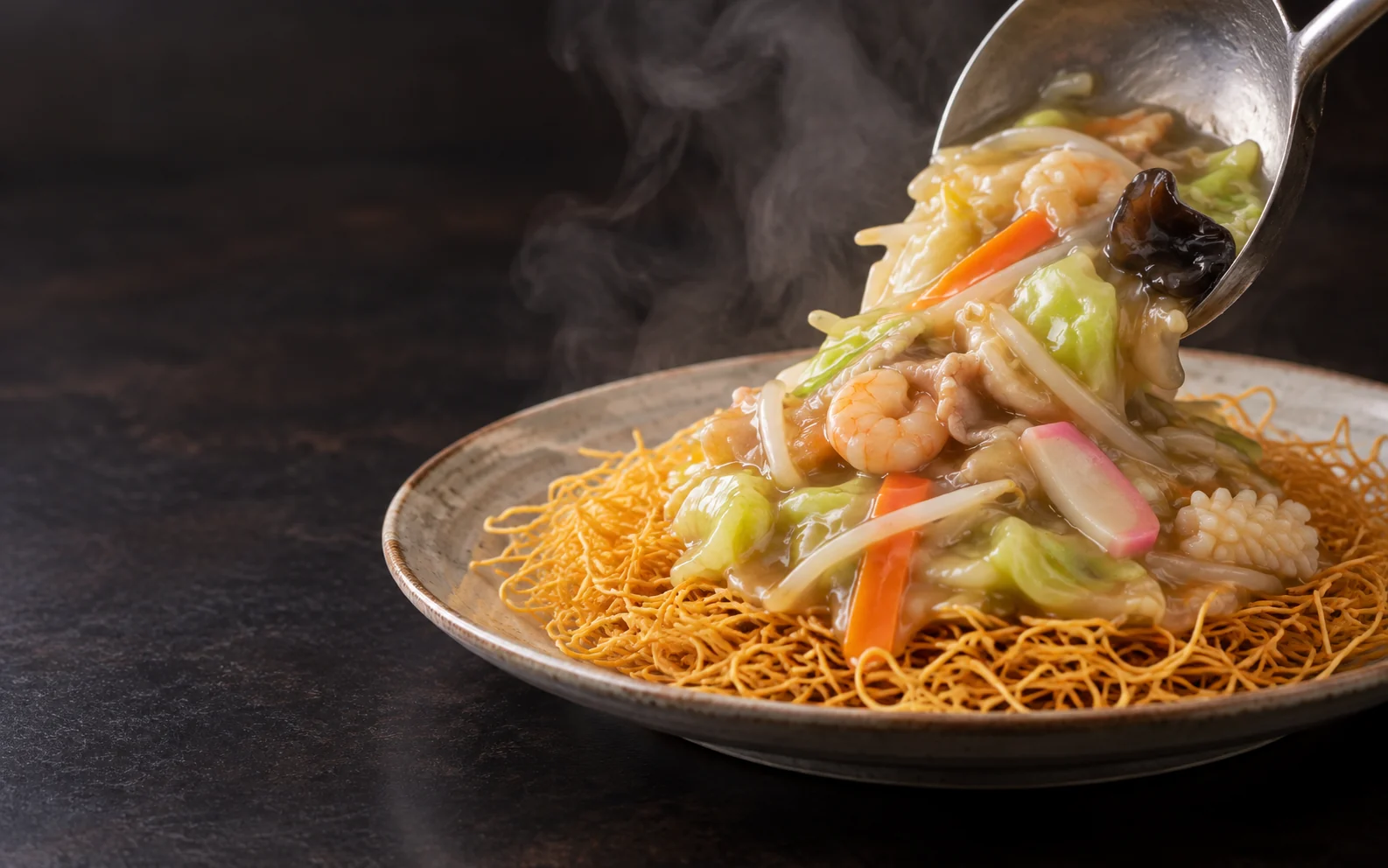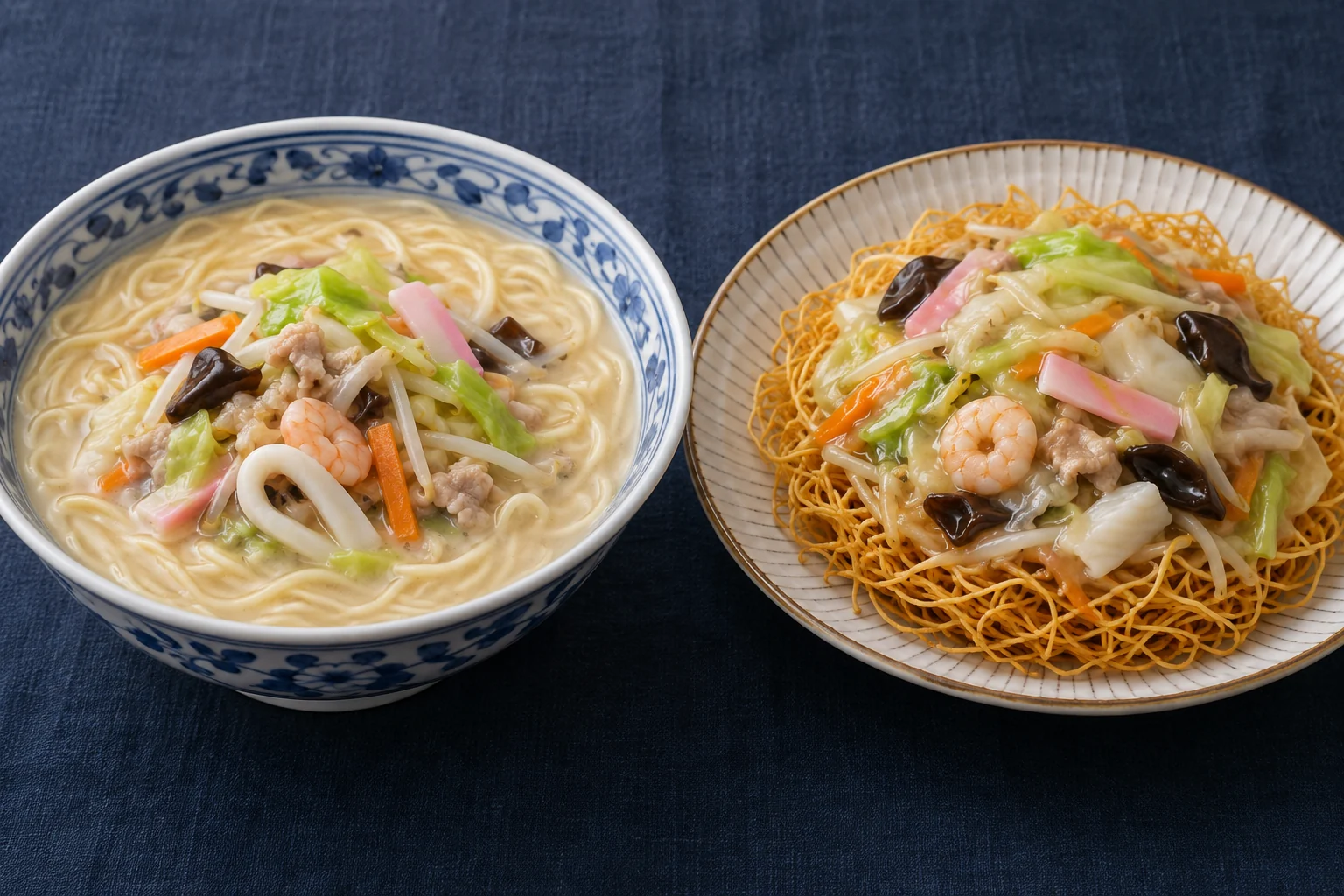
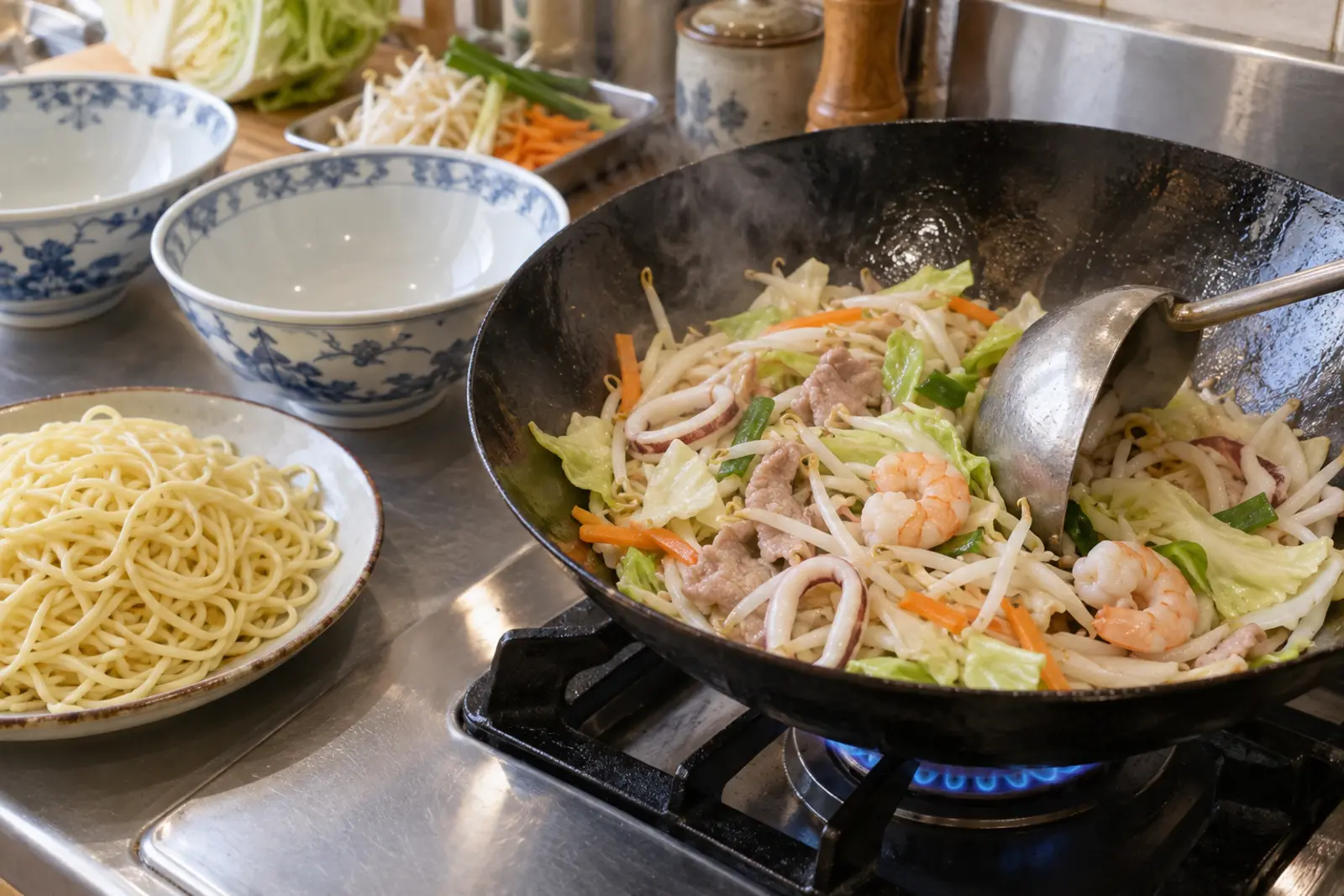
Ingredients for two: check the seafood and noodle packets first
Frozen seafood mixes may contain raw or precooked ingredients. Follow the package for thawing and whether further cooking is required. This version assumes a shrimp-and-squid mix that needs cooking. Check whether your champon noodles are fresh, pre-boiled or frozen too.
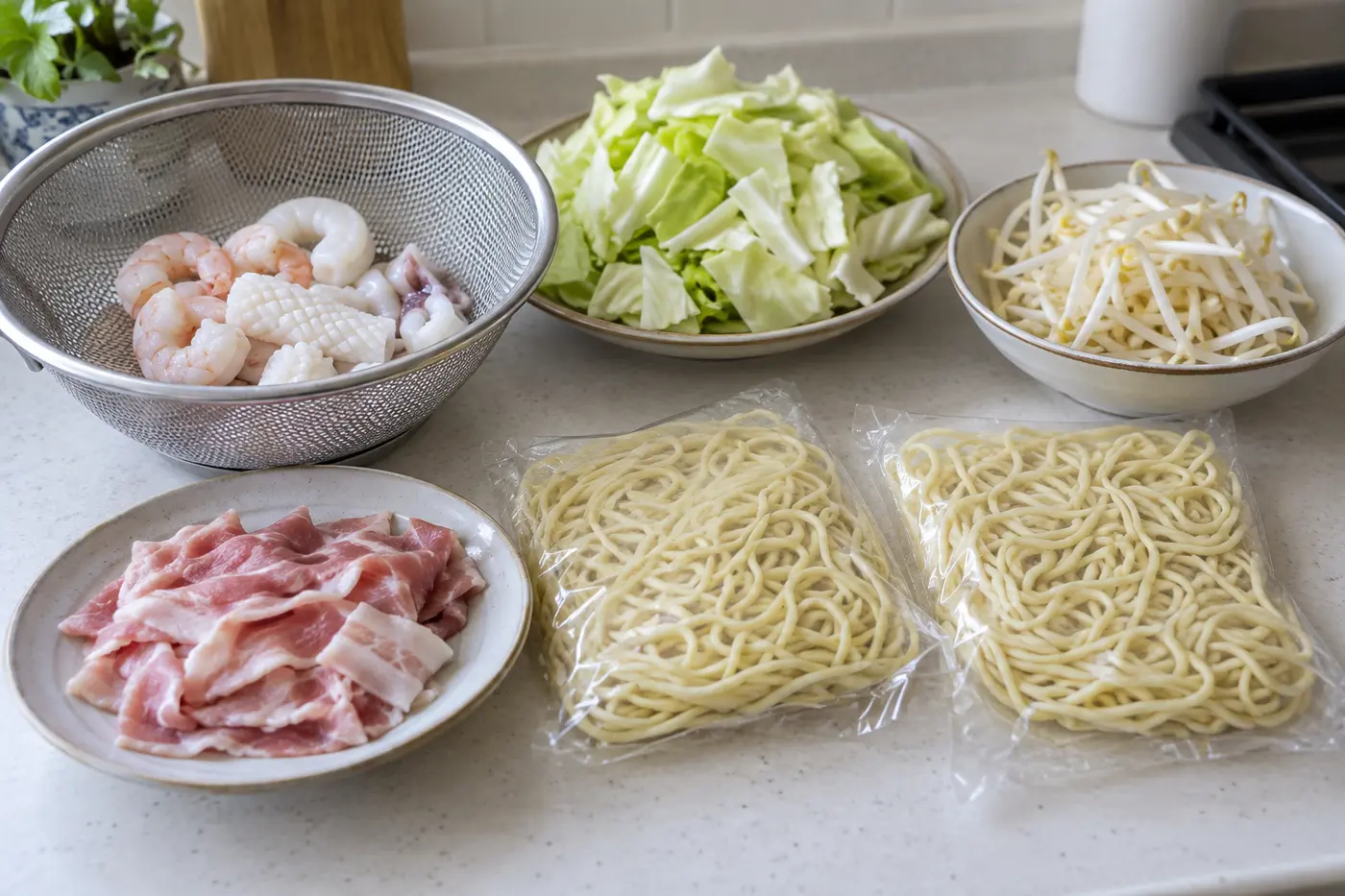
- Champon noodles: 2 servings; prepare according to the packet.
- Frozen seafood mix: 160 g; thinly sliced pork: 80 g.
- Cabbage: 120 g; bean sprouts: 100 g; carrot: 30 g; kamaboko fish cake: 30 g.
- Water: 400 ml; chicken-stock powder: 2 tsp; soy sauce: 1 tsp; sake: 1 tbsp; oil: 1 tbsp; a little salt and pepper.
1. Remove excess surface water
If the seafood packet calls for thawing, drain the mix in a colander and blot its surface dry. Japan's Ministry of Agriculture also recommends removing surface moisture from thawed seafood to avoid a watery result. If the product says to cook from frozen, follow that instruction instead. We drain it here so the broth quantity is easier to judge.
Cut cabbage into bite-size pieces and slice the carrot and fish cake thinly. Rinse and drain the sprouts; cut the pork as needed. Pre-boil fresh noodles only if their packet calls for it, and prepare pre-boiled or frozen noodles as directed. Mix the water and broth seasonings before heating the pan.
2. Stir-fry pork, seafood, then vegetables
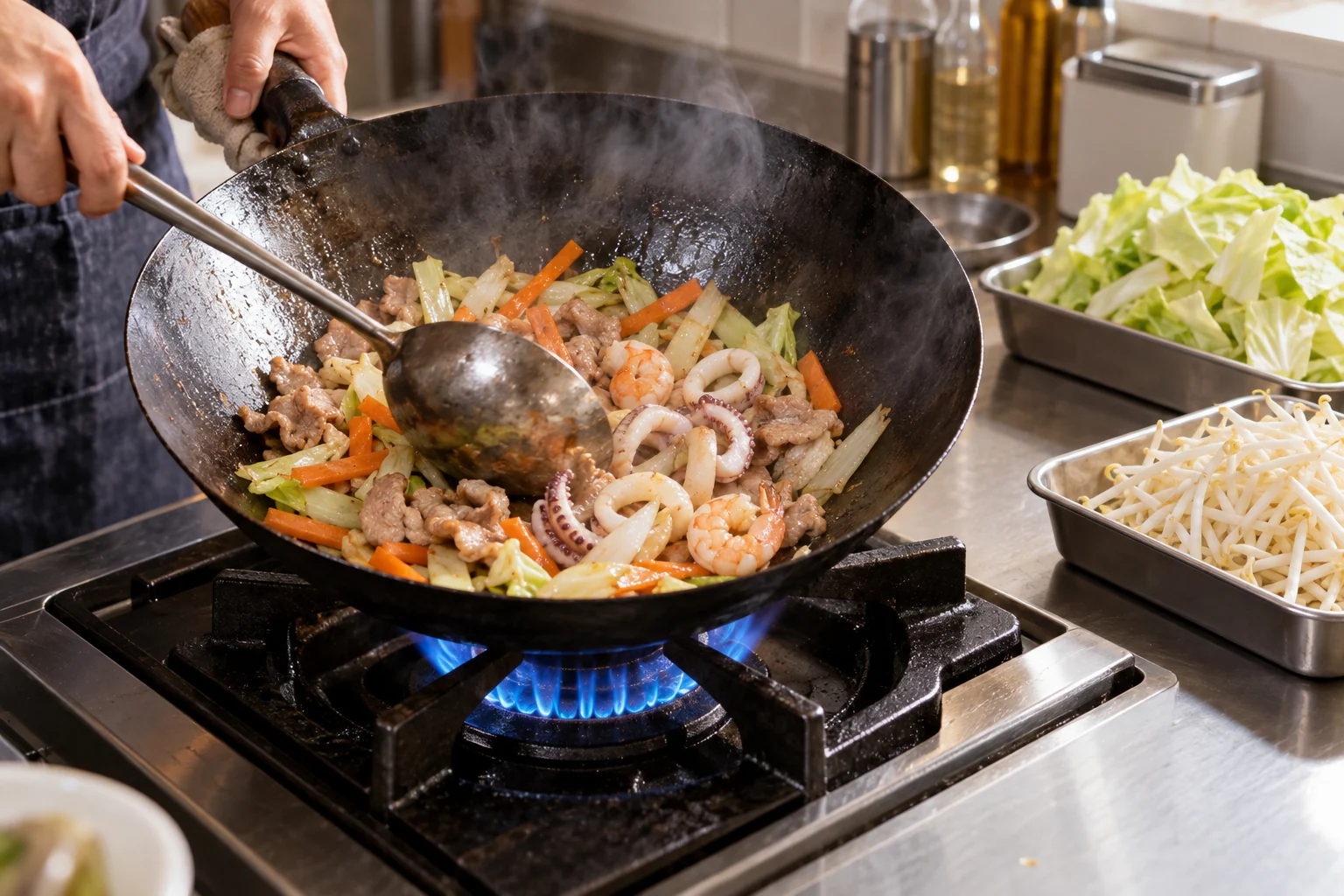
Heat the oil in a deep frying pan or wok. Cook the pork, then add the seafood. If it was raw, cook it thoroughly. If the pan releases a great deal of liquid, you can reduce the water added later, but proper cooking comes first.
Stir-fry carrot and cabbage, then add the sprouts and fish cake. If two servings crowd the pan, work in batches. A crowded, cool pan steams the vegetables and can dilute the broth. How to keep champon vegetables from watering down the soup explains the quantity and heat trade-off.
3. Bring the broth to a boil; add noodles last
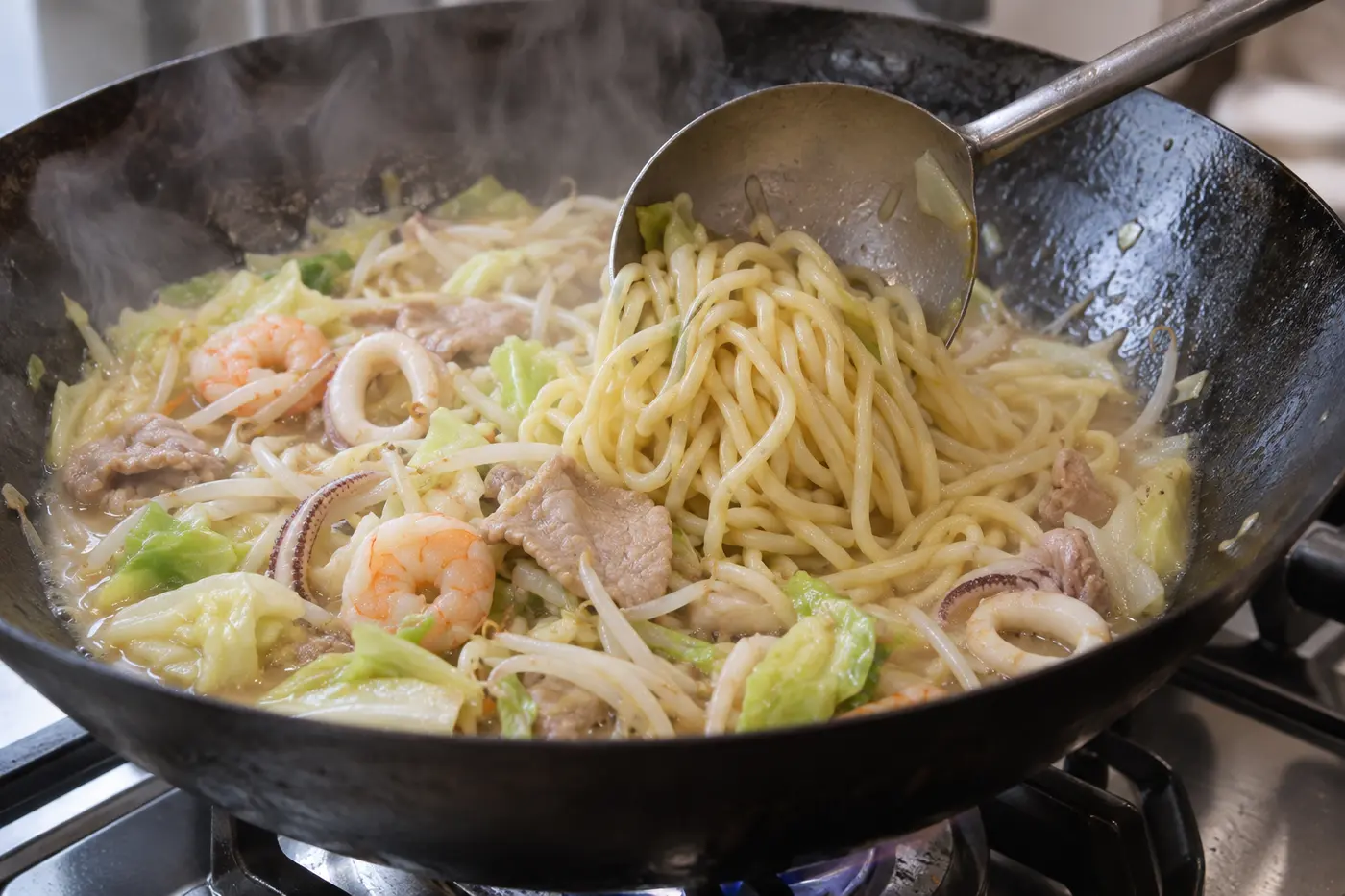
Add the seasoned water and bring it to a boil. Taste with the juices already released by the seafood and vegetables, then adjust salt and pepper gradually. If your noodle kit includes soup seasoning, use its water quantity and directions instead of doubling up with this mixture.
Add the prepared noodles and warm them through while loosening them. Divide into bowls immediately. This follows the same pan-to-broth-to-noodles sequence as our basic champon recipe. Leaving noodles simmering for too long changes their bite.
Faster version: pre-boiled noodles and ready-cut vegetables
For two, use 2 packs of pre-boiled champon noodles, 150 g frozen seafood mix, one 200–250 g bag of ready-cut stir-fry vegetables, 350 ml water, 2 tsp chicken-stock powder, 1 tsp soy sauce and 1 tbsp oil. Fewer ingredients give a lighter flavor, so taste at the end. If noodles come with soup sachets, use those instead of the listed stock and soy sauce.
Prepare and drain the seafood as its packet directs. Cook it thoroughly in the pan, then stir-fry the vegetables. Add water and seasoning, bring to a boil, and heat the noodles according to their packet before serving. No chopping is needed, but the seafood still needs proper cooking.
If the seafood turns tough, check the specified thawing method and cooking time next time. If the broth tastes thin, look at how much water the ingredients released. Actual heating time depends on the product and pan, so judge doneness rather than relying on minutes alone.