The two foods play different roles
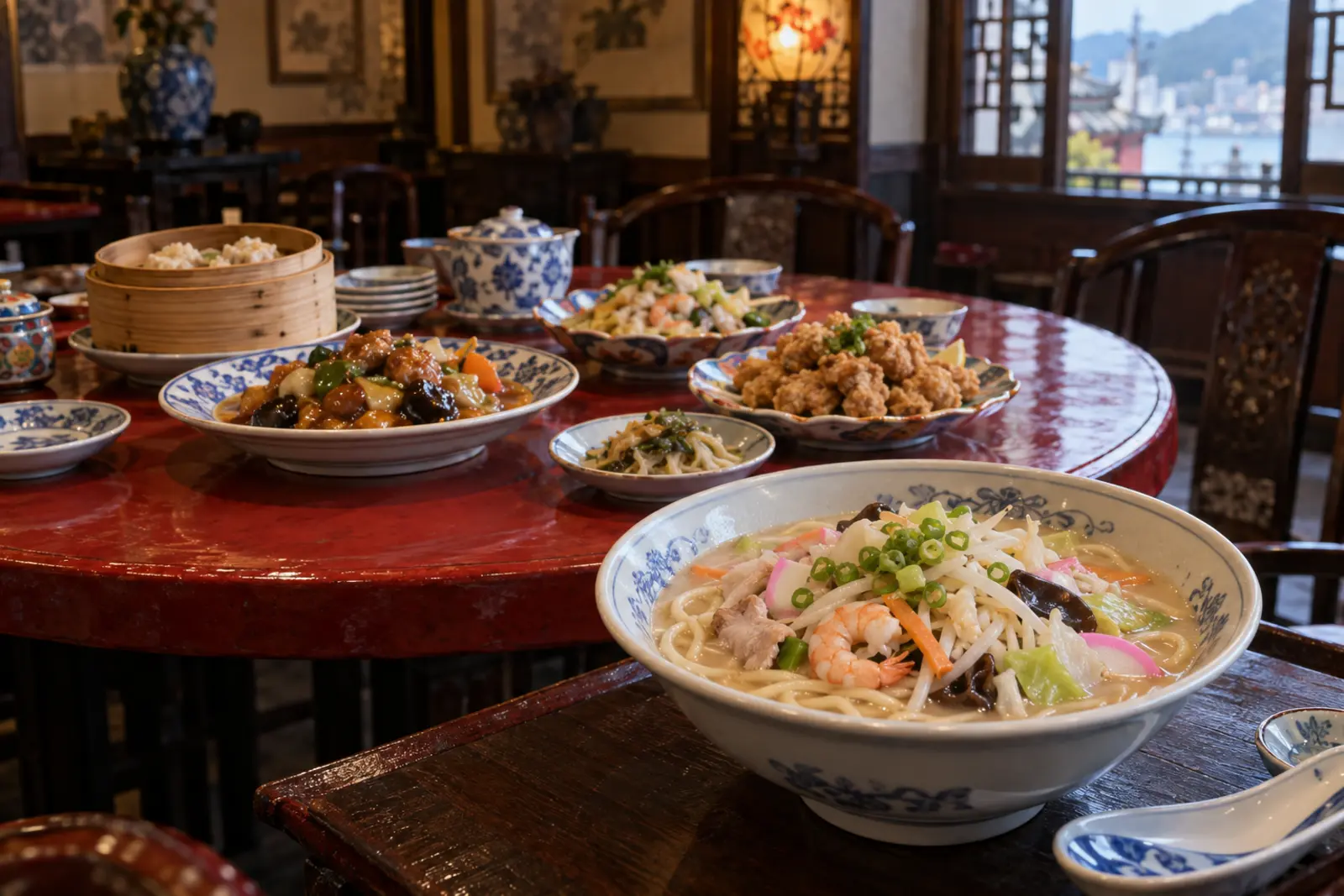
Visitors to Nagasaki will see the name shippoku cuisine (shippoku ryōri) alongside champon and sara udon. Shippoku is not another noodle dish. Guests gather around a lacquered round table and share dishes from large plates. The Nagasaki Prefecture Tourism Association describes a banquet beginning with ohire soup and including seasonal dishes such as sashimi, braised pork and Nagasaki-style tempura.
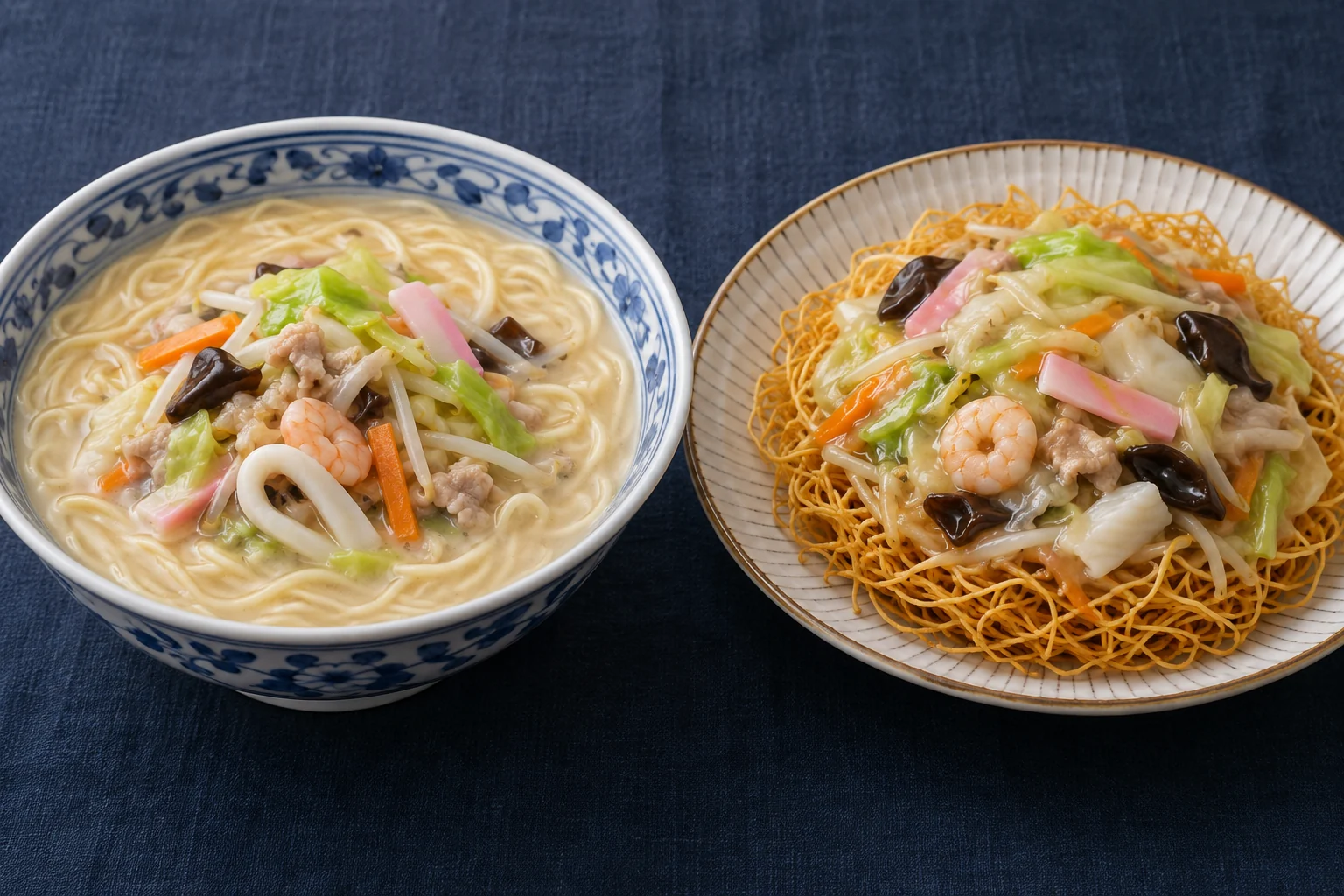
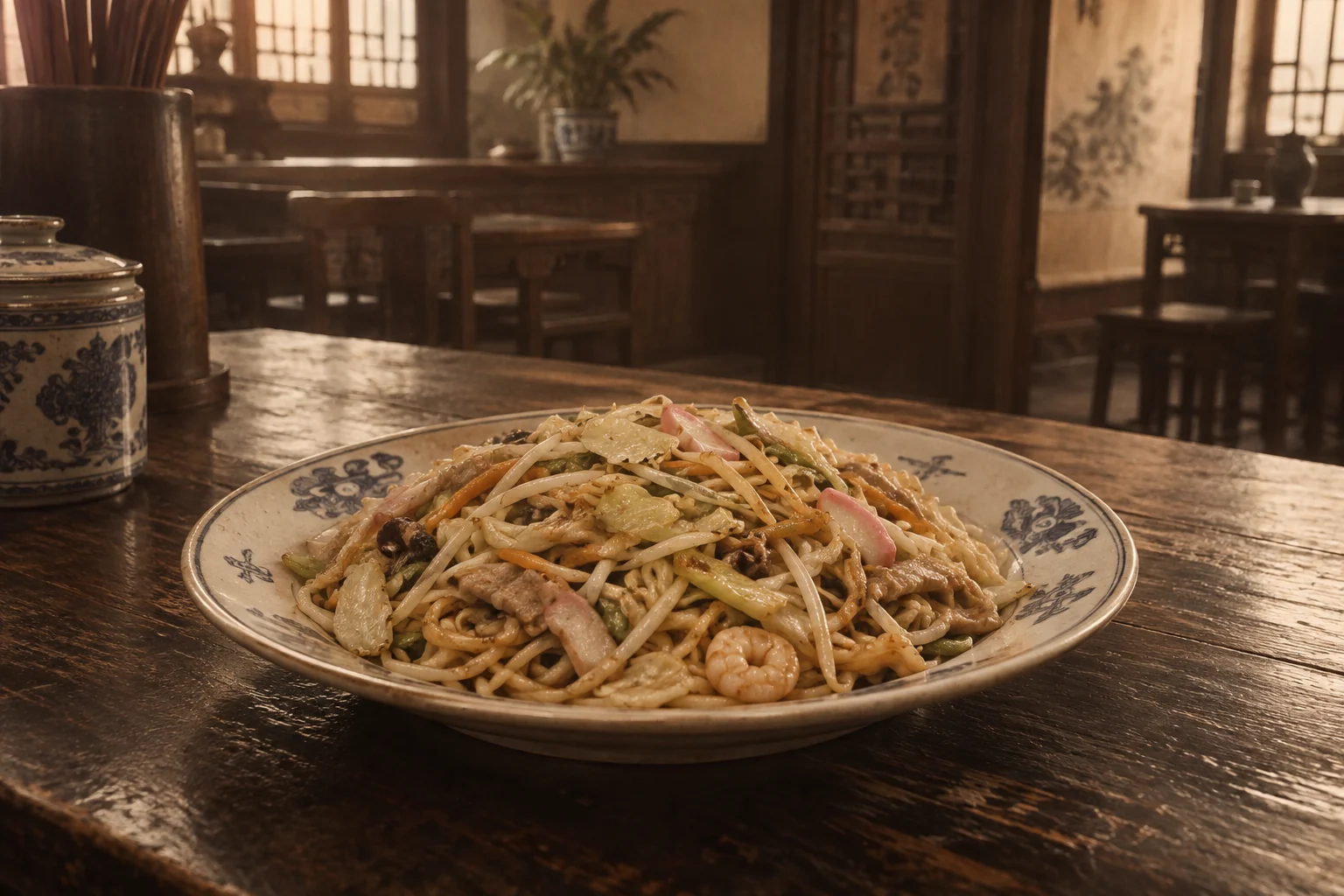
Champon brings meat, seafood, vegetables and noodles together in a single bowl; sara udon is another plated noodle dish. Either may be shared from a large plate, but that alone does not turn it into shippoku. Why sara udon is sometimes served on a large plate offers a separate story.
Shippoku brings different dishes to one round table
According to the prefectural tourism association, shippoku developed in Nagasaki from a Chinese style of shared dining, with Japanese and Western elements added over time. Its foods are not blended into one recipe; guests share dishes with different roots at the same sitting. Nagasaki's often-mentioned Japanese, Chinese and Western influences can be seen in the meal itself.
The association also lists shippoku among the Chinese cultural traces of Nagasaki's former Chinese quarter. Centuries of change cannot be pinned to one person or date. Champon arose later and has a distinct history.
Champon began as a practical everyday meal
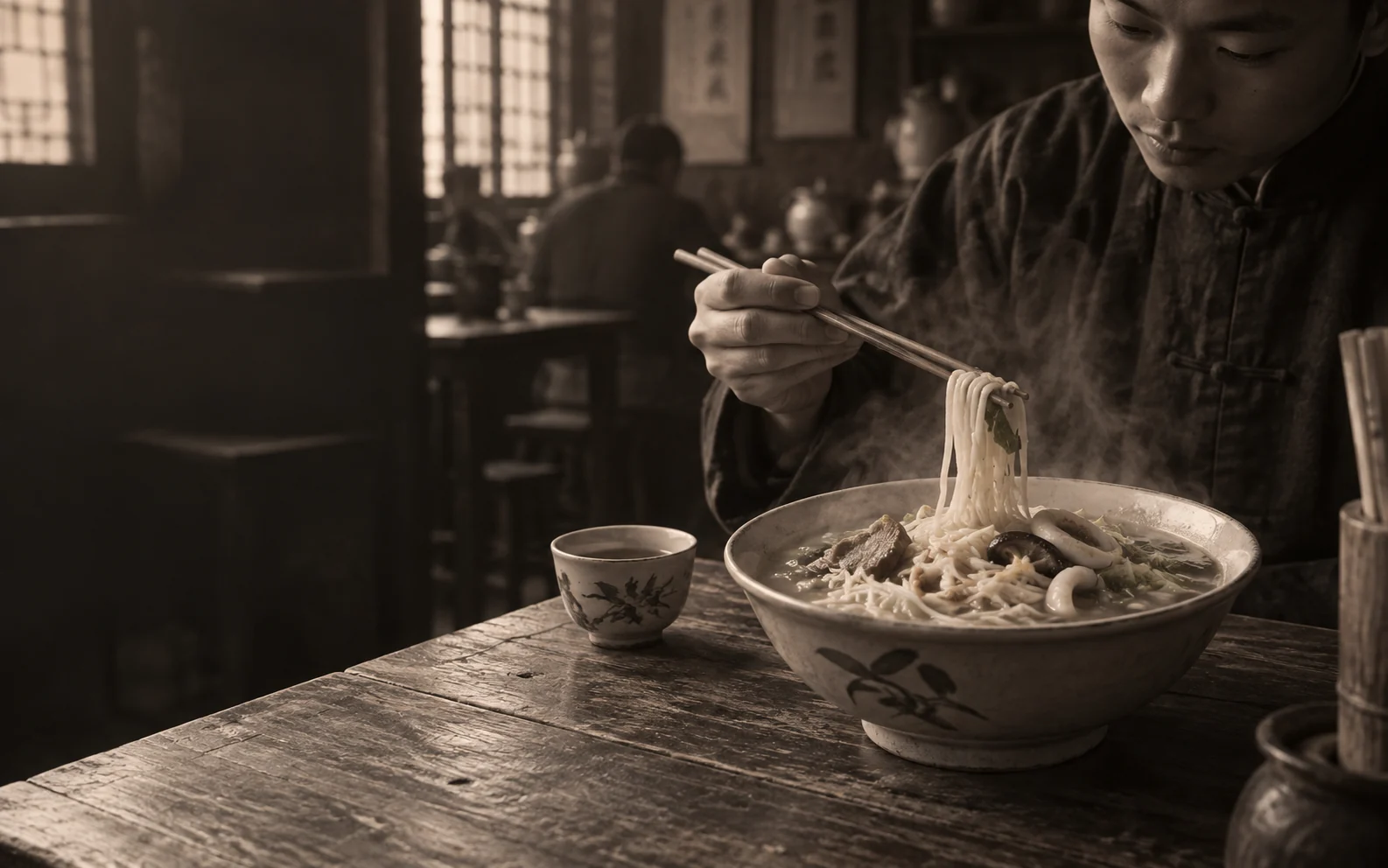
The history of champon describes the account of Chen Pingshun of Shikairō, who sought an affordable, nourishing meal for Chinese students in Nagasaki around 1899. Where shippoku is a banquet of shared courses, champon's appeal was a satisfying meal in one bowl.
That does not establish that champon descended directly from shippoku. The sources point instead to a port city with continuing contact with China and several food traditions taking root in different settings. It is more revealing to taste the dishes on their own terms than to force them into a single family tree.
Try them on different occasions
Have a bowl of champon at lunch, or share a plate of fine- or thick-noodle sara udon. On another day, make time for shippoku around a round table. Notice the opening ohire and the way dishes are shared; at a champon shop, notice how the toppings and broth meet in the pan.
The number of diners, the shape of the table and the order of the dishes tell as much of Nagasaki's food story as the names on the menu.