Shinchi began as land for storing traded goods
According to Shinchi Chinatown’s official history, the area was reclaimed from the sea to provide warehouses for goods traded with China. After the Meiji Restoration, the warehouse compound was abolished and Chinese residents moved in, gradually forming a Chinese neighbourhood. It was not originally built as a visitor attraction full of restaurants.
Beneath the streets where people now come to eat lies a history of storing cargo, migration and everyday life. Seeing more than the Chinese-style gates—and considering how the port and the movement of people changed the area—adds another dimension to a walk here.
Chinatown’s development is not the same story as champon’s invention
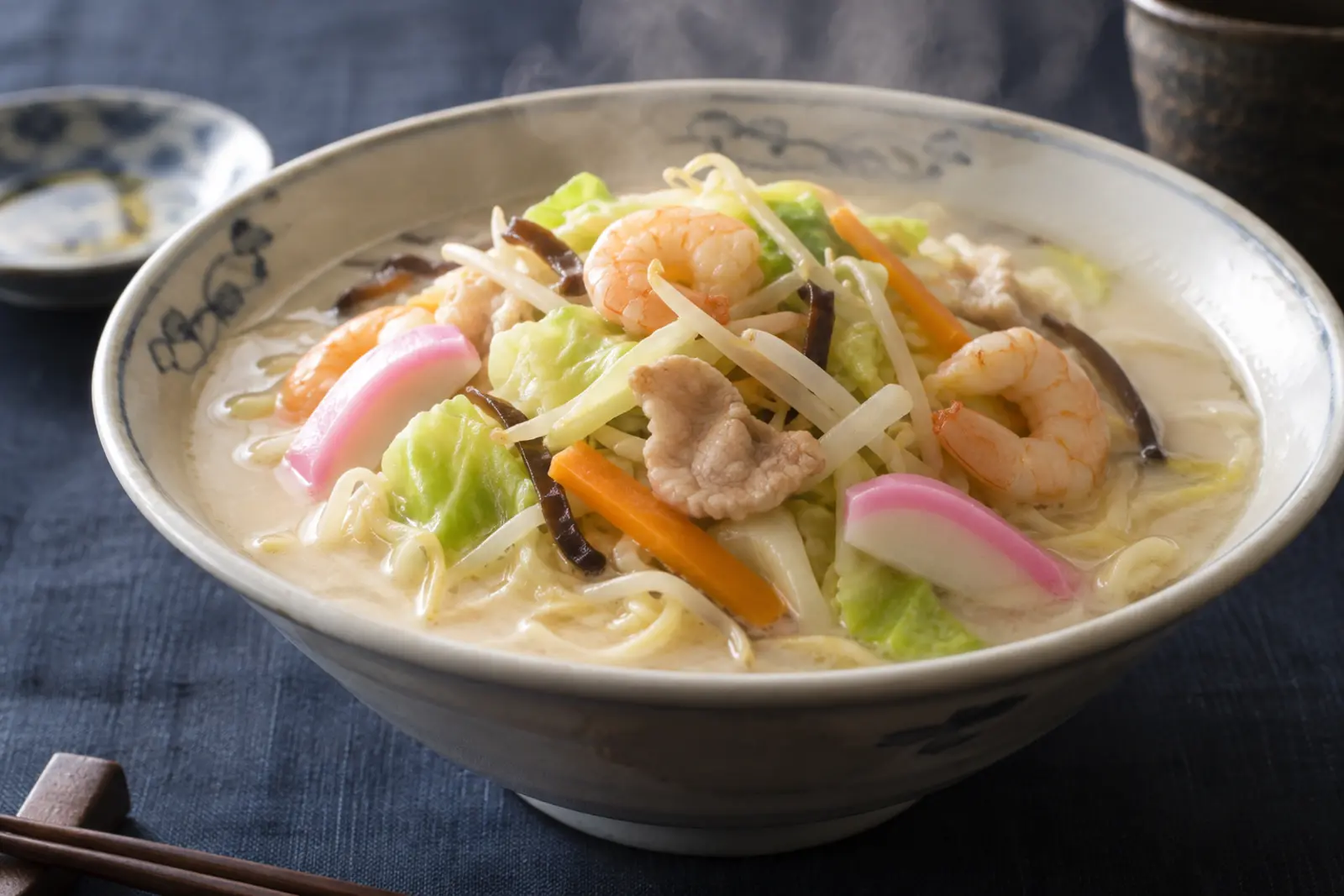
Shikairō’s official account says its founder, Chen Ping-shun, created champon in 1899 for Chinese students and other Chinese residents. That does not establish a direct chain from the reclamation of Shinchi to the invention of champon. The neighbourhood’s development and the creation of a dish concern different periods and subjects.
The story behind champon’s origins centres on a meal intended to support people. Shinchi Chinatown, meanwhile, is a place to encounter the cooking of different restaurants today. Separating where a dish originated from where you can eat it helps you appreciate both stories.
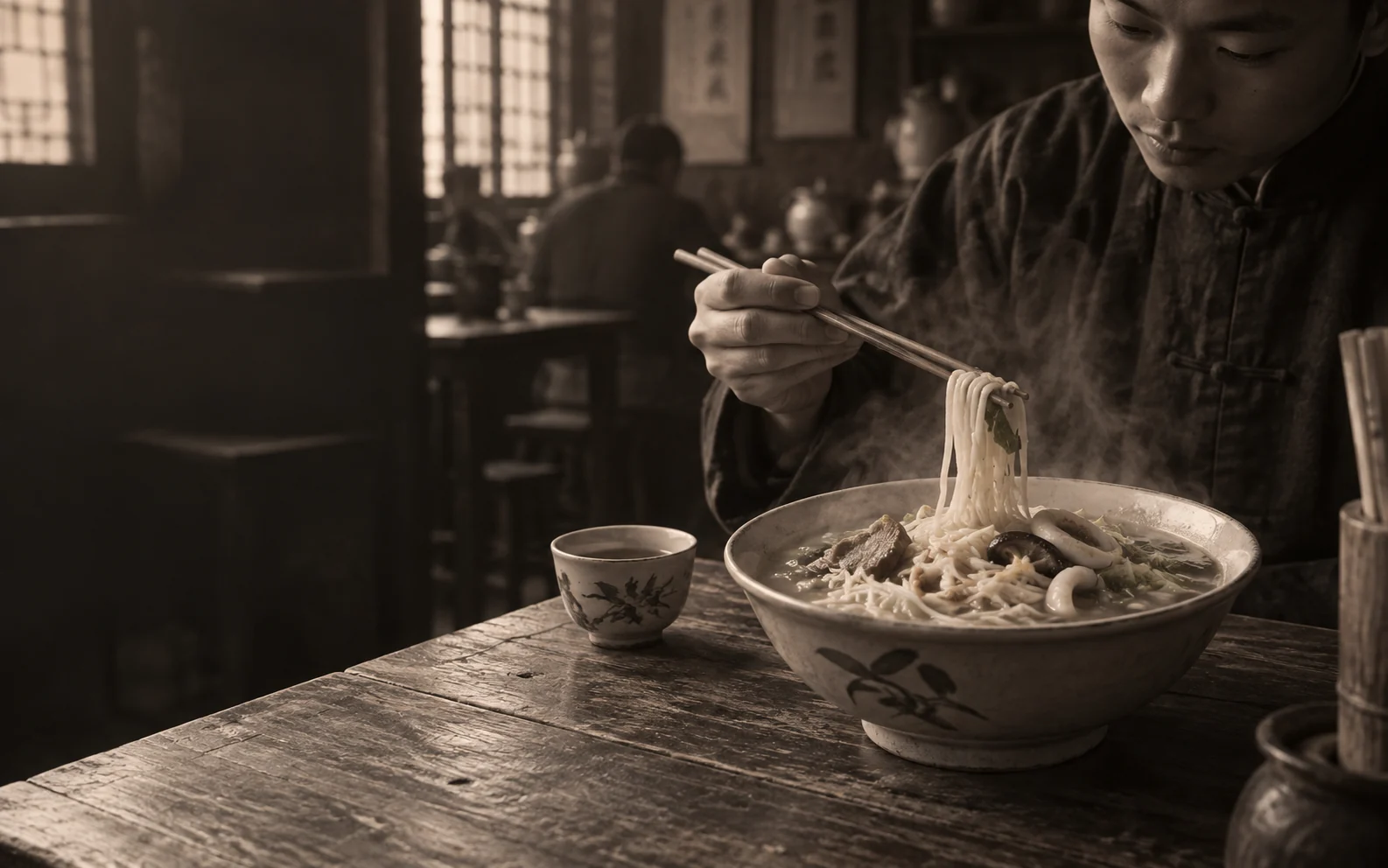
There is no need to reduce Chinatown to a single flavour
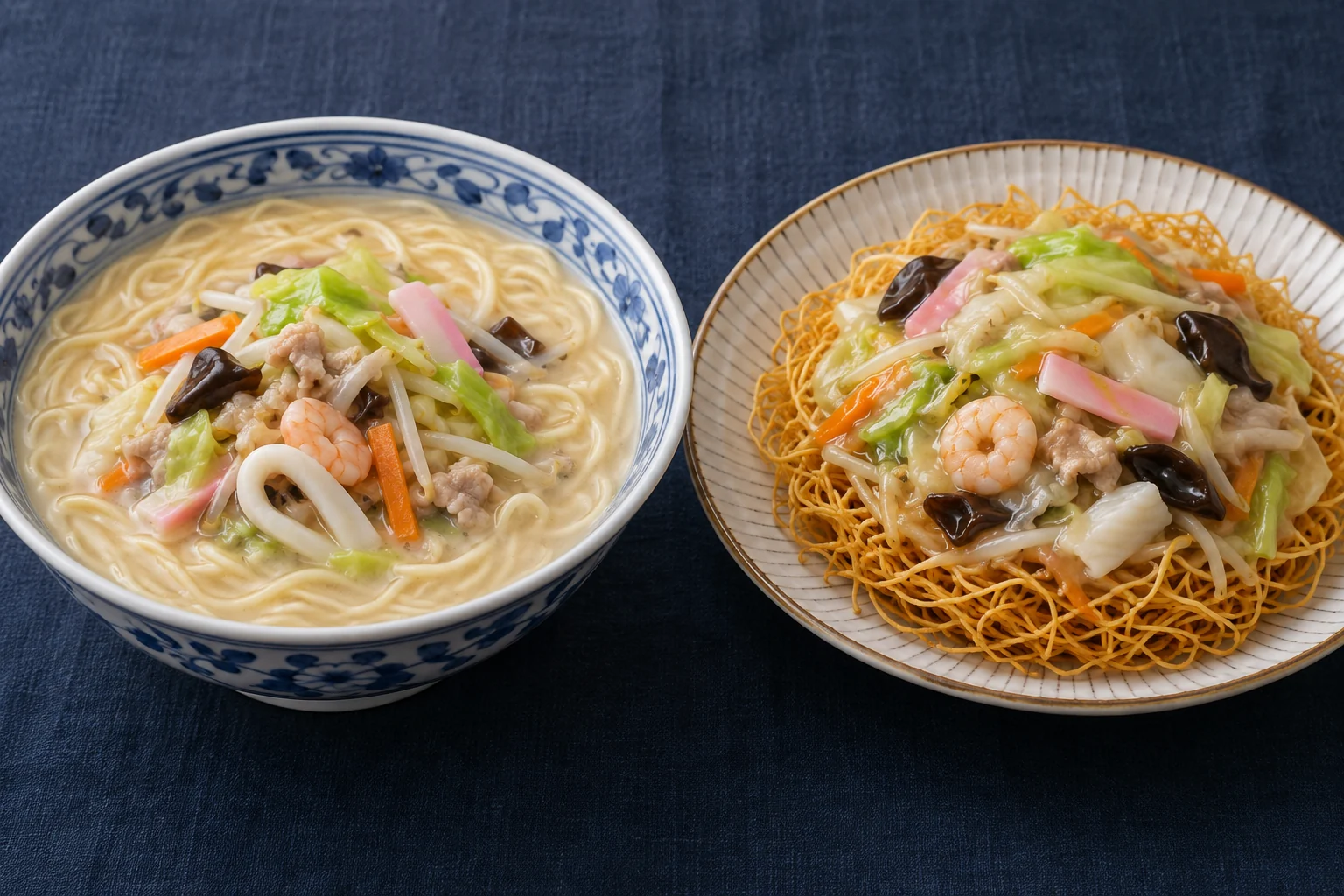
The official Shinchi Chinatown website introduces individual restaurants’ champon in its ‘ChangPongManiaxX’ section. Even within the same neighbourhood, each bowl comes from a particular kitchen. The colour of the broth or the number of toppings alone cannot establish which is the original or authentic taste.
When comparing bowls, try describing the broth’s aroma first, the feel of the noodles next, and then how they work with the toppings. Asking whether champon broth must be white is another way to move beyond judging flavour by appearance.
Check each restaurant’s current information before visiting
You can enjoy the food in front of you while learning about the history of trade. There is no need to fit today’s bowl into an old story: enjoy the changes in the neighbourhood and the choices made by its individual restaurants.
- Use the official restaurant directory to choose possible stops, then check each restaurant’s latest opening days and menu.
- Record the restaurant and date with your impressions of a bowl, rather than treating them as characteristics of the whole neighbourhood.
- If you also order Sara Udon, ask that restaurant which thin- or thick-noodle versions it serves and how they are finished.