Resting prepares dough for the next step
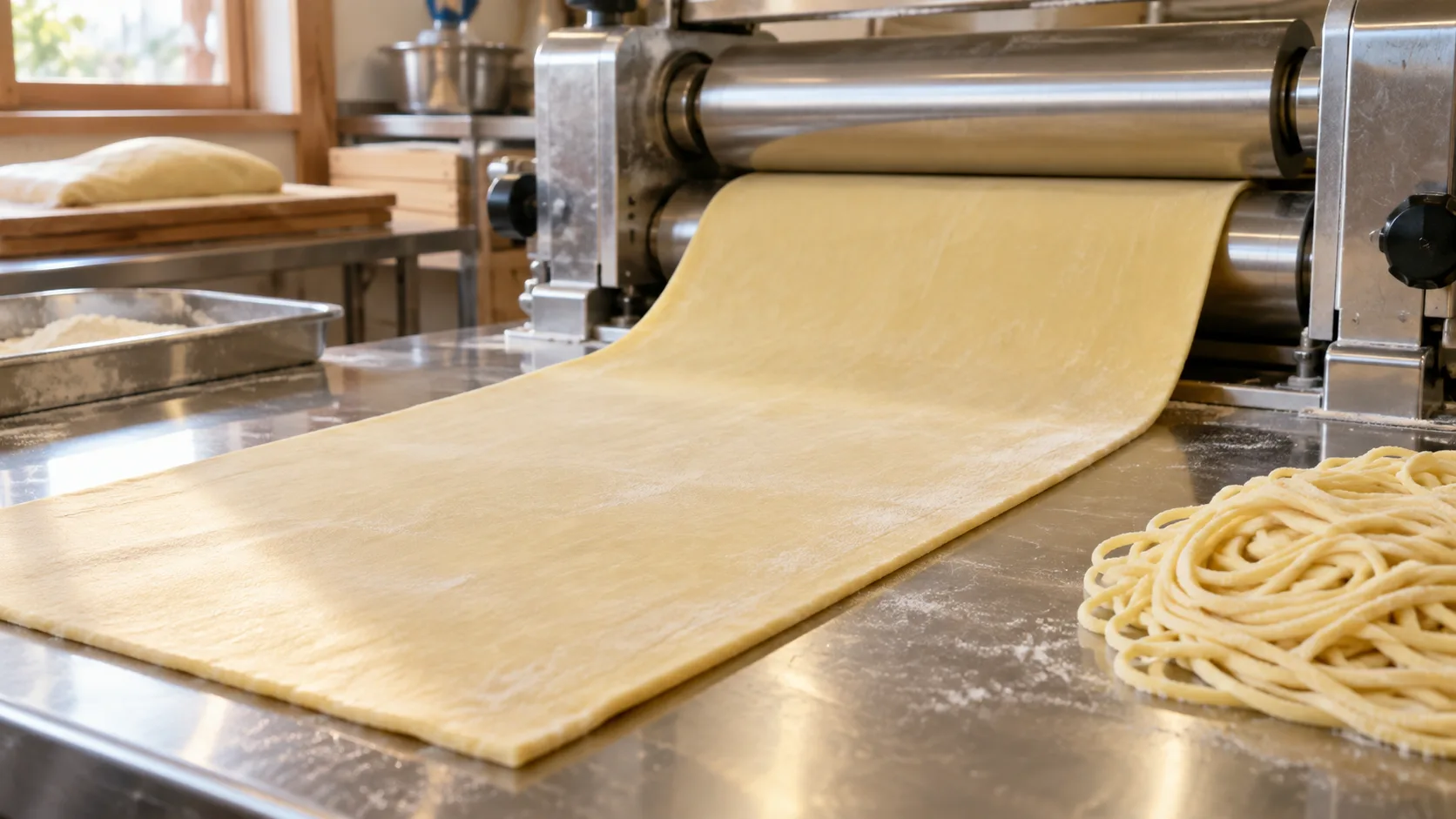
Just after flour and water are mixed, moisture distribution and ease of rolling may still vary. Some noodle makers leave the dough to rest before sheeting or cutting. This may be called 'maturation' in Japanese noodle-making. It does not necessarily mean microbes are developing flavor as in fermented foods.
In a Ministry of Agriculture profile, a sōmen maker describes rotating kneaded dough in a press for about 30 minutes, helping it become smooth while the gluten relaxes. That example comes from hand-stretched sōmen production; it cannot be applied wholesale to every champon noodle.
The same word can refer to different stages
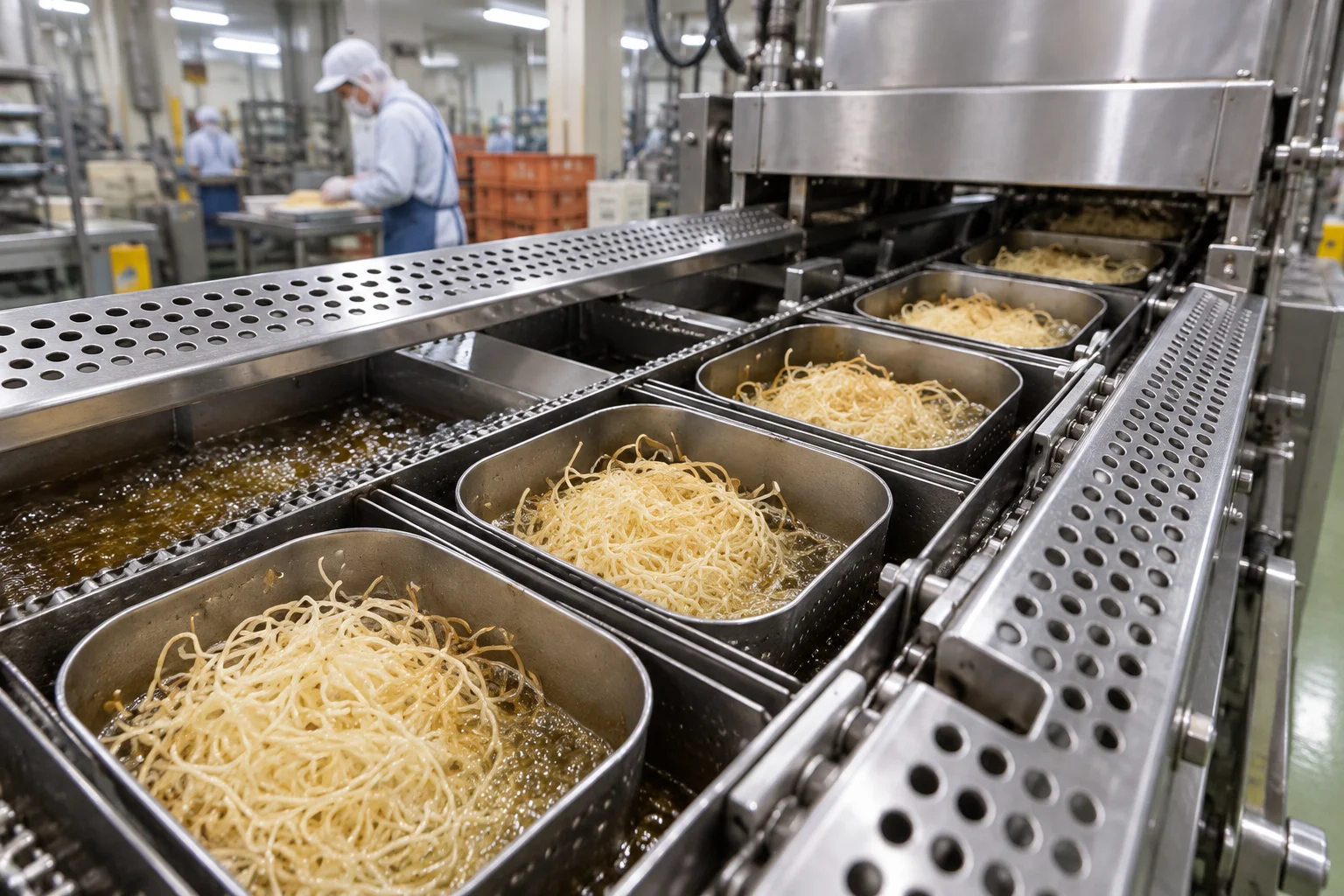
Depending on the product and method, makers may rest mixed dough, a rolled sheet or even cut noodles. Nagasaki noodle maker Gotō Seimen says its ramen and champon noodles use a low-temperature maturation and cool-air drying process taking about 60 minutes. That description includes its own drying method; it does not set a required time or temperature for other makers.
For the shaping stages, see how champon noodles become round strands. Flour blend, sheet thickness, cutting blades, heating and drying also affect the final product. Resting time alone cannot predict the bite.
An 'hours matured' claim cannot compare texture by itself
A longer time on a package is not proof of a better noodle. First compare products in the same state when purchased—fresh, pre-boiled or dried. Noodle formats and storage explains why the required cooking changes with that state.
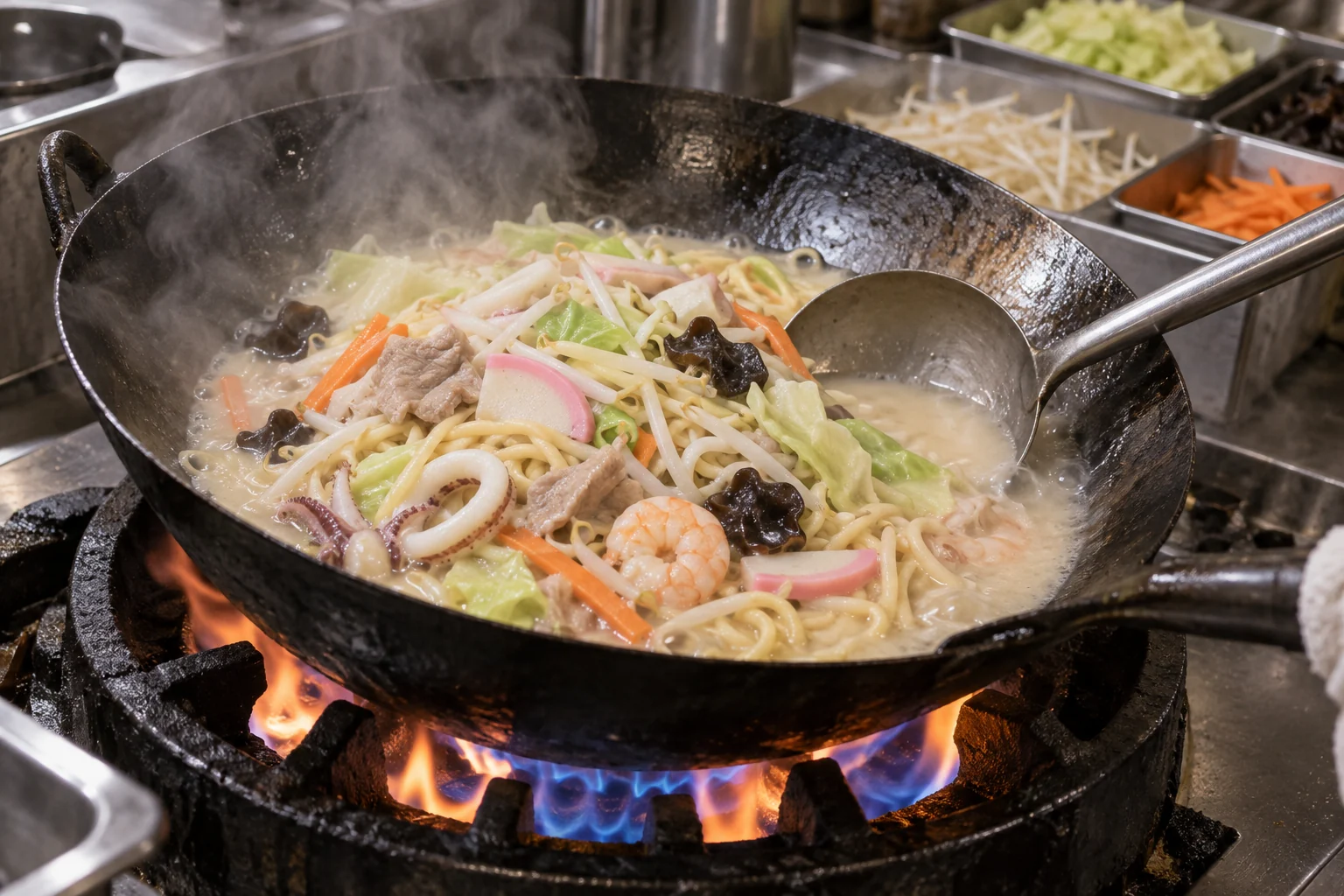
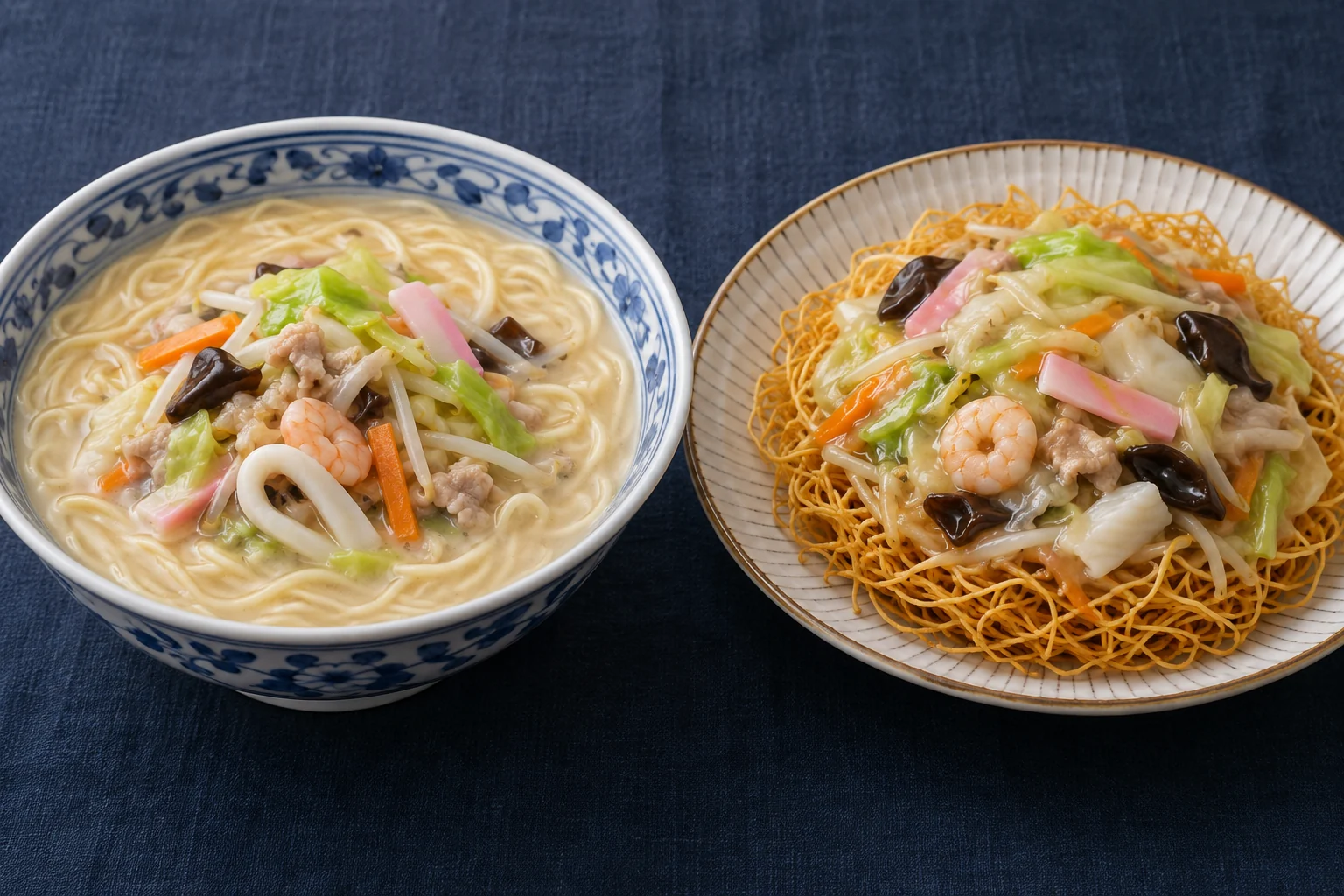
For champon, follow the label's cooking method and judge how the noodles feel with the soup and toppings. Pan time, noodle thickness and soup quantity can change the impression of the same noodle. Production terms offer clues, but actual use should decide your choice.
Ask the maker how to use the noodles
You need not obtain a maker's formula or temperatures. Describe your kitchen use so that samples can be compared under relevant conditions. The state of noodles needed for your intended bowl matters more than the length of a 'maturation' claim.
- Are the noodles delivered fresh, pre-boiled, frozen or dried?
- Must they be boiled separately first? How should they be combined with toppings and soup?
- If there is a delay before eating, how should texture be tested under those conditions?