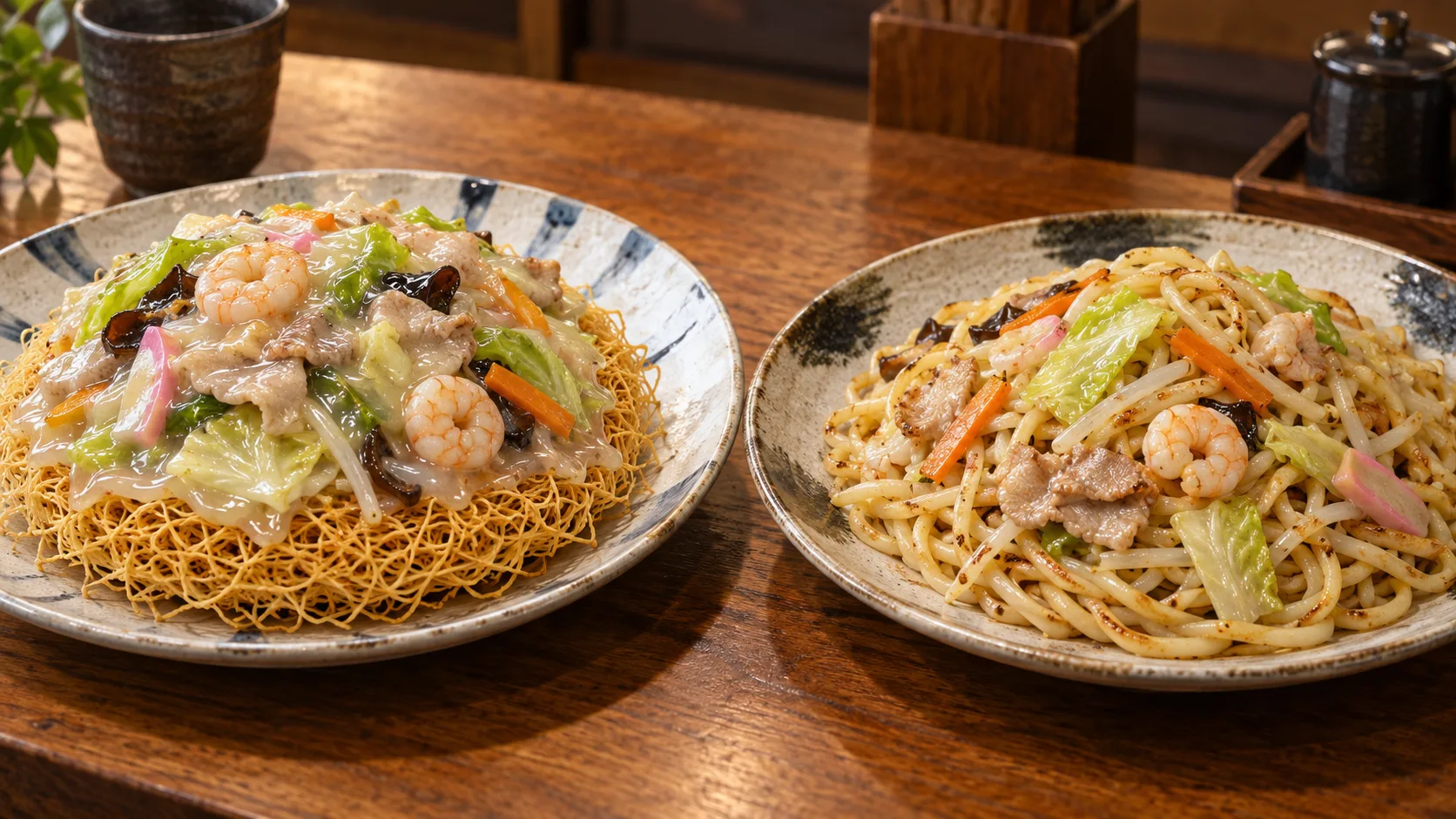
'Sara Udon' alone can evoke two different plates
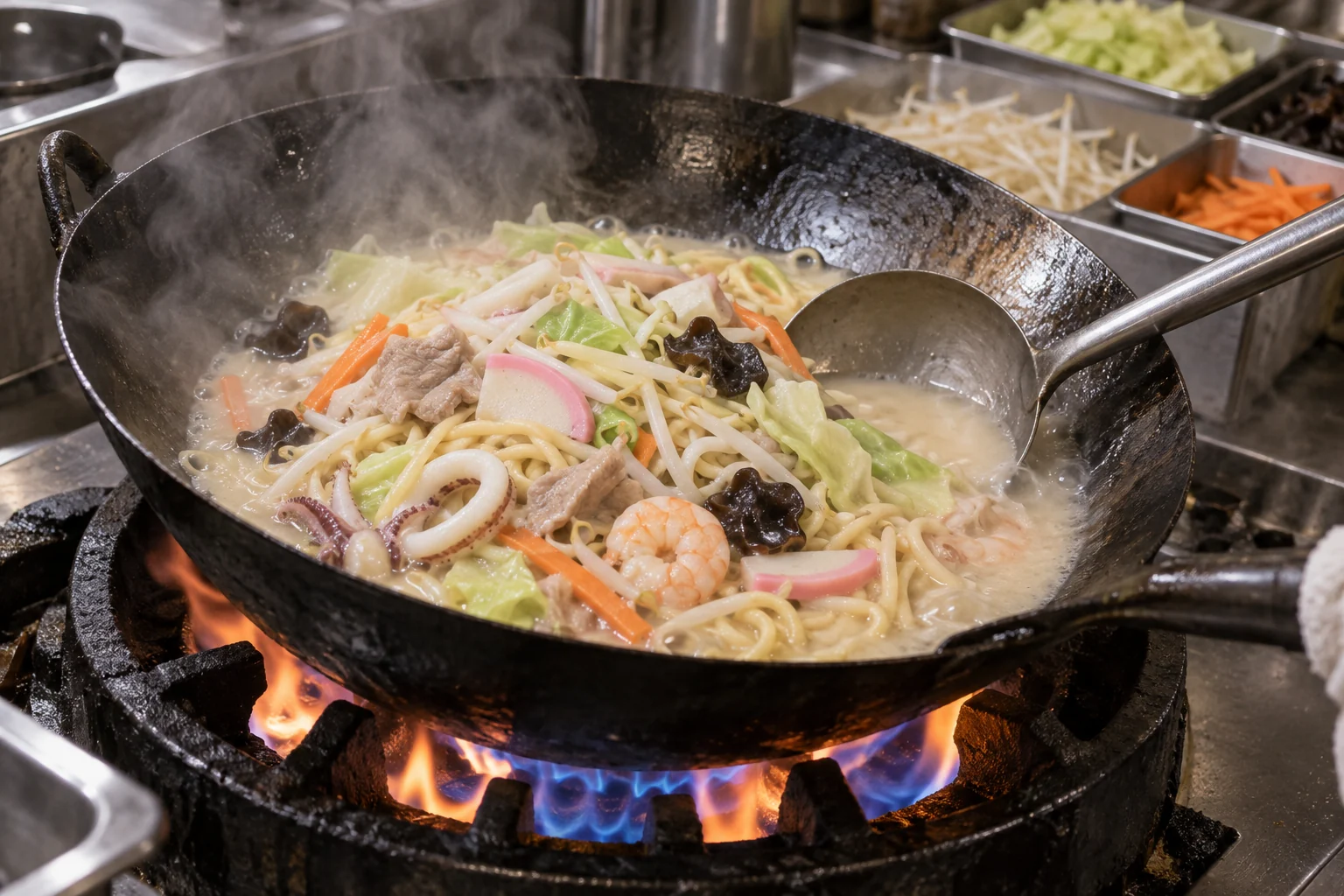
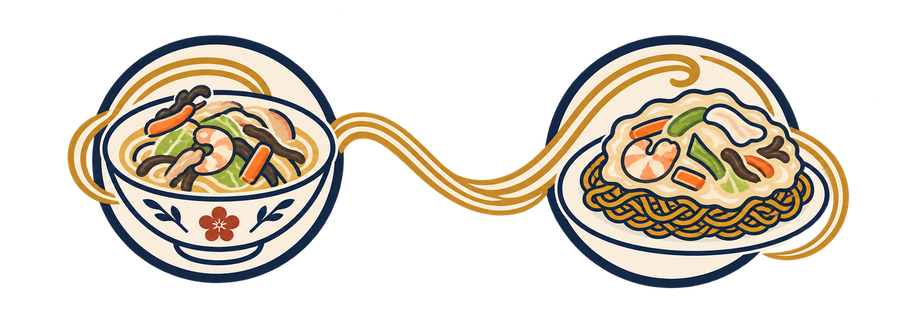
A first-time guest may picture crispy fried thin noodles under a thickened topping. Nagasaki also has a version with thicker noodles, closer to champon noodles, cooked in a pan. Japan's Ministry of Agriculture distinguishes the older thick-noodle form from the widely known crisp thin-noodle form.
For guests familiar with the thin-versus-thick distinction, this is a choice. For others, it can be a surprise after ordering. If a shop serves both, name the noodle and explain the finish before the order is placed.
Put the noodle's form first on the menu
List 'Sara Udon (thin, fried noodles)' and 'Sara Udon (thick, pan-cooked noodles)' on separate lines, with one sentence about each texture. Some shops also sauce thick noodles, so adapt these words to the dish you serve. Ringer Hut has offered a choice between crisp fried noodles and softer, aromatic thick noodles.
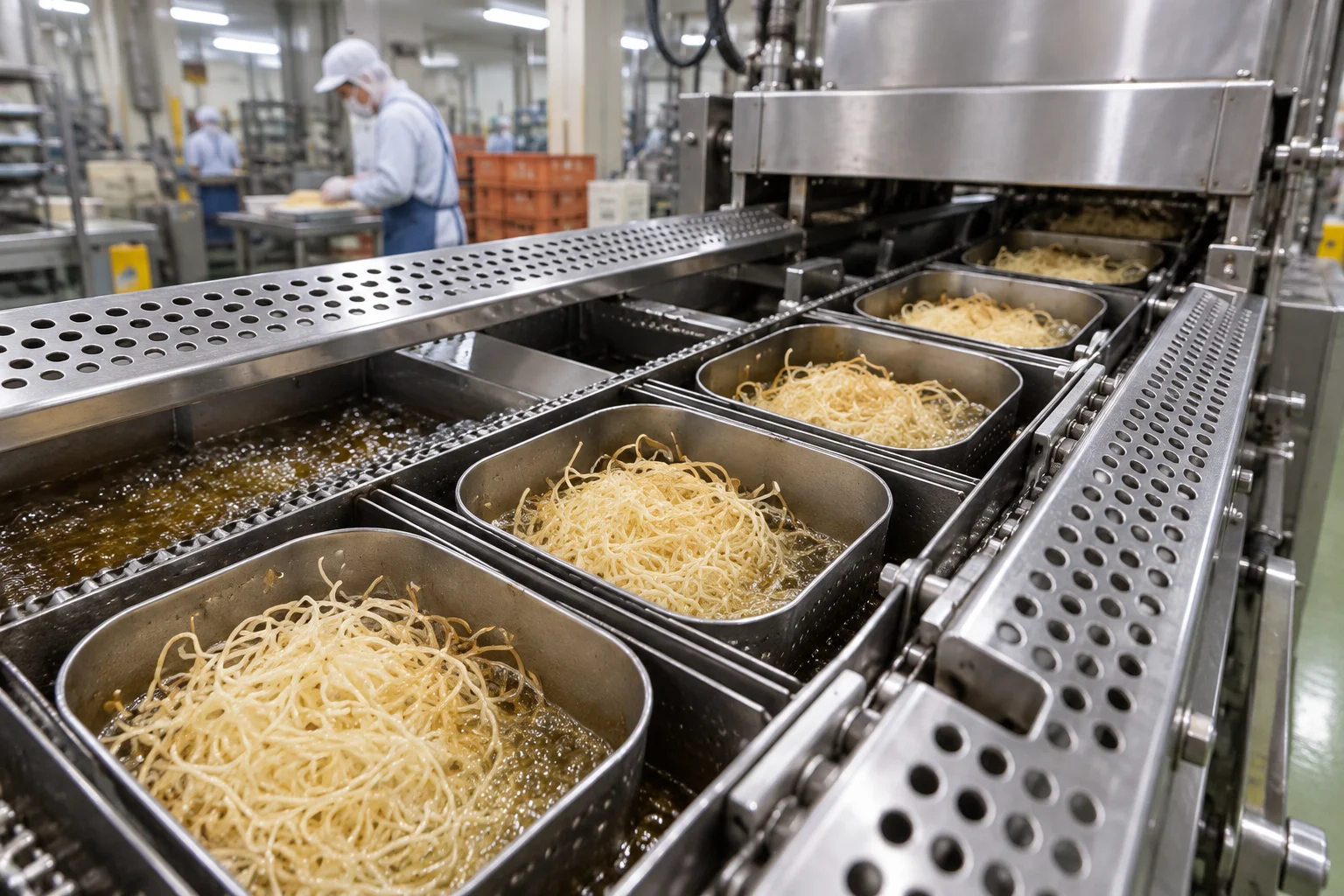
- Thin: very fine fried noodles, crisp under hot toppings in thickened sauce.
- Thick: medium-thick noodles cooked in a pan with toppings, with springy areas and browned, aromatic patches.
- If your shop prepares either dish differently, describe its actual finish—for example, sauced or stir-fried.
Show the noodles from comparable angles
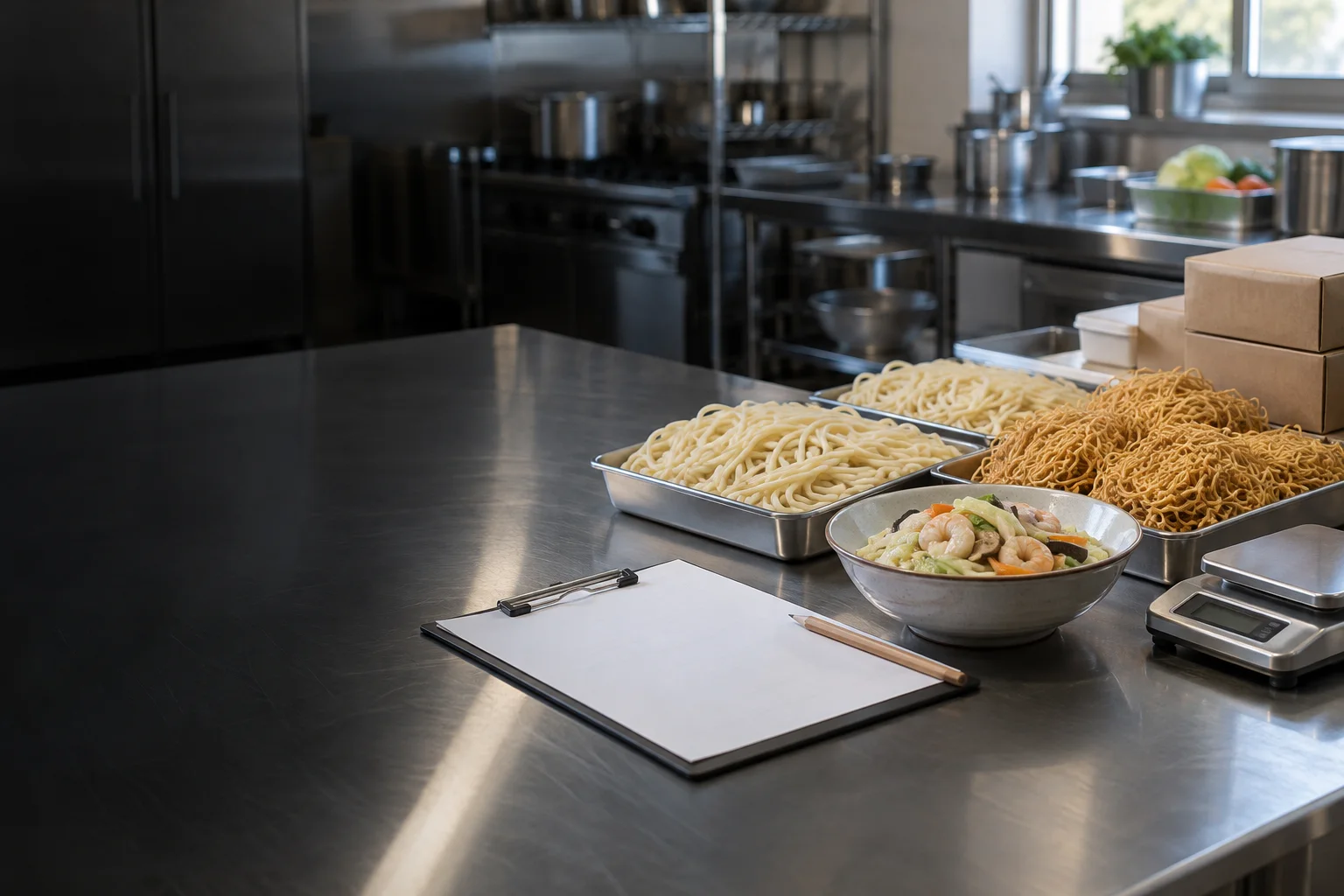
For side-by-side photos, keep plate size, amount of toppings and camera angle as similar as possible, and let the noodles show. The crisp edge of thin noodles and the thickness and browned surface of thick noodles make short descriptions concrete. Photos that hide both under sauce cannot show the difference.
As in our guide to accurate menu photographs, the image should match the actual plating. Do not exaggerate the width of thick noodles beyond the real dish or use a generated illustration as a product photograph.
Confirm the choice with one question
For spoken orders, ask: 'Would you like the crisp thin noodles or the pan-cooked thick noodles?' If your thick-noodle dish is sauced, change the wording accordingly. For takeaway and ordering kiosks, use the same distinction in option names and short descriptions.
Ask someone visiting for the first time to choose from the menu without extra explanation. If the same question keeps coming up, improving the noodle photo and one-sentence texture description will help more than repeating the words 'thin' and 'thick.' Revise the sign while looking at the dish you actually serve.