First agree on exactly what is being weighed
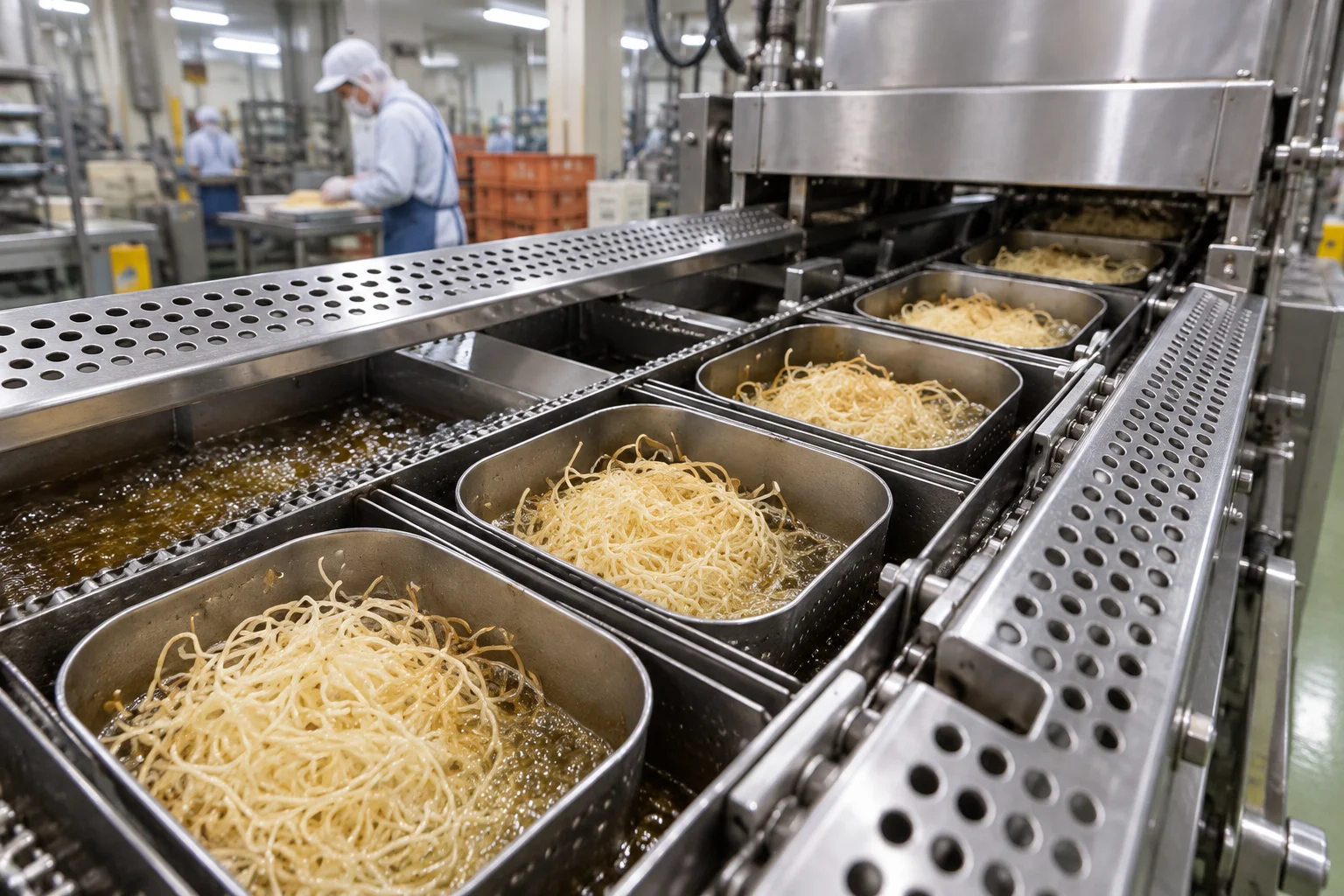
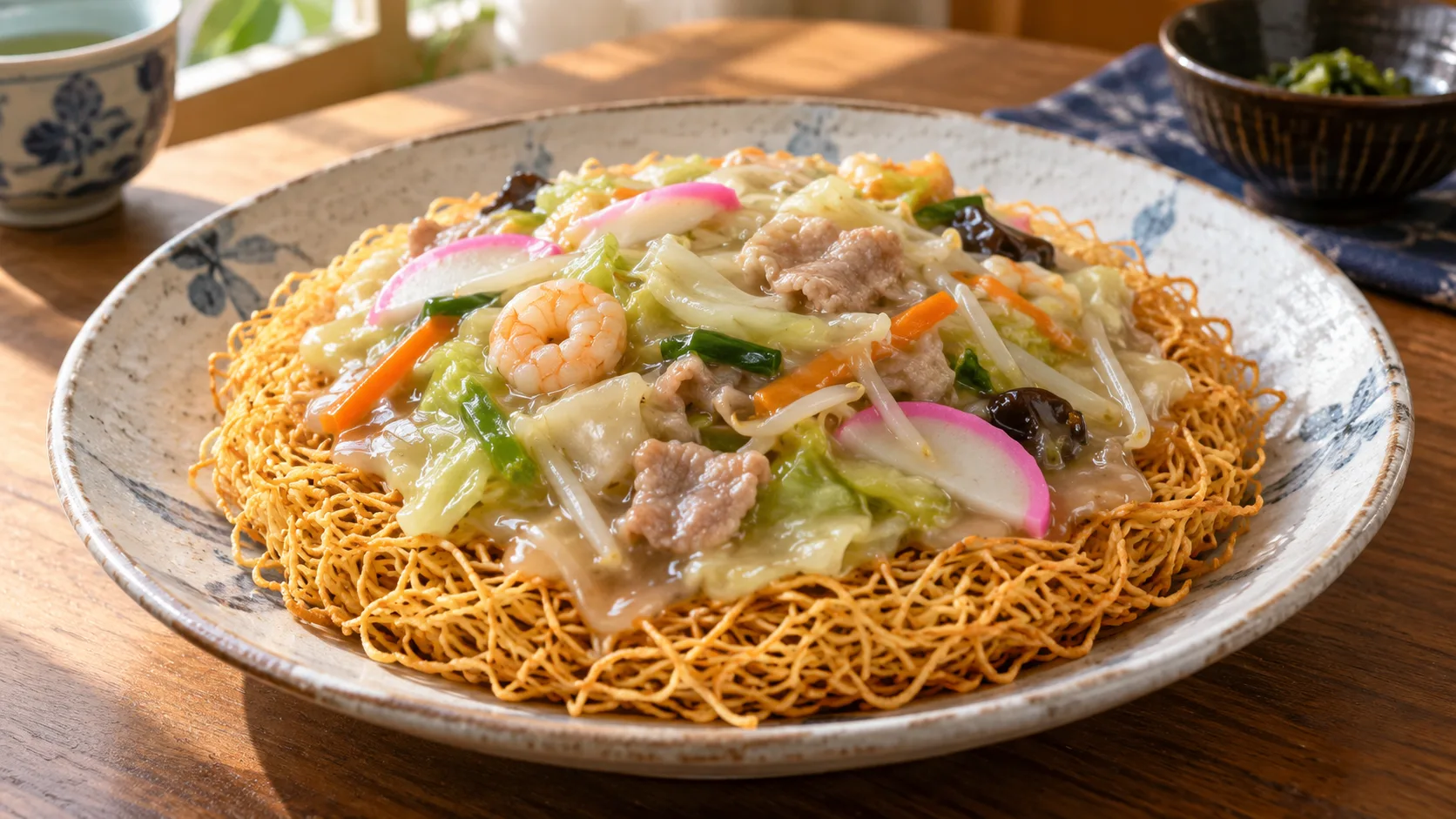
Thin-noodle Sara Udon is finished by adding a saucy topping to fried noodles. The noodle weight printed on a packet, the weight of raw vegetables and the weight of the finished topping describe different stages. When comparing purchasing options, weigh like with like to understand the difference between plates.
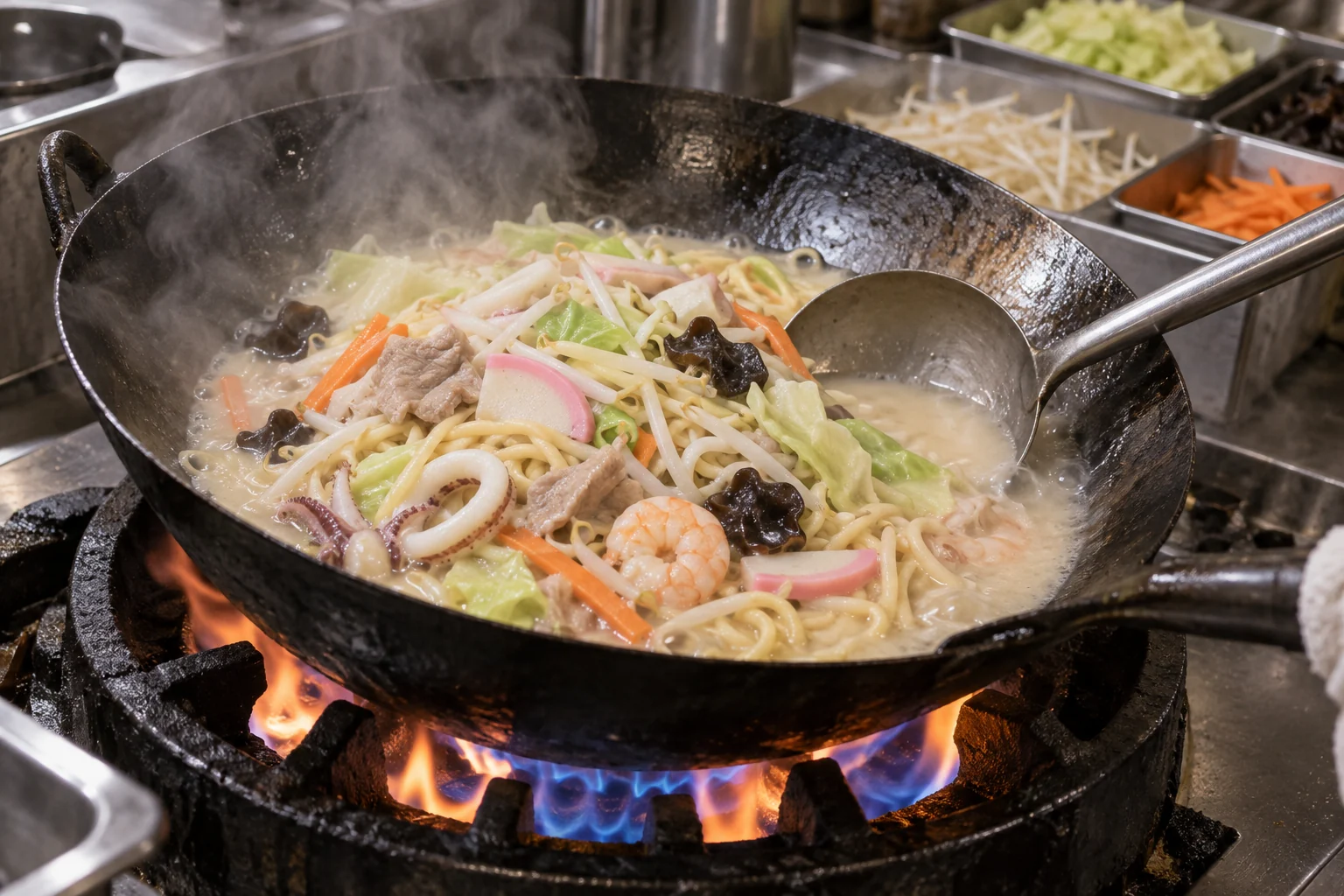
Japan’s Ministry of Agriculture, Forestry and Fisheries also describes cooking meat and vegetables separately from the noodles, then serving them as a thickened topping. A ‘portion of noodles’ is not the same as the finished weight of a complete meal. That distinction is the starting point for useful trial notes. Thick noodles use a different cooking method, so this article focuses on fine fried noodles.
Keep the noodles fixed and change one other factor at a time
Start with the product’s stated noodle portion on the plate you intend to use. Add the topping and observe how much of the noodles it covers, how much dry edge remains, and how easily the dish can be served or shared. Rather than seeking one ideal weight for every restaurant, consider your customers and whether this is a standalone dish or part of a set.
When increasing the topping, keep the plate and noodle amount unchanged. When testing plates, keep the noodles and topping unchanged. Changing everything at once obscures the cause of any difference. If you use an included soup mix, follow its instructions; do not increase only the water to make more topping.
Five things to record for each plate
The change in texture after adding the topping also affects how a portion is experienced. Compare dishes after the same expected serving delay as well as immediately after plating. This is a suggested trial method, not a report of measured standard values.
- Noodles: product name, fried-noodle weight before preparation, and the number of stated portions used.
- Topping: ingredient and seasoning formula, and the cooked weight actually served.
- Plate: inside diameter and depth, noodle placement, and where the topping is added.
- Time: the expected interval between plating and the first bite.
- Assessment: how filling it feels, the balance of dry and softened noodles, and ease of eating.
Share the agreed portion with both kitchen and menu teams
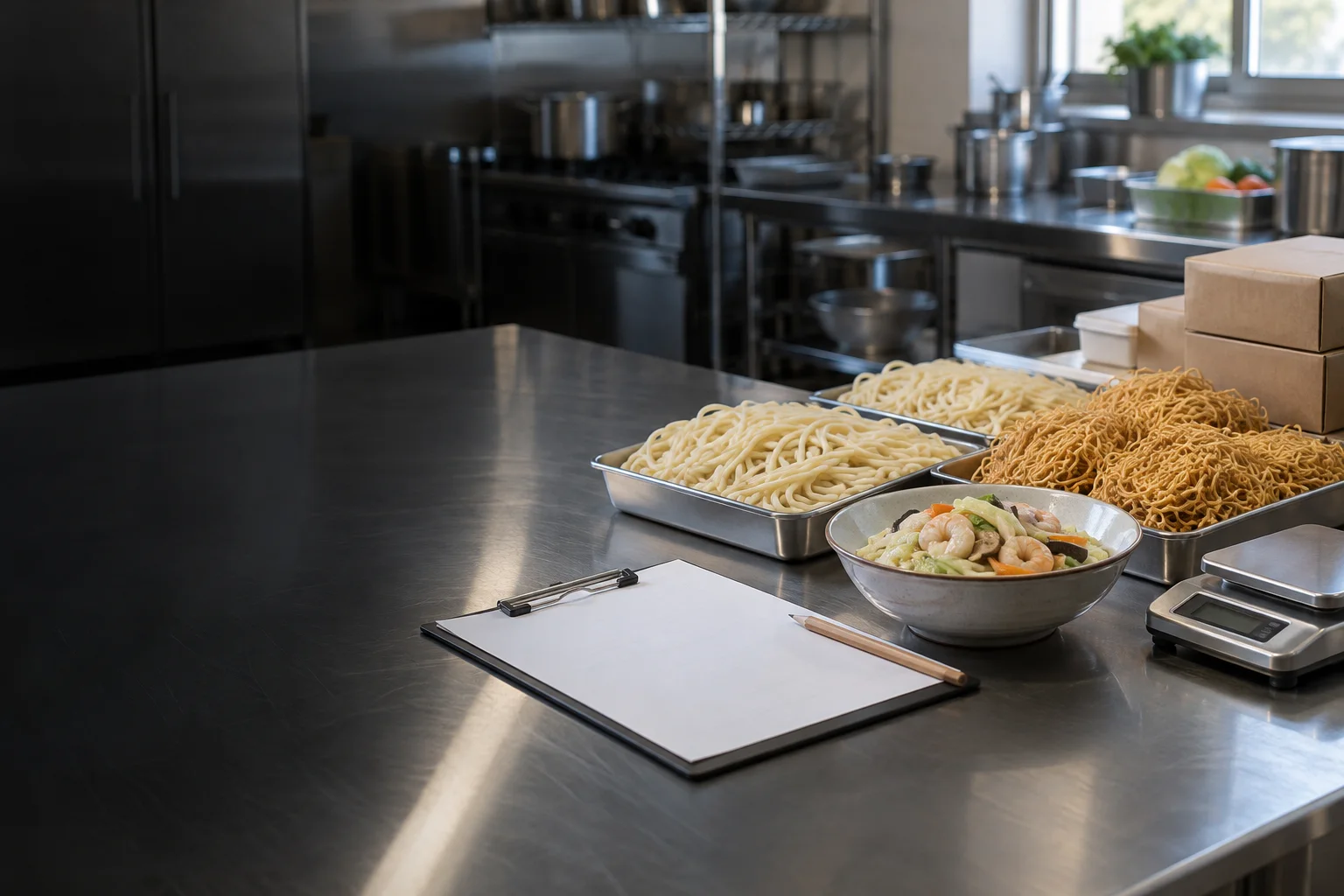
Do not leave the result as ‘one noodle portion, some topping.’ Put the product name, serving weights, plate and plating positions on one sheet. Check in the normal kitchen workflow whether a different team member can reproduce the same dish. Review large portions and small set-meal portions as distinct finished dishes.
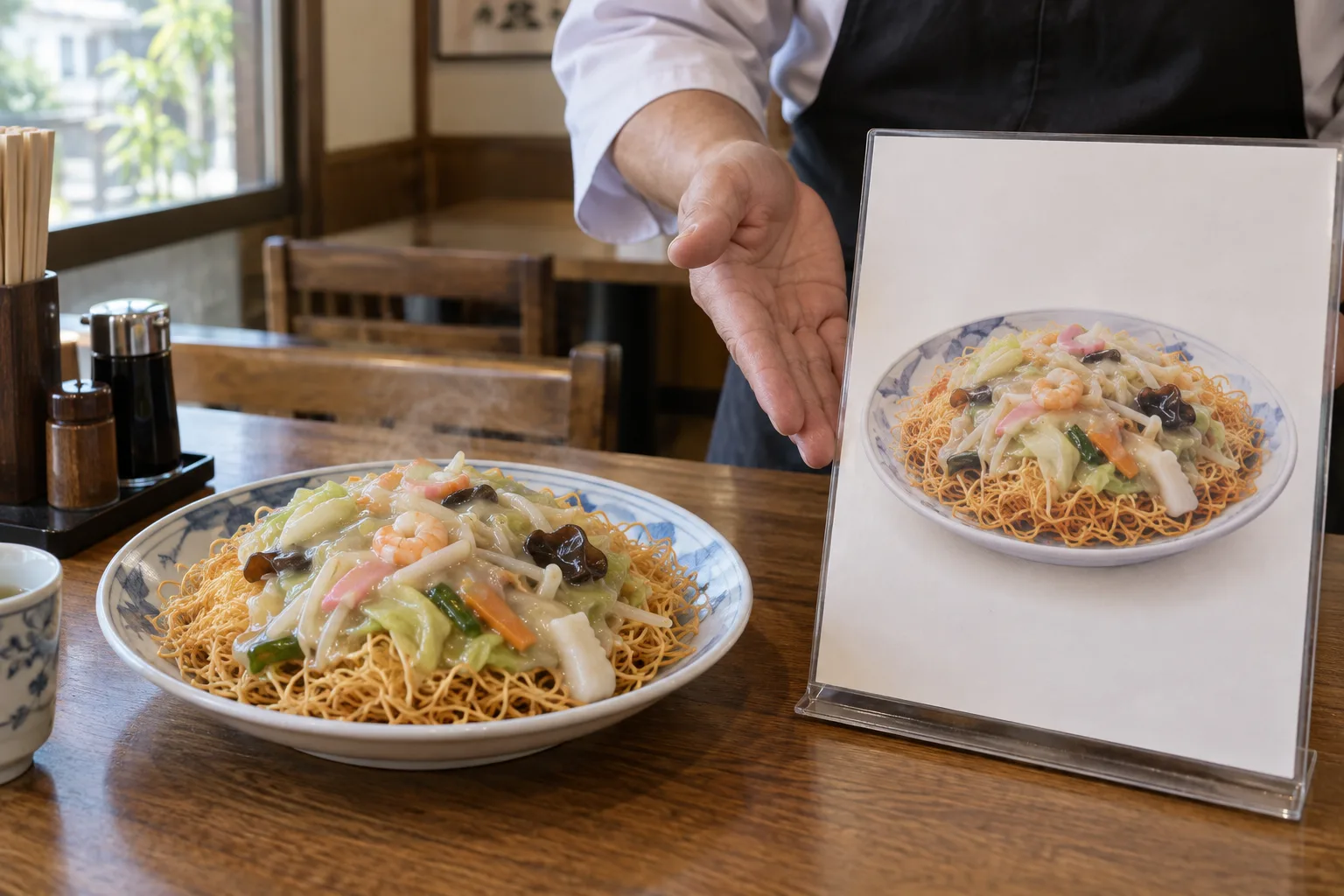
As discussed in matching menu photographs to the actual dish, photograph the final real plate and use it in customer information. Showing what the complete meal looks like can help customers choose more readily than highlighting the fried-noodle weight alone.