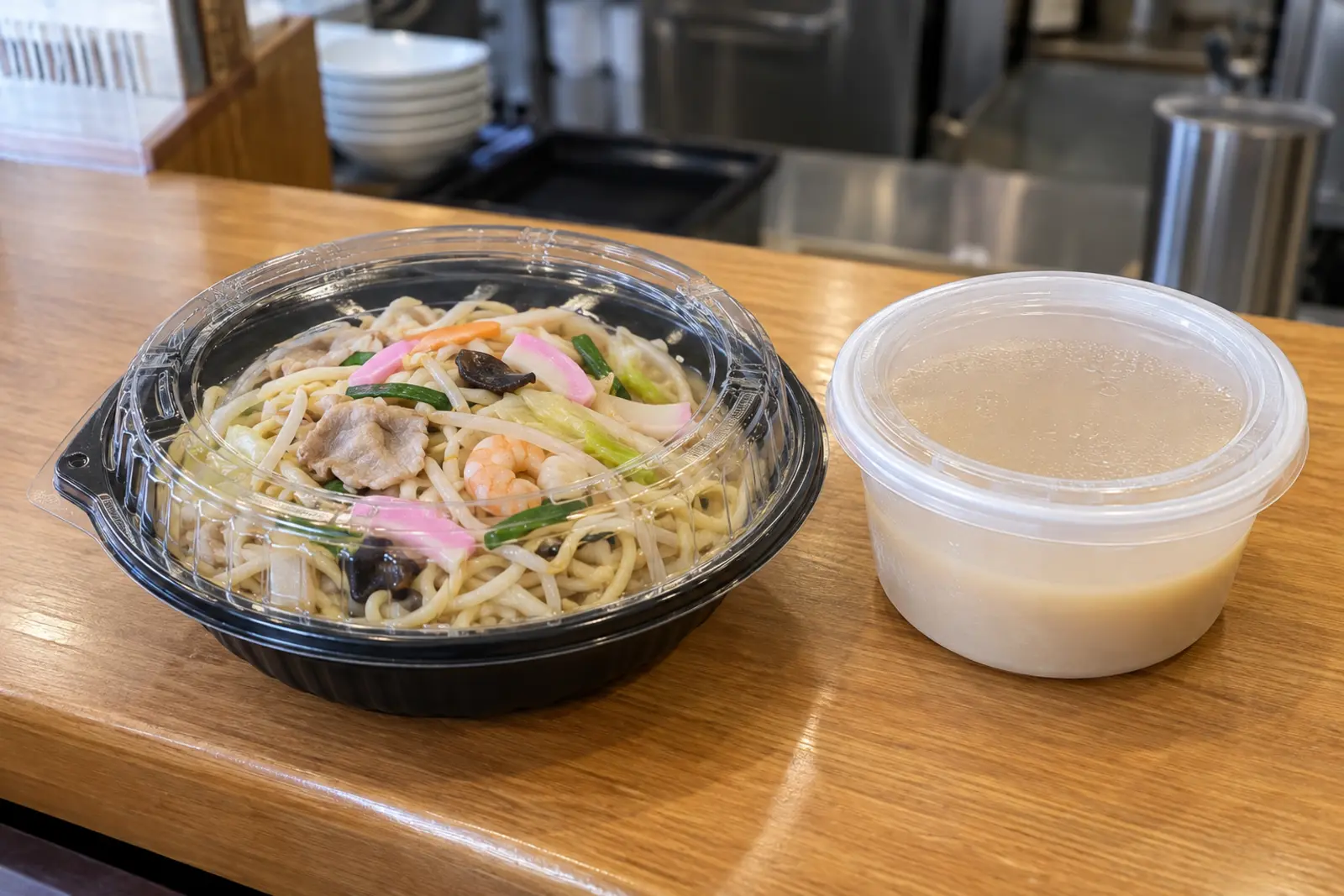
Cook together; packing separately is still possible
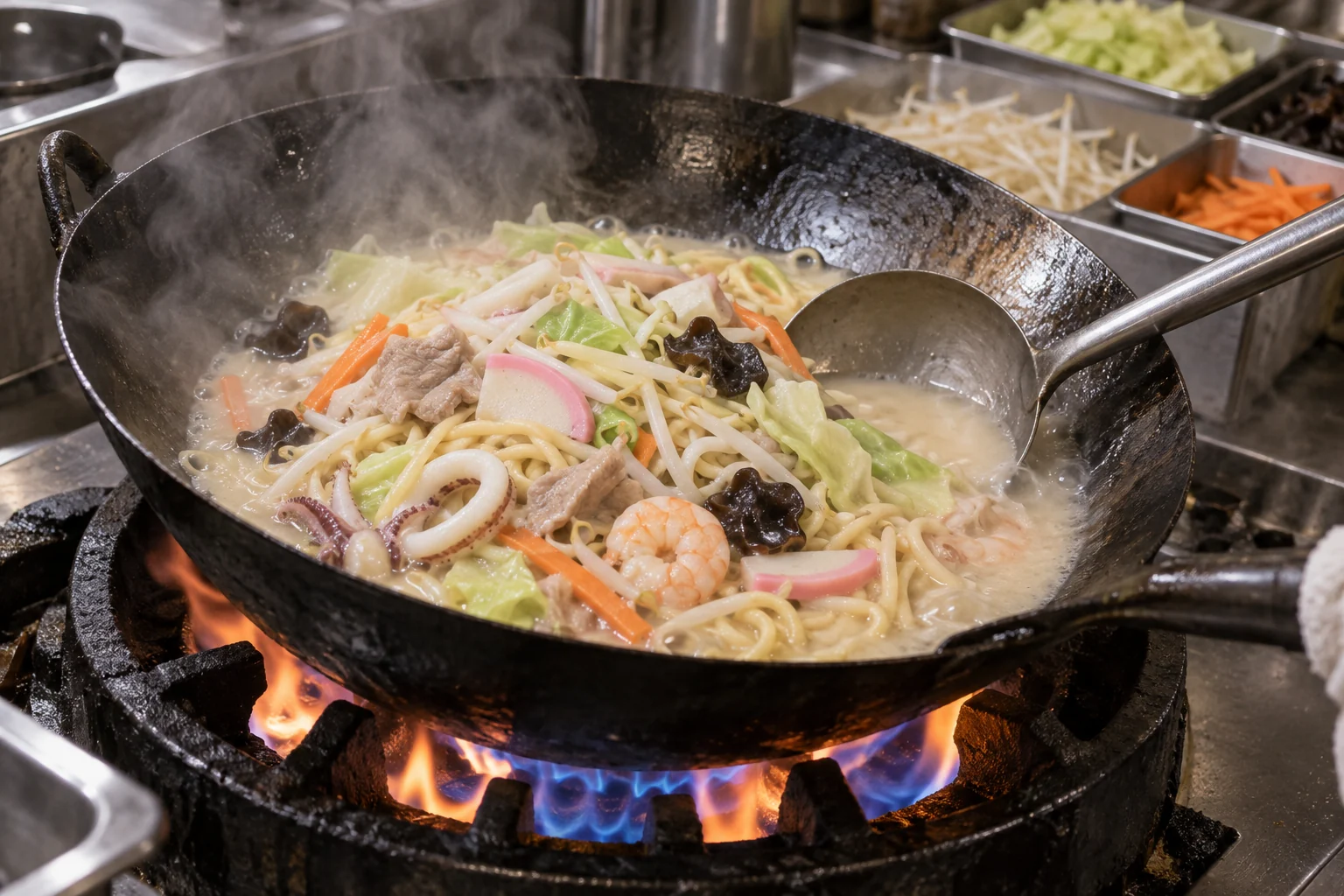
Champon is commonly finished by combining toppings, broth and noodles in a pan. So how can a shop then 'separate' them? Takeaway separation does not mean giving customers raw noodles to cook at home. It means packing cooked noodles so they do not spend the entire journey submerged in broth. It does not remove every trace of soup clinging to them.
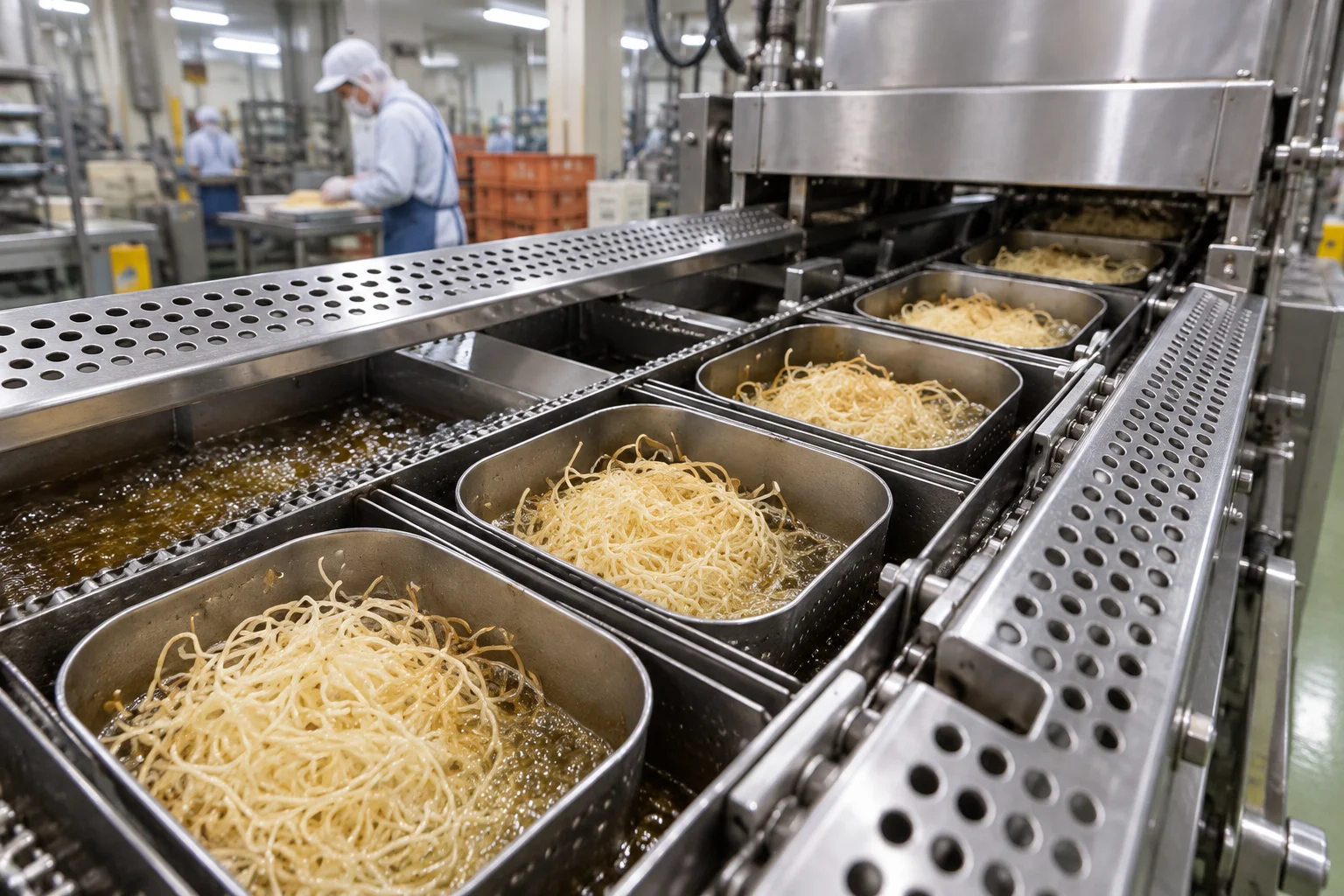
In a 2020 announcement, Ringer Hut said it handed over noodles separately from soup and toppings for takeaway. It also developed a thicker takeaway champon noodle that was less likely to become soft, and announced a rollout to all shops that November. The company adjusted both noodle and packaging rather than relying on the container alone. That announcement cannot establish that every item and shop still uses exactly the same arrangement today.
Packing everything together is also an option if customers will eat promptly. The journey and intended texture matter. Takeaway sara udon deals with crisp fried noodles and sauce, so its packaging should not simply be copied for champon.
Test the noodle and container together
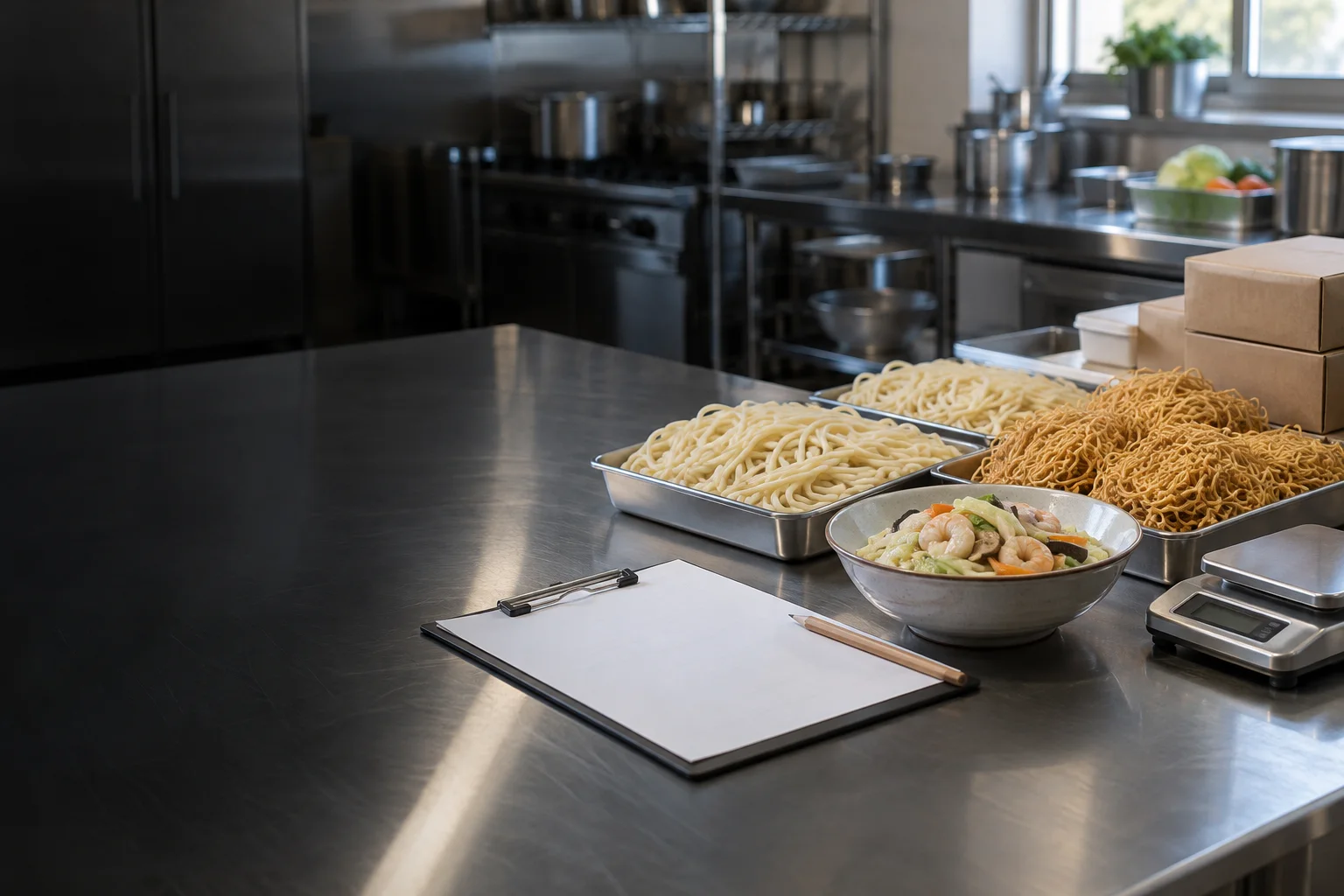
Keep noodle and soup quantities, temperature and elapsed time consistent during comparisons. Change the noodle or the container separately to see which makes a difference. A nearby pickup and a long trip from an event will not have identical priorities.
Check the supplier's specifications for contact with hot food and liquids, and test whether lids close reliably. A photogenic container still has to work at the counter and on the journey.
- How do cooked noodles and toppings fare when only the soup travels separately?
- How does a one-container serving compare immediately and after the expected journey?
- Does the closed container leak, trap too much steam or feel too hot to carry?
- Can customers understand where and when to pour the soup?
Tell customers how to assemble and when to eat
If packed separately, a short instruction such as 'pour the soup over the noodles and eat while hot' helps. If a separate bowl is needed, say so. If reheating is required, state whether the container is microwave-safe; otherwise tell customers to transfer the food to a suitable vessel. Match the wording to the actual product.
Japan's Ministry of Agriculture advises keeping takeaway journeys short, eating promptly on arrival and not leaving food at room temperature. Separation can protect noodle texture; it does not make prolonged room-temperature storage safe.
Design a good takeaway bowl, not an impossible copy of dining in
A bowl eaten beside the wok and one eaten after a journey have different conditions. Decide whether the offering is for a short trip or for assembly after travel, then set expectations accordingly.
Follow the noodle and soup product directions where supplied. Test with the same containers and travel time, including leaks and temperature. What customers need is a clear answer to how to carry, assemble and eat their champon.